
Share
Sexual Health
New Anesthetic Method Might Better Manage Pain Of IUD Insertion
2 min read
FRIDAY, Sept. 18, 2026 (HealthDay News)
 Adobe Stock
 A bit of carefully placed local anesthesia can significantly reduce pain among women receiving an IUD, a new study says.
Currently, doctors insert an IUD with no anesthesia at all or with a frequently painful injection of local anesthetic into tissue around the cervix, researchers said.
A third option — a small amount of local anesthetic introduced into the uterus through a thin plastic catheter — can make the procedure much less painful, researchers reported Sept. 17 in the Journal of the American Medical Association.
Clinical trial results show this option reduces overall pain and makes what pain does occur more tolerable, researchers said.
“It is a simple method that does not require needles and is easy to use in everyday clinical practice,” lead researcher Karin Elgemark said in a news release. She is a doctoral student at Karolinska Institute in Sweden.
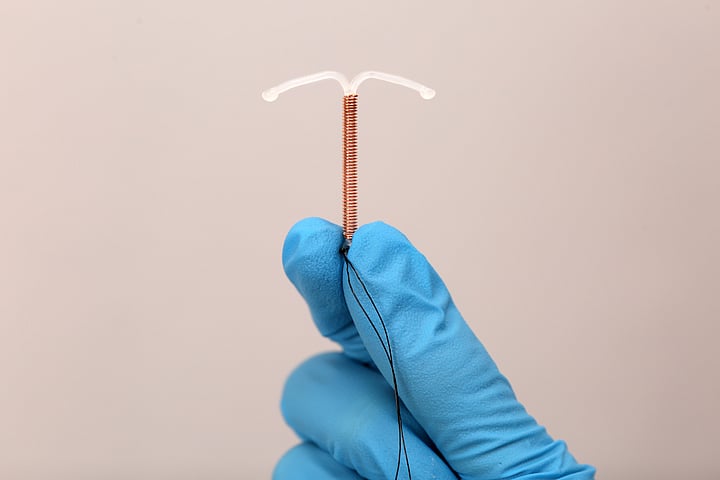
An IUD is a T-shaped device that is inserted into a woman’s uterus, according to Planned Parenthood. It keeps sperm cells from being able to reach a woman’s egg, preventing pregnancy for years.
For the new study, researchers recruited 370 women 18 to 31 who’d never given birth, and randomly assigned them to receive via catheter either a local anesthetic or a saline solution.
Average pain scores were about 44 among those treated with anesthetic versus nearly 59 among those in the control group, on a scale of 0 to 100, researchers found.
The proportion of patients who found the pain tolerable reached 98% among those who got the anesthetic.
More than half of women in the anesthetic group found the procedure easier than expected, compared with about a third of the control group.
“We can see that the method not only reduces pain, but also means that more people find the procedure acceptable,” said senior researcher Helena Kopp Kallner, a professor of clinical sciences at Karolinska Institute.
Researchers noted that this approach was not compared against other anesthetic options, and so it’s too early to say whether the catheter method is more effective than injections.
“Our study shows that the method works when compared with no active treatment, but it also needs to be compared with other pain relief methods,” Kallner said in a news release.
More information
Planned Parenthood has more on IUDs.
SOURCE: Karolinska Institute, news release, Sept. 17, 2026
Copyright © 2026 HealthDay. All rights reserved.

Know your body better.
Trusted By Thousands Daily

Legal Disclaimer
The content published on Livium Health is for informational and educational purposes only. Nothing on this site constitutes medical advice, diagnosis, or treatment. Always consult a qualified healthcare provider before making decisions about your health, including changes to medications, supplements, diet, or exercise.
Livium Health is not a medical practice and does not have a patient-provider relationship with its readers. We do not sell supplements, medications, or treatments, and we have no financial relationship with the products or services we reference.
While we work to ensure the information we publish is accurate and up to date, health and medical guidance evolves. We make no guarantees about the completeness or currency of any content on this site. Reliance on any information provided by Livium Health is solely at your own risk.
If you are experiencing a medical emergency, call 911 or your local emergency services immediately.
We may receive compensation, free products, or affiliate commissions for products mentioned in this post. Opinions are our own.