
Share
Neurology
3 In 4 NFL Players Die With CTE Brain Damage, Study Finds
5 min read
THURSDAY, Oct. 29, 2026 (HealthDay News)
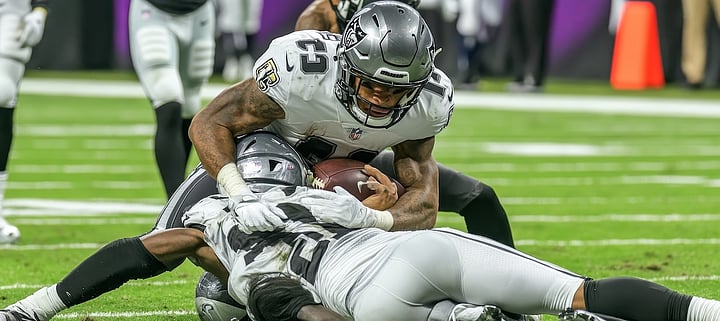 OkiDokiBot AI Art Generator/Adobe Stock
As many as 3 of 4 NFL players who died in the past 15 years were suffering from chronic traumatic encephalopathy (CTE), a degenerative brain disease caused by repetitive head impacts, a new study has found.
An estimated 75% of football pros who died between 2008 and 2023 had CTE ravaging their brains, researchers estimate in the journal JAMA Network Open.
By comparison, CTE is found in fewer than 1% of people from the general population who have donated their brains to science, researchers noted.
The finding of widespread CTE among former players “is concerning, and suggests we need to increase efforts to support families, diagnose CTE during life, and treat CTE-related symptoms,” said study lead researcher Julia Gallini, a doctoral candidate at Boston University School of Public Health.
CTE can only be definitively diagnosed following death.
For the new study, researchers attempted to estimate CTE among NFL players whose brains had not been donated after death by first looking at results from those who had donated their brains.
Of 387 NFL players whose brains were studied, 94% (362) had some degree of neural damage associated with CTE, the study found.
However, former players suffering from cognitive problems are about five times more likely than unaffected players to donate their brains for examination after death, the researchers noted.
So, further study might be needed to gain an accurate picture of the prevalence of CTE among the NFL as a whole.
To do so, Gallini’s team studied available death records for all 2,362 NFL players who had died between 2008 and 2023. They looked specifically at those who died from any degenerative brain disease or had dementia when they passed.
They “then used dementia-related type cause of death to extrapolate some sort of potential consequence of perhaps this being what the symptoms [of CTE] may have been manifested,” said Dr. Rosanna Sabini, who reviewed the findings. She is medical director of the Northwell Health Concussion Program in New York City.
Based on an analysis of all the data collected, Gallini’s team estimated that about 75% of deceased former NFL players were likely affected by CTE.
One longtime player said the data is tough to take in.
“It’s hard to learn what the guys who built the game have suffered through,” said Matt Hasselbeck, an 18-year NFL veteran who serves as the ambassador for the landmark study.
“I’m looking at this like getting a scouting report. Now that we know what we’re up against, we have a better chance of winning,” Hasselbeck said in a Boston University news release. “I can’t take back the hits I took, but I can sign up for research and do whatever I can to help the scientists so they can find a cure in my lifetime. We have to learn from this data to make the game safer, because we can’t accept these numbers for the next generation of players.”
Not every player with CTE will develop symptoms, researchers noted. However, those who do will typically experience cognitive impairment, behavioral changes, mood swings and dementia.
Previous studies have shown that NFL players develop dementia at four times the rate of the general public, researchers said. No other job has ever been found to have such an impact on dementia risk.
“We would like to thank the former NFL player community for their support of this research that is answering an important public health question on the relationship of tackle football and CTE,” senior researcher Yorghos Tripodis, a professor of biostatistics at Boston University School of Public Health, said in the news release.
“We recognize these findings may cause concern for the community of living players and their families. We want them to know that we and others are standing by to provide support, and that we have hope for those living with CTE,” Tripodis said. “Discoveries from the brain bank have already brought us significantly closer to a diagnosis during life, at which point our most important goal will be to develop effective treatments for CTE.”
Former football players concerned about their brain health should consider being evaluated by a neurologist, the researchers said.
Sabini agreed, noting that the symptoms of CTE can take decades to develop.
Pro football careers occur “early on in [a player’s] their life and then they go on to retire,” she said in a Northwell news release. “Then, 20 years may go by, and suddenly some surfacing of symptoms may happen; maybe in social, psychological situations, maybe there are character changes and no one is really understanding it.”
The first signs of CTE can involve depression or anxiety, she said, or “explosiveness, being impulsive, having a short fuse.”
As the illness progresses, CTE can lead to cognitive impairment, memory loss and even motor difficulties around balance and walking that can mimic those of Parkinson’s disease, Sabini said.
She stressed that a heightened risk of CTE can occur in any sport in which head impacts are common.
“We know more about it in American football because they’ve developed these brain banks specifically to the NFL donors,” Sabini said. “But you can see it across the board between boxing, soccer, rugby, hockey and military exposure. The brain doesn’t distinguish one sport from another.”
More information
Harvard Medical School has more on chronic traumatic encephalopathy.
SOURCES: JAMA Network Open, Oct. 28, 2026; Boston University School of Medicine, news release, Oct. 28, 2026; Northwell Health, Oct. 28, 2026
Copyright © 2026 HealthDay. All rights reserved.

Know your body better.
Trusted By Thousands Daily








Legal Disclaimer
The content published on Livium Health is for informational and educational purposes only. Nothing on this site constitutes medical advice, diagnosis, or treatment. Always consult a qualified healthcare provider before making decisions about your health, including changes to medications, supplements, diet, or exercise.
Livium Health is not a medical practice and does not have a patient-provider relationship with its readers. We do not sell supplements, medications, or treatments, and we have no financial relationship with the products or services we reference.
While we work to ensure the information we publish is accurate and up to date, health and medical guidance evolves. We make no guarantees about the completeness or currency of any content on this site. Reliance on any information provided by Livium Health is solely at your own risk.
If you are experiencing a medical emergency, call 911 or your local emergency services immediately.
We may receive compensation, free products, or affiliate commissions for products mentioned in this post. Opinions are our own.