
Share
Neurology
Exercise Reduces Chronic Pain Among Spinal Cord Patients, Trial Finds
3 min read
TUESDAY, Oct. 20, 2026 (HealthDay News)
 Adobe Stock
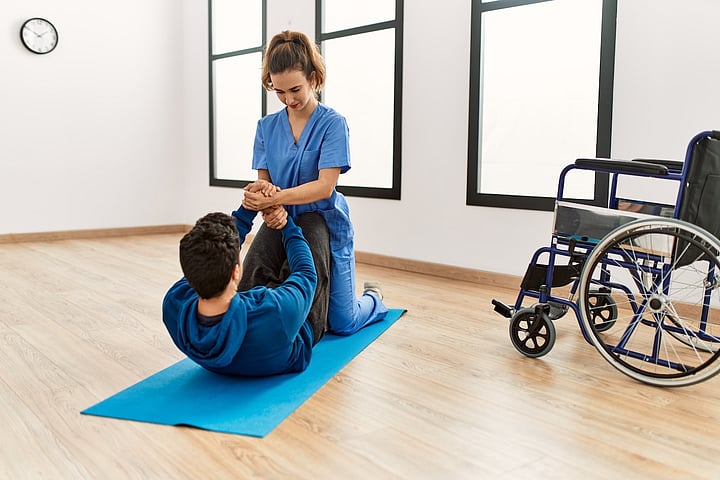
Patients with a spinal cord injury can use everyday exercise to reduce their chronic pain, a new study says.
Spinal cord patients reported that their chronic nerve or muscle pain eased after they followed an individualized exercise prescription for six months, researchers reported recently in the Archives of Physical Medicine and Rehabilitation.
These exercise prescriptions followed international spinal cord injury guidelines, which have been shown to improve health and strength but had not been linked to reductions in chronic pain, researchers said.
“This isn’t a cure-all, and we need larger trials to confirm these findings,” lead researcher Kathleen Martin Ginis, chair of preventive medicine at the University of British Columbia in Canada, said in a news release. “But it shows that a standardized exercise prescription can be delivered in real-world settings and may offer a drug-free option for some people.”
Many people living with a spinal cord injury experience chronic pain that is sometimes more debilitating than the injury itself, researchers said in background notes.
“People with spinal cord injury have told us for years that they use exercise to manage their pain, but we didn’t have strong evidence on how to prescribe it,” Martin Ginis said.
For the new study, researchers recruited 46 adults with spinal cord injury who were in chronic pain.
Half were assigned to a personalized aerobics and strength training program, with support from counselors and fitness trainers. The other half continued their usual activities.
The patients’ exercise prescriptions were based on guidelines issued in 2017, that recommend at least 20 minutes of moderate to vigorous aerobic exercise twice a week and three weekly sets of strength exercises targeting every major functioning muscle group.
Patients assigned exercise worked out where it suited them, at home, in local gyms or at community centers, researchers said.
After six months, eight of the 18 patients assigned exercise had a clinically meaningful reduction in pain intensity of 30% or more, the study found.
By comparison, two of the 16 people in the control group experienced such an improvement, researchers said.
The exercise group also reported less interference from pain with daily activities and mood.
However, researchers noted that the trial was repeatedly interrupted by COVID-19 pandemic restrictions and wildfire evacuations, which limited the number of people they intended to recruit.
Follow-up trials are needed to confirm exercise’s benefits. Patients should not undertake an exercise program without first speaking to a doctor, researchers said.
More information
The Christopher and Dana Reeve Foundation has more on exercises for people with spinal cord injuries.
SOURCES: University of British Columbia, news release, Oct. 16, 2026; Archives of Physical Medicine and Rehabilitation, October 2026
Copyright © 2026 HealthDay. All rights reserved.

Know your body better.
Trusted By Thousands Daily









Legal Disclaimer
The content published on Livium Health is for informational and educational purposes only. Nothing on this site constitutes medical advice, diagnosis, or treatment. Always consult a qualified healthcare provider before making decisions about your health, including changes to medications, supplements, diet, or exercise.
Livium Health is not a medical practice and does not have a patient-provider relationship with its readers. We do not sell supplements, medications, or treatments, and we have no financial relationship with the products or services we reference.
While we work to ensure the information we publish is accurate and up to date, health and medical guidance evolves. We make no guarantees about the completeness or currency of any content on this site. Reliance on any information provided by Livium Health is solely at your own risk.
If you are experiencing a medical emergency, call 911 or your local emergency services immediately.
We may receive compensation, free products, or affiliate commissions for products mentioned in this post. Opinions are our own.