
Share
Mental Health
Depressed? Try Cutting Back On Ultra-Processed Foods, Study Suggests
3 min read
FRIDAY, Sept. 25, 2026 (HealthDay News)
 Adobe Stock
 Cutting back on ultra-processed food could provide a boost to your mental health, a new pilot study says.
People had less depression and anxiety after cutting their ultra-processed food intake by more than 85%, researchers reported Sept. 23 in JAMA Psychiatry.
The results indicate that junk food “may harm your gut in ways that ripple up to your brain,” lead researcher Dr. Nyasha Chagwedera, an assistant professor of psychiatry and behavioral sciences at the University of California, San Francisco, said in a news release.
For the study, researchers recruited 20 participants diagnosed with depression. Among them, 14 also had anxiety.
The patients all were overweight or obese and suffered from at least one metabolic disorder, including high blood pressure, diabetes or elevated cholesterol.
Participants were divided into two groups. One group continued their regular diet for four weeks, while the other shifted to a diet low in ultra-processed foods. After four weeks, the groups swapped diets.
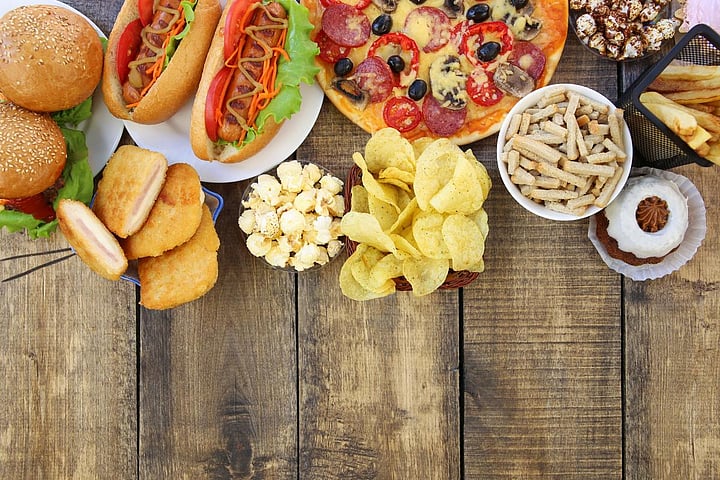
Ultra-processed foods are made mostly from substances extracted from whole foods, like saturated fats, starches and added sugars. They also contain a wide variety of additives to make them more tasty, attractive and shelf-stable, including colors, emulsifiers, flavors and stabilizers.
Examples include packaged baked goods, sugary cereals, ready-to-eat or ready-to-heat products, and deli cold cuts.
These foods are designed to push people’s buttons in ways intended to promote overeating, Chagwedera said.
“Ultra-processed food triggers dopamine, the pleasure hormone, which promotes craving,” Chagwedera said. “Food companies work with scientists to find just the right amount of sugar, salt and fat that make you want to eat more and more.”
People assigned to eat less ultra-processed food shopped for their own eats, with guidance from researchers.
“Reducing the amount of ultra-processed food in our diet can be challenging, because it’s highly palatable, cheap and convenient,” Chagwedera said.
Results showed that when people cut down on ultra-processed food, they scored significantly lower on three measures for depression. They also had modestly improved anxiety scores.
The link between junk food and depression might be explained by a “leaky, out-of-balance gut,” Chagwedera said.
Ultra-processed foods can damage the gut’s protective lining, she said.
“This gut damage can create low-grade, chronic inflammation throughout the body that either directly causes depression or makes people more vulnerable to it,” Chagwedera said.
However, this is just a pilot study, and larger efforts involving more people will be needed to verify its results, researchers said.
This study “successfully established the viability of carrying out this research in a larger-scale trial,” senior researcher Dr. Andrew Krystal, a distinguished professor of psychiatry and behavioral sciences and neurology at the University of California, San Francisco, said in a news release.
More information
Johns Hopkins Bloomberg School of Public Health has more on ultra-processed foods.
SOURCE: University of California, San Francisco, news release, Sept. 23, 2026
Copyright © 2026 HealthDay. All rights reserved.

Know your body better.
Trusted By Thousands Daily





Legal Disclaimer
The content published on Livium Health is for informational and educational purposes only. Nothing on this site constitutes medical advice, diagnosis, or treatment. Always consult a qualified healthcare provider before making decisions about your health, including changes to medications, supplements, diet, or exercise.
Livium Health is not a medical practice and does not have a patient-provider relationship with its readers. We do not sell supplements, medications, or treatments, and we have no financial relationship with the products or services we reference.
While we work to ensure the information we publish is accurate and up to date, health and medical guidance evolves. We make no guarantees about the completeness or currency of any content on this site. Reliance on any information provided by Livium Health is solely at your own risk.
If you are experiencing a medical emergency, call 911 or your local emergency services immediately.
We may receive compensation, free products, or affiliate commissions for products mentioned in this post. Opinions are our own.