
Share
Allergies
One-Third Of Infant Peanut Allergy Cases Might Be Misdiagnosed, Study Reports
4 min read
THURSDAY, Nov. 5, 2026 (HealthDay News)
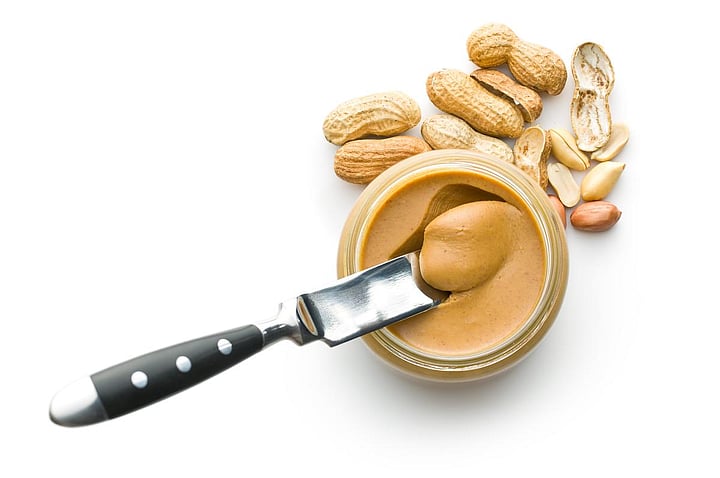 Adobe Stock
Five-month-old Arthur’s face reddened the first time he ate peanut, and hives broke out on his shoulders and upper lip.
“Our GP referred us to an allergy specialist who took skin prick and blood tests,” Arthur’s mom Leah said in a news release. “The results suggested Arthur had a high risk of reacting to peanut, and we were advised to avoid it while we awaited further tests.”
But at age 1, Arthur underwent a follow-up food challenge in which he was fed peanut to assess his allergy — and he passed without any reaction at all. His suspected peanut allergy label was removed.
Arthur’s case is far from rare, a new study indicates.
More than one-third of infants thought to have peanut allergy might have been misdiagnosed, researchers recently reported in The Journal of Allergy and Clinical Immunology: In Practice.
About 35% of infants with a recent reaction to peanut and a positive allergy test later had their diagnosis overturned, the study found.
These diagnoses were reversed after the children didn’t react when fed peanut under the supervision of a doctor, researchers said.
“We found more than one third of infants who were suspected to have peanut allergy based on their history and initial tests no longer reacted when they underwent a supervised food challenge,” said lead author Dr. Timothy Brettig, a senior research clinician at Murdoch Children’s Research Institute in Australia.
“Being able to identify those children early allows them to avoid an unnecessary allergy label and the burden of avoiding peanut,” Brettig said in a news release.
These results come from an Australian study evaluating whether peanut allergies can be treated by exposing allergic babies to small amounts of peanut.
As part of the study, 1,275 infants younger than 18 months of age were assessed, with 778 undergoing an oral food challenge to confirm their diagnosis of peanut allergy.
During a food challenge, infants receive increasing doses of peanut under medical supervision to check for an allergic reaction, researchers said in background notes.
About 65% of the babies who had an oral food challenge suffered an allergic reaction, including 12% who experienced a severe reaction, results showed. All these episodes were safely managed by medical staff.
The other 35% of children, though thought to be allergic to peanut, had no reaction at all and could have their allergy label removed, researchers said. These infants could regularly eat peanut in an age-appropriate form, further building their defense against allergy.
Arthur was one of the children in the study found to not really have a peanut allergy, despite his earlier reaction.
“We were understandably anxious going into the challenge, because we didn’t know how Arthur would respond,” Leah said. “It’s a huge relief knowing Arthur can tolerate peanut, and we can move forward without the uncertainty of managing a suspected allergy. Having the opportunity to find out he could tolerate peanuts has made a real difference to our family.”
These results indicate that doctors need to do more testing before concluding that an infant has peanut allergy, researchers concluded.
“Oral food challenges are not currently used routinely for every infant with suspected peanut allergy,” researcher Kirsten Perrett, group leader of population allergy research at Murdoch Children’s Research Institute, said in a news release. “But our results show that clinical history and allergy testing alone were not enough to accurately diagnose peanut allergy in many cases.
“A supervised oral food challenge should be routinely considered to confirm the diagnosis before an infant starts oral immunotherapy,” she added. “With peanut allergy one of the most common childhood food allergies, it’s particularly important that we have an accurate diagnosis when a baby first shows signs of a possible peanut allergy.”
Almost all of the babies who reacted to the food challenge proceeded to oral immunotherapy, a treatment in which they are fed daily doses of peanut to build tolerance, researchers said.
Researchers recommended that parents request an oral food challenge to confirm a diagnosis of peanut allergy based on medical history and allergy testing.
“We strongly recommend considering this approach for diagnosing peanut allergy in infants regardless of whether oral immunotherapy or an allergen avoidance strategy is pursued,” the paper concluded.
More information
The American Academy of Allergy, Asthma & Immunology has more on oral immunotherapy for food allergies.
SOURCES: Murdoch Children’s Research Institute, news release, Nov. 4, 2026; The Journal of Allergy and Clinical Immunology: In Practice, Sept. 17, 2026
Copyright © 2026 HealthDay. All rights reserved.

Know your body better.
Trusted By Thousands Daily

Legal Disclaimer
The content published on Livium Health is for informational and educational purposes only. Nothing on this site constitutes medical advice, diagnosis, or treatment. Always consult a qualified healthcare provider before making decisions about your health, including changes to medications, supplements, diet, or exercise.
Livium Health is not a medical practice and does not have a patient-provider relationship with its readers. We do not sell supplements, medications, or treatments, and we have no financial relationship with the products or services we reference.
While we work to ensure the information we publish is accurate and up to date, health and medical guidance evolves. We make no guarantees about the completeness or currency of any content on this site. Reliance on any information provided by Livium Health is solely at your own risk.
If you are experiencing a medical emergency, call 911 or your local emergency services immediately.
We may receive compensation, free products, or affiliate commissions for products mentioned in this post. Opinions are our own.