
Share
Cardiovascular Diseases
Rural Heart Attack Patients Three Times More Likely To Die En Route To A Hospital
3 min read
MONDAY, Nov. 2, 2026 (HealthDay News)
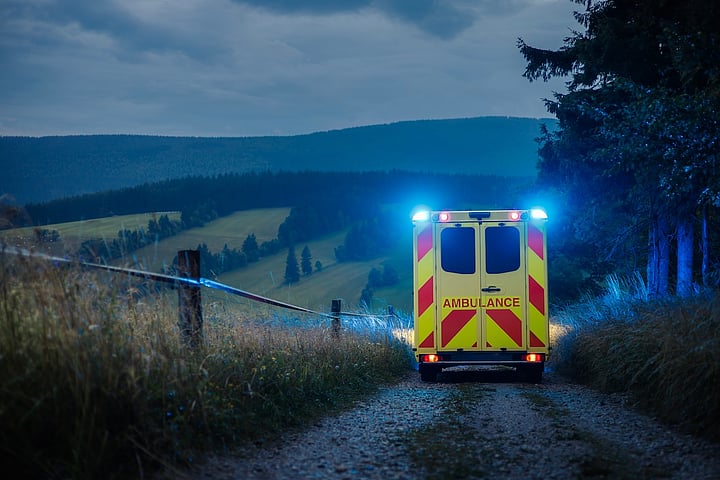 Jaromir Chalabala -- Adobe Stock
Rural residents who have a heart attack are nearly three times more likely to die before reaching a hospital compared to urban dwellers, a new study says.
Heart attack victims in rural areas are also 89% more likely to die at home and 58% more likely to die in a doctor’s office or ER compared to city folks, according to results scheduled for presentation Nov. 9 at the annual meeting of the American Heart Association (AHA).
“Getting emergency care as soon as possible can make a major difference in a life-threatening situation,” researcher Dr. Darshan Shivanne Gowda, a medical student at Hassan Institute of Medical Sciences in Karnataka, India, said in a news release.
“We found that people who live in rural areas and certain other populations were more likely to die before receiving urgent care for a heart attack that would improve their chances of survival,” Gowda said.
About 50% of fatal heart attacks occur outside a hospital, the AHA said in background notes.
For the new study, researchers analyzed U.S. death certificate data between 2003 and 2023 for more than 2.5 million adults 20 and older who died from a heart attack.
Results showed that rural residents were 2.9 times more likely to die from a heart attack before they got to a hospital.
Overall, men were 20% to 40% more likely to die from a heart attack before they got to a hospital than women, researchers said.
Young adults 20 to 44 had the highest relative odds of dying either en route to a hospital or in an ER, with survival odds improving as people got older, researchers found.
“We were also struck by the higher likelihood of out-of-hospital death among younger adults,” Gowda said. “Heart attacks are often perceived as primarily affecting older adults, so the finding that younger adults had the highest relative odds of death by the time they reached the hospital underscores the importance of recognizing heart attack symptoms across all age groups.”
The study also found that Black heart attack victims were 16% more likely to die before they reached a hospital and 25% more likely to die at a doctor’s office than white adults.
“The message for patients and families is simple: Know the warning signs of a heart attack and do not wait to seek help,” Gowda said. “Call 9-1-1 immediately when symptoms occur. At the same time, our findings show that communities need reliable emergency medical services and timely access to specialized heart attack care, regardless of where people live.”
AHA spokeswoman Dr. Johanna Paola Contreras agreed that a heart attack “is a time-sensitive emergency.”
“Rural communities may face longer distances to hospitals, fewer emergency and specialty cardiovascular services, and challenges with transportation and access to timely care,” Contreras, who was not involved in the study, said in a news release.
“Although this study cannot tell us which of these factors explains the difference, the findings reinforce the importance of strengthening emergency medical services, prevention, early recognition and access to specialized cardiovascular care in rural communities. Our goal should be simple: where someone lives should not determine whether they survive a cardiovascular emergency,” continued Contreras, medical director of the Hispanic Heart Center at Mount Sinai Health System in New York City.
The AHA meeting takes place in Chicago Nov. 6-9.
Findings presented at medical meetings should be considered preliminary until published in a peer-reviewed journal.
More information
The American Heart Association has more about rural health.
SOURCE: American Heart Association, news release, Nov. 2, 2026
Copyright © 2026 HealthDay. All rights reserved.

Know your body better.
Trusted By Thousands Daily





Legal Disclaimer
The content published on Livium Health is for informational and educational purposes only. Nothing on this site constitutes medical advice, diagnosis, or treatment. Always consult a qualified healthcare provider before making decisions about your health, including changes to medications, supplements, diet, or exercise.
Livium Health is not a medical practice and does not have a patient-provider relationship with its readers. We do not sell supplements, medications, or treatments, and we have no financial relationship with the products or services we reference.
While we work to ensure the information we publish is accurate and up to date, health and medical guidance evolves. We make no guarantees about the completeness or currency of any content on this site. Reliance on any information provided by Livium Health is solely at your own risk.
If you are experiencing a medical emergency, call 911 or your local emergency services immediately.
We may receive compensation, free products, or affiliate commissions for products mentioned in this post. Opinions are our own.