
Share
Cancer
Blood Test Could Spot Deadly Pancreatic Cancer Sooner
3 min read
THURSDAY, Sept. 17, 2026 (HealthDay News)
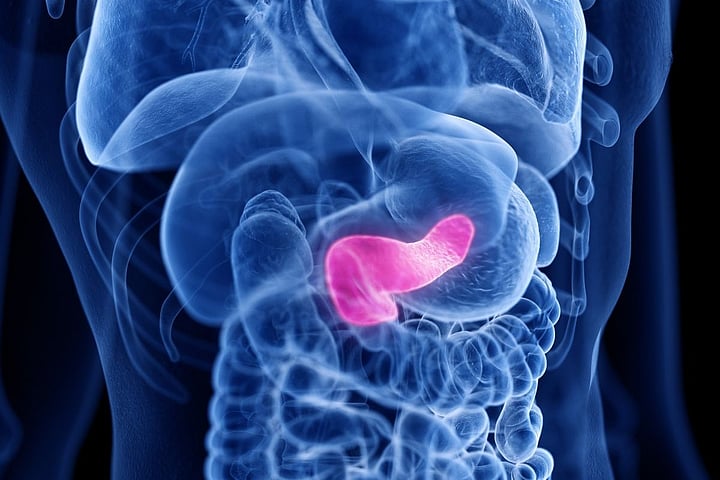 Adobe Stock
 An experimental blood test might be able to detect pancreatic cancer at its earliest stages, potentially saving countless lives, a new study says.
The test, called PANXEON, correctly identified early-stage pancreatic cancer 87% of the time, researchers reported Sept. 16 in the journal Nature Medicine.
The blood test also was able to identify a precancerous condition of the pancreas called high-grade dysplasia, opening the possibility that doctors might be able to ward off cancer before it can even start, researchers said.
Considered a “silent killer,” pancreatic cancer currently has the lowest survival rate of any cancer, with only 14% of patients living five years past diagnosis, researchers said in background notes.
“Pancreatic cancer remains so deadly largely because we find it after the window for cure has begun to close,” senior researcher Ajay Goel said in a news release. He is chair of molecular diagnostics and experimental therapeutics at City of Hope in Los Angeles.
“For patients, these findings represent progress toward finding pancreatic cancer before symptoms appear and while more treatment options remain available,” Goel said.
About 90% of patients have their pancreatic cancer detected at advanced stages, after the tumor has already spread to other parts of the body, researchers said.
“A stage shift is not just a statistic,” Goel said. “The earlier we find pancreatic cancer, the greater the chance that meaningful intervention is still possible.”
PANXEON works by looking for three different markers of pancreatic cancer that circulate in a person’s blood. These include genetic material shed by the cancer, as well as a protein called CA19-9 that is produced by pancreatic cancer cells.
Artificial intelligence, or AI, combines the measurements into a single score that estimates a patient’s risk of pancreatic cancer, researchers said.
“Most biomarkers tell you one part of the story,” Goel said. “Combining multiple biological signals gives us a clearer picture of what may be happening in the pancreas.”
For this study, researchers tested PANXEON in nearly 1,800 people across the U.S., Europe and Asia to see if it would return accurate results in many different settings.
Results showed that the test’s false-positive rate was 3% in low-risk groups and 16% in groups at higher risk for pancreatic cancer.
The test also detected high-grade dysplasia more than 64% of the time, researchers said. The precancerous condition is often considered “stage 0” pancreatic cancer, and early detection could help identify patients who need closer monitoring.
Patients most likely to benefit from the blood test include those with a higher genetic risk, a family history of pancreatic cancer, pancreatic cysts or chronic pancreatitis, Goel said. It shouldn’t replace imaging or other tests, he said, but could help identify high-risk patients who need further evaluation.
The test will need to be confirmed in larger studies before it is ready for widespread use, researchers said.
More information
The Cleveland Clinic has more on pancreatic cancer.
SOURCE: City of Hope, news release, Sept. 16, 2026
Copyright © 2026 HealthDay. All rights reserved.

Know your body better.
Trusted By Thousands Daily









Legal Disclaimer
The content published on Livium Health is for informational and educational purposes only. Nothing on this site constitutes medical advice, diagnosis, or treatment. Always consult a qualified healthcare provider before making decisions about your health, including changes to medications, supplements, diet, or exercise.
Livium Health is not a medical practice and does not have a patient-provider relationship with its readers. We do not sell supplements, medications, or treatments, and we have no financial relationship with the products or services we reference.
While we work to ensure the information we publish is accurate and up to date, health and medical guidance evolves. We make no guarantees about the completeness or currency of any content on this site. Reliance on any information provided by Livium Health is solely at your own risk.
If you are experiencing a medical emergency, call 911 or your local emergency services immediately.
We may receive compensation, free products, or affiliate commissions for products mentioned in this post. Opinions are our own.