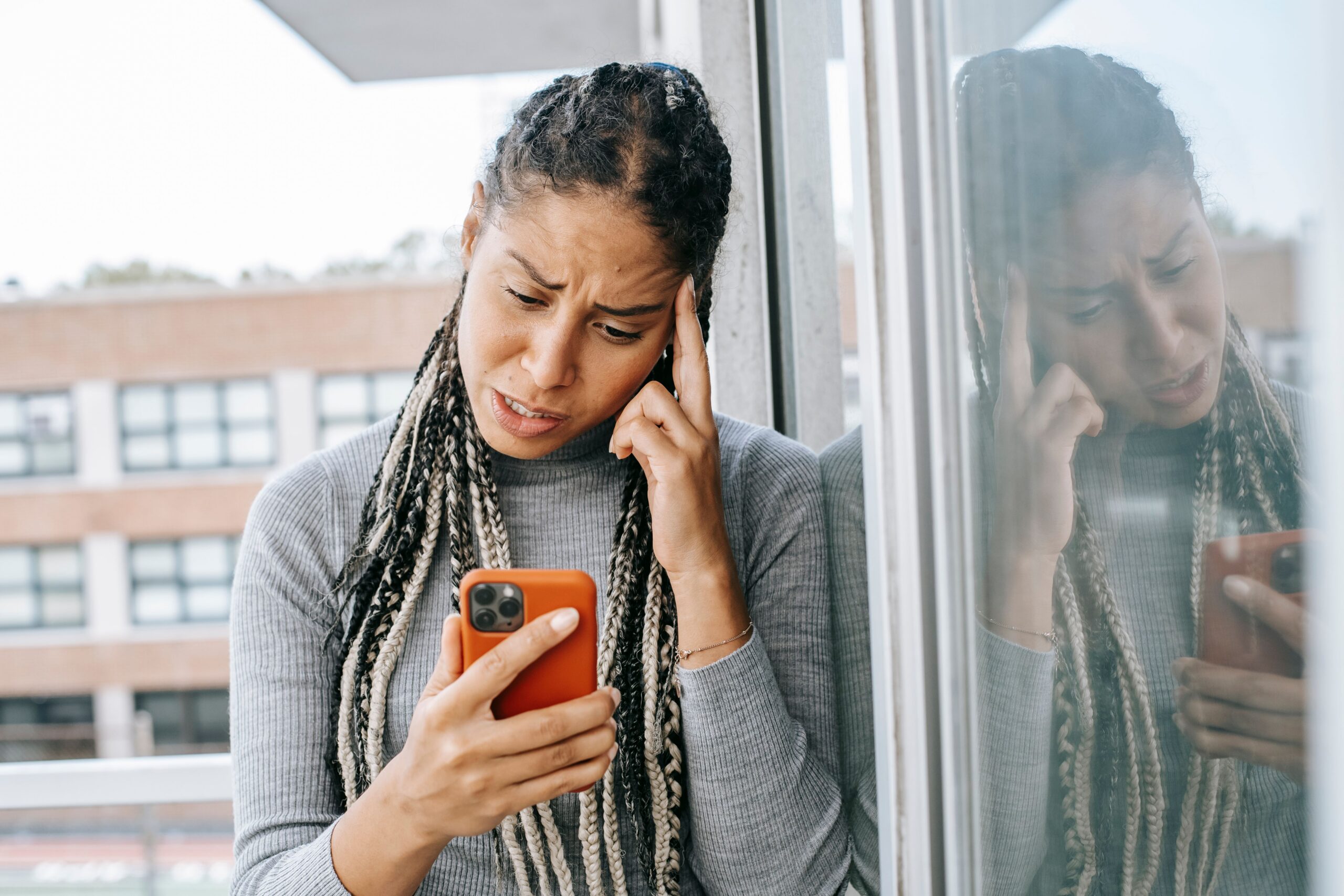
Your phone is not making you anxious. What you are doing on it is
6 min read
Key takeaways
Total screen time is a poor predictor of anxiety. The specific behaviors, doomscrolling, social comparison, notification-driven context switching, and news consumption, are far stronger predictors.
Social comparison on visual social media platforms activates the same reward-threat circuitry as in-person social status evaluation, but at a frequency and intensity that has no evolutionary precedent.
Notifications produce a cortisol spike equivalent to a minor physical threat every time they arrive. The average adult receives 80 to 100 notifications per day. This is 80 to 100 low-grade stress responses in addition to any actual life stressors.
Context switching from phone interruptions reduces cognitive performance on the current task for 23 minutes per interruption on average, and produces sustained elevated cortisol from the incomplete task state.
The screen time research is mostly wrong about what matters
The dominant public conversation about phones and mental health focuses on total screen time as the primary metric. The research, when examined carefully, does not support total screen time as a meaningful predictor of anxiety in adults. The effect sizes in large observational studies are small. The confounders are substantial.
What the more granular research consistently shows: the specific behaviors performed on phones predict anxiety far more strongly than the time spent on phones. A person using a phone for two hours to read, navigate, photograph, or message friends they know is having a categorically different neurobiological experience than a person spending 40 minutes scrolling news and social media comparison feeds. The blunt metric of screen time obscures the distinction that matters.
The three anxiety-driving behaviors
Doomscrolling and news overconsumption. The news feed is an algorithmically optimized anxiety delivery system. Algorithms that maximize engagement have learned that threat content, outrage content, and uncertainty content produce more clicks and more time on platform than positive or neutral content. This is not a conspiracy. It is engagement optimization working as designed. The person who checks news 15 times a day is receiving 15 doses of algorithmically selected threat content, each of which activates the amygdala-HPA axis response that evolved to handle immediate, actionable physical threats.
Social comparison. The human brain performs automatic social status evaluation. In ancestral environments, this happened through direct interaction with a small group and provided useful information about social standing. On Instagram or LinkedIn, this evaluation runs continuously against a curated highlight-reel feed of hundreds or thousands of people, none of whom post their failures, their bad days, or their unfiltered reality. The comparison circuitry runs at full evolutionary intensity against an unrealistic input set. The result is a sustained low-grade sense of inadequacy that has no resolution because the comparison standard is an artifact.
Notification-driven context switching. A notification is a social cue demanding attention from the social species that evolved to respond to social cues. Each notification produces a cortisol micro-spike. The average adult receives 80 to 100 per day. Independent of the content of the notification, the interruption itself fragments attention, produces what cognitive scientists call “attention residue” (the previous task continues to occupy working memory after the switch), and generates sustained cortisol from the incomplete-task state.
Tool. Screen Time on iOS or Digital Wellbeing on Android provides category-level data on which apps are consuming time. The useful metric is not total screen time but specifically the time spent in news, social media, and the notification count per day. A timed lockbox provides a physical barrier to phone access during deep work or sleep windows for people who have established that willpower alone is insufficient. Blue light blocking glasses for the two hours before bed reduce the circadian disruption component of evening phone use while still allowing non-anxiety-driving use cases.
Behavior. Three targeted changes based on the highest-anxiety behaviors. First: disable all non-essential notifications permanently. Batch check messages at three specific times per day rather than responding to each notification arrival. This single change reduces daily cortisol micro-spikes by 60 to 80 percent for most adults. Second: identify the specific social media accounts and news feeds that consistently produce negative affect after viewing. Unfollow or mute without negotiation. The feed is an input you control. Third: no phone access for the first hour of the morning and the last hour before bed. The morning phone check loads the threat-comparison content into working memory before the prefrontal cortex is fully activated.
Threshold. After two weeks of notification elimination and morning/evening phone-free windows: resting heart rate should trend slightly downward, morning anxiety (which is frequently loaded by previous evening’s social media) should improve, and HRV should trend upward. Self-reported anxiety on a standardized scale like the GAD-7 typically improves measurably in four weeks of sustained behavioral phone restructuring.
The supplement support layer
NOW Foods Ashwagandha 450 mg reduces the cortisol load from notification-driven micro-stress exposures and supports HPA axis recovery during the behavioral restructuring period. A Headspace subscription provides a structured replacement behavior for the habitual phone reach: a short guided meditation practice gives the hand something to do with the phone that supports anxiety reduction rather than producing it.
Phone behaviors by anxiety impact
Behavior
Anxiety effect
Mechanism
First intervention
Notification checking
High; immediate cortisol spike per notification
Social threat signal; context switching
Disable all non-essential notifications
News scrolling
High; sustained threat-content exposure
Algorithmic threat optimization
Two daily news checks maximum; no morning or evening
Check Screen Time or Digital Wellbeing today. Identify which category is consuming the most time and which specific apps are the highest source of anxiety-driving content. The data is already collected. Just look at it.
Disable all notifications except phone calls and urgent messaging apps this week. Give it seven days before evaluating. The first two days feel like missing something. By day five, most people report missing nothing except the cortisol spikes.
Charge the phone outside the bedroom. Put a cheap alarm clock on the nightstand. The morning phone-free window eliminates the most anxiety-loading moment of the day, and the sleep improvement from removing the bedroom phone is substantial and measurable.
Run the GAD-7 now and again in four weeks. The before-and-after score comparison is often the data point that makes the change sustainable, because it makes the mechanism visible rather than relying on subjective impression.
Does the research support social media causing anxiety or just correlating with it?+
Both causal and correlational evidence exists. The correlational evidence is extensive. Causal evidence comes from experimental studies including randomized trials where subjects assigned to reduce social media use showed significant anxiety and depression reductions within two weeks compared to control groups, and a 2018 University of Pennsylvania RCT showing that limiting social media to 30 minutes per day produced significant reductions in loneliness and depression at four weeks.
Is LinkedIn less harmful than Instagram?+
Different comparison content, same comparison mechanism. LinkedIn activates professional status comparison circuitry rather than appearance or lifestyle comparison. For high-achieving adults in their 40s and 50s, professional status comparison can be equally anxiety-provoking as appearance comparison. The platform matters less than the psychological activity the platform is facilitating.
What about work email and Slack?+
Work communication platforms produce anxiety through their notification and context-switching mechanisms rather than through comparison. Batching email checks to three times daily, disabling Slack notifications outside designated hours, and establishing explicit response time norms with colleagues reduces the cortisol load substantially without reducing actual work output.
Legal Disclaimer
The content published on Livium Health is for informational and educational purposes only. Nothing on this site constitutes medical advice, diagnosis, or treatment. Always consult a qualified healthcare provider before making decisions about your health, including changes to medications, supplements, diet, or exercise.
Livium Health is not a medical practice and does not have a patient-provider relationship with its readers. We do not sell supplements, medications, or treatments, and we have no financial relationship with the products or services we reference.
While we work to ensure the information we publish is accurate and up to date, health and medical guidance evolves. We make no guarantees about the completeness or currency of any content on this site. Reliance on any information provided by Livium Health is solely at your own risk.
If you are experiencing a medical emergency, call 911 or your local emergency services immediately.
We may receive compensation, free products, or affiliate commissions for products mentioned in this post. Opinions are our own.