
Share
Men's Health
Thyroid Health
Women's Health
High cholesterol may have a thyroid clue: Why lipids can shift when thyroid hormone is low
4 min read
Key takeaways
- Thyroid hormone influences LDL receptors and several pathways involved in lipid metabolism.
- A large meta-analysis found levothyroxine treatment of overt hypothyroidism reduced total cholesterol by about 58 mg/dL and LDL cholesterol by about 41 mg/dL on average.
- Lipid improvements were smaller in subclinical hypothyroidism, reinforcing that disease severity matters.
- A high LDL should not automatically be blamed on the thyroid, and correcting hypothyroidism does not eliminate the need to reassess cardiovascular risk.
The thyroid and the lipid panel talk to each other
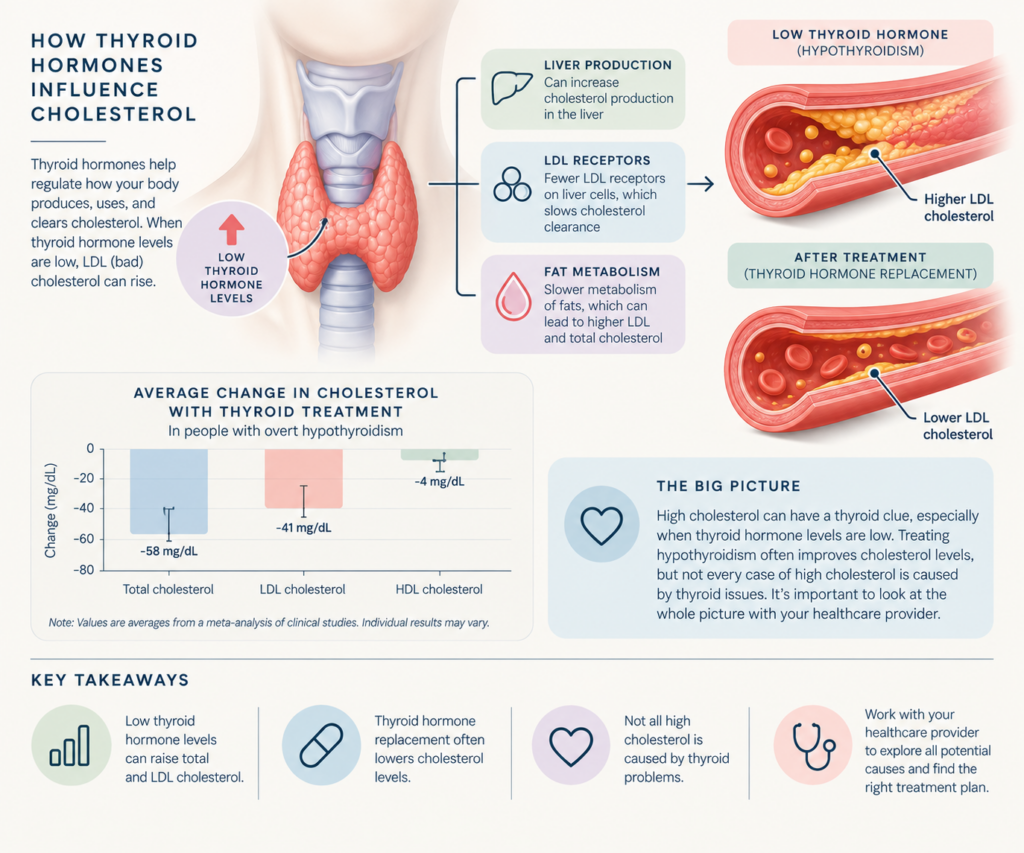
Thyroid hormone influences hepatic LDL receptors, cholesterol synthesis and clearance, lipoprotein lipase, and other parts of lipid metabolism. When thyroid hormone is low, LDL cholesterol can rise even if the person’s diet has not changed.
That makes thyroid function one of the secondary causes clinicians consider when cholesterol unexpectedly worsens.
Treating overt hypothyroidism can move LDL substantially
A systematic review and meta-analysis evaluated lipid changes after treatment of thyroid dysfunction. In overt hypothyroidism, levothyroxine was associated with an average total-cholesterol reduction of about 58.4 mg/dL and LDL reduction of about 41.1 mg/dL.
The average changes were smaller in subclinical hypothyroidism. That difference matters because a mildly elevated TSH with normal free T4 is not metabolically identical to clear thyroid hormone deficiency.
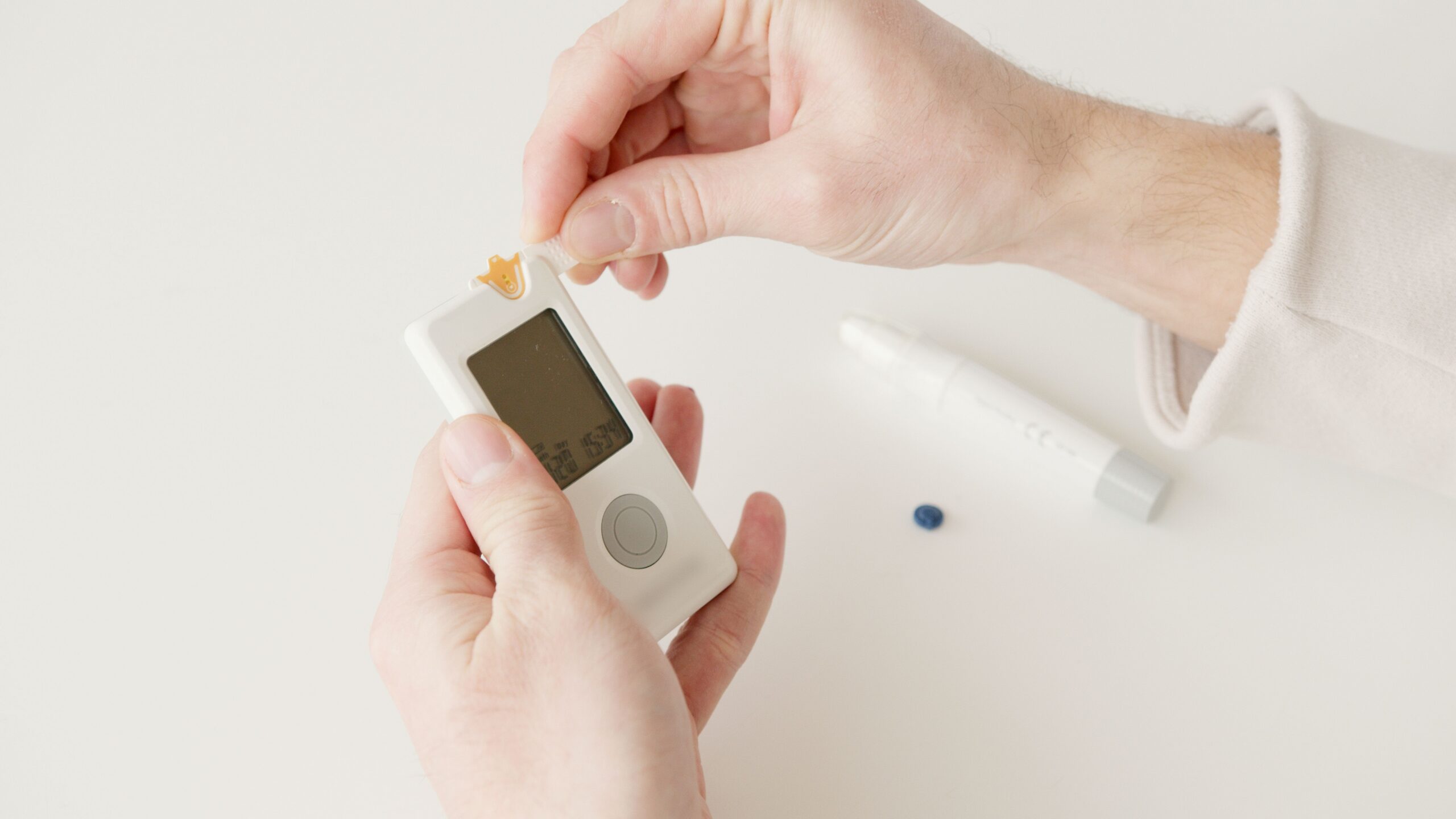
A lab-results notebook can keep TSH, free T4, LDL, triglycerides, and medication dates together so the before-and-after pattern is visible.
Do not make the thyroid explain every lipid problem
A person can have hypothyroidism and familial hypercholesterolemia, insulin resistance, dietary contributors, medication effects, or ordinary age-related cardiovascular risk at the same time.
If LDL remains high after thyroid levels normalize, the remaining lipid problem still deserves attention. Treating one contributor does not cancel the others.
A meal-prep container can make a fiber-rich lunch easier to repeat, while a water bottle can replace a sugary beverage if that fits the person’s broader nutrition goals.
Timing the repeat lipid panel can matter
Interpret lipids after thyroid treatment has had enough time to stabilize and the thyroid dose has been reassessed. Checking too early can blur whether the metabolic effect has caught up with the laboratory thyroid change.
The exact follow-up interval belongs to the clinician managing the thyroid and cardiovascular risk. The goal is not to postpone needed lipid treatment indefinitely while waiting for a perfect TSH.
A calendar reminder timer can help remember scheduled repeat bloodwork, and a home scale can track broad weight trends if they are clinically useful.
Cholesterol can be a clue before classic symptoms appear
Some people with hypothyroidism do not present with a dramatic textbook cluster of cold intolerance, constipation, and fatigue. An unexplained lipid change can be one reason thyroid testing enters the workup.
The reverse is also true: a normal thyroid panel redirects attention to other causes of dyslipidemia instead of leaving the person chasing a thyroid explanation that isn’t there.
The Livium recipe
Tool. Put thyroid and lipid results on the same timeline.
Behavior. Recheck lipids after appropriate thyroid stabilization when hypothyroidism may be contributing.
Threshold. Very high LDL, known cardiovascular disease, or major inherited risk should not be dismissed as a thyroid-only issue.
| Lipid change after treating overt hypothyroidism | Average change | Interpretation |
|---|---|---|
| Total cholesterol | -58.4 mg/dL | Substantial average reduction |
| LDL cholesterol | -41.11 mg/dL | Substantial average reduction |
| HDL cholesterol | -4.14 mg/dL | Small decrease |
| Triglycerides | -7.25 mg/dL | No clear significant change |
| Subclinical hypothyroidism | Smaller changes | Severity matters |
Source: Kotwal et al., Journal of Clinical Endocrinology & Metabolism, 2020.
The lipid response can confirm part of the story
When LDL falls after overt hypothyroidism is corrected, the change supports the idea that thyroid hormone deficiency was contributing. It does not prove every remaining lipid abnormality has the same cause.
Use the post-treatment lipid panel as new information. The next decision should be based on what remains, not on what the LDL used to be before thyroid treatment.
Thyroid treatment and lipid treatment can coexist
Some people need levothyroxine and a separate lipid-lowering strategy. That is not a failure of thyroid treatment. It simply reflects that cardiovascular risk has multiple causes.
The cleanest sequence is to correct a meaningful thyroid abnormality, reassess the lipid profile at an appropriate time, and then manage the residual risk with the evidence that applies.
Plan of action
- Keep thyroid decisions tied to repeatable laboratory and clinical evidence.
- Track changes over time instead of reacting to one isolated result.
- Tell clinicians about prescriptions, supplements, and major medication changes.
- Use urgent care for severe or rapidly changing symptoms rather than self-adjusting thyroid treatment.
Table of Content

Know your body better.
Trusted By Thousands Daily








FAQs
Can hypothyroidism raise LDL cholesterol?
Yes. Low thyroid hormone can reduce LDL clearance and is associated with higher total and LDL cholesterol.
Will levothyroxine lower cholesterol?
In overt hypothyroidism, treatment often improves the lipid profile. The average effect is smaller in subclinical hypothyroidism.
Can I skip cholesterol treatment if my thyroid is corrected?
Not necessarily. Lipids should be reassessed after thyroid treatment, and remaining cardiovascular risk should be managed on its own merits.
Legal Disclaimer
The content published on Livium Health is for informational and educational purposes only. Nothing on this site constitutes medical advice, diagnosis, or treatment. Always consult a qualified healthcare provider before making decisions about your health, including changes to medications, supplements, diet, or exercise.
Livium Health is not a medical practice and does not have a patient-provider relationship with its readers. We do not sell supplements, medications, or treatments, and we have no financial relationship with the products or services we reference.
While we work to ensure the information we publish is accurate and up to date, health and medical guidance evolves. We make no guarantees about the completeness or currency of any content on this site. Reliance on any information provided by Livium Health is solely at your own risk.
If you are experiencing a medical emergency, call 911 or your local emergency services immediately.
We may receive compensation, free products, or affiliate commissions for products mentioned in this post. Opinions are our own.