
Share
Men's Health
Peptides
Women's Health
Beyond GLP-1: Why the next obesity drugs are targeting glucagon too
4 min read

Key takeaways
- Survodutide activates both the GLP-1 and glucagon receptors, rather than targeting GLP-1 alone.
- The 2026 SYNCHRONIZE-1 phase 3 trial found substantial weight reduction with once-weekly survodutide compared with placebo.
- Dual agonism is designed to influence appetite and energy metabolism through complementary pathways.
- Survodutide remains an investigational therapy, and gastrointestinal adverse effects are an important part of the benefit-risk picture.
GLP-1 is becoming a platform, not a finish line
Semaglutide changed the obesity-treatment landscape by showing how powerful gut-hormone signaling can be. The next wave is asking whether one receptor is enough.
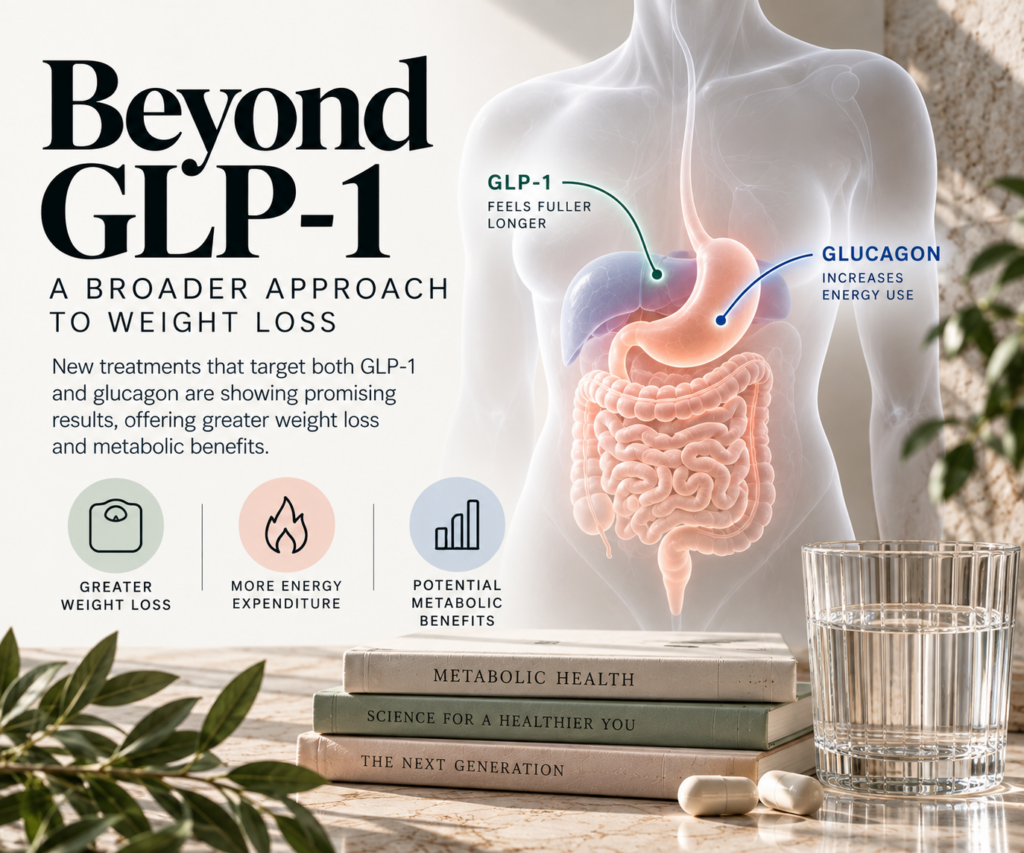
Survodutide is a once-weekly investigational molecule that activates the GLP-1 receptor and the glucagon receptor. GLP-1 signaling can reduce appetite and slow gastric emptying, while glucagon biology adds a different metabolic signal.
Phase 3 data moved the dual-agonist idea forward
The 2026 SYNCHRONIZE-1 trial randomized adults with obesity or overweight plus a complication, without diabetes, to weekly survodutide or placebo alongside lifestyle counseling. The trial found substantial body-weight reductions with survodutide compared with placebo.
The important point is not that glucagon is a new weight-loss hack. It is that drug developers are deliberately combining endocrine pathways to produce a stronger or broader metabolic effect.
A weekly health notebook can help people using prescribed metabolic medication record appetite, gastrointestinal symptoms, activity, and questions between visits.
Glucagon sounds counterintuitive for a reason
Glucagon is often introduced as the hormone that raises blood glucose, which makes agonizing its receptor sound strange in an obesity drug. But glucagon also affects hepatic metabolism and energy expenditure, and the net effect of a designed dual agonist is not equivalent to injecting glucagon alone.
The balance between receptor activities, dose, pharmacokinetics, and the accompanying GLP-1 signal matters. That is why these drugs need clinical trials rather than mechanism-based guessing.
A insulated water bottle can make normal hydration easier during appetite changes, while meal containers can help preserve regular meals when hunger drops.
More receptors can also mean more variables
Adding another receptor does not automatically create a better medication. Efficacy, tolerability, lean-mass preservation, liver effects, cardiovascular outcomes, and long-term adherence all matter.
Gastrointestinal effects remain common across incretin-based obesity drugs, particularly during dose escalation. Treatment should be titrated and monitored according to the actual prescription rather than copied from someone else’s schedule.
A home scale can capture weekly trends when weight is a treatment outcome, but daily fluctuations should not drive dosing decisions.
What to watch next
The next useful evidence is not another mechanism diagram. It is larger, longer trials that show whether the effect persists, whether people function better, and whether adverse effects remain acceptable outside a tightly controlled study.
That distinction matters especially in emerging therapy. A compelling biological target can be real while the eventual drug still fails on tolerability, durability, manufacturing, or outcomes that patients actually notice.
The Livium recipe
Tool. Track treatment response in trends rather than reacting to one day’s appetite or weight.
Behavior. Protect protein intake, resistance exercise, hydration, and nutritional adequacy during substantial weight loss.
Threshold. Severe or persistent abdominal symptoms, repeated vomiting, dehydration, or other concerning effects deserve prompt medical guidance.
| Therapy concept | Receptors targeted | Development signal |
|---|---|---|
| Semaglutide | GLP-1 | Established obesity therapy |
| Survodutide | GLP-1 + glucagon | Phase 3 weight-loss efficacy |
| Why combine pathways | Appetite + metabolic signaling | Potentially broader effect |
| Status | Investigational | Not a consumer peptide |
Source: le Roux et al., New England Journal of Medicine, 2026.
Why this belongs in the emerging-therapy conversation
The obesity pipeline is moving from single-hormone mimicry toward deliberately engineered multi-receptor pharmacology. That creates opportunities to improve efficacy or treat related metabolic disease, but it also raises the bar for understanding which receptor contributes which benefit and which adverse effect.
For patients, the practical takeaway is simple: a newer mechanism is a reason to watch the evidence, not a reason to seek the compound before regulators and clinicians have enough data.
Do not compare trial percentages across drugs as if they were a race
Different obesity trials enroll different populations, use different estimands, titration schedules, durations, and rules for handling discontinuation. A percentage from one trial cannot be cleanly ranked against a percentage from another without a head-to-head study.
The useful question is whether each drug produces clinically meaningful benefit with acceptable safety in the population it was designed to treat.
Plan of action
- Separate approved treatment from investigational therapy before acting on a headline.
- Track functional and health outcomes, not only weight or one laboratory number.
- Protect nutrition, movement, sleep, and hydration while using any prescribed metabolic therapy.
- Avoid unregulated research-chemical versions of drugs or peptides still in development.
Table of Content

Know your body better.
Trusted By Thousands Daily








FAQs
What is survodutide?
Survodutide is an investigational once-weekly dual agonist of the glucagon and GLP-1 receptors.
Is survodutide the same as semaglutide?
No. Semaglutide targets the GLP-1 receptor, while survodutide activates both GLP-1 and glucagon receptors.
Is survodutide available now?
It is an investigational therapy and should not be treated as an approved consumer peptide product.
Legal Disclaimer
The content published on Livium Health is for informational and educational purposes only. Nothing on this site constitutes medical advice, diagnosis, or treatment. Always consult a qualified healthcare provider before making decisions about your health, including changes to medications, supplements, diet, or exercise.
Livium Health is not a medical practice and does not have a patient-provider relationship with its readers. We do not sell supplements, medications, or treatments, and we have no financial relationship with the products or services we reference.
While we work to ensure the information we publish is accurate and up to date, health and medical guidance evolves. We make no guarantees about the completeness or currency of any content on this site. Reliance on any information provided by Livium Health is solely at your own risk.
If you are experiencing a medical emergency, call 911 or your local emergency services immediately.
We may receive compensation, free products, or affiliate commissions for products mentioned in this post. Opinions are our own.