
Share
Longevity & Aging
Men's Health
Women's Health
The senescent cell problem: What zombie cells are doing to your body
5 min read
Key takeaways
- Senescent cells are cells that have stopped dividing but refuse to die, accumulating with age and secreting a cocktail of inflammatory molecules called the senescence-associated secretory phenotype (SASP) that damages neighboring healthy cells.
- SASP contributes to cardiovascular disease, osteoarthritis, neurodegeneration, metabolic dysfunction, and cancer progression. Senescent cell accumulation is one of the more robustly characterized hallmarks of aging at the cellular level.
- Senolytics are compounds that selectively destroy senescent cells. Dasatinib plus quercetin is the most studied combination, with published human trials showing reduced senescent cell burden in adipose tissue and improved physical function in older adults.
- Fisetin, a flavonoid found in strawberries, is the most potent senolytic available without prescription, with animal data showing substantially extended lifespan and human trials underway.
Cells that neither work nor die
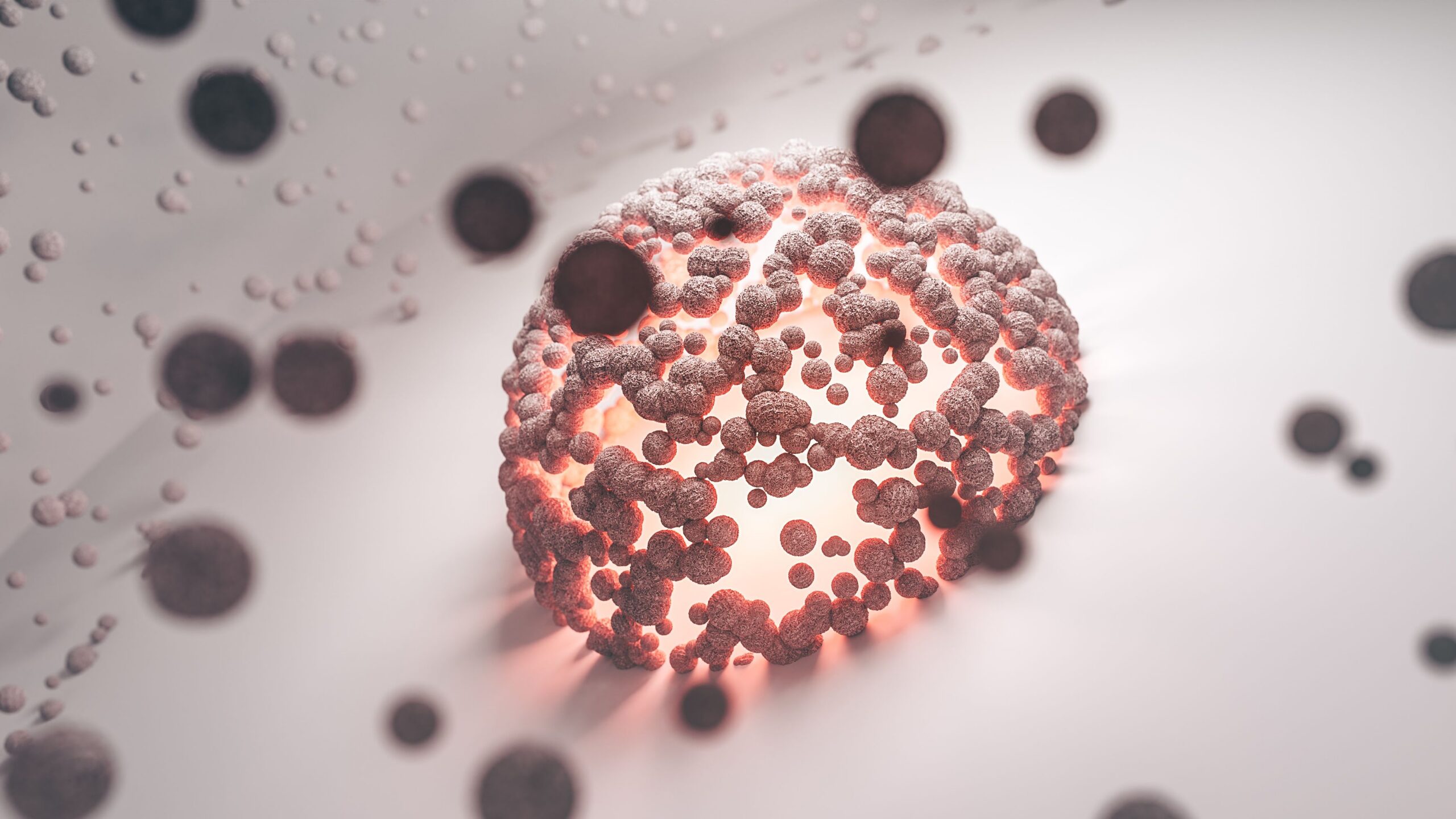
Every cell in the body has a finite replication capacity. When a cell reaches the end of its replication potential, or is exposed to DNA damage, oncogene activation, or oxidative stress, it can enter senescence: a permanently arrested state where it stops dividing but persists in the tissue. In youth, the immune system clears most senescent cells efficiently. With aging, this clearance slows. Senescent cells accumulate. And because they are not just inert, but actively secreting inflammatory signals, they begin corrupting the tissue environment around them.
The SASP includes IL-6, IL-8, MMP-3, and PAI-1, among dozens of other molecules. These signals break down the extracellular matrix, drive adjacent healthy cells toward senescence in a process called bystander senescence, promote chronic inflammation, and create the tissue microenvironment that facilitates both age-related degeneration and cancer progression. In mouse studies, clearing senescent cells using genetic tools or senolytics extends healthy lifespan by 25 to 35 percent. The human equivalent is what the clinical field is now pursuing.
The senolytic evidence
Dasatinib plus quercetin (D+Q). Dasatinib is an FDA-approved leukemia drug with potent senolytic activity discovered by James Kirkland’s group at Mayo Clinic. Combined with quercetin, the combination produces additive senolytic effects in multiple tissues. Human pilot trials in idiopathic pulmonary fibrosis, diabetic kidney disease, and frailty populations show reduced senescent cell burden and improved functional outcomes. D+Q is used intermittently (not daily) because once senescent cells are cleared, they require time to re-accumulate before the next clearing is useful.
Fisetin. A flavonoid with senolytic activity discovered in the same Mayo Clinic research pipeline. The 2018 mouse study in EBioMedicine showed fisetin reducing senescent cell burden in multiple tissues and extending median lifespan by approximately 10 percent and maximum lifespan by 35 percent in aged mice. Multiple human trials are underway. Fisetin is available without prescription at meaningful doses and has a favorable safety profile at doses studied.
Quercetin alone. At higher doses than typically supplemented (1,000 to 1,500 mg), quercetin shows senolytic activity in human adipose tissue biopsies. The most commonly available senolytic without prescription.
The Livium recipe
Tool. Senolytics are used on an intermittent protocol, not daily. The most studied human protocol for quercetin-based senolytics: two consecutive days of higher-dose treatment every four to eight weeks. This mimics the pulse dosing used in clinical trials and accounts for the time required for senescent cells to re-accumulate between clearings.
Behavior. Add fisetin at 1,000 to 1,500 mg for two consecutive days every four to six weeks as a senolytic pulse. On non-dosing days, focus on the senescence-prevention behaviors with the strongest evidence: consistent aerobic exercise (which promotes immune clearance of senescent cells), adequate sleep (during which growth hormone-mediated tissue repair occurs), and an anti-inflammatory dietary pattern that reduces the oxidative stress driving premature senescent entry.
Threshold. There is currently no validated consumer biomarker for senescent cell burden. Proxy markers to track: hs-CRP (SASP produces systemic inflammation), epigenetic clock scores (senescent cell accumulation is one driver of accelerated epigenetic aging), and physical function measures including grip strength and gait speed.
Life Extension Fisetin 250 mg provides a standardized fisetin extract. At four to six capsules over two consecutive days monthly, this reaches the dose range studied in human senolytic protocols. Jarrow Quercetin 500 mg provides the quercetin component that is additive with fisetin for SASP pathway inhibition. Life Extension BioLuteolin Complex provides luteolin, a flavonoid with both senolytic and senomorphic (SASP-suppressing) activity, for use on daily non-dosing days. Life Extension Black Cumin Seed Oil provides thymoquinone, which has published data showing it reduces SASP-driven inflammation through NF-κB inhibition on a daily maintenance basis.
| Compound | Mechanism | Human evidence | Dosing protocol |
|---|---|---|---|
| Fisetin | BCL-2 inhibition; senescent cell apoptosis | Trials ongoing; strong animal data | 1,000–1,500 mg 2 consecutive days monthly |
| Quercetin (high dose) | PI3K inhibition; SASP reduction | Human adipose biopsy data | 1,000 mg 2 consecutive days monthly |
| Dasatinib + quercetin | Src + PI3K; additive clearance | Published RCTs in disease populations | Physician supervised; prescription required |
Source: Livium editorial synthesis based on NIA Hallmarks of Aging and Kirkland et al., EBioMedicine (2017).
Plan of action
- Implement the three senescence-prevention behaviors first: regular aerobic exercise, adequate sleep, and an anti-inflammatory diet. These reduce the rate of senescent cell accumulation. Senolytics clear what is already accumulated. Both are needed.
- Add a monthly fisetin pulse (1,000 to 1,500 mg over two consecutive days) once the behavioral foundation is in place. This is the highest-evidence-to-accessibility-ratio senolytic available without a prescription.
- Track hs-CRP annually. As the senolytic protocol matures, hs-CRP should trend downward, reflecting reduced SASP-driven systemic inflammation. Reductions in hs-CRP below 1.0 mg/L reduce all-cause mortality risk independently of other changes.
- Discuss dasatinib with a physician if interested in the more potent D+Q protocol. Dasatinib is a prescription medication with a real side effect profile and requires appropriate medical supervision. The fisetin protocol is a reasonable starting point while the evidence base matures.
Table of Content

Know your body better.
Trusted By Thousands Daily





FAQs
Can senolytics cause cancer by clearing tumor-suppressive senescent cells?
This theoretical concern was raised early in the field. The current evidence does not support increased cancer risk from intermittent senolytic use in healthy adults. Tumor-suppressive senescence is typically acute and cleared by the immune system relatively efficiently in healthy tissue. The senescent cells that accumulate with aging and are targeted by senolytics are predominantly chronic rather than tumor-suppressive. Ongoing monitoring of cancer incidence in senolytic trial populations will provide better data over the next decade.
At what age should senolytic protocols be started?
Senescent cell accumulation is measurable in the 40s and increases throughout the 50s and 60s. Most longevity physicians who use senolytics begin protocols in the 45 to 55 age range for healthy adults. Earlier use has less evidence. The senolytic benefit is more clearly established for people with elevated senescent cell burden, which increases substantially after 50.
How does fisetin compare to eating strawberries?
Strawberries contain approximately 160 mcg of fisetin per gram. The doses showing senolytic activity in human studies are 1,000 to 1,500 mg. A single 1,000 mg dose from strawberries would require eating approximately 6 kilograms of strawberries. The supplement dose is not achievable from dietary intake, which is why supplementation is necessary if the senolytic effect is the target.
Legal Disclaimer
The content published on Livium Health is for informational and educational purposes only. Nothing on this site constitutes medical advice, diagnosis, or treatment. Always consult a qualified healthcare provider before making decisions about your health, including changes to medications, supplements, diet, or exercise.
Livium Health is not a medical practice and does not have a patient-provider relationship with its readers. We do not sell supplements, medications, or treatments, and we have no financial relationship with the products or services we reference.
While we work to ensure the information we publish is accurate and up to date, health and medical guidance evolves. We make no guarantees about the completeness or currency of any content on this site. Reliance on any information provided by Livium Health is solely at your own risk.
If you are experiencing a medical emergency, call 911 or your local emergency services immediately.
We may receive compensation, free products, or affiliate commissions for products mentioned in this post. Opinions are our own.