
Share
Longevity & Aging
Men's Health
Women's Health
Why your doctor’s definition of healthy aging is not ambitious enough
5 min read

Key takeaways
- Standard medicine defines healthy as “not yet diseased.” Longevity medicine defines healthy as “optimized for maximal healthspan at current age.” These produce different interventions at nearly every biomarker threshold.
- Population-normal laboratory reference ranges include the sickest quartile of the population; they are descriptive of what is common, not prescriptive of what is optimal. A fasting glucose of 99 mg/dL and an LDL of 130 mg/dL are both “normal” by reference range and both associated with meaningfully elevated long-term risk.
- The annual physical, as typically performed, is optimized for detecting advanced disease rather than for identifying the five to fifteen years of remediable physiological decline that precede it.
- Building a personal longitudinal health data record from regular biomarker testing is one of the highest-leverage investments in longevity, because it converts the vague question of “am I healthy?” into the specific question of “which biomarkers are trending wrong and which interventions are producing the most improvement?”
The difference between “not sick” and “optimized”
Standard medicine is built around disease states. A patient has a disease or does not. Their lab values are within or outside the reference range. The annual physical is designed to detect disease that has already emerged, not to identify the trajectory toward disease years before it becomes diagnosable. This is appropriate for many purposes. It is inadequate for longevity optimization.
A person can have a fasting glucose of 99 mg/dL (technically normal, below the 100 mg/dL prediabetes threshold), an ApoB of 120 (technically normal by most lab reference ranges), a HOMA-IR of 2.8 (technically normal, below the 3.0 threshold), a resting heart rate of 78 (technically normal), and a DunedinPACE of 1.1 (aging 10 percent faster than average). Every number is “normal.” The trajectory of all five together indicates a person moving toward metabolic syndrome, cardiovascular disease, and accelerated biological aging that will become diagnosable in five to ten years. Standard preventive medicine is not designed to respond to this picture. Longevity medicine is.
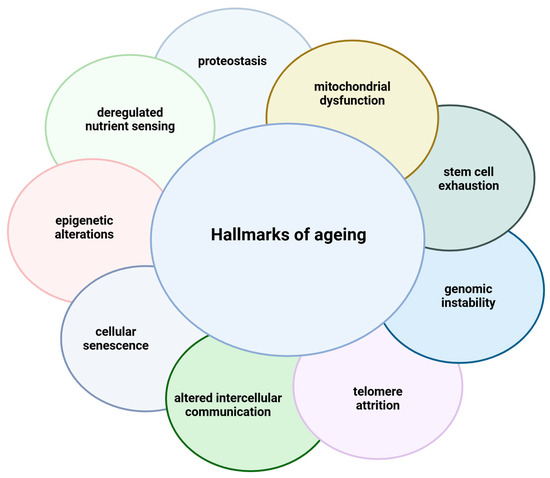
The twelve hallmarks of aging — genomic instability, telomere attrition, epigenetic alterations, loss of proteostasis, disabled autophagy, deregulated nutrient sensing, mitochondrial dysfunction, cellular senescence, stem cell exhaustion, altered intercellular communication, chronic inflammation, and dysbiosis — are all measurable and increasingly targetable. A standard annual physical addresses none of them. Source: Speeckaert et al., IJMS 2025, 26(19), 9372 — Rewinding the Clock: Pharmacological Strategies for Anti-Aging Therapy. CC BY 4.0.
What a longevity-optimized panel looks like
Metabolic. Fasting glucose below 90 mg/dL (versus normal below 100). Fasting insulin below 6 mIU/L. HOMA-IR below 1.5. HbA1c below 5.4 percent. These targets reflect optimal insulin sensitivity rather than absence of diabetes.
Cardiovascular. ApoB below 80 mg/dL (versus normal below 130). Lp(a) known and below 30 mg/dL ideally. hs-CRP below 1.0 mg/L. Blood pressure below 120/80. Resting heart rate below 60 bpm.
Hormonal. Free testosterone in the upper quartile for age and sex (not just “in range”). Estradiol appropriate for life stage. DHEA-S at mid-normal or above for age. Thyroid: free T3 at the upper half of the reference range; TSH between 1.0 and 2.0.
Nutritional. Ferritin 50 to 100 ng/mL (not just above the 12 ng/mL lower limit of normal). Vitamin D 60 to 80 ng/mL. Magnesium in the upper half of the reference range. Omega-3 index above 8 percent.
Functional performance. VO2 max in the “good” to “excellent” range for age and sex. Grip strength above threshold for age and sex. DunedinPACE below 1.0 (aging slower than the population average).
The Livium recipe
Tool. An annual comprehensive panel covering the longevity-optimized targets above. Function Health ($499/year, includes 100+ biomarkers twice annually) and InsideTracker offer the most comprehensive direct-to-consumer longevity panels that include longevity-optimized reference ranges rather than just population normal ranges. Alternatively, a direct-pay lab draw with a physician order covering the above markers costs $200 to $400 and provides the same raw data.
Behavior. Tracking biomarkers annually without acting on them is not longevity medicine. The value is in identifying which specific markers are not at optimal levels and designing targeted interventions. A fasting glucose of 97 with an ApoB of 95 and a HOMA-IR of 2.2 points toward an insulin resistance intervention as the highest leverage starting point. A ferritin of 14 and a free testosterone of 8 pg/mL point toward a very different starting point. The data tells you where to invest first.
Threshold. After 12 months of targeted intervention based on the baseline panel: each marker that was below the optimal target should have trended meaningfully toward it. If a specific marker did not move despite targeted intervention, the cause of resistance requires investigation. Biomarker targets that do not respond to the expected interventions are the most informative results: they indicate an underlying driver that the intervention is not addressing.
Life Extension Comprehensive Thyroid Panel at-home test kit covers TSH, free T4, and free T3, providing the full thyroid picture that most annual physicals measure incompletely. Thorne Advanced Nutrients provides a comprehensive micronutrient and cofactor formula supporting the enzymatic and biochemical processes across every longevity-optimized biomarker domain simultaneously. Pure Encapsulations O.N.E. Multivitamin provides once-daily comprehensive micronutrient coverage that fills the gaps in typical Western diets that contribute to suboptimal biomarker levels across multiple systems. NOW Foods Nattokinase 2000 FU supports cardiovascular biomarker optimization through fibrinolytic activity, relevant to the endothelial and thrombotic aspects of cardiovascular longevity that standard panels do not fully capture.
| Biomarker | Standard normal range | Longevity-optimized target | First intervention if below target |
|---|---|---|---|
| Fasting glucose | Below 100 mg/dL | Below 90 mg/dL | TRE; protein-first eating; reduce refined carbs |
| ApoB | Below 130 mg/dL | Below 80 mg/dL | Mediterranean diet; Zone 2; statin if needed |
| hs-CRP | Below 10 mg/L | Below 1.0 mg/L | Inflammaging protocol; dental check; gut health |
| Vitamin D (25-OH) | Above 20 ng/mL | 60–80 ng/mL | 3,000–5,000 IU daily; recheck in 3 months |
| Resting heart rate | Below 100 bpm | Below 60 bpm (ideally 50–55) | Zone 2 training 4x/week; sauna 4x/week |
| DunedinPACE | Population mean 1.0 | Below 0.90 | Sleep 7–9h; Zone 2; Mediterranean diet; no smoking |
Source: Livium editorial synthesis based on NIA Measuring Healthy Aging and Attia, Peter, Outlive: The Science and Art of Longevity (2023).
Plan of action
- Request the longevity panel at the next lab visit, not just the standard annual physical draw. Specifically: ApoB, Lp(a), hs-CRP, free testosterone, DHEA-S, ferritin, free T3, fasting insulin, and HOMA-IR. These six additions to the standard panel provide the most longevity-relevant information not captured by routine blood work.
- Track all biomarker results in a spreadsheet or app over time. The trend across three to five annual panels is far more informative than any single result. A glucose of 94 declining from 102 over three years tells a very different story than a glucose of 94 rising from 88.
- Identify the two or three biomarkers that are farthest from the longevity-optimized targets and design targeted interventions for those specifically. Trying to improve everything simultaneously is less effective than sequential prioritized optimization.
- Consider a direct-to-consumer longevity panel service (Function Health, InsideTracker, Levels) that provides longevity-optimized reference ranges and trend tracking built in. The analysis layer is as valuable as the data itself for translating numbers into action.
Table of Content

Know your body better.
Trusted By Thousands Daily






FAQs
Is longevity medicine covered by insurance?
Standard preventive lab tests are typically covered. The expanded longevity panel markers (ApoB, Lp(a), HOMA-IR, DunedinPACE) have variable coverage. ApoB is increasingly covered when ordered alongside standard lipids. Lp(a) coverage varies by insurer and indication. DunedinPACE epigenetic testing is typically out-of-pocket at $200 to $500. The total cost of the longevity panel in a direct-pay setting is $300 to $600 annually, which most people in Livium’s target audience can absorb as a health investment.
How do I find a doctor who practices longevity medicine?
The American College of Lifestyle Medicine, the Institute for Functional Medicine, and the A4M (American Academy of Anti-Aging Medicine) each maintain practitioner directories of physicians who practice evidence-based longevity or functional medicine. Direct primary care (DPC) practices frequently attract longevity-oriented physicians who have the time in longer appointments to address these questions. Telehealth platforms including Hone Health and Function Health provide access to longevity-oriented physicians without requiring a local specialist.
Can standard primary care physicians provide longevity medicine?
Some can, particularly those who have self-educated in the longevity literature. The structural constraints of standard primary care (15-minute appointments, billing incentives tied to disease management rather than prevention optimization, guidelines calibrated for disease detection) make it difficult regardless of physician interest. A longevity-focused physician operating outside these constraints, whether in DPC, concierge practice, or telehealth, typically provides a meaningfully more thorough longevity evaluation than the standard annual physical allows.
Legal Disclaimer
The content published on Livium Health is for informational and educational purposes only. Nothing on this site constitutes medical advice, diagnosis, or treatment. Always consult a qualified healthcare provider before making decisions about your health, including changes to medications, supplements, diet, or exercise.
Livium Health is not a medical practice and does not have a patient-provider relationship with its readers. We do not sell supplements, medications, or treatments, and we have no financial relationship with the products or services we reference.
While we work to ensure the information we publish is accurate and up to date, health and medical guidance evolves. We make no guarantees about the completeness or currency of any content on this site. Reliance on any information provided by Livium Health is solely at your own risk.
If you are experiencing a medical emergency, call 911 or your local emergency services immediately.
We may receive compensation, free products, or affiliate commissions for products mentioned in this post. Opinions are our own.