
Share
Energy & Focus
Men's Health
Women's Health
Creatine is not just for the gym: The cognitive case
6 min read

Key takeaways
- Creatine is one of the few supplements with genuine published evidence for cognitive benefit, specifically working memory, processing speed under cognitive load, and mental fatigue resistance. The effect is largest in people with the lowest dietary creatine intake: vegetarians and adults who eat little red meat.
- The mechanism is brain phosphocreatine stores. The brain uses ATP (cellular energy) for cognitive work. Creatine replenishes the phosphocreatine buffer that regenerates ATP under demand, which is why cognitive tasks under stress or sleep deprivation benefit most.
- The effective dose for cognitive benefit in the published literature is 3 to 5 grams daily. Creatine monohydrate is the form used in virtually all the research. There is no evidence that more expensive forms (ethyl ester, buffered creatine) are more effective.
- Creatine is safe for healthy adults across decades of research. Kidney concerns arose from theoretical models and have not been observed in any published clinical trial of standard dosing in healthy adults.
The reputation problem
Creatine built its reputation in the weight room in the 1990s. Big tubs. Athletic college guys. Muscle magazine ads. That reputation has made it invisible to a large population of adults for whom the evidence is actually most compelling: midlife professionals in their 40s who eat less red meat than they used to, who experience cognitive fatigue in high-demand work, and who increasingly rely on vegetable-forward eating patterns that contain very little dietary creatine.
The cognitive creatine literature is smaller than the muscle literature, but it is real, and it has been growing. A 2003 randomized double-blind crossover trial by Rae et al. showed significant improvements in working memory capacity and processing speed in vegetarians given 5 g/day creatine for six weeks versus placebo. A 2022 meta-analysis in Nutrients (Avgerinos et al.) found that creatine supplementation improved memory performance specifically in older adults and in people who were sleep-deprived, with the largest effects in populations with lower baseline creatine stores.
Why the brain needs creatine
The brain consumes approximately 20 percent of the body’s total energy despite making up only 2 percent of body weight. It runs almost entirely on glucose, metabolized into ATP. Under cognitive demand, a complex analysis, an emotionally difficult conversation, a sustained period of deep focus, ATP demand spikes faster than mitochondria can produce it.
The phosphocreatine buffer covers this gap. When ATP is used, phosphocreatine donates a phosphate group to regenerate ATP immediately, buying time while the mitochondria catch up. This is the same mechanism in muscle during explosive effort. The brain uses it too, particularly during cognitive peaks.
If the phosphocreatine pool is depleted, which it is in sleep-deprived adults, in low-meat-eating adults, and (increasingly) in aging adults whose creatine synthesis declines, the ATP regeneration buffer is smaller. The cognitive tasks that require sustained ATP demand get harder to maintain. The experience is: hit a wall at hour three of focused work instead of hour five. Struggle to maintain mental clarity under stress. Notice that complex tasks feel more effortful than they should.
Creatine supplementation replenishes the pool. The brain synthesizes some creatine endogenously, but supplementation meaningfully increases brain phosphocreatine stores as measured by magnetic resonance spectroscopy in published human studies (Lyoo et al., 2003; Dechent et al., 1999).
Who benefits most
The cognitive creatine effect is largest in two populations: vegetarians and people under cognitive stress or sleep restriction. These are not niche categories for Livium’s audience.
Dietary creatine comes almost exclusively from meat and fish, particularly red meat. An adult eating red meat two or more times per week synthesizes and ingests enough creatine to keep brain phosphocreatine stores reasonably replete. An adult eating chicken and vegetables with occasional fish does not. The vegetarian diet produces creatine stores 15 to 20 percent lower than omnivore diets on average; even partial reductions from eating less red meat show up in brain phosphocreatine measurements.
Sleep-deprived adults benefit from creatine supplementation because sleep deprivation depletes brain phosphocreatine stores. A 2024 study published in Scientific Reports found that creatine supplementation at 5 g/day attenuated some of the working memory deficits from sleep restriction. It does not make you need less sleep. It makes the performance hit from bad sleep slightly less bad.
The Livium recipe
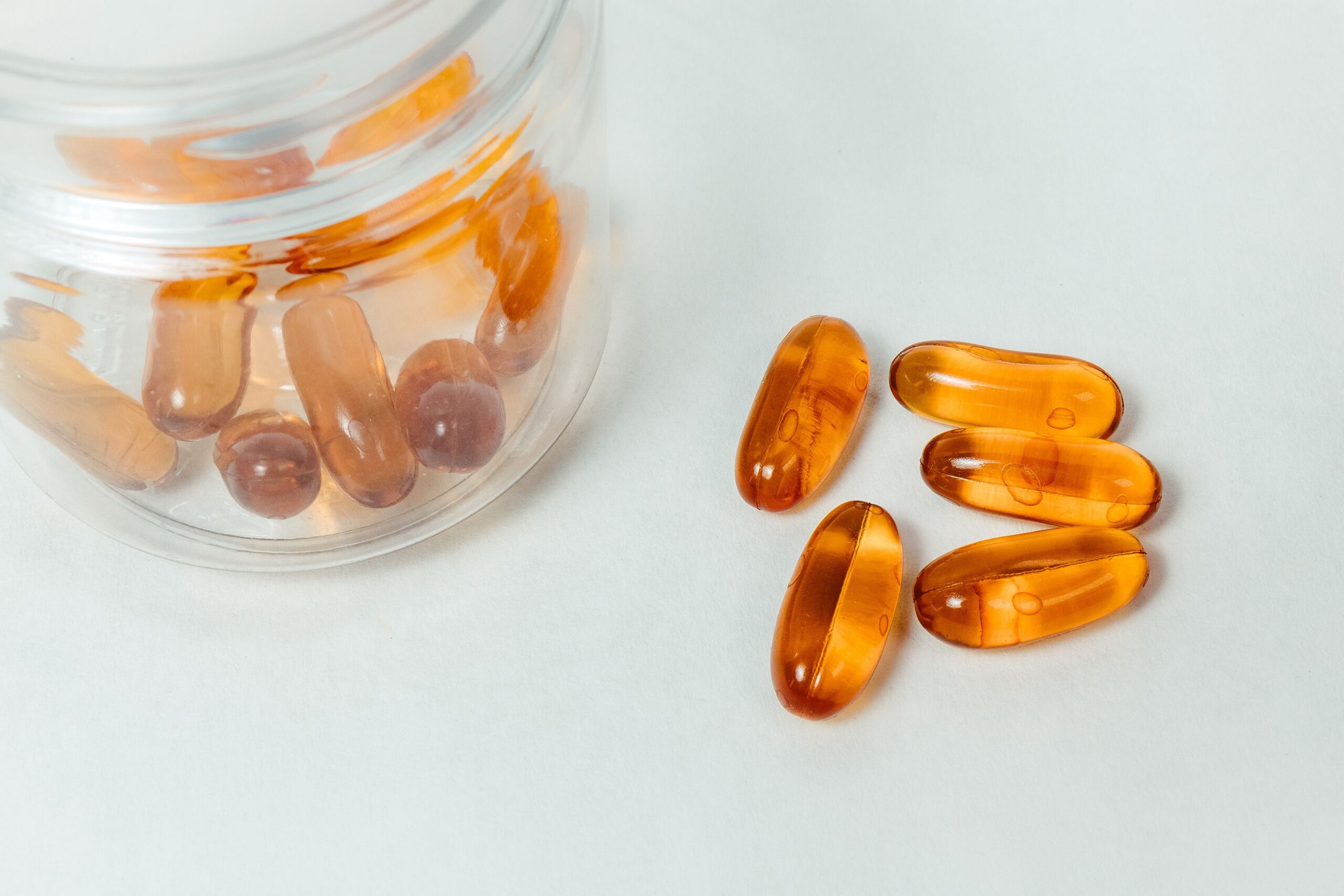
Tool. NOW Foods Sports Creatine Monohydrate powder, unflavored, 3 to 5 grams daily. Creatine monohydrate is the form in virtually all the published research. More expensive forms (Kre-Alkalyn, creatine ethyl ester, “buffered” creatine) have no published evidence of superiority and substantially higher cost. Buy the monohydrate. The powder form is cheaper per serving than capsules and mixes easily in water or coffee. For adults who prefer capsules: NOW Foods Creatine 750 mg capsules.
Behavior. Three to five grams daily, any time of day, with or without food. There is no meaningful evidence that timing (pre-workout vs. post-workout vs. morning vs. night) matters for cognitive benefit. The benefit comes from maintained brain phosphocreatine stores, which are a chronic state, not an acute response. No loading phase is necessary for cognitive benefit. Loading (20 g/day for five days) saturates muscle phosphocreatine faster, but the brain benefits build at the same rate whether you load or not. Just start at 3-5 g daily and continue indefinitely. Caffeine does not block creatine’s cognitive effects, despite an old study suggesting it might; that finding has not been replicated, and the current consensus is that the two are compatible.
Threshold. Cognitive benefit of creatine supplementation takes two to four weeks to appear because the brain phosphocreatine pool fills gradually. Do not evaluate at one week. The expected experience at four to six weeks: better sustained focus during cognitively demanding stretches, less of the “wall” feeling after two hours of deep work, modestly improved word retrieval under stress or fatigue. The effect is subtle in well-rested omnivores and meaningful in sleep-restricted or low-meat-eating adults.
| Population | Baseline brain creatine | Expected cognitive benefit from supplementation | Evidence quality |
|---|---|---|---|
| Vegetarian / vegan | Low (15–20% below omnivore) | Significant (working memory, processing speed) | Strong (multiple RCTs) |
| Low red meat omnivore | Moderately low | Moderate (fatigue resistance, memory under load) | Moderate |
| Sleep-restricted adults | Depleted (sleep reduces PCr stores) | Meaningful (attenuates working memory deficit) | Moderate (recent RCT data) |
| Well-rested high red meat omnivore | Near-saturated | Small to negligible | Consistent with the ceiling effect model |
Source: Livium editorial synthesis based on Avgerinos et al., Nutrients (2018) creatine cognition meta-analysis and Rae et al., Proceedings of the Royal Society B (2003) vegetarian RCT.
Plan of action
- If you eat red meat twice a week or more and sleep consistently well, creatine’s cognitive benefit for you is likely small. Start with the interventions first (bloodwork, resistance training, sleep). Creatine is a logical add-on, not a foundation.
- If you are vegetarian, vegan, or eating primarily plant-based with occasional fish, start creatine. NOW Foods Sports Creatine Monohydrate 5 g daily in your morning drink. The evidence in your population is strong, and the safety record is decades long.
- If you have kidney disease, creatine warrants a conversation with your doctor first. For healthy adults with normal kidney function, there is no published clinical evidence of kidney damage at 3 to 5 g/day. The concern arose from the theoretical pathway by which creatine breaks down to creatinine (which is a kidney-filtered waste product). Elevated creatinine from creatine supplementation is a measurement artifact, not kidney damage.
- Weight gain of 0.5 to 1.5 kg in the first two weeks is normal and expected. It is water retention in muscle cells (creatine draws water into muscle). It is not fat. If the scale movement bothers you, anticipate it.
Table of Content

Know your body better.
Trusted By Thousands Daily




FAQs
Does creatine improve mood as well as cognition?
There is a growing body of research on creatine and depression, including a 2023 RCT showing that creatine augmented the antidepressant effect of SSRIs in women with treatment-resistant depression. The mechanism is related to the energy-deficit model of depression, where reduced brain phosphocreatine stores may contribute to mood dysregulation. The evidence is not strong enough yet to recommend creatine as a standalone mood intervention, but it is an active area of research and a reason the supplement may have broader effects than just cognition and muscle.
Should women take creatine differently than men?
Dosing is the same (3 to 5 g/day). Baseline brain creatine stores may be slightly different by sex (some evidence that women have slightly lower baseline brain creatine), which could mean a modestly larger benefit. The female cognition research specifically (including the Rae et al. vegetarian study) found consistent benefits. There is nothing about the mechanism that differs by sex.
Can I get the same effect from eating more meat?
Theoretically yes, but practically no. To get 5 g of creatine from food, you would need approximately 1 kg of red meat daily. That is not a useful dietary strategy. Supplementation is how you achieve the doses used in the research without absurd quantities of meat. This is one area where the supplement is unambiguously the right delivery mechanism.
Legal Disclaimer
The content published on Livium Health is for informational and educational purposes only. Nothing on this site constitutes medical advice, diagnosis, or treatment. Always consult a qualified healthcare provider before making decisions about your health, including changes to medications, supplements, diet, or exercise.
Livium Health is not a medical practice and does not have a patient-provider relationship with its readers. We do not sell supplements, medications, or treatments, and we have no financial relationship with the products or services we reference.
While we work to ensure the information we publish is accurate and up to date, health and medical guidance evolves. We make no guarantees about the completeness or currency of any content on this site. Reliance on any information provided by Livium Health is solely at your own risk.
If you are experiencing a medical emergency, call 911 or your local emergency services immediately.
We may receive compensation, free products, or affiliate commissions for products mentioned in this post. Opinions are our own.