
Share
Energy & Focus
Men's Health
Women's Health
The focus tax of context switching: What the research says about how midlife brains handle interruption
8 min read

Key takeaways
- Context switching carries a measurable cognitive cost called the “switch cost”: the time and mental energy required to disengage from one task and reengage with another. It is not multitasking. There is no such thing as cognitive multitasking. The switch cost is the price of switching serially between tasks.
- The prefrontal cortex executes all task-switching. After 40, the PFC runs on lower dopamine and norepinephrine, making the switch more expensive: more activation required, longer recovery before full engagement resumes, and larger performance drop during the transition period.
- A 2005 study by Gloria Mark at UC Irvine found that after an interruption, it takes an average of 23 minutes and 15 seconds to return to the original task. In a typical open-plan office, workers are interrupted every 11 minutes. The math is not favorable.
- Time-blocking, notification management, and single-tasking are not productivity hacks. They are working arrangements that match the architecture of the prefrontal cortex. The open-plan office and the always-on phone are not neutral tools for midlife brains.
The workday that costs more than it produces
You start the financial model. A Slack message arrives. You glance at it, decide it is not urgent, and look back at the model. The numbers feel unfamiliar for a moment. You reread the last row. You find your place. Twelve minutes later, your email pings. You do not open it, but you have already lost the thread again.
At the end of the day, you have worked eight hours and produced about three hours of meaningful output. You are exhausted in the specific way that comes from high cognitive effort with low cognitive accomplishment. That exhaustion is real; it has a mechanism, and after 40 it gets worse.
This is not exactly a time management problem. It is a neuroscience problem with a time management solution.
What happens in the brain during a switch
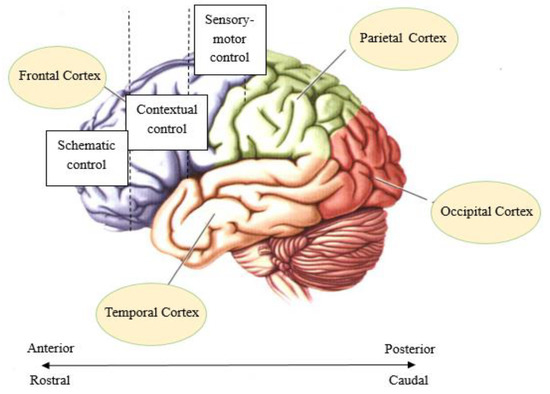
Every cognitive task requires two things from the prefrontal cortex: a goal representation (what am I trying to do) and a set of task rules (how am I doing it). When you switch tasks, the PFC must inhibit the old goal and task rules, activate the new ones, and suppress the residual activation from the previous task. This inhibition and reactivation take measurable time and use real metabolic resources.
The “switch cost” is the performance decrement observed in the first several minutes after a task switch: slower reaction time, higher error rate, and less efficient working memory. The cost is higher when: the previous task was emotionally salient (an upsetting email), the tasks are similar in domain (switching between two spreadsheets is harder than switching from a spreadsheet to a walk), and when the brain is depleted (late afternoon, sleep-restricted, high cortisol).
“Residual activation” is the part most people do not account for. After disengaging from task A, the PFC continues running task A’s rules in a background process while trying to run task B in the foreground. For 10 to 20 minutes after a switch, both tasks are partially active. Neither gets full PFC resources. This is why even a brief task interruption, a quick question answered, a message glanced at, degrades performance on the original task for far longer than the interruption itself lasted.
Why it gets worse after 40
The prefrontal cortex runs on dopamine and norepinephrine. Both decline measurably through midlife (covered in detail in the brain-slow-after-40 piece). The practical consequence for context switching: the inhibitory control and goal maintenance functions that manage task switching require dopaminergic signaling in the lateral PFC. As that signaling weakens, the switch becomes more effortful. You can still do it. It just costs more.
There is a second midlife-specific factor: cognitive load. By 40 or 45, most high-performing adults are managing substantially more cognitive complexity than they were at 30: more direct reports, more financial decisions, more organizational context to hold in mind. The PFC’s working memory is narrower than it was at 28 (as described in EF-01), but it is being asked to hold more. Interruptions into a nearly-full working memory are more disruptive than interruptions into a half-empty one. The system was designed for a smaller cognitive load running at a faster clock speed. It is now a slower clock running a larger load.
This is why adults in their 40s and 50s frequently report that open-plan offices and fragmented attention feel more damaging than they did in their 30s. The environment has not changed. The brain has.
What the research says actually works
Time-blocking. Scheduling discrete blocks for a single category of work (deep work, email, meetings, administrative tasks) is the structural solution to context switching because it removes the decision and the opportunity to switch. The PFC does not need to manage the transition if the environment prevents the trigger. Research on time-blocking shows consistent improvements in task completion quality and self-reported cognitive fatigue reduction. The design principle: protect at least two 90-minute deep-work blocks per day with all notifications off. The cognitive literature on ultradian rhythms (Peretz Lavie, Nathaniel Kleitman) suggests 90 minutes is approximately the natural length of a focused cognitive work cycle before the brain wants a recovery period.
Notification management. Phone notifications produce an effect nearly identical to the interruption itself, even when ignored. A 2015 study in the Journal of Experimental Psychology (Ward et al., earlier; Stothart et al., 2015 specifically) found that the mere presence of a smartphone on a desk reduced available working memory capacity, even when the phone was face down and silent. The cognitive cost of resisting the pull of a notification is real. The solution is not willpower. It is not having the notification.
Recovery between switches. When context switching is unavoidable, brief recovery intervals between tasks restore PFC function faster than immediate task re-engagement. Two to three minutes of physical movement, eyes closed, or a completely undemanding activity (stepping outside, getting water) between tasks reduces the residual activation carry-over and improves performance on the new task. The goal is not to never switch. It is to never switch without a transition buffer.
Single-screen discipline. Multiple monitors increase the surface area for distraction, not just for productivity. For deep work, a single screen with only the application relevant to the current task open produces better focus outcomes than a multi-window setup. The additional screen real estate invites switching. For tasks requiring reference material or comparison, multiple screens are appropriate. For deep single-task work, they are a liability.
The Livium recipe
Tool. The primary tools are structural, not chemical. A calendar that protects two 90-minute blocks per day. A phone in another room during those blocks. A communication norm (with your team, if relevant) that distinguishes urgent from asynchronous. For neurochemical support of PFC function during deep work: NOW Foods L-Theanine 200 mg taken 30 to 45 minutes before a deep work block promotes alpha-wave activity in the PFC and reduces the anxious vigilance that primes people to check their phone. Thorne Magnesium Glycinate the night before supports the sleep quality that determines next-day dopamine tone in the PFC. Poor sleep is the fastest way to make context switching more expensive; it is worth treating as part of the focus system, not separately from it.
Behavior. Design the workday around cognitive load, not calendar availability. High-complexity, deep-focus work belongs in the two to three hour window after morning cortisol peaks (typically 9 to 11 AM for morning chronotypes). Email, meetings, and administrative work belong after the deep-work window. Schedule interruption-prone work in the afternoon when the cost of switching is lower because the tasks themselves require less working memory. Create a “shutdown ritual” at the end of the workday: a brief written task list for tomorrow, a physical closing of the laptop, and a cognitive commitment that the day is done. Research on attention residue (Leroy, 2009) shows that incomplete tasks continue consuming working memory after work ends; the shutdown ritual formally closes those open loops.
Threshold. Two weeks of protected deep-work blocks produce measurable output improvement that most adults notice immediately. The metric to track: how many tasks do you finish in their original session (versus how many do you restart the next day with reorientation time). A high restart rate is the fingerprint of excessive context switching. A realistic target after two weeks of time-blocking: 30 percent more tasks completed in their original session. Four weeks in: sustained improvement in the late-day cognitive fatigue that comes from a switching-heavy day.
| Intervention | What it addresses | Implementation | Evidence |
|---|---|---|---|
| Time-blocking | Prevents forced context switches | 2 x 90-min blocks daily, notifications off | Strong (Cal Newport; Mark et al. interruption research) |
| Phone in another room | Eliminates cognitive load of resisting | Physical separation during deep work | Strong (Ward et al.; Stothart et al. 2015) |
| Recovery interval between tasks | Clears residual activation | 2–3 min physical or eyes-closed break | Moderate (Leroy attention residue; general cognitive recovery literature) |
| Shutdown ritual | Closes open cognitive loops | Written task list + physical laptop close | Moderate (Leroy 2009; Zeigarnik effect research) |
Source: Livium editorial synthesis based on Mark et al., CHI (2005) interruption study and Leroy, Organizational Behavior and Human Decision Processes (2009) attention residue research.
Plan of action
- Audit your calendar for next week. Count how many uninterrupted 90-minute blocks exist. If the answer is zero, that is the problem. Rearrange one meeting and block two 90-minute windows in the 9 to 11 AM timeframe. Do nothing else differently that week. Measure output quality at the end of the week against a typical prior week.
- Turn off all non-urgent phone notifications permanently, not just during deep work blocks. The cognitive tax of notification management compounds across the day. A phone that interrupts you 40 times costs more than 40 interruptions because each one resets the residual activation clock.
- If you manage a team: establish explicit communication norms that distinguish urgent (“requires response within the hour”) from asynchronous (“responds before end of day is fine”). Most Slack messages that feel urgent are not. The cultural norm that all messages deserve immediate response is a cognitive tax on everyone, and it falls harder on the midlife brains in the room.
- For neurochemical support: take L-Theanine 200 mg 30 to 45 minutes before a deep work block. It does not make you smarter. It reduces the ambient vigilance and low-level anxiety that makes you want to check your phone. Combined with a consistent morning coffee at a fixed dose, it smooths the cortisol peak without blunting alertness.
Table of Content

Know your body better.
Trusted By Thousands Daily







FAQs
Is some context switching unavoidable, and does it really matter?
Yes and yes. Leadership roles and management work are inherently higher-switching environments than individual contributor roles. The research does not say that all switching is bad. It says that switching carries a cost, that cost is higher in midlife, and that cost accumulates across a day. The goal is not zero switching. It is reducing unnecessary switching and managing necessary switching with the recovery principles above. Even a 25 percent reduction in unplanned context switches produces meaningful improvement in daily cognitive output.
Does exercise help with context switching specifically?
Yes, through two mechanisms. First, aerobic exercise acutely elevates dopamine and norepinephrine in the PFC for two to four hours post-exercise, directly improving the neurochemical basis for task-switching. A morning workout produces a mid-morning PFC performance window. Second, chronic resistance and aerobic training improve executive function and working memory capacity over weeks and months, raising the ceiling that context switching is taxing against. Both effects are real and cumulative. Exercise is the systemic fix; time-blocking is the environmental fix. Both are needed.
Does ADHD make context switching worse, and is it undertreated in midlife?
ADHD significantly amplifies the context switching cost because the same dopaminergic PFC pathways involved in task-switching are impaired in ADHD. Adults with ADHD, particularly those first diagnosed in midlife, experience an extreme version of the context-switching problem described here. If the interventions above produce only marginal improvement in an otherwise organized person, and if impulsivity, difficulty initiating tasks, and hyperfocus-or-nothing cognitive patterns are also present, an ADHD evaluation is worth pursuing.
Legal Disclaimer
The content published on Livium Health is for informational and educational purposes only. Nothing on this site constitutes medical advice, diagnosis, or treatment. Always consult a qualified healthcare provider before making decisions about your health, including changes to medications, supplements, diet, or exercise.
Livium Health is not a medical practice and does not have a patient-provider relationship with its readers. We do not sell supplements, medications, or treatments, and we have no financial relationship with the products or services we reference.
While we work to ensure the information we publish is accurate and up to date, health and medical guidance evolves. We make no guarantees about the completeness or currency of any content on this site. Reliance on any information provided by Livium Health is solely at your own risk.
If you are experiencing a medical emergency, call 911 or your local emergency services immediately.
We may receive compensation, free products, or affiliate commissions for products mentioned in this post. Opinions are our own.