
Share
Fitness
Men's Health
Women's Health
Exercise snacks: How short bursts of movement add up
2 min read
Key takeaways
- Exercise snacks are brief, planned movement bouts spread throughout the day.
- Activity bouts of any length can contribute to weekly movement totals.
- Short bouts are useful for reducing friction and interrupting sitting, but they do not replace every component of training.
- Reliable environmental cues make the habit easier to repeat than motivation alone.
A workout does not need a full hour to count
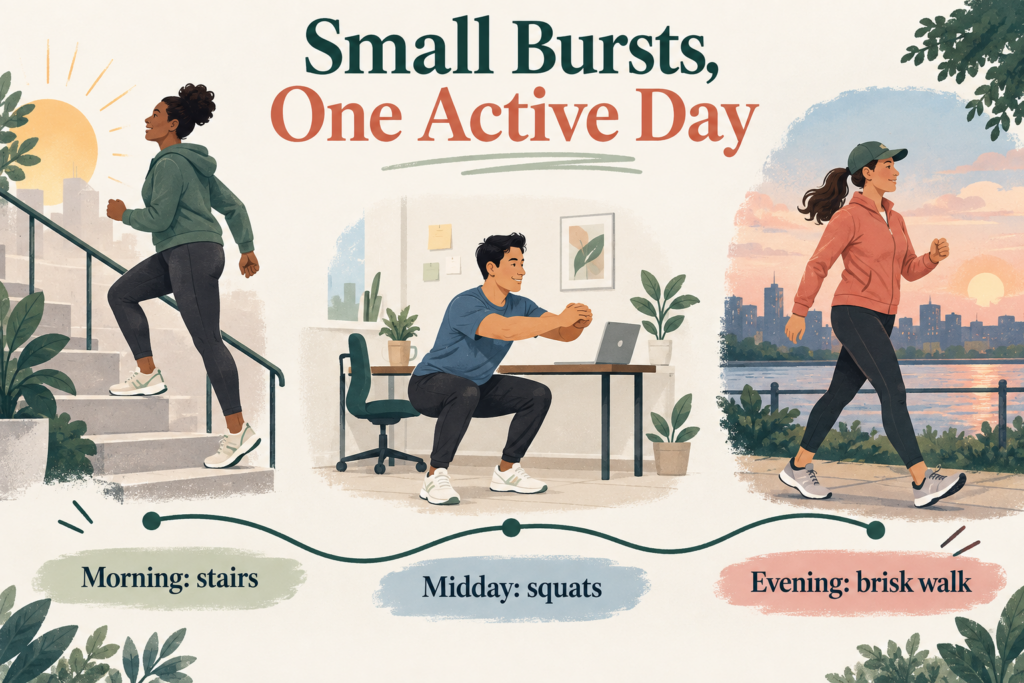
Exercise snacks are brief, intentional bouts of movement distributed through the day. Think two minutes of stairs, a set of chair squats, or a brisk loop through the building. They lower the setup cost that makes conventional workouts easy to postpone.
Current U.S. guidance recognizes that activity does not need to occur in 10-minute blocks to count. Research on structured exercise snacks is still developing, but trials and reviews suggest that repeated brief bouts can improve aspects of fitness in inactive people. That does not make nine scattered minutes identical to a complete strength program. It makes them a useful entry point and a way to break up long sitting periods.
Build around friction, not motivation
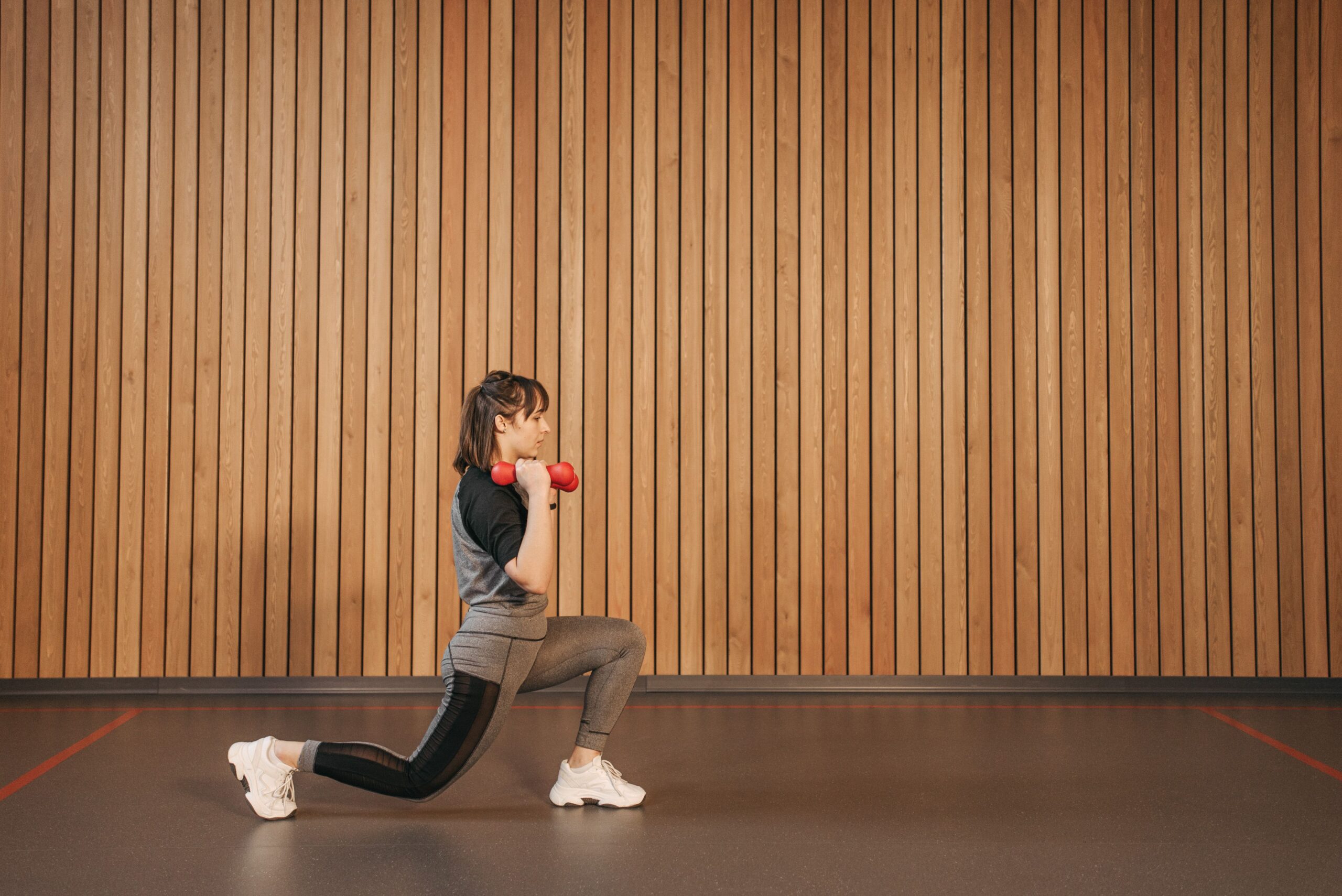
The best snack is the one your surroundings make obvious. Stairs work at an office. Chair squats work beside a desk. A mini resistance loop fits in a drawer. A pair of light hex dumbbells can stay visible without requiring a home gym. An exercise step creates an indoor option, and a simple interval timer keeps the bout contained.
The Livium recipe
| Cue | Two-minute option | Primary demand |
|---|---|---|
| Morning coffee | Sit-to-stands | Leg endurance |
| After a meeting | Brisk stairs or hallway walk | Cardiorespiratory effort |
| Afternoon break | Wall push-ups and band rows | Upper-body endurance |
| Before dinner | Fast walk | Whole-body movement |
Examples are scalable starting points, not fixed prescriptions. Source context: British Journal of Sports Medicine.
Plan of action
- Choose two reliable daily cues and attach a two-minute movement bout to each.
- Begin below all-out intensity and leave enough energy to repeat the habit later.
- Track completed bouts, then gradually increase time, resistance, or frequency.
- Keep full aerobic, strength, and balance sessions in the weekly plan when possible.
Table of Content
Know your body better.
Trusted By Thousands Daily



FAQs
How long is an exercise snack?
Research protocols vary, but many use bouts lasting a few minutes. The defining feature is that the effort is brief and repeated across the day.
Do exercise snacks replace 150 minutes of weekly activity?
They can contribute to the total, but a few brief bouts may not provide the same volume or variety as a complete weekly program.
How intense should they be?
Start at a manageable effort that is safe for your current fitness. Some studies use vigorous bouts, but all-out intensity is not appropriate for everyone.
Legal Disclaimer
The content published on Livium Health is for informational and educational purposes only. Nothing on this site constitutes medical advice, diagnosis, or treatment. Always consult a qualified healthcare provider before making decisions about your health, including changes to medications, supplements, diet, or exercise.
Livium Health is not a medical practice and does not have a patient-provider relationship with its readers. We do not sell supplements, medications, or treatments, and we have no financial relationship with the products or services we reference.
While we work to ensure the information we publish is accurate and up to date, health and medical guidance evolves. We make no guarantees about the completeness or currency of any content on this site. Reliance on any information provided by Livium Health is solely at your own risk.
If you are experiencing a medical emergency, call 911 or your local emergency services immediately.
We may receive compensation, free products, or affiliate commissions for products mentioned in this post. Opinions are our own.