
Share
Hormones
Women's Health
Hormone therapy and insulin resistance: The menopause benefit that gets less attention
4 min read

Key takeaways
- A 2025 meta-analysis pooled 17 randomized trials and 5,772 non-diabetic postmenopausal women.
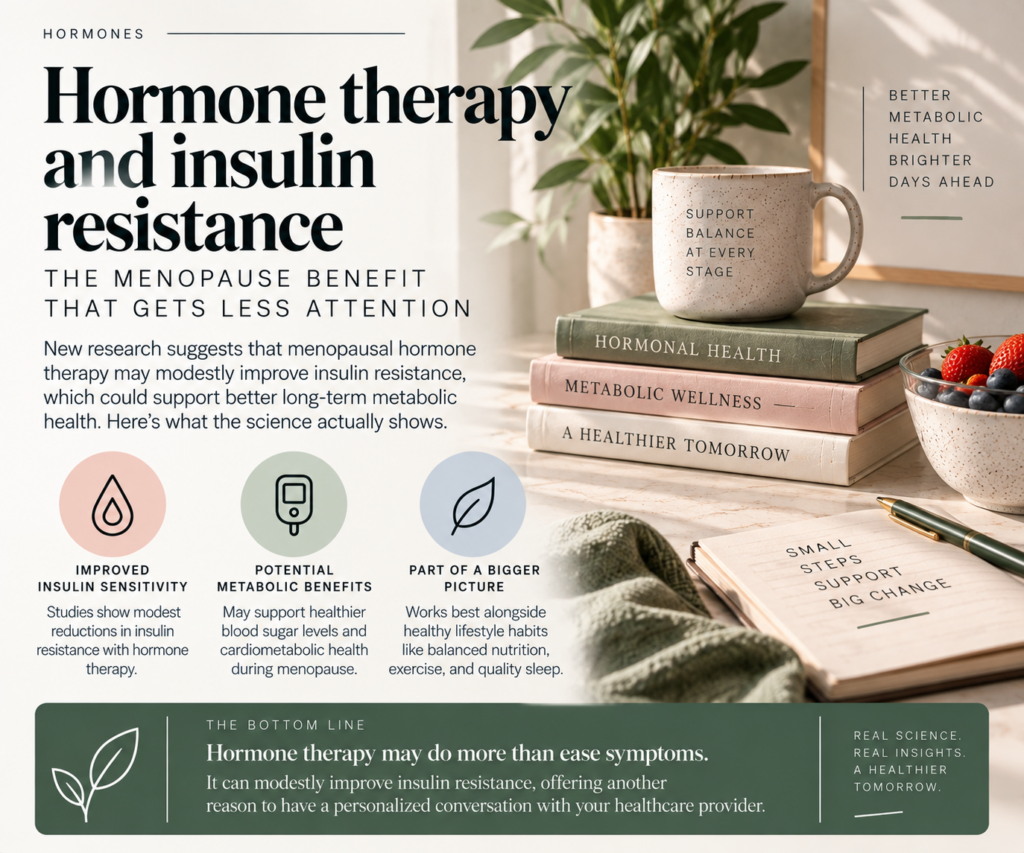
- Menopausal hormone therapy modestly reduced HOMA-IR, a research measure of insulin resistance, compared with placebo.
- Both estrogen-only and estrogen-plus-progestogen regimens showed reductions in the pooled analysis.
- Hormone therapy should not be started solely as a glucose-lowering strategy; symptom treatment and individual risk-benefit assessment remain central.
Menopause changes more than reproductive hormones
The menopause transition is accompanied by changes in body composition, fat distribution, lipids, and insulin sensitivity. Those changes overlap with aging, sleep, activity, genetics, and diet, which makes it difficult to assign every metabolic shift to estrogen alone.
Randomized hormone-therapy trials can help isolate part of that question because they compare treatment with placebo rather than simply observing who chooses therapy.
Seventeen randomized trials found a modest insulin-resistance effect
A 2025 systematic review and meta-analysis included 17 randomized controlled trials with 5,772 non-diabetic postmenopausal women. Hormone therapy significantly reduced HOMA-IR compared with placebo.
The pooled reduction was larger in estrogen-only trials than in estrogen-plus-progestogen trials, although those groups can differ in important ways, including whether participants have a uterus. This is not a head-to-head proof that one regimen is metabolically superior.
A meal and symptom notebook can help separate treatment effects from simultaneous changes in diet, sleep, and activity.
HOMA-IR is not a diagnosis by itself
HOMA-IR is calculated from fasting glucose and insulin and is widely used in research. It is not the same as an A1C, oral glucose tolerance test, or a diagnosis of prediabetes or diabetes.
A modest improvement in a surrogate marker is interesting, but it should not be converted into a promise that hormone therapy prevents diabetes or reverses metabolic disease.
A home scale can track broad weight trends if useful, while meal containers can make balanced lunches easier. Neither tells you insulin sensitivity directly.
The bigger metabolic picture still matters
Resistance training, adequate sleep, dietary quality, smoking status, alcohol intake, and body composition all affect metabolic health through pathways that hormone therapy does not replace.
For women using MHT for appropriate indications, the insulin-resistance data is useful context. For someone without an indication for MHT, it is not a reason to start treatment solely for a better HOMA-IR value.
A water bottle supports normal hydration but does not lower insulin resistance on its own.
What a useful decision looks like
Hormone decisions are rarely improved by chasing one laboratory number or one viral claim. Symptoms, goals, medical history, and the quality of the evidence all belong in the same conversation.
A useful plan also has an evaluation point. Know what outcome you are trying to change, when you will reassess it, and which side effects or new symptoms would make you contact the prescriber sooner.
The Livium recipe
Tool. Use established metabolic markers such as fasting glucose and A1C when clinically appropriate rather than chasing a consumer insulin score.
Behavior. Treat hormone therapy as one part of a broader health plan, not a substitute for movement, sleep, and nutrition.
Threshold. New excessive thirst, frequent urination, unexplained weight loss, or markedly abnormal glucose results deserve medical evaluation.
| 2025 pooled analysis | Participants | HOMA-IR change vs. placebo |
|---|---|---|
| All hormone therapy | 5,772 women | -0.24 |
| Estrogen alone | Subgroup | -0.42 |
| Estrogen + progestogen | Subgroup | -0.14 |
| Treatment duration | 8 weeks to 3 years | Effect pooled across varied regimens |
Source: Systematic review and meta-analysis of randomized trials, 2025.
A surrogate marker should stay in its lane
HOMA-IR is useful because it lets researchers compare insulin-resistance patterns across groups, but it is not a promise about future diabetes, heart attack, or longevity. Those outcomes require longer and differently designed studies.
The finding is most useful as reassurance that appropriate MHT does not appear metabolically neutral in every domain, not as a reason to prescribe it as a metabolic drug.
Metabolic improvement does not replace screening
Women using hormone therapy still need ordinary cardiometabolic prevention. Blood pressure, lipids, glucose screening, physical activity, and nutrition do not become optional because HOMA-IR improved in a meta-analysis.
Likewise, a normal A1C does not explain every episode of fatigue or hunger. Use metabolic testing to answer specific clinical questions rather than making every symptom about insulin.
Plan of action
- Write down the specific symptom or outcome you want to improve.
- Change one major treatment variable at a time when possible.
- Use follow-up labs or symptom tracking only when they answer a defined question.
- Do not start, stop, or change prescription hormone treatment without appropriate medical guidance.
Table of Content

Know your body better.
Trusted By Thousands Daily





FAQs
Does menopause hormone therapy improve insulin sensitivity?
In a 2025 meta-analysis of randomized trials, hormone therapy modestly reduced HOMA-IR compared with placebo in non-diabetic postmenopausal women.
Does that mean HRT prevents diabetes?
No. Improvement in HOMA-IR is a metabolic signal and does not by itself prove diabetes prevention.
Should HRT be prescribed for insulin resistance alone?
Hormone therapy is not generally started solely to lower insulin resistance. The overall indication and individual risks still matter.
Legal Disclaimer
The content published on Livium Health is for informational and educational purposes only. Nothing on this site constitutes medical advice, diagnosis, or treatment. Always consult a qualified healthcare provider before making decisions about your health, including changes to medications, supplements, diet, or exercise.
Livium Health is not a medical practice and does not have a patient-provider relationship with its readers. We do not sell supplements, medications, or treatments, and we have no financial relationship with the products or services we reference.
While we work to ensure the information we publish is accurate and up to date, health and medical guidance evolves. We make no guarantees about the completeness or currency of any content on this site. Reliance on any information provided by Livium Health is solely at your own risk.
If you are experiencing a medical emergency, call 911 or your local emergency services immediately.
We may receive compensation, free products, or affiliate commissions for products mentioned in this post. Opinions are our own.