
Share
Longevity & Aging
Men's Health
Sleep
Sleep apnea after 40: When snoring is a longevity problem
11 min read
Key takeaways
- Loud snoring with pauses, dry-mouth mornings, and persistent daytime fatigue at 40 and over are most commonly symptoms of undiagnosed obstructive sleep apnea (OSA), which is present in roughly 26 percent of adults aged 30 to 70 and undiagnosed in about 80 percent of cases.
- Untreated OSA is linked to hypertension, atrial fibrillation, stroke, type 2 diabetes, and faster cognitive decline; the Wisconsin Sleep Cohort showed roughly 50 percent higher 18-year all-cause mortality at severe untreated levels.
- A home sleep test from a service like Lofta ($189) is FDA-cleared, clinically valid for diagnosing moderate-to-severe OSA, and the fastest path to a real diagnosis without a sleep lab.
- The treatment target is an apnea-hypopnea index (AHI) under 5 events per hour and a return of daytime energy within 4 weeks of effective therapy. Options span continuous positive airway pressure machines like ResMed AirSense 11, custom oral appliances, the Inspire implant, and GLP-1 medications like Zepbound for obesity-driven cases.
Why your snoring is the symptom, not the problem
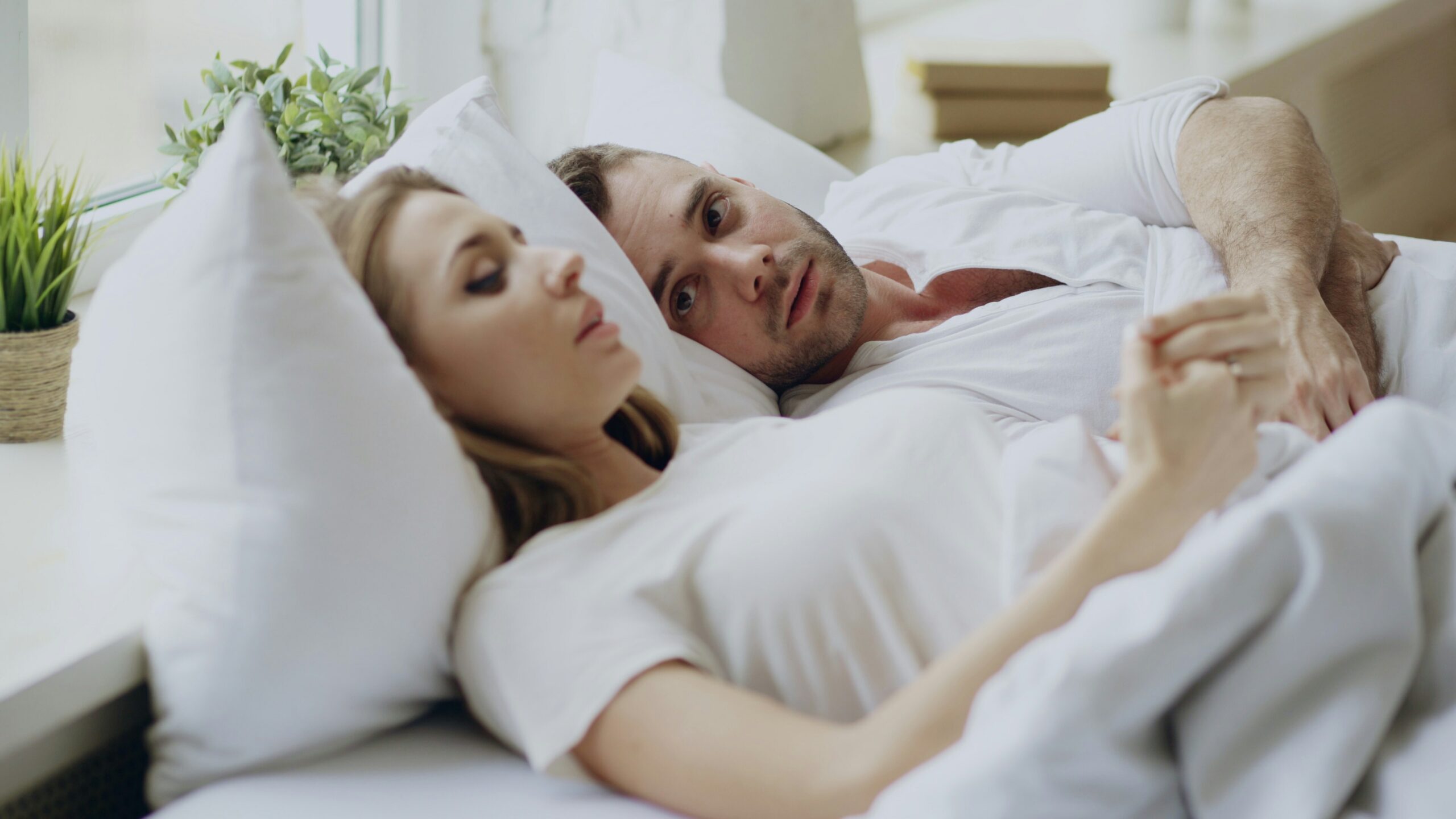
Your partner has mentioned the snoring. Maybe complained about it. Maybe moved to the guest room. You’ve been told it’s nothing serious, or to lose a little weight, or to roll onto your side. Meanwhile, your mornings start with a dry mouth, your headaches happen before coffee, and your midday energy doesn’t match how long you were in bed. None of that is your sleep routine failing. It’s most likely OSA, and it’s one of the most under-diagnosed conditions in midlife.
The American Academy of Sleep Medicine estimates that 26 percent of adults between 30 and 70 have obstructive sleep apnea, and roughly 80 percent of them are undiagnosed. It is not a snoring problem with health consequences. It’s a cardiovascular and metabolic problem disguised as a snoring problem, and it’s quietly compounding for the decade or two before anyone catches it.
What’s actually happening when you have sleep apnea
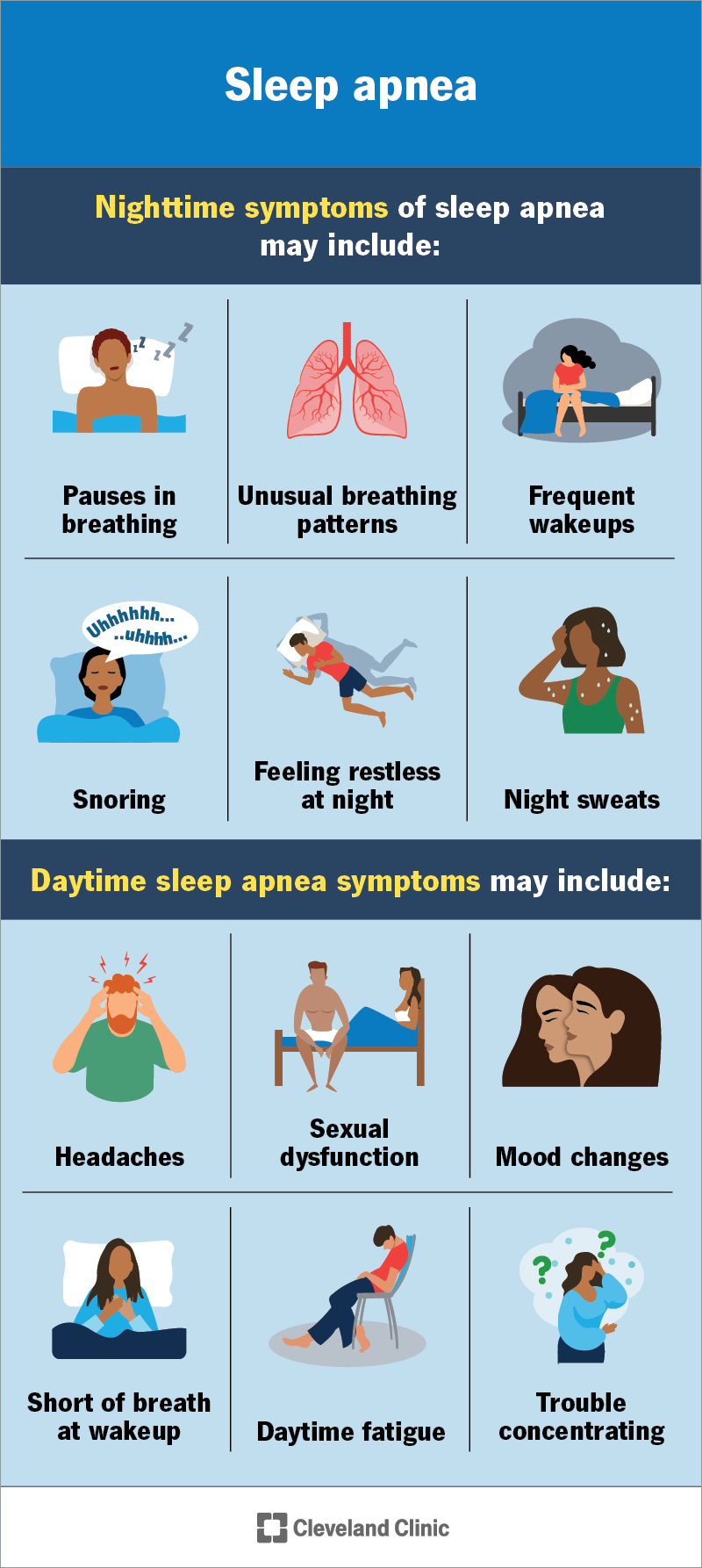
Sleep apnea is the partial or complete collapse of your airway while you sleep. The muscles that hold your throat open relax too far, the soft tissue at the back of your mouth and tongue blocks the airflow, and your breathing either slows dramatically or stops entirely. That can happen dozens of times per night in mild cases, hundreds of times in severe ones. Each event triggers a stress response: oxygen drops, your heart rate spikes, cortisol releases, and your brain briefly wakes you just enough to clear the airway. You don’t remember the wake-ups, but you didn’t actually sleep through them either.
At 40 and beyond, three things stack against you. Muscle tone in the upper airway declines with age, so the throat collapses more easily. Weight gain through midlife adds tissue around the neck and tongue, narrowing the airway further. Hormonal shifts compound both: declining testosterone in men correlates with weaker airway dilator muscle activity, and the loss of estrogen at menopause removes the protective effect that kept apnea rates in women lower than men through their thirties. After 50, women catch up. Family history matters too. If a parent had it, your odds are higher.
The downstream damage isn’t snoring. It’s vascular. Every apnea event spikes your blood pressure and heart rate, and over the years that pattern hardens into chronic hypertension, atrial fibrillation, stroke risk, type 2 diabetes, and faster cognitive decline. The Wisconsin Sleep Cohort, a long-running NIH-funded study at the University of Wisconsin, found that adults with severe, untreated OSA had roughly three times the 18-year all-cause mortality of adults without it, even after controlling for body weight. That’s the silent bill behind what most doctors still write off as a snoring problem.
What you’ve probably already tried
You’ve probably tried a few things already. Nose strips that promise to open your airway. Anti-snoring mouth guards from the drugstore. Side-sleeping pillows. Maybe a viral video where someone said mouth taping fixed everything. Maybe you’ve lost some weight. None of those are diagnostic, and most of them treat the noise instead of the underlying airway collapse.
Mouth taping in particular has had a real online surge in the last few years, and we need to be direct about it: if you have undiagnosed OSA, mouth taping can make the hypoxia worse, not better. It is not safe as a substitute for actual treatment. The same goes for chin straps, snore-stop sprays, and most of the snoring aisle at the drugstore. Some of those tools have a role for socially disruptive snoring without apnea. None of them are appropriate when the underlying problem is your airway closing dozens of times per night.
The right next step is a real diagnosis. Not a guess from a primary care doctor who looked at your throat for ten seconds. A home sleep test, scored by a board-certified sleep physician, that tells you exactly how many breathing events you’re having per hour and how low your oxygen is dropping.
The Livium recipe
Tool. Start with diagnosis, not treatment. A home sleep test from Lofta ($189) or a comparable FDA-cleared service sends a small device to your house. You sleep with it for one or two nights, ship it back, and a board-certified sleep physician reviews the data and gives you a diagnosis along with your apnea-hypopnea index (AHI). AHI is the diagnostic headline number for sleep apnea: how many breathing events (apneas, meaning complete pauses in breathing, or hypopneas, meaning significant drops in airflow) you experience per hour of sleep. The American Academy of Sleep Medicine uses these standard bands: an AHI under 5 events per hour is normal, 5 to 15 is mild OSA, 15 to 30 is moderate, and over 30 is severe. The treatment target with therapy in place is to return your AHI to under 5.
Treatment paths split by severity and tolerance. ResMed AirSense 11 is the standard continuous positive airway pressure (CPAP) machine for moderate-to-severe cases. A custom oral appliance (made by a dental sleep specialist, with SomnoMed and ProSomnus among the proven systems) covers mild-to-moderate cases or CPAP-intolerant patients. The Inspire implant is the option for people with moderate-to-severe OSA who can’t tolerate CPAP. For a body mass index (BMI) of 30 or above, GLP-1 weight-loss medications now sit in the toolkit as well: tirzepatide (Zepbound) was FDA-approved for moderate-to-severe OSA in December 2024.
Behavior. Sleep on your side, not your back. Positional apnea, where events happen mostly when you’re supine, accounts for a real share of mild OSA cases and improves dramatically with consistent side sleeping. Cut alcohol within 4 hours of bed and ideally on most weeknights overall, because alcohol relaxes airway muscles and worsens every apnea event you have. Treat nasal congestion and allergies as part of the protocol, not as a separate problem. Congestion makes apnea worse and reduces CPAP tolerance. And if your BMI is over 30, weight loss compounds every other intervention. A 10 percent reduction in body weight cuts AHI by roughly 26 percent on average in published studies.
Threshold. The treatment goal combines an AHI under 5 events per hour with resolution of daytime sleepiness. On the Epworth Sleepiness Scale (ESS), a self-reported questionnaire used to measure daytime sleepiness, a score of 10 or higher is significant; effective treatment usually brings the score under 8. Blood pressure improvements appear within 4 to 12 weeks of consistent CPAP use, typically a 2 to 10 mmHg drop. Morning headaches and energy usually improve in the first two to three weeks. If you’re still tired after 4 weeks of consistent therapy and your AHI is in target range, the issue is something else (residual sleep fragmentation, restless legs, or insomnia layered on top), and a follow-up with the sleep physician is the next step.
Getting a real diagnosis
Home sleep tests have replaced the sleep lab for most people. They cost a fraction of an in-lab polysomnogram (around $189 versus $1,000 to $5,000 in some markets), they happen in your own bed (where you actually sleep), and they are clinically valid for moderate-to-severe OSA. The American Academy of Sleep Medicine considers home sleep apnea testing appropriate for adults with a high pre-test probability of moderate-to-severe OSA and no significant comorbidities. That covers most of the people who should be testing.
Lofta is the most reader-friendly service worth knowing about. They send the device, you wear it overnight (typically a small pulse oximeter plus a chest strap and a nasal cannula), you mail it back, and a board-certified sleep physician licensed in your state reviews the data and writes a diagnosis. From order to diagnosis is usually under two weeks. Other services offer similar pathways, including SleepImage Ring and WatchPAT-based providers (both can also be ordered through Lofta). Cost varies but most fall in the $150 to $400 range out of pocket. Insurance often covers diagnostic testing if you go through your primary care or a sleep clinic referral.
When you do need a lab study: suspected central sleep apnea (apnea events without airway obstruction), suspected complex parasomnias, narcolepsy, REM behavior disorder, or any complicated medical picture that home testing isn’t designed for. If your sleep physician sees something unusual on the home study, they’ll send you to a lab anyway. That’s normal, and not a sign that the home test failed.
| AHI events/hour | Classification | What it means | Typical first-line treatment |
|---|---|---|---|
| Under 5 | Normal | No clinical OSA | None; preventive only |
| 5 to 15 | Mild OSA | Some risk, especially with daytime symptoms | Oral appliance, or CPAP if symptomatic |
| 15 to 30 | Moderate OSA | Real cardiovascular risk | CPAP first; oral appliance or Inspire as alternates |
| Over 30 | Severe OSA | High cardiovascular and metabolic risk | CPAP first; Inspire if intolerant |
Source: American Academy of Sleep Medicine clinical guidelines.
Choosing your treatment
CPAP is the first-line, gold-standard therapy for moderate-to-severe OSA. Continuous positive airway pressure delivered through a mask keeps your airway open through the night, eliminates most events, and rapidly reverses the cardiovascular and cognitive strain that untreated apnea creates. The ResMed AirSense 11 is the dominant device, often with insurance coverage that brings the out-of-pocket cost into the $200 to $1,000 range depending on your plan. The catch with CPAP is tolerance: estimates from the field suggest 30 to 50 percent of patients discontinue CPAP within the first year, almost always because of mask fit issues, air leak, or claustrophobia. Most of those are fixable with a different mask style (nasal pillow, nasal mask, or full face), a pressure adjustment, or a heated humidifier. Pushing through the first 30 days with active troubleshooting is the difference between long-term success and giving up.
Custom oral appliances are the next option for mild-to-moderate OSA, or for moderate-to-severe patients who genuinely can’t tolerate CPAP. The good ones are custom-fit mandibular advancement devices made by a dental sleep specialist. SomnoMed and ProSomnus are the established systems. Vivos is the newer entrant with FDA clearance but a more aggressive marketing posture (it is not a cure in any clinical sense, and headlines suggesting otherwise should be read with suspicion). Cost is typically $1,500 to $3,000, with some insurance coverage. The efficacy ceiling is lower than CPAP (appliances reduce AHI by about 50 to 60 percent on average, where CPAP can reduce it to near zero), but tolerance is much higher.
Inspire is a surgically implanted upper-airway stimulator. It is FDA-approved for adults with moderate-to-severe OSA, a BMI under 40, and intolerance or failure of CPAP. The device is implanted under the skin of the chest, detects breathing patterns, and gently stimulates the hypoglossal nerve to advance the tongue and open the airway during inhalation. About two-thirds of qualifying patients see significant reduction in apnea events. Cost is typically $30,000 to $40,000 for the procedure, with most insurance plans (including Medicare) covering it for qualifying patients. Adoption has grown substantially since FDA approval in 2014.
GLP-1 medications joined the OSA conversation officially in December 2024 when the FDA approved tirzepatide (Zepbound) for moderate-to-severe OSA in adults with obesity. The SURMOUNT-OSA trial showed an average AHI reduction of 27 to 30 events per hour over 52 weeks at the highest dose, primarily through weight loss. For obesity-driven OSA, this is a meaningful new tool, especially for patients already being treated for type 2 diabetes or metabolic disease. It is not a stand-alone replacement for CPAP in the short term; the apnea events are still happening until weight comes off. But as a long-term metabolic strategy, it sits in the toolkit now.
| Treatment | Best for | Approx cost | Insurance | Time to results |
|---|---|---|---|---|
| CPAP (ResMed AirSense 11) | Moderate to severe OSA; first-line | $200-1,000 with insurance | Typically covered | 2 to 4 weeks |
| Custom oral appliance (SomnoMed, ProSomnus) | Mild to moderate OSA, or CPAP-intolerant | $1,500-3,000 | Often partial | 4 to 8 weeks |
| Inspire implant | Moderate to severe OSA, CPAP-intolerant, BMI under 40 | $30,000-40,000 procedure | Covered for qualifying patients | 3 to 6 months |
| GLP-1 (Zepbound for OSA) | Obesity-driven OSA, BMI 30+ | $1,000-1,500/month | FDA approved Dec 2024 | 3 to 6 months |
Plan of action
- This week, order a home sleep test from Lofta or a comparable FDA-cleared service. Don’t wait for a primary care referral if you’ve already had snoring and daytime fatigue for more than 6 months.
- When the diagnosis comes back, bring the AHI, lowest oxygen saturation, and ESS score to a board-certified sleep physician.
- If diagnosed, schedule treatment within 30 days. Don’t sit on a positive result for months waiting for the right time.
- First month of CPAP, focus on mask fit, not the therapy itself. Most discontinuation happens because the mask is wrong, not because the ResMed AirSense 11 (or whichever machine you’re using) doesn’t work.
- If CPAP tolerance becomes the issue, switch to a custom oral appliance or the Inspire implant instead of giving up on treatment entirely.
- If your BMI is over 30, ask about Zepbound or a similar GLP-1 alongside OSA therapy. The two compound.
- Track your heart rate variability (HRV), resting heart rate (RHR), and morning energy over 4 to 8 weeks. The numbers should move clearly with effective treatment.
Table of Content

Know your body better.
Trusted By Thousands Daily



Do I actually need a sleep study, or can I skip straight to a CPAP?
You need a diagnosis with a measurable AHI to know which severity you’re at, which determines the right treatment. Insurance also won’t cover CPAP equipment without it, and oral appliance and Inspire pathways both require a formal diagnosis. A home sleep test is the easiest entry point.
How is the Apple Watch, Oura, or WHOOP sleep apnea detection different from a real test?
Helpful but not diagnostic. The newer sleep apnea screening features on consumer wearables like Apple Watch, Oura, and WHOOP look for breathing disturbances and oxygen variability and flag possible OSA. That’s useful for getting people to test. They are not a substitute for an actual home sleep test scored by a sleep physician, and they don’t measure AHI directly.
What about mouth taping or breathing exercises like Buteyko?
If you have undiagnosed OSA, mouth taping can worsen hypoxia and is not safe. Get diagnosed first. Breathing exercises can support general nasal breathing but do not treat actual airway collapse during sleep. They are adjuncts at most.
Will CPAP fix my snoring and my fatigue?
Almost always, yes. Most patients on a properly fitted CPAP machine see snoring stop completely within the first week and daytime energy return within 2 to 4 weeks. If those don’t happen, mask fit and pressure settings are usually the issue; both are fixable.
Does treating OSA reverse the cardiovascular damage that's already happened?
Partially. CPAP-treated patients see measurable improvements in blood pressure and cardiac strain markers within months, but some structural changes (like the cardiac remodeling that severe OSA causes) improve only modestly with treatment. The earlier the diagnosis, the more recoverable the downstream effects.
Legal Disclaimer
The content published on Livium Health is for informational and educational purposes only. Nothing on this site constitutes medical advice, diagnosis, or treatment. Always consult a qualified healthcare provider before making decisions about your health, including changes to medications, supplements, diet, or exercise.
Livium Health is not a medical practice and does not have a patient-provider relationship with its readers. We do not sell supplements, medications, or treatments, and we have no financial relationship with the products or services we reference.
While we work to ensure the information we publish is accurate and up to date, health and medical guidance evolves. We make no guarantees about the completeness or currency of any content on this site. Reliance on any information provided by Livium Health is solely at your own risk.
If you are experiencing a medical emergency, call 911 or your local emergency services immediately.
We may receive compensation, free products, or affiliate commissions for products mentioned in this post. Opinions are our own.