
Share
Longevity & Aging
Mental Health
Women's Health
A vaccine you were already supposed to get just became more interesting
4 min read
Key takeaways
- Shingrix is already recommended for adults 50 and older because it prevents shingles and its complications.
- Large 2026 observational data linked the two-dose recombinant shingles vaccine with lower dementia rates.
- The dementia finding is promising, but it does not prove that vaccination prevents Alzheimer’s disease or other dementias.
- The practical move is to complete the two-dose series for its proven benefit and treat the brain signal as a possible bonus.
Why a shingles vaccine is suddenly part of the dementia conversation
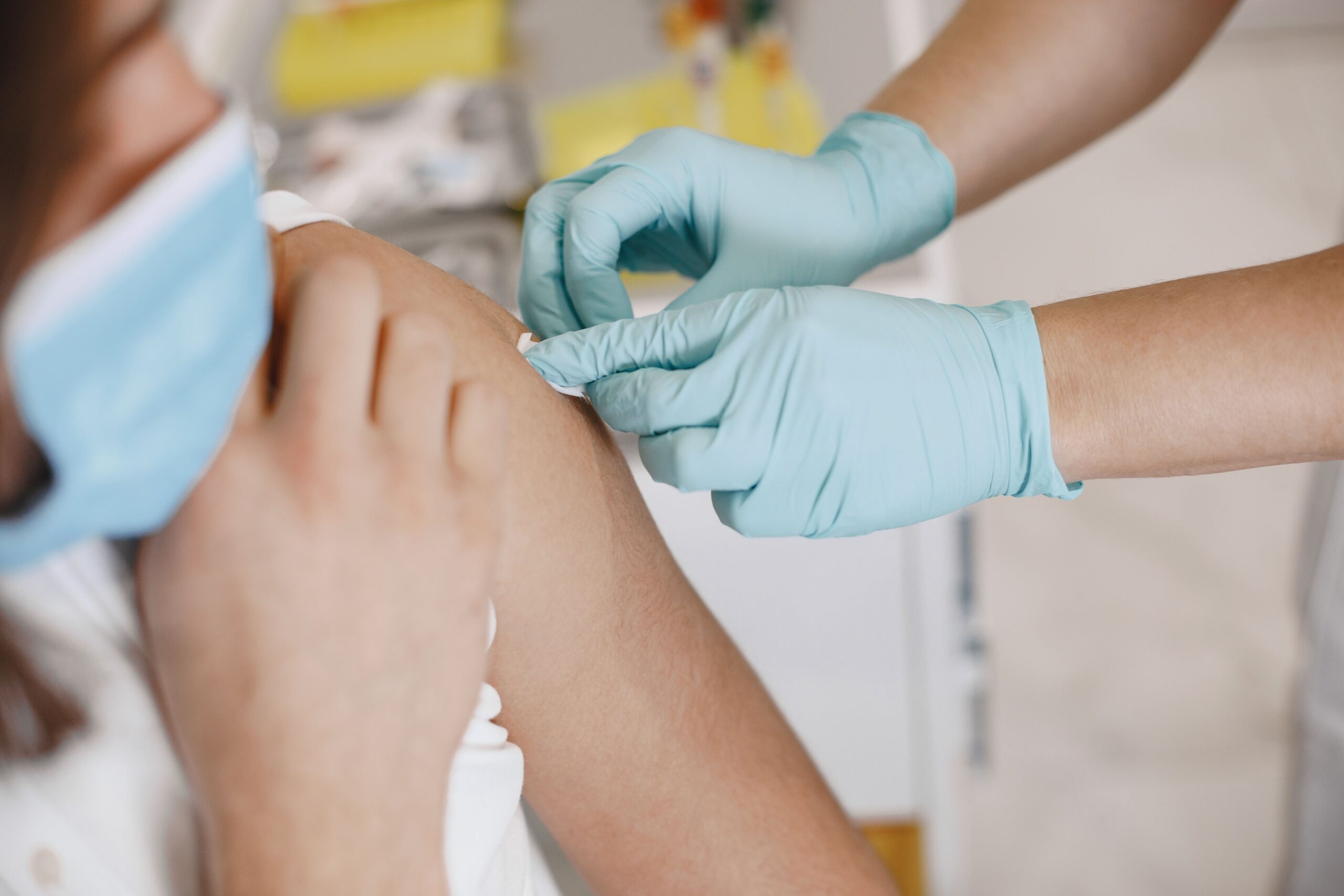
Shingrix already had a simple job. Prevent shingles, and prevent the long nerve pain that can follow it. For adults 50 and older, that is enough reason to get the two-dose series.
Then the dementia data started stacking up.
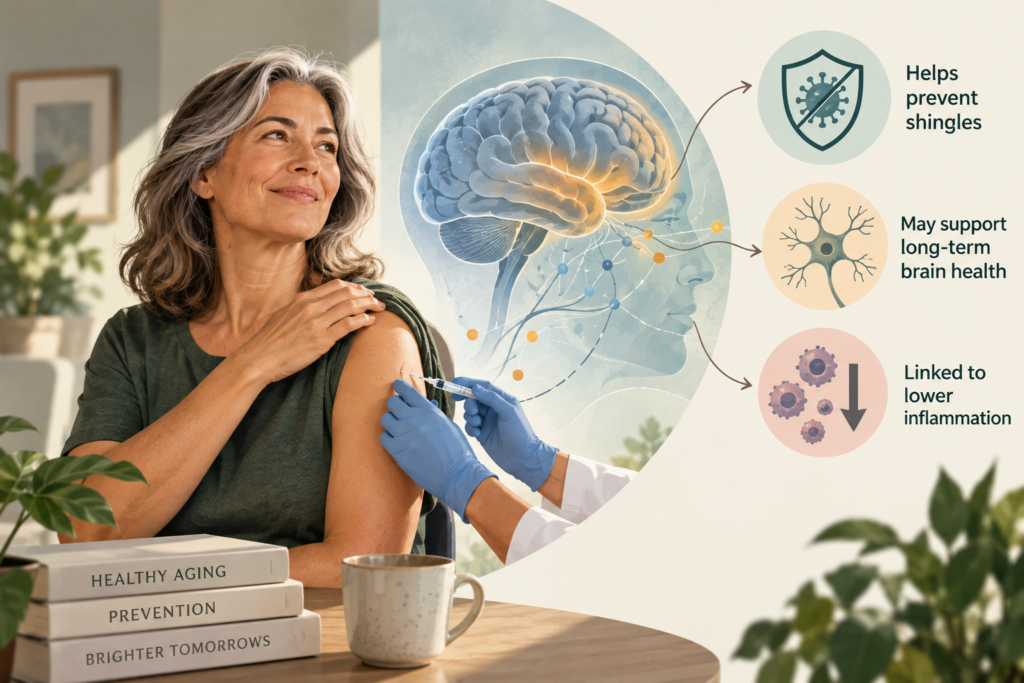
A large 2026 Kaiser Permanente study followed older adults who had received both doses of the recombinant shingles vaccine and compared them with matched adults who had not. Dementia diagnoses were substantially less common in the vaccinated group. Earlier studies had pointed in the same direction, including a natural experiment in Wales and a comparison of the newer recombinant vaccine with the older live vaccine.
That does not turn Shingrix into an Alzheimer’s drug. It does make this one of the most interesting accidental findings in preventive aging right now.
What the 2026 study actually found
The Kaiser Permanente analysis included 65,800 adults age 65 and older who received two doses of recombinant zoster vaccine, plus more than 263,000 matched unvaccinated adults. The researchers found lower dementia incidence in the vaccinated group across several analyses.
The effect was not limited to one type of dementia. The association appeared for Alzheimer’s disease and vascular dementia, and it held across age and racial groups. The signal was stronger in women than in men, although it was present in both.
The important word is association. People who complete vaccines can differ from people who do not in ways that are hard to fully measure. They may use health care differently, have different prevention habits, or have different underlying health. The researchers adjusted for a long list of those variables, but this was not a randomized dementia-prevention trial.
Why researchers think the link might be real
There are two broad ideas. The first is viral. Shingles is caused by reactivation of varicella-zoster virus, which stays in the body after chickenpox. Preventing that reactivation might reduce repeated inflammatory or neurological stress.
The second idea is immune training. Shingrix uses the AS01 adjuvant system to create a strong immune response. Researchers are asking whether that immune activation has effects beyond preventing shingles itself. A 2025 analysis found lower dementia rates after both AS01-adjuvanted shingles vaccination and an AS01-adjuvanted respiratory syncytial virus vaccine, which is one reason the adjuvant question is getting attention.
Neither mechanism has been proven. This is exactly where Livium draws the line between interesting and actionable.
The Livium recipe
Tool. Shingrix is the tool. CDC recommends two doses for adults 50 and older, usually 2 to 6 months apart. If you are immunocompromised, eligibility starts younger. A clinician or pharmacist gives the vaccine; you don’t buy it online.
Behavior. Put dose two on the calendar before you leave dose one. The protection data assume you finish the series. If vaccine-day side effects make you miserable, a simple recovery setup is enough: fluids in an Owala FreeSip stainless bottle, Pedialyte electrolyte powder if you are not eating and drinking normally, and a Chattanooga ColPac for a sore arm. None of those products changes vaccine effectiveness. They just make the day easier.
Threshold. The decision is binary. If you are 50 or older and have no contraindication, ask whether your two-dose Shingrix series is complete. A simple vaccine-card holder is useful if you still keep paper records, but the better move is getting the doses into your pharmacy and health-system record.
| Who | CDC recommendation | Timing |
|---|---|---|
| Adults 50+ | 2-dose Shingrix series | Dose 2 usually 2 to 6 months after dose 1 |
| Immunocompromised adults 19+ | 2-dose Shingrix series | Dose 2 can be 1 to 2 months later when needed |
| Had shingles before | Still vaccinate | Use the routine schedule |
| Had Zostavax before | Still vaccinate | Use Shingrix |
Source: CDC adult immunization schedule notes.
What we are ruling out
Do not get Shingrix because you think it guarantees dementia protection. It does not. Do not use the dementia signal as a reason to ignore blood pressure, hearing loss, exercise, diabetes, smoking, sleep, or social isolation. Those remain better-established dementia risk targets.
The more useful interpretation is simpler. This is a vaccine already recommended for a common, painful age-related disease. The possibility that it also protects the aging brain makes completing the series easier to prioritize, not harder.
Plan of action
- Check your pharmacy or health portal for your Shingrix dates.
- If you have one dose, schedule dose two now rather than waiting for the reminder.
- If you are 50 or older and have zero doses recorded, ask your pharmacist or clinician whether anything in your history changes the recommendation.
The decision this week. Confirm whether your Shingrix series is complete.
Table of Content

Know your body better.
Trusted By Thousands Daily




FAQs
Does Shingrix prevent dementia?
Not proven. Several large studies have found lower dementia rates among vaccinated adults, but the evidence is not yet enough to call Shingrix a dementia-prevention treatment.
Should I get Shingrix if I already had shingles?
Yes, in most cases. CDC still recommends Shingrix after a prior shingles episode because shingles can recur.
How many Shingrix doses do adults over 50 need?
CDC recommends two doses for adults 50 and older, usually given 2 to 6 months apart.
Legal Disclaimer
The content published on Livium Health is for informational and educational purposes only. Nothing on this site constitutes medical advice, diagnosis, or treatment. Always consult a qualified healthcare provider before making decisions about your health, including changes to medications, supplements, diet, or exercise.
Livium Health is not a medical practice and does not have a patient-provider relationship with its readers. We do not sell supplements, medications, or treatments, and we have no financial relationship with the products or services we reference.
While we work to ensure the information we publish is accurate and up to date, health and medical guidance evolves. We make no guarantees about the completeness or currency of any content on this site. Reliance on any information provided by Livium Health is solely at your own risk.
If you are experiencing a medical emergency, call 911 or your local emergency services immediately.
We may receive compensation, free products, or affiliate commissions for products mentioned in this post. Opinions are our own.