
Share
Men's Health
Mental Health
Women's Health
ADHD in midlife: What it looks like when it is missed for 40 years
6 min read

Key takeaways
- ADHD is not a childhood disorder that resolves in adulthood. Most children with ADHD grow into adults with ADHD. Most of them were never diagnosed.
- The adult ADHD presentation differs substantially from the hyperactive child stereotype. In midlife adults, it most commonly presents as chronic disorganization, difficulty sustaining attention on low-stimulation tasks, emotional dysregulation, and an inability to translate intention into action.
- Women are significantly underdiagnosed because the ADHD diagnostic criteria were developed primarily from studies of hyperactive boys, and the predominantly inattentive presentation more common in women was not well characterized until the 1990s.
- A formal psychiatric evaluation is the only way to establish a diagnosis. The evaluation changes the treatment options. Self-diagnosis is not sufficient, and the symptom overlap with anxiety, depression, and burnout is substantial.
The person who has “always been like this”
Forty-three years old. Extremely capable in high-stimulation environments and emergencies. Chronically late on paperwork. Has started more projects than anyone they know and finished fewer. The desk is a management problem. The to-do list has been the same for six weeks. The emails that require more than two minutes are sitting unread. Friends describe them as flaky. A therapist described it as anxiety. The person describes it as “just how my brain works.”
For some of these people, that is the correct description. For others, it is decades of unidentified ADHD that has been successfully camouflaged by intelligence, coping strategies, and a career that happened to provide enough stimulation to mask the underlying regulation deficit. When the career gets less stimulating, or parenting adds administrative load, or the midlife cognitive demands shift, the coping strategies stop covering for the gap.
What ADHD actually is, neurobiologically
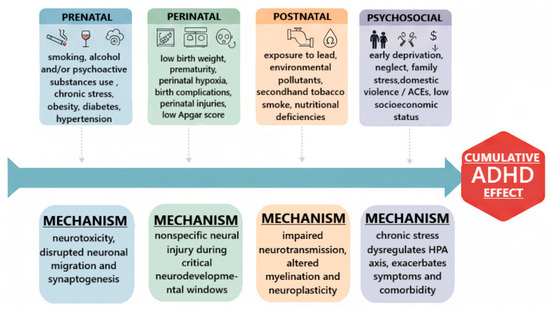
ADHD is not a deficit of attention. It is a deficit of attention regulation. People with ADHD can sustain intense focus on stimulating, novel, or urgency-driven tasks for hours (hyperfocus). The deficit emerges on low-stimulation, repetitive, or self-initiated tasks where dopamine must be generated internally rather than supplied by the task itself.
The underlying mechanism is now well characterized: reduced dopamine and norepinephrine tone in the prefrontal cortex, particularly in the circuits that support working memory, inhibitory control, and executive function. The prefrontal cortex in ADHD requires more dopaminergic stimulation to maintain functional engagement than the neurotypical prefrontal cortex. When the environment provides that stimulation (a deadline, a crisis, a new project), function normalizes. When the environment does not (a spreadsheet, a filing task, a routine obligation), the prefrontal circuits disengage.
This is not a motivational problem. It is a neurotransmitter availability problem. The distinction matters because the solutions that work for motivation problems (just try harder, set better intentions, make a schedule) do not address the neurotransmitter deficit and consistently fail in ADHD, producing a secondary loop of shame and self-criticism that compounds the functional impairment.
The midlife presentation
Time blindness. Difficulty estimating how long tasks will take, chronic underestimation of task duration, perpetual lateness despite effort not to be late. Time blindness is not carelessness. It reflects a specific deficit in the dopaminergic systems that regulate temporal processing.
Task initiation difficulty. The capacity to intend an action and the capacity to begin it are neurologically separate. Adults with ADHD often have normal or above-normal capacity for complex planning and detailed intention-setting. Translating intention into first action, specifically the boring or ambiguous first step, is where the system fails.
Emotional dysregulation. ADHD produces a more intense and faster-rising emotional response alongside slower emotional recovery. This is not a mood disorder. It is an impulsivity of emotion rather than action, driven by the same prefrontal inhibitory deficit that produces behavioral impulsivity in the hyperactive presentation.
Rejection sensitive dysphoria. An intense emotional response to perceived criticism, rejection, or failure that is disproportionate to the triggering event and frequently described as one of the most impairing aspects of adult ADHD. Not present in everyone with ADHD but common enough to be a significant diagnostic consideration.
The Livium recipe
Tool. A formal psychiatric evaluation by a clinician experienced in adult ADHD. The Adult ADHD Self-Report Scale (ASRS) is a free validated screening tool that takes five minutes. A score suggesting ADHD on the ASRS is not a diagnosis; it is an indication to pursue evaluation. Evaluation includes a detailed developmental and symptom history, standardized rating scales, and often neuropsychological testing to establish the cognitive profile and rule out conditions with overlapping presentations.
Behavior. Whether or not a diagnosis is pursued, the behavioral interventions that address the dopaminergic and noradrenergic deficits are: vigorous aerobic exercise (raises dopamine and norepinephrine for 2 to 4 hours post-workout), consistent sleep timing (sleep deprivation worsens ADHD symptoms through PFC degradation), and externalizing systems (written external reminders, time-blocking, visible task management systems) that bypass the working memory deficit rather than demanding its improvement.
Threshold. If symptoms are impairing work, relationships, or daily functioning despite consistent behavioral interventions, pharmacological treatment is medically appropriate. Stimulant medications (methylphenidate, amphetamine-based) and non-stimulants (atomoxetine, viloxazine) are FDA-approved for adult ADHD. Their effect sizes are among the largest in psychiatry for the indication they target.
The nutritional support layer
Jarrow Alpha GPC 300 mg is a choline precursor that supports acetylcholine production and prefrontal cortex function. Several small studies show cognitive improvement in adults with attention difficulties. It is not a stimulant and does not replace medication but provides nutritional support for cholinergic prefrontal function. Life Extension Acetyl-L-Carnitine 1,000 mg improves mitochondrial function in neuronal tissue and has shown attention improvement in several trials of adults with mild cognitive impairment.
NOW Foods True Focus combines tyrosine, DMAE, ginkgo, and cofactors specifically formulated for dopamine and norepinephrine precursor support. Tyrosine is the dietary precursor to both catecholamines. For adults not yet on pharmacological treatment, tyrosine-based precursor loading provides a milder, non-prescription alternative to catecholamine support. Pure Encapsulations Attention Factors provides a comprehensive formula covering the B-vitamin cofactors, minerals, and botanical extracts with the strongest supporting evidence for attention and executive function.
Adult ADHD: presentation differences by sex
| Feature | More common in men | More common in women |
|---|---|---|
| Primary subtype | Hyperactive-impulsive or combined | Predominantly inattentive |
| Diagnostic age | Childhood or adolescence | Adulthood; often triggered by major life transition |
| Externalizing vs. internalizing | Behavioral disruption; externalizing | Anxiety, self-criticism, shame; internalizing |
| Coping strategy | Impulsive engagement; risk-taking | Masking; compensatory over-preparation; perfectionism |
| Hormonal interaction | Testosterone decline worsens focus in 50s | Perimenopausal estrogen decline severely worsens ADHD symptoms |
Source: Livium editorial synthesis based on NIMH ADHD resources and Hinshaw et al., Annual Review of Clinical Psychology (2022).
Plan of action
- Complete the Adult ADHD Self-Report Scale (ASRS v1.1) available free from the WHO website. A positive screen is not a diagnosis but indicates that evaluation is warranted.
- If symptoms are impairing work or relationships, seek evaluation from a psychiatrist or psychologist experienced in adult ADHD. Primary care ADHD evaluations vary significantly in quality. Specifically ask for an evaluation by someone who specializes in adult presentations.
- Add vigorous aerobic exercise to the daily routine regardless of whether evaluation is pursued. Twenty to 30 minutes of exercise producing elevated heart rate raises dopamine and norepinephrine for 2 to 4 hours post-exercise and is the most evidence-supported non-pharmacological intervention for ADHD symptoms.
- Externalize everything. Not as a personal failing but as a systems response to a working memory deficit. Written lists, visible timers, external accountability, and time-blocking are not crutches. They are appropriate tools for the cognitive architecture in question.
Table of Content

Know your body better.
Trusted By Thousands Daily







FAQs
Can ADHD first appear in midlife?
True late-onset ADHD, with no childhood symptoms, is rare and contested in the literature. What is common is ADHD that was always present but successfully masked by compensatory strategies until midlife demands exceeded the compensatory capacity. A thorough evaluation includes a developmental history that often reveals clear childhood symptoms that were not recognized as such at the time.
Does perimenopause worsen ADHD?
Substantially, for many women. Estrogen supports dopaminergic and serotonergic tone in the prefrontal cortex. Perimenopausal estrogen decline directly worsens executive function and working memory in women with ADHD at a rate that often exceeds the general perimenopausal cognitive changes. Women who have successfully managed ADHD symptoms for decades sometimes find their strategies completely inadequate during perimenopause. This is a recognized clinical pattern and worth discussing with both a psychiatrist and a hormone-aware physician.
Is ADHD overdiagnosed in adults?
Overdiagnosis in some clinical settings coexists with significant underdiagnosis in others. Women, adults from lower-income backgrounds, and adults from non-Western cultural contexts are consistently underdiagnosed relative to prevalence estimates. The diagnostic process matters: evaluation by a specialist using standardized measures and developmental history produces more accurate outcomes than a 15-minute primary care appointment with a checklist.
Legal Disclaimer
The content published on Livium Health is for informational and educational purposes only. Nothing on this site constitutes medical advice, diagnosis, or treatment. Always consult a qualified healthcare provider before making decisions about your health, including changes to medications, supplements, diet, or exercise.
Livium Health is not a medical practice and does not have a patient-provider relationship with its readers. We do not sell supplements, medications, or treatments, and we have no financial relationship with the products or services we reference.
While we work to ensure the information we publish is accurate and up to date, health and medical guidance evolves. We make no guarantees about the completeness or currency of any content on this site. Reliance on any information provided by Livium Health is solely at your own risk.
If you are experiencing a medical emergency, call 911 or your local emergency services immediately.
We may receive compensation, free products, or affiliate commissions for products mentioned in this post. Opinions are our own.