
Share
Fitness
Men's Health
Women's Health
Balance training after 40: The fitness skill most workouts ignore
3 min read
Key takeaways
- Balance depends on sensory input and coordination as well as muscular strength.
- Regular balance practice belongs alongside aerobic and strength training, especially as we age.
- The safest progression changes one difficulty at a time while keeping stable support nearby.
- Sudden or worsening unsteadiness needs medical evaluation rather than self-directed progression.
The fitness gap that strength alone does not close
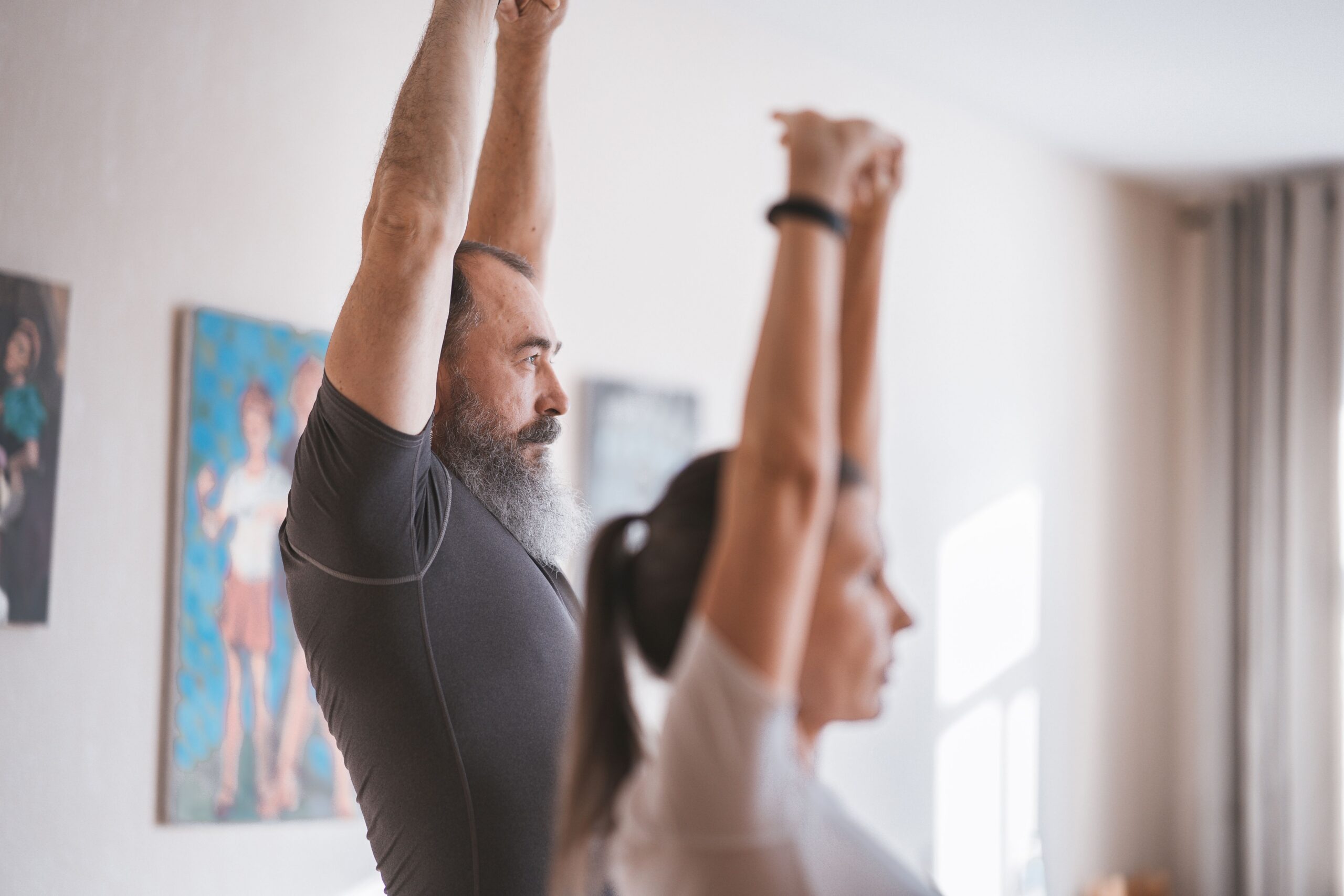
A strong pair of legs matters, but balance also depends on vision, sensation from the feet and joints, and the nervous system’s ability to organize a fast response. Those systems are challenged when you step off a curb, turn while carrying groceries, or catch yourself on uneven ground. A workout can improve strength without ever asking the body to practice those decisions.
Federal physical activity guidance specifically includes balance within multicomponent activity for older adults. Waiting until balance feels poor misses the point. The useful window begins while ordinary movement still feels easy, because balance responds to practice.
Why balance becomes more demanding
Balance is not a single muscle. It is a coordination task. Reduced ankle mobility, changes in vision, slower reaction time, medication effects, pain, and less exposure to varied movement can all narrow the margin for error. That does not make every wobble a warning sign, but sudden or worsening unsteadiness deserves medical attention rather than a harder home workout.
Training should make the task slightly less stable without making it reckless. A foam balance pad can add difficulty after floor drills become easy. A light resistance band adds controlled reaching. Neither is required at the beginning; a counter and clear patch of floor are enough.
The Livium recipe
Support. Start beside a sturdy counter, not in the middle of an open room. Wear stable shoes or practice barefoot only when the surface and your health make that appropriate. If foot comfort limits practice, compare a supportive cross-training shoe rather than using an unstable cushioned platform.
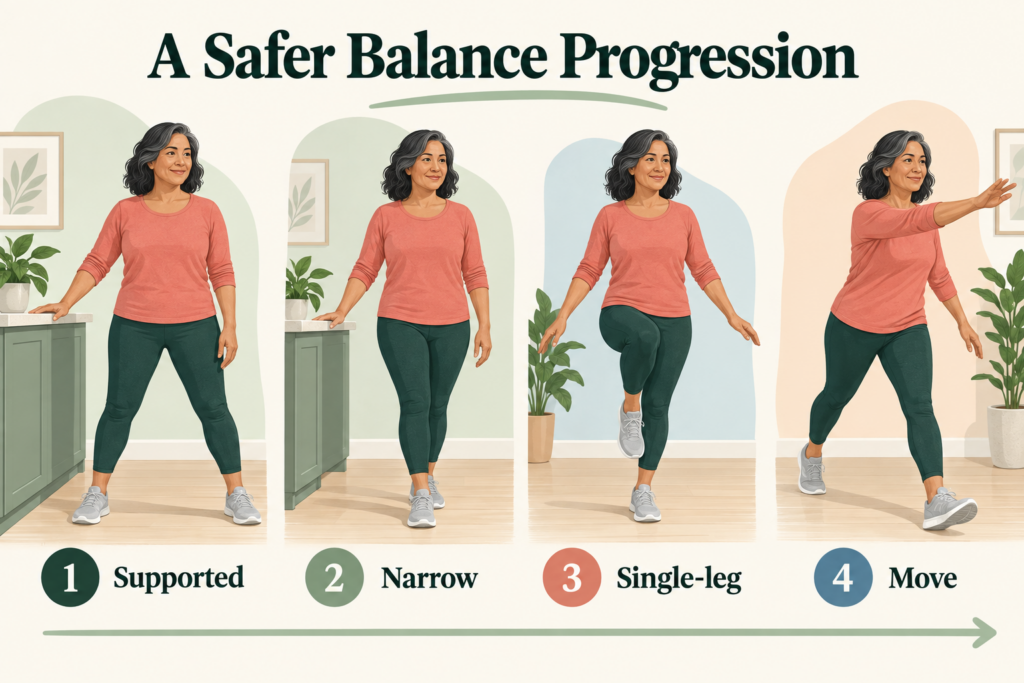
Progression. Hold each position for 10 to 20 seconds with normal breathing. Move from feet apart to feet together, then a staggered stance. Single-leg work comes later. Reduce hand support before adding a soft surface or closing the eyes. A simple interval timer can keep practice brief and consistent.
| Level | Practice | Ready to progress when |
|---|---|---|
| Supported | Feet apart, fingertips on counter | You remain steady without gripping |
| Narrow | Feet together or staggered | You can turn your head slowly |
| Single-leg | One foot lightly lifted | You control 10 to 20 seconds per side |
| Dynamic | Reach, step and change direction | Movement stays smooth and deliberate |
Framework informed by the U.S. Department of Health and Human Services physical activity guidelines.
Plan of action
- Practice beside a stable support for five minutes, three days this week.
- Use the easiest position that feels challenging but controlled.
- Progress only one variable at a time: stance, hand support, surface, vision, or movement.
- Stop and seek medical guidance for new dizziness, faintness, weakness, numbness, or rapidly worsening balance.
Table of Content
Know your body better.
Trusted By Thousands Daily




FAQs
How often should I practice balance?
Short, regular sessions are more useful than occasional long ones. Begin with several minutes on three or more days per week and adjust to your ability.
Should I close my eyes during balance exercises?
Not at first. Removing vision sharply increases difficulty. Master the position with eyes open and stable support nearby before considering that progression.
When should poor balance be checked by a clinician?
Seek evaluation for a sudden change, repeated falls, dizziness, faintness, new weakness or numbness, or balance problems that interfere with daily activity.
Legal Disclaimer
The content published on Livium Health is for informational and educational purposes only. Nothing on this site constitutes medical advice, diagnosis, or treatment. Always consult a qualified healthcare provider before making decisions about your health, including changes to medications, supplements, diet, or exercise.
Livium Health is not a medical practice and does not have a patient-provider relationship with its readers. We do not sell supplements, medications, or treatments, and we have no financial relationship with the products or services we reference.
While we work to ensure the information we publish is accurate and up to date, health and medical guidance evolves. We make no guarantees about the completeness or currency of any content on this site. Reliance on any information provided by Livium Health is solely at your own risk.
If you are experiencing a medical emergency, call 911 or your local emergency services immediately.
We may receive compensation, free products, or affiliate commissions for products mentioned in this post. Opinions are our own.