
Share
Energy & Focus
Men's Health
Women's Health
Chronic overwork is a metabolic problem. The body keeps the score in cortisol
7 min read

Key takeaways
- Chronic overwork produces measurable HPA axis dysregulation: elevated baseline cortisol, suppressed DHEA, reduced testosterone, and accelerated cellular aging via telomere shortening.
- The cognitive symptoms of burnout (poor memory, low motivation, reduced creativity, emotional blunting) are not psychological phenomena. They are downstream effects of cortisol’s structural impact on the prefrontal cortex and hippocampus.
- Burnout is not resolved by vacation. The HPA axis dysregulation that underlies it requires weeks to months of reduced demand alongside active recovery interventions.
- Phosphatidylserine, Rhodiola rosea, ashwagandha, and Tulsi each have published evidence for reducing cortisol and supporting HPA axis recovery at standard doses.
The endocrine system does not care how much you love your job
Chronic overwork produces a specific, measurable physiological signature that is independent of whether the person enjoys the work, feels fulfilled, or subjectively experiences stress. The HPA axis does not distinguish between a deadline that excites and a deadline that terrifies. It reads demand. Both register the same way on the cortisol curve.
Cortisol follows a diurnal rhythm. It peaks within 30 to 60 minutes of waking (the cortisol awakening response), declines through the morning, drops to a nadir around midnight, and rises again toward the next morning peak. This rhythm regulates immune function, metabolism, blood sugar, cognitive alertness, and circadian timing. When the HPA axis is chronically activated by unrelenting work demand, the rhythm flattens. The morning peak blunts. The evening nadir rises. And a previously functional hormonal system begins to run off the grid in ways that produce the characteristic burnout symptom cluster: morning exhaustion despite adequate sleep, an afternoon cognitive wall, emotional flatness, and a reduced capacity to recover from even minor stressors.
This is diagnosable on a blood test. Blunted AM cortisol below 10 mcg/dL, elevated PM cortisol above 3 mcg/dL, suppressed DHEA-S, and low testosterone in men. These are the biomarkers of an HPA axis that has been running in overdrive for long enough to start losing coherence.
What cortisol does to the brain over time
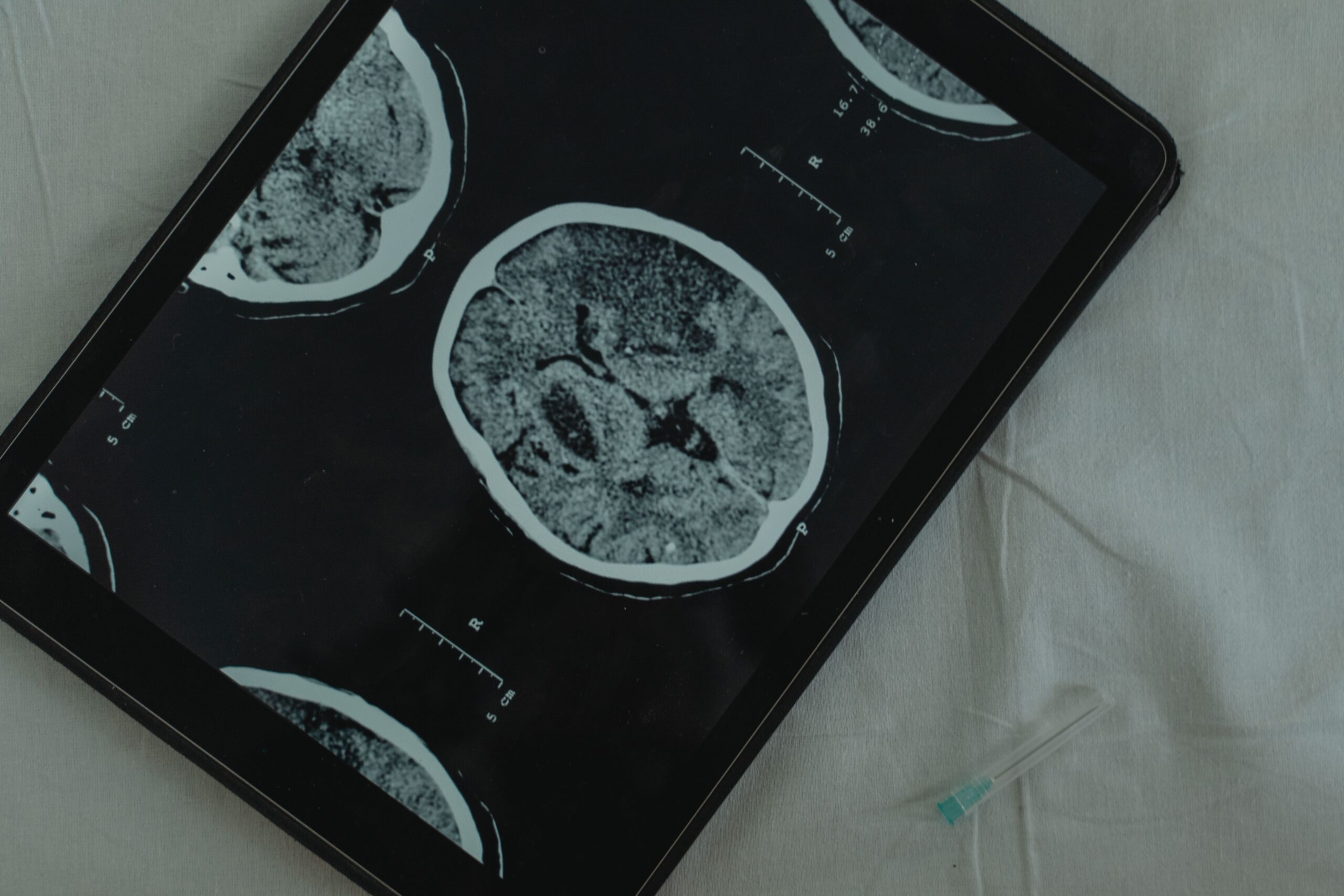
Prefrontal cortex atrophy. Chronic cortisol exposure reduces dendritic branching in the prefrontal cortex, the seat of executive function, working memory, and impulse control. This is structural, measurable on MRI, and associated with the cognitive symptoms that burned-out people describe: difficulty thinking clearly, poor planning, emotional dysregulation. The prefrontal cortex recovers with sufficient recovery time, but the process is not immediate.
Hippocampal volume reduction. The hippocampus, the primary site of memory formation and learning, is highly sensitive to cortisol via glucocorticoid receptor density. Chronic cortisol exposure suppresses hippocampal neurogenesis and reduces hippocampal volume in animal and human studies. The subjective experience includes poor short-term memory, difficulty learning new information, and a reduced sense of cognitive sharpness, which is distinct from and often coexists with prefrontal symptoms.
DHEA suppression. DHEA (dehydroepiandrosterone) is produced by the adrenal glands alongside cortisol. Chronically elevated cortisol demand progressively depletes DHEA-S as the adrenal glands prioritize cortisol production. DHEA has neuroprotective effects that counterbalance cortisol’s neurotoxic ones. When the cortisol-to-DHEA ratio rises, the neuroprotective buffer disappears. Low DHEA-S is one of the most consistent bloodwork findings in people who meet clinical burnout criteria.
Telomere shortening. Telomeres, the protective caps on chromosomes, shorten with each cell division. Psychological stress and chronic cortisol elevation accelerate this shortening. A 2004 study in PNAS showed that caregivers under chronic stress had significantly shorter telomeres than age-matched controls, equivalent to approximately 10 years of additional cellular aging. Overwork is not just burning out the person. It is aging the cells.
The adaptogen evidence
Adaptogens are plants that modulate the HPA axis response to stress without sedating or stimulating. They do not block cortisol acutely. They reduce the magnitude of the cortisol response to stressors and support the system’s ability to return to baseline faster. Four have the strongest clinical evidence for HPA axis support.
Ashwagandha (KSM-66). The most studied adaptogen for cortisol reduction. Multiple RCTs show 20-30% reductions in salivary and serum cortisol over 8-12 weeks. KSM-66 ashwagandha root extract at 600 mg daily is the dose used in the published trials. Note this is a different product format from the KSM-66 in the EF-07 testosterone article.
Rhodiola rosea. A Scandinavian and Siberian adaptogen with the most consistent evidence specifically for mental fatigue. Three RCTs in adults with burnout-related work-related fatigue show improved cognitive performance, reduced cortisol reactivity, and subjective improvement in fatigue over four to eight weeks. Rhodiola rosea extract standardized to 3% rosavins, at 300-600 mg daily, is the form studied. Take in the morning; it has mild stimulant properties at higher doses that can interfere with sleep if taken after noon.
Phosphatidylserine. A phospholipid that blunts the cortisol and ACTH response to exercise-induced stress and, in several studies, to cognitive stress. It supports neuronal membrane integrity in the prefrontal cortex and hippocampus, the two brain structures most damaged by chronic cortisol exposure. NOW Phosphatidylserine 100 mg, at 300 to 400 mg daily, is the dose with clinical evidence of HPA axis blunting.
Tulsi (Holy Basil). An Ayurvedic adaptogen with multiple human trials showing reduced cortisol, improved cognitive flexibility, and anti-anxiety effects at 300 to 600 mg daily. The mechanism involves eugenol and ocimumosides that modulate the HPA axis similarly to ashwagandha but through distinct receptor pathways. Organic India Tulsi extract is the most commonly studied commercial formulation. Can be stacked with ashwagandha without interaction concerns.
The Livium recipe
Tool. A blood panel including AM cortisol, PM cortisol, DHEA-S, free testosterone, and hs-CRP. The cortisol-to-DHEA-S ratio is the single most informative marker of HPA axis status. A ratio above 10 to 1 (cortisol in mcg/dL to DHEA-S in mg/dL) suggests meaningful HPA dysregulation. Most standard panels do not include DHEA-S or PM cortisol; specifically request both.
Behavior. Three non-negotiable recovery inputs. First: two full days per week with no work email, no Slack, no work-related cognitive load. Not reduced work. Zero work. The parasympathetic nervous system requires complete absence of demand to produce meaningful recovery. Second: daily physical movement that is not driven by performance metrics. Walking, yoga, swimming at a relaxed pace. The goal is parasympathetic activation, not cortisol generation from athletic effort. Third: consistent sleep timing including weekends. The HPA axis is a circadian system; schedule variability compounds its dysregulation.
Threshold. After eight to twelve weeks of consistent demand reduction and adaptogen support: AM cortisol should trend toward 15 to 20 mcg/dL. DHEA-S should trend upward. The subjective marker that most reliably precedes objective marker improvement: the ability to feel genuinely rested after a weekend, rather than merely less tired. When that returns, the HPA axis is beginning to recover.
What happens to the hormonal profile under chronic overwork
| Hormone | Normal pattern | Chronic overwork pattern | Symptom produced |
|---|---|---|---|
| Cortisol AM | 15–20 mcg/dL, sharp morning peak | Blunted peak below 10 mcg/dL | Morning exhaustion; slow start |
| Cortisol PM | Below 1.5 mcg/dL by evening | Elevated above 3 mcg/dL at 9 PM | Evening alertness; poor sleep onset |
| DHEA-S | Age-appropriate; high cortisol-to-DHEA ratio | Suppressed; ratio above 10:1 | Reduced neuroprotection; low energy |
| Testosterone (M) | Within functional range | Suppressed via HPG axis inhibition | Motivational flatness; low drive |
| HRV | Within 10% of personal baseline | Sustained depression below baseline | Poor recovery; reduced stress resilience |
Source: Livium editorial synthesis based on Endocrine Society adrenal function resources and Epel et al., PNAS (2004), Stress and telomere shortening.
Plan of action
- Get AM and PM cortisol plus DHEA-S on the next bloodwork panel. Calculate the cortisol-to-DHEA-S ratio. Above 10:1 indicates that HPA intervention is warranted.
- Start ashwagandha 600 mg and phosphatidylserine 300 mg daily. Give the stack for eight weeks before assessing effect. Cortisol changes are slow.
- Implement two fully work-free days per week immediately. This is the most impactful intervention and the one most people resist. The HPA axis does not recover under continued demand regardless of what supplements are added.
- Track HRV on a wearable. Sustained HRV below personal baseline alongside blunted AM cortisol is the two-marker signal that the system needs more recovery, not more optimization.
Table of Content

Know your body better.
Trusted By Thousands Daily




FAQs
Is burnout the same as adrenal fatigue?
No. Adrenal fatigue is not a recognized medical diagnosis, and the concept that the adrenal glands become exhausted and stop producing cortisol due to overuse is not supported by physiology. What is supported is HPA axis dysregulation: a disruption of the rhythm, timing, and amplitude of cortisol production rather than a failure of the glands themselves. Burnout produces HPA dysregulation. The glands continue working; the system they are part of loses its regulatory coherence.
Does one week of vacation fix burnout?
No. Research on vacation and HPA axis recovery shows that the subjective sense of restoration improves within a few days, but the hormonal markers of HPA dysregulation require weeks to months of sustained demand reduction to normalize. The cortisol curve begins to return to baseline within two to three weeks of genuine demand reduction. Full recovery of DHEA-S and testosterone to pre-burnout levels typically takes three to six months. A week of vacation followed by a return to the same conditions that produced burnout is a pause, not a recovery.
Can women experience the same HPA dysregulation from overwork as men?
Yes, with some differences. Women show higher cortisol reactivity to psychosocial stressors than men in controlled studies. Women are also more likely to experience burnout-related thyroid disruption alongside HPA dysregulation. The cortisol-to-DHEA-S ratio remains the most useful diagnostic marker regardless of sex. The downstream suppression of estrogen and progesterone in women mirrors the testosterone suppression in men in terms of mechanism and symptom cluster.
Legal Disclaimer
The content published on Livium Health is for informational and educational purposes only. Nothing on this site constitutes medical advice, diagnosis, or treatment. Always consult a qualified healthcare provider before making decisions about your health, including changes to medications, supplements, diet, or exercise.
Livium Health is not a medical practice and does not have a patient-provider relationship with its readers. We do not sell supplements, medications, or treatments, and we have no financial relationship with the products or services we reference.
While we work to ensure the information we publish is accurate and up to date, health and medical guidance evolves. We make no guarantees about the completeness or currency of any content on this site. Reliance on any information provided by Livium Health is solely at your own risk.
If you are experiencing a medical emergency, call 911 or your local emergency services immediately.
We may receive compensation, free products, or affiliate commissions for products mentioned in this post. Opinions are our own.