
Share
Longevity & Aging
Men's Health
Women's Health
Grip strength is a longevity biomarker. Take it seriously
4 min read
Key takeaways
- Grip strength is one of the most validated longevity biomarkers in the epidemiological literature, predicting all-cause mortality, cardiovascular events, cognitive decline, and functional disability independently of age, body weight, and self-reported physical activity.
- A 5 kg reduction in grip strength corresponds to a 16 percent increase in all-cause mortality risk and a 17 percent increase in cardiovascular mortality risk in the large Prospective Urban Rural Epidemiology (PURE) study of 140,000 adults across 17 countries.
- Grip strength works as a proxy because it reflects total body muscle mass, neuromuscular integrity, and systemic physiological reserve, all of the variables that determine how well the body handles the acute stresses of illness, surgery, and injury.
- Grip strength is trainable at any age through forearm and hand-specific training, progressive resistance training, and activities requiring sustained gripping. Deficits are addressable, not fixed.
Why a hand metric predicts who lives longest
Grip strength seems like an odd longevity marker until you understand what it is actually measuring. Grip strength reflects total body muscle mass because hand muscle and total body muscle are highly correlated, requiring similar neuromuscular integrity, adequate protein availability, hormonal support, and mechanical loading. A strong grip signals a body that has maintained its musculoskeletal health. A weak grip signals progressive loss that extends throughout the body.
The PURE study, the largest prospective grip strength dataset published, showed grip strength outperforming systolic blood pressure as a predictor of cardiovascular mortality. The Leiden 85-plus study found grip strength predicting cognitive decline better than any other simple clinical measure. The relationship is dose-dependent and continuous: every kilogram of grip strength matters.
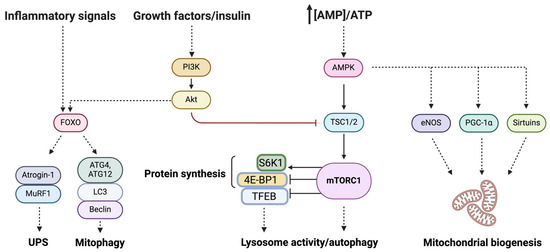
Grip strength declines because mitochondrial dysfunction in muscle cells disrupts the mTOR/AMPK balance between protein synthesis and catabolism. The measurement captures a systemic failure of energy production across every organ that depends on muscle — not just the hand. Source: Picca et al., IJMS 2024, 25(4), 2052 — Mitochondrial Quantity and Quality in Age-Related Sarcopenia. CC BY 4.0.
The Livium recipe
Tool. A hand dynamometer (available for $30 to $50) measures grip strength in kilograms. Test the dominant hand three times and record the peak. Reference values: men aged 40 to 59 should target above 40 kg; men aged 60 and above, above 35 kg. Women aged 40 to 59 should target above 25 kg; women aged 60 and above, above 20 kg. Below these thresholds indicates clinically significant weakness with associated longevity risk.
Behavior. Grip-specific training using resistance grippers three to four times per week alongside a progressive resistance training program targeting total body muscle mass. Dead hangs (hanging from a pull-up bar by the hands) for increasing durations. Farmer’s carries (walking while holding heavy dumbbells or kettlebells). Any activity requiring sustained loaded gripping improves grip strength through the same progressive overload principle as other resistance training.
Threshold. Retest grip strength monthly. A 2 to 3 kg improvement per month in early training is typical. The training effect plateaus at approximately six months of specific grip training; maintenance work three times per week sustains the achieved strength.
IronMind Captains of Crush Gripper is the benchmark resistance gripper, available in calibrated resistance levels from 60 to 365 pounds. Start at the Guide (60 lbs) or Sport (80 lbs) level. Metolius Rock Rings allow dead hangs and grip holds at varying depths from a door frame, producing full hand and forearm training in a home setting. Fat Gripz add diameter to any barbell or dumbbell, increasing the grip demand on every exercise and producing additional forearm and hand strength from existing training. Life Extension Advanced Mitochondrial Formula supports the cellular energy production that sustained grip strength training requires.
Grip strength reference values and targets
| Age | Men — low (kg) | Men — target (kg) | Women — low (kg) | Women — target (kg) |
|---|---|---|---|---|
| 40–49 | Below 37 | Above 44 | Below 22 | Above 27 |
| 50–59 | Below 35 | Above 41 | Below 20 | Above 25 |
| 60–69 | Below 30 | Above 37 | Below 17 | Above 21 |
Source: Livium editorial synthesis based on Leong et al., The Lancet (2015) PURE study and NIA Physical Performance Measurement.
Plan of action
- Measure grip strength this week. A bathroom scale placed against a wall works as a rough substitute if a dynamometer is unavailable: push against it with the palm and note the peak reading. A dynamometer costs $35 and provides a validated measurement.
- Add FatGripz to existing dumbbell and barbell work. This single addition doubles the grip training stimulus from every existing training session without adding time.
- Begin dead hangs. Start with 30-second holds on a pull-up bar three times at the end of each training session. Build to 60-second holds over four weeks. Dead hangs load the grip through the full range of finger flexion and train the forearm extensors simultaneously.
- Track grip strength monthly. The measurement takes 60 seconds and provides the most evidence-supported simple longevity biomarker available without a blood draw or imaging.
Table of Content
Know your body better.
Trusted By Thousands Daily




FAQs
Does arthritis or hand injury make grip strength an unreliable marker?
Yes. Grip strength should be interpreted in the context of local hand pathology. Severe hand osteoarthritis or a prior hand injury can lower grip strength independent of systemic muscle mass and health. In these cases, lower body strength measures (knee extension strength, chair stand test) provide a more reliable proxy for systemic physiological reserve.
Is grip strength different between dominant and non-dominant hands?
Typically 10 to 15 percent stronger in the dominant hand. Population norms account for this. The PURE study and most epidemiological work use the maximum of three trials from the dominant hand as the reference measure. Consistent testing of the same hand under the same conditions is what matters for tracking change over time.
Why does grip strength predict cognitive decline?
The association between grip strength and cognitive decline is mediated by myokine production in muscle (particularly irisin and BDNF) that supports hippocampal neuroplasticity, and by shared underlying mechanisms of sarcopenia and cognitive decline, including vascular health, inflammation, and insulin resistance. A body with high physiological reserve in its muscles has high reserve in its brain. Low grip strength signals systemic deterioration that the brain does not escape.
Legal Disclaimer
The content published on Livium Health is for informational and educational purposes only. Nothing on this site constitutes medical advice, diagnosis, or treatment. Always consult a qualified healthcare provider before making decisions about your health, including changes to medications, supplements, diet, or exercise.
Livium Health is not a medical practice and does not have a patient-provider relationship with its readers. We do not sell supplements, medications, or treatments, and we have no financial relationship with the products or services we reference.
While we work to ensure the information we publish is accurate and up to date, health and medical guidance evolves. We make no guarantees about the completeness or currency of any content on this site. Reliance on any information provided by Livium Health is solely at your own risk.
If you are experiencing a medical emergency, call 911 or your local emergency services immediately.
We may receive compensation, free products, or affiliate commissions for products mentioned in this post. Opinions are our own.