
Share
Men's Health
Nutrition
Women's Health
Healthy ultra-processed food is still different: What happened when both diets followed the guidelines
4 min read
Key takeaways
- A 2025 randomized crossover feeding trial compared ultra-processed and minimally processed diets that both followed national healthy-eating guidance.
- Participants lost weight on both diets, but weight loss was greater during the minimally processed phase.
- The study challenges the idea that nutrient targets erase every difference created by food processing.
- Processing level is useful context, but it should not become a purity test.
A healthy label does not erase food structure
Ultra-processed food research often gets dismissed with a fair objection: maybe people eating more packaged food simply have worse diets overall. A 2025 randomized crossover feeding trial tried to separate those questions.
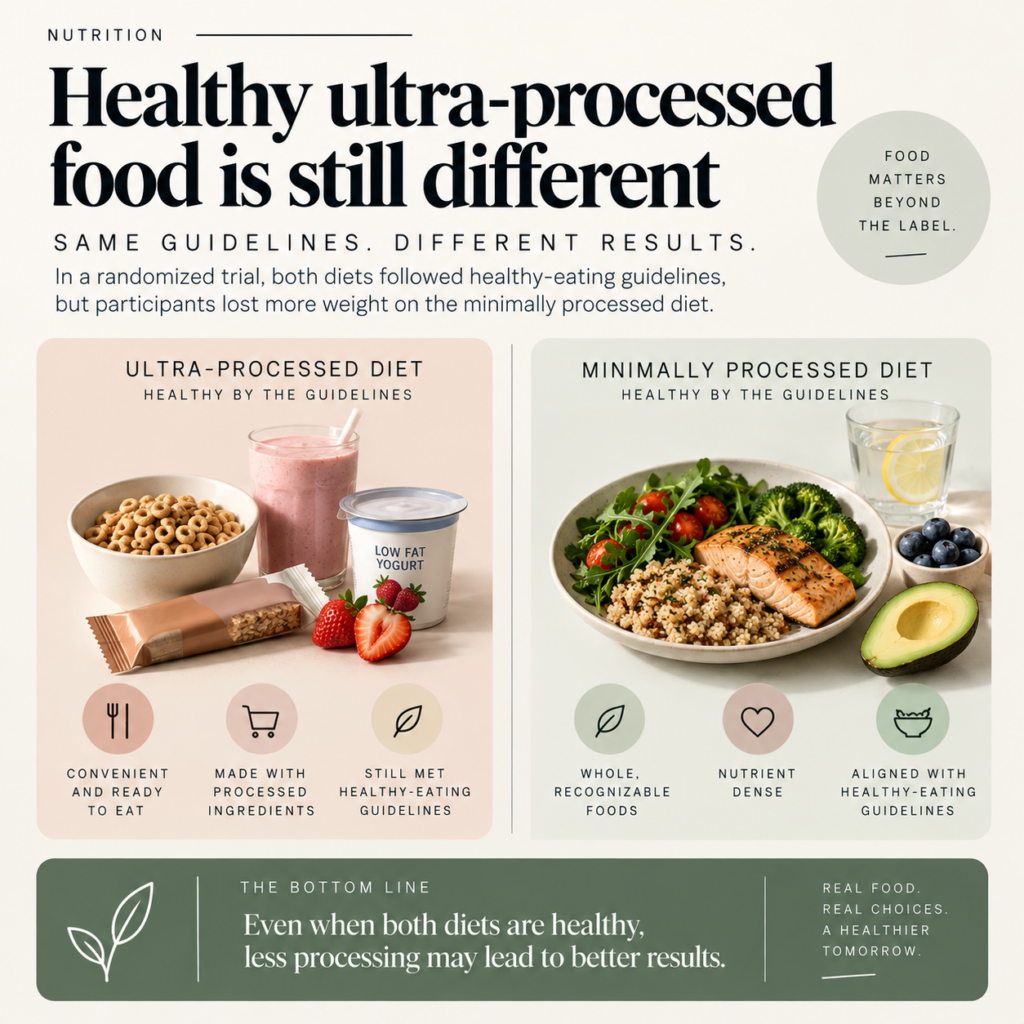
Adults in England were provided two eight-week diets in random order. Both followed the UK Eatwell Guide. One was built from minimally processed foods, and the other used more ultra-processed foods while still meeting the same broad healthy-diet guidance.
Both diets produced weight loss, but not the same amount
Participants lost weight during both phases. Average percentage weight change was about minus 2.06% on the minimally processed diet and minus 1.05% on the ultra-processed diet, a significant difference favoring the minimally processed phase.
That is more interesting than a simplistic good-food, bad-food story. The ultra-processed diet was not designed as junk food. It met national guidance, yet processing level still appeared to matter.
A set of food containers can make minimally processed leftovers as convenient as packaged meals, which is often the practical barrier rather than nutrition knowledge.
Why processing may change how much we eat
Food texture, energy density, eating rate, palatability, and the physical structure of ingredients can affect how quickly calories arrive before fullness catches up. Processing can change several of those variables at once.
This does not mean a blender, freezer, or factory automatically makes a food harmful. The NOVA category is broad. Whole-grain bread, flavored yogurt, protein products, and candy can all enter conversations about processing for very different reasons.
Use a weekly meal planner to identify the one or two convenience moments that repeatedly default to packaged meals. Replacing those moments is more realistic than rebuilding the pantry overnight.
The target is a pattern, not purity
The trial does not establish a safe percentage of ultra-processed calories, nor does it prove that every product within the category has the same effect. It does show that meeting nutrient guidance may not capture everything about a food.
A reusable bottle can replace one routinely packaged beverage, and a kitchen scale can help during recipe prep if portions are unfamiliar. Neither tool is necessary for a minimally processed diet.
Convenience matters. Frozen vegetables, canned beans, plain oats, and other practical staples can reduce cooking burden without turning eating into an all-or-nothing project.
The study also changes how we define a healthy convenience food
Nutrition labels are good at listing nutrients and poor at describing structure. Two foods can have similar calories, protein, fiber, sugar, and sodium while differing in texture, eating rate, and how much processing has already done the mechanical work of digestion.
That does not make the nutrition label irrelevant. It means the label and the degree of processing answer different questions. The most useful shopping decisions use both rather than pretending one system captures everything.
Minimally processed does not mean homemade from scratch
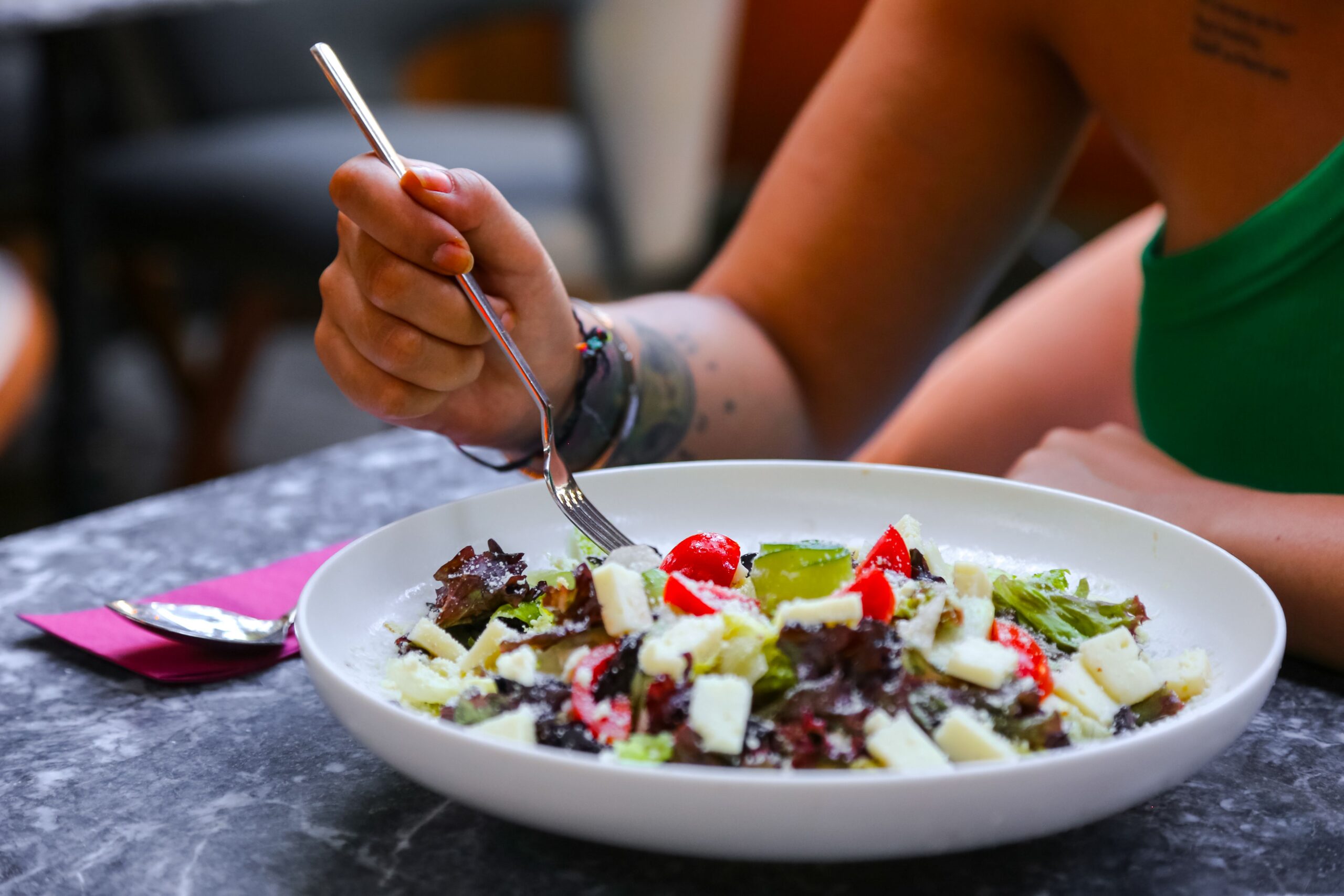
A useful interpretation of the trial is to move food closer to recognizable ingredients when that is practical, not to spend Sunday making every condiment and loaf of bread yourself. Canned beans, frozen fruit, plain yogurt, pre-cut vegetables, and simple packaged staples can make a less processed pattern realistic.
The best change is the one that survives a busy Wednesday. If the minimally processed version takes an extra hour every day, convenience will eventually win. Build shortcuts into the plan on purpose.
The Livium recipe
Tool. Look at the week’s eating pattern before auditing individual ingredients.
Behavior. Make minimally processed foods the default base and use packaged foods where they genuinely solve a problem.
Threshold. If food rules are becoming rigid or anxiety-producing, nutritional adequacy and a healthy relationship with eating matter more than achieving a processing score.
| Eight-week diet | Average weight change | What it shows |
|---|---|---|
| Minimally processed | -2.06% | Greater weight loss |
| Ultra-processed | -1.05% | Weight still decreased |
| Difference | -1.01 percentage points | Processing level mattered despite both diets following guidance |
Source: Dicken et al., Nature Medicine, 2025.
Plan of action
- Replace one repeat convenience meal with a simple minimally processed option.
- Keep useful frozen and canned staples instead of chasing food purity.
- Judge the weekly pattern rather than one snack.
- Choose changes that remain convenient enough to repeat.
Table of Content

Know your body better.
Trusted By Thousands Daily



FAQs
Can ultra-processed foods fit a healthy diet?
Yes, but the trial suggests a diet can meet dietary guidelines and still produce different outcomes depending on processing level.
Did participants lose weight on the ultra-processed diet?
Yes. Weight fell during both diet phases, but the decrease was significantly greater on the minimally processed diet.
Do I need to eliminate all ultra-processed foods?
No. The study supports shifting the overall pattern, not treating every processed food as forbidden.
Legal Disclaimer
The content published on Livium Health is for informational and educational purposes only. Nothing on this site constitutes medical advice, diagnosis, or treatment. Always consult a qualified healthcare provider before making decisions about your health, including changes to medications, supplements, diet, or exercise.
Livium Health is not a medical practice and does not have a patient-provider relationship with its readers. We do not sell supplements, medications, or treatments, and we have no financial relationship with the products or services we reference.
While we work to ensure the information we publish is accurate and up to date, health and medical guidance evolves. We make no guarantees about the completeness or currency of any content on this site. Reliance on any information provided by Livium Health is solely at your own risk.
If you are experiencing a medical emergency, call 911 or your local emergency services immediately.
We may receive compensation, free products, or affiliate commissions for products mentioned in this post. Opinions are our own.