
Share
Longevity & Aging
Men's Health
Women's Health
Hearing protection that doesn’t make you look 70: Loop and friends
7 min read
Key takeaways
- High-fidelity earplugs attenuate sound evenly across frequencies rather than muffling it. The music sounds the same at a concert. Just quieter. This is not what foam plugs do. It is what makes modern attenuators usable in environments where foam plugs were never realistic.
- The biggest barrier to hearing protection use is social: people do not want to wear something that looks medical or industrial. The current generation of hearing protection, led by Loop, Eargasm, Etymotic, and Vibes, is designed to be worn visibly without self-consciousness. Earplugs are now a longevity tool with the aesthetic footprint of jewelry.
- Noise reduction rating (NRR) and signal-to-noise ratio (SNR) are different measurement systems. NRR is the US standard; SNR is the European standard. Neither tells you the whole story without context. What matters for music and social environments is frequency-balanced attenuation, not maximum NRR.
- The environments that warrant protection are more common than most people think: concerts, sporting events, motorcycles, power tools, kids’ birthday parties, nightclubs, loud restaurants. Wearing protection in these contexts is the same logic as sunscreen: boring, obvious, and dramatically worth it over a lifetime.
The foam plug problem
The orange foam plug has been the default hearing protection option for decades. It works. NRR 33, maximum attenuation, cheap, disposable. At a shooting range or on a construction site, it is exactly the right tool. At a concert, it is not. Foam plugs attenuate high frequencies far more than low frequencies, turning music into a muffled bass rumble and voice into an indistinguishable murmur. Wearing them in a music venue is choosing between hearing damage and a worse experience. Most people choose not to wear them.
High-fidelity attenuators solve this with a different mechanism. Instead of blocking sound indiscriminately, they use a tuned acoustic filter that reduces sound pressure level evenly across the frequency spectrum. The result is music that sounds like the same mix at a lower volume. Voices are still intelligible. The experience is preserved. The hair cells are not.
The current options
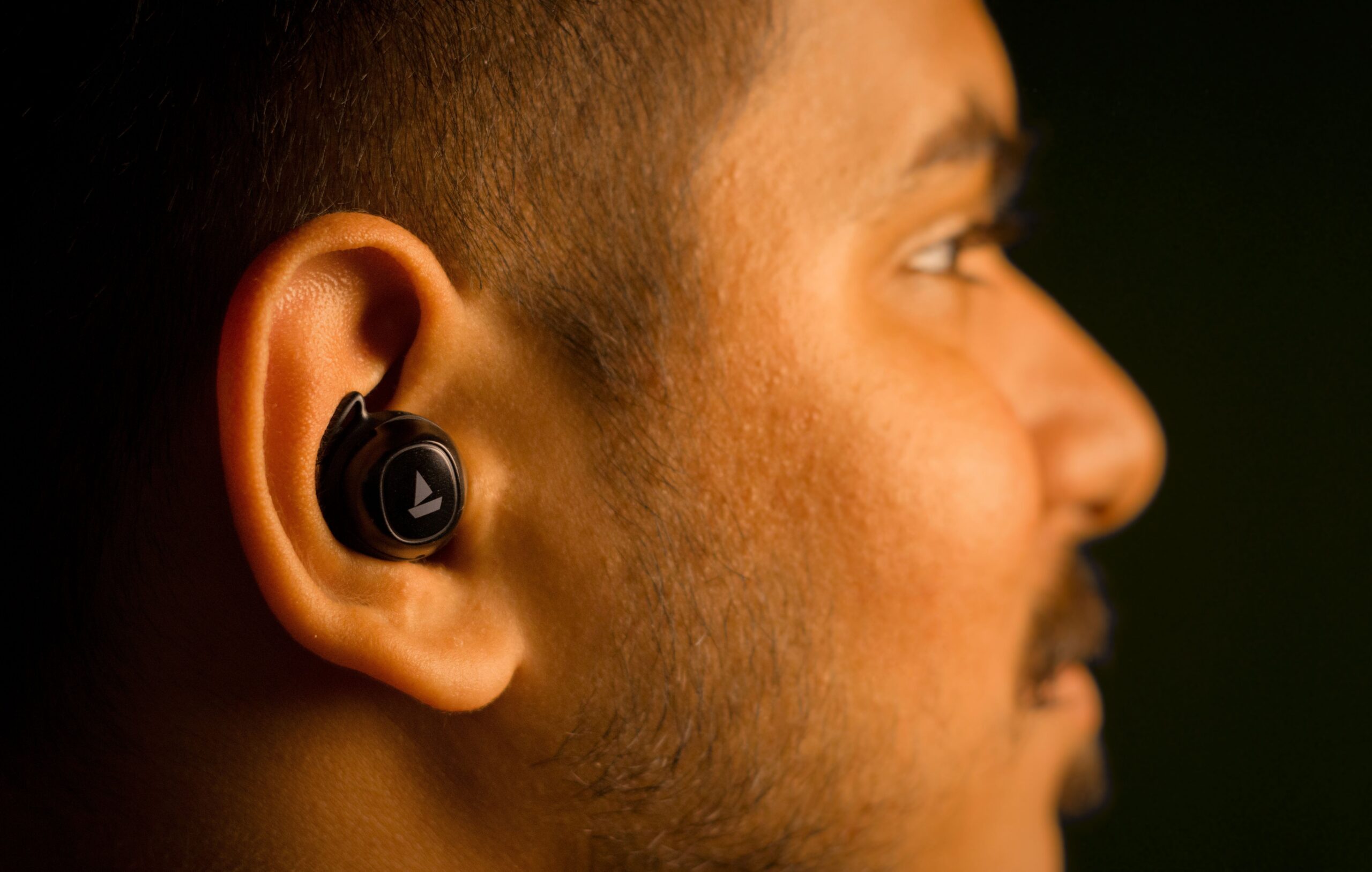
Loop. The brand that made hearing protection a consumer category. Loop Experience Pro (18 dB SNR) and Loop Engage (16 dB SNR) are the flagship models. Designed to look like jewelry rather than ear protection, available in multiple colors and finishes, with a silicone tip that sits at the canal entrance rather than deep-inserted. The acoustic filter is embedded in the housing. They are the highest-profile mainstream option and have meaningful traction in concert and nightlife contexts.
Etymotic ER20XS. The standard against which most high-fidelity plugs are measured. Twenty dB uniform attenuation, triple-flange silicone tip for deep canal fit, the best frequency balance of any consumer earplug at this price. Less aesthetically designed than Loop but the acoustic performance is excellent. Standard choice among professional musicians and audiologists recommending protection for music environments.
Eargasm High Fidelity. Similar mechanism to Etymotic, attenuation around 16 to 21 dB, comes with two filter options (standard and high attenuation), silicone tips in multiple sizes. Strong comfort reviews for all-night wear. Price point slightly above Etymotic.
Vibes. The lowest-profile option visually, a translucent plug designed to be nearly invisible in the ear. Lower attenuation (22 dB NRR, approximately 11 dB actual in real-world use) than the others. Best suited for moderate-noise environments: loud restaurants, kids’ events, sporting events. Not sufficient for concert-level exposure on its own.
Decibullz. Custom-moldable thermoplastic plugs that conform to your ear canal when heated. The best passive fit available without a professional custom mold. Significantly better seal than standard silicone tips, which matters at very high exposure levels (motorsports, shooting, industrial). The custom fit also means they stay in during physical activity better than any other option.
EarPeace. Three interchangeable filter levels (low, medium, high) in the same housing. Useful for variable environments where you might want 12 dB at a work event and 23 dB at a loud concert without switching products.

NRR versus SNR: What the numbers actually mean
NRR (noise reduction rating) is the US measurement standard, set by OSHA and the EPA, and is based on testing methodology. It is measured in a laboratory with an optimally fitted plug. Real-world attenuation is typically about half the NRR value because most people do not achieve the optimal laboratory fit. A foam plug rated at NRR 33 delivers approximately 16-17 dB of protection in real-world use.
SNR (single-number rating) is the European standard and provides a more realistic estimate of real-world performance. The SNR value is generally closer to actual field performance than the NRR value. When comparing products that list SNR rather than NRR, the numbers are roughly comparable to what you will actually experience.
For music environments, the relevant question is not maximum NRR but frequency balance. A plug with NRR 12 and flat frequency response will preserve the musical experience better than a plug with NRR 25 and severe high-frequency attenuation, even if the higher-NRR plug offers technically more protection. The protection you will actually use is more valuable than the maximum protection you leave in your pocket.
The Livium recipe
Tool. One pair of high-fidelity earplugs in your regular carry. Loop Experience 2 for the aesthetics-first buyer; Etymotic ER20XS for the performance-first buyer; Eargasm High Fidelity for the comfort-first buyer. Keep a backup pair of foam plugs rated NRR 33 for high-industrial-noise environments (power tools, shooting ranges) where maximum attenuation matters more than sound quality. Carry both. Use the right one for the context.
Behavior. The barrier is proximity, not intention. Everyone intends to use hearing protection. Nobody has it on them. The solution is a keychain carrying case or a small pouch that you can keep in the bag you carry daily. Loop sells a carrying case for exactly this. The 30 seconds of friction between the intent and the plug in your ear is what prevents you from using it. Remove the friction. The other behavioral change: use them before you think you need them. Once you notice your ears ringing, the damage from that exposure is already done. Protection goes in before the loud environment, not in response to it.
Threshold. Any environment above 85 dB warrants protection. The practical list: concerts and live music, clubs and loud bars, sporting events (especially motorsports), motorcycles and ATVs, power tools (especially gas-powered), construction sites, shooting ranges, aircraft cabin for extended flights, and surprisingly, children’s birthday parties and school events in gymnasium spaces where ambient noise can exceed 90 dB. The 60/60 rule applies to personal audio: no more than 60 percent volume for no more than 60 minutes at a stretch.
| Product | Attenuation | Best for | Approx. price |
|---|---|---|---|
| Loop Experience Pro | 18 dB SNR (flat) | Concerts, nightlife, daily carry | $35–$40 |
| Etymotic ER20XS | 20 dB (flat) | Music, speech environments, professional use | $20–$25 |
| Eargasm High Fidelity | 16–21 dB (flat) | All-night events, extended wear comfort | $35–$45 |
| Vibes Hi-Fidelity | 22 dB NRR (~11 real-world) | Restaurants, kids’ events, low-to-moderate noise | $25–$30 |
| Decibullz Custom | 31 dB NRR | Motorsports, shooting, high-intensity industrial | $25–$35 |
| Foam plugs (NRR 33) | 33 dB NRR (~16 real-world) | Industrial, construction, maximum attenuation needed | Under $1 per pair |
Source: NIOSH Noise and Hearing Loss Prevention and AAA position statement on hearing protection for musicians and concert-goers.
Plan of action
- Buy one pair of high-fidelity earplugs this week and put them in whatever you carry daily. The specific brand matters less than the presence. Loop, Etymotic, Eargasm, Vibes: pick one. They are all meaningfully better than nothing and all meaningfully better than foam plugs in music and social environments.
- If you go to concerts, sporting events, or any regular loud environment: those earplugs go in before you enter the venue, not when the ringing starts. The moment your ears ring during exposure, the temporary threshold shift has already occurred. Damage is cumulative. The pre-event habit is the protection.
- Check the volume on your earbuds. Most smartphones have a built-in hearing health tracker (Settings > Sound and Haptics > Headphone Safety on iPhone) that reports your weekly average earbud volume. If you are consistently above 75 dB average, that is an actionable number. Noise-canceling headphones reduce the ambient noise floor, so you can hear at a lower volume without competing with background noise.
- Parents: high-fidelity earplugs belong in the bag for any kids’ event in a gymnasium, arena, or stadium. Indoor kids’ events in reverberant spaces routinely exceed 90 dB. You are not being precious. You are preserving your hearing for the next 40 years of life after the birthday party.
Table of Content

Know your body better.
Trusted By Thousands Daily






FAQs
Do musicians use custom-molded earplugs instead of consumer options?
Professional musicians with significant noise exposure (touring performers, orchestral players, sound engineers) typically use custom-molded musicians’ earplugs, made from an ear impression taken by an audiologist and fitted with interchangeable acoustic filters at 9, 15, or 25 dB attenuation. Cost is approximately $150 to $300 per pair. For everyday concert attendance and general noise exposure, the consumer high-fidelity options perform comparably at a fraction of the cost.
Are electronic hearing protectors worth the cost for recreational shooting?
Yes, for regular shooters. Electronic earmuffs (Howard Leight Impact Sport, Walker’s Razor) amplify ambient sounds to normal levels while electronically suppressing impulse sounds above 85 dB. You can have normal conversations on the range and hear range commands while still being protected from gunshot impulse noise. For occasional recreational shooting, standard foam plugs and earmuffs, used in combination (double protection), achieve the required attenuation without the premium of electronics.
Can I wear high-fidelity earplugs and still hold a conversation at a concert?
At 15-20 dB attenuation, voice remains fully intelligible with high-fidelity earplugs in a concert setting. The overall sound level drops enough that speech at normal-to-raised volume is comfortable. This is the other design advantage over foam plugs: they attenuate the frequencies that most strongly carry speech intelligibility, making conversation impossible. High-fidelity attenuators preserve speech while reducing the total level.
Legal Disclaimer
The content published on Livium Health is for informational and educational purposes only. Nothing on this site constitutes medical advice, diagnosis, or treatment. Always consult a qualified healthcare provider before making decisions about your health, including changes to medications, supplements, diet, or exercise.
Livium Health is not a medical practice and does not have a patient-provider relationship with its readers. We do not sell supplements, medications, or treatments, and we have no financial relationship with the products or services we reference.
While we work to ensure the information we publish is accurate and up to date, health and medical guidance evolves. We make no guarantees about the completeness or currency of any content on this site. Reliance on any information provided by Livium Health is solely at your own risk.
If you are experiencing a medical emergency, call 911 or your local emergency services immediately.
We may receive compensation, free products, or affiliate commissions for products mentioned in this post. Opinions are our own.