Heat and cold: What the sauna and cold plunge data actually shows for longevity
5 min read
Key takeaways
Finnish sauna use four to seven times per week is associated with a 40 percent reduction in all-cause mortality, a 50 percent reduction in fatal cardiovascular events, and a 66 percent reduction in dementia risk in the KIHD prospective study of 2,315 Finnish men over 20 years. This is among the strongest longevity associations in epidemiology for a single modifiable behavior.
The sauna longevity data comes primarily from traditional Finnish sauna at 80 to 100 degrees Celsius, not infrared sauna. Infrared saunas produce lower core temperature elevation and have significantly less epidemiological data, though they are safer and more accessible.
Cold water immersion has published evidence for reduced inflammation, improved insulin sensitivity, enhanced norepinephrine release, and possible mitochondrial biogenesis effects, but lacks the long-term mortality data that sauna has accumulated. The longevity case for cold plunge is currently more mechanistic than epidemiological.
Combining heat and cold sequentially (contrast therapy) produces additive effects on norepinephrine, growth hormone, and vagal tone that neither alone produces to the same degree. The protocol used in most research: heat first, cold second.
The Finnish data and why it is compelling
The Kuopio Ischemic Heart Disease (KIHD) Risk Factor Study enrolled 2,315 Finnish men in the late 1980s and followed them for over 20 years. Jari Laukkanen and colleagues published the sauna analyses between 2015 and 2020. The dose-response relationship was striking: men using the sauna two to three times per week had lower mortality than those using it once per week; men using it four to seven times per week had lower mortality still. The reduction in sudden cardiac death (63 percent lower in the four to seven times per week group) is particularly remarkable because sudden cardiac death is one of the most difficult outcomes to influence through any modifiable behavior.
The mechanisms are well characterized. Sauna produces core body temperature elevation to 38.5 to 39 degrees Celsius, heart rate elevation to 100 to 150 beats per minute, plasma volume expansion, reduced arterial stiffness through heat shock protein (HSP) production and nitric oxide release, increased growth hormone, and sustained reductions in blood pressure lasting up to 24 hours post-sauna. The cardiovascular stress of sauna is comparable to moderate aerobic exercise and may partially explain the cardiovascular benefit in a population where sauna use is embedded in daily life.
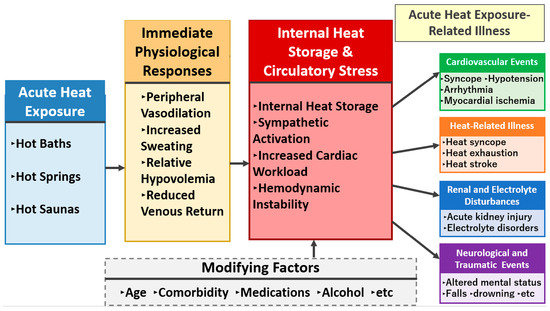
Acute sauna exposure triggers peripheral vasodilation, a rise in cardiac output, relative hypovolemia, and core temperature elevation — the same cardiovascular stress response as moderate-intensity aerobic exercise. Repeated sessions produce lasting adaptations in endothelial function and arterial compliance, which is the mechanism behind the Finnish cohort’s lower cardiovascular mortality. Source: Konta et al., JCM 2026, 15(5), 1910 — Acute Heat Exposure from Hot Baths, Hot Springs, and Saunas. CC BY 4.0.
Cold immersion: what the evidence actually shows
Norepinephrine and dopamine. Cold water immersion at 14 degrees Celsius produces a 300 percent increase in norepinephrine and a 250 percent increase in dopamine in published human studies. These elevations are sustained for hours post-immersion. The norepinephrine increase produces attention enhancement, mood elevation, and pain reduction. The dopamine increase produces the post-plunge motivation and energy that regular cold immersion users consistently report.
Inflammation reduction. Cold immersion reduces IL-6 and CRP in multiple studies, partly through norepinephrine-mediated inhibition of inflammatory signaling and partly through the direct vasoconstrictive effects on inflamed tissue. The effect is real but smaller in magnitude than anti-inflammatory dietary interventions. It is most useful as an adjunct to primary inflammation management.
Timing with resistance training. Cold immersion immediately after resistance training appears to blunt the mTOR-mediated muscle protein synthesis response by reducing the post-exercise inflammatory signaling that is part of the muscle adaptation process. The practical recommendation: cold plunge on non-training days or at least three hours after resistance training. On aerobic training days, cold immersion immediately post-exercise is acceptable and may enhance recovery.
The Livium recipe
Tool. Traditional sauna access (gym, spa, or home unit) is the gold standard. For home use where a traditional sauna is not accessible, an infrared sauna blanket produces approximately 40 percent of the core temperature elevation of a traditional sauna and significantly more than that of a hot bath, with published evidence of improvements in blood pressure and cardiovascular markers. For cold immersion, The Pod Company Ice Pod Pro with ice provides the 14-15°C temperature range used in the most compelling cold immersion research at a fraction of the cost of dedicated cold plunge units.
Behavior. Four sauna sessions per week is the minimum for the most significant cardiovascular mortality reduction in the KIHD data. Traditional sauna: 80 to 100 degrees Celsius, 15 to 20 minutes per session. For contrast therapy: sauna first (15 to 20 minutes), cool shower or air cool for five minutes, cold immersion at 14 to 15 degrees Celsius for 2 to 3 minutes, repeat cycle one to two times. End with cold for the dopamine/norepinephrine benefit.
Threshold. After 12 weeks of four sauna sessions weekly: resting heart rate should trend downward, HRV should trend upward, and morning blood pressure should trend toward improvement in adults with elevated baseline. The chronic training adaptations from repeated sauna exposure (arterial compliance, plasma volume expansion, HSP upregulation) accumulate over three to six months of consistent use.
NOW Foods Ginger Root 550 mg supports the same anti-inflammatory and cardiovascular pathways that sauna activates. Gingerols inhibit the same prostaglandin and cytokine signals that heat stress downregulates, making it a useful daily stack alongside a sauna practice rather than a replacement for it. NOW Foods Glutathione 250 mg supports the antioxidant defense system stressed by the thermal and oxidative challenges of regular heat and cold exposure, maintaining the redox balance that makes the adaptations from heat/cold stress beneficial rather than damaging.
Modality
Longevity evidence
Temperature
Target session
Frequency
Traditional Finnish sauna
Very strong (KIHD 20-year data)
80–100°C
15–20 min
4–7x/week
Infrared sauna/blanket
Moderate (biomarker data; less mortality data)
45–60°C
30–45 min
4x/week
Cold water immersion
Solid mechanism; limited mortality data
10–15°C
2–5 min
3–5x/week
Contrast therapy (heat + cold)
Additive; strong for recovery and autonomic balance
Both as above
Sauna then cold; end cold
3–4x/week
Source: Livium editorial synthesis based on AHA Sauna and Cardiovascular Health and Laukkanen et al., JAMA Internal Medicine (2015), KIHD sauna study.
Plan of action
Identify a gym, spa, or facility with a traditional sauna within a reasonable commute and build four weekly sauna sessions into the schedule. The dose-response data are clear: four or more sessions per week yield substantially greater cardiovascular mortality benefit than one to two sessions per week.
If traditional sauna is not accessible, an infrared sauna blanket is the best alternative. While the mortality data are less robust than for traditional saunas, the biomarker data for blood pressure, HRV, and inflammatory markers are meaningful, and the cost is a fraction of that of a dedicated home sauna.
Do not cold plunge immediately after resistance training. Schedule cold immersion either on non-training days or three or more hours after resistance work to preserve the muscle protein synthesis response.
Track resting heart rate and HRV on a wearable before and after establishing a four-day sauna routine. The cardiovascular training adaptations begin appearing in HRV data within six to eight weeks of consistent use.
Is sauna safe for people with cardiovascular disease?+
The KIHD data showed the greatest cardiovascular mortality benefit in men with higher cardiovascular risk. However, people with unstable cardiovascular disease, severe heart failure, recent heart attack, or uncontrolled arrhythmia should consult a cardiologist before initiating sauna use. Stable cardiovascular disease with physician clearance is compatible with sauna at lower temperatures and shorter durations, building up gradually.
Does cold plunge work if the water is not cold enough?+
The norepinephrine response is temperature-dependent and significantly larger at 14 to 15 degrees Celsius than at 20 degrees Celsius. A shower that feels cold but is above 20 degrees Celsius produces a fraction of the hormonal response of genuine cold water immersion. The discomfort threshold that most people associate with cold plunges correlates reasonably with the temperature range where the research-documented effects occur.
Do the data from Finnish saunas apply to infrared saunas?+
Not directly. The KIHD study used traditional Finnish sauna at 80 to 100 degrees Celsius, which produces a substantially higher core body temperature elevation than infrared sauna. The proposed mechanisms (HSP upregulation, arterial compliance improvement, plasma volume expansion) depend on reaching a meaningful core temperature increase. Infrared sauna produces a smaller temperature elevation over a longer duration and likely shares some but not all of the mechanisms of traditional sauna. The available infrared sauna data are positive for biomarker outcomes, but the mortality data specifically required 20 years of follow-up in a specific Finnish population using specific conditions.
Legal Disclaimer
The content published on Livium Health is for informational and educational purposes only. Nothing on this site constitutes medical advice, diagnosis, or treatment. Always consult a qualified healthcare provider before making decisions about your health, including changes to medications, supplements, diet, or exercise.
Livium Health is not a medical practice and does not have a patient-provider relationship with its readers. We do not sell supplements, medications, or treatments, and we have no financial relationship with the products or services we reference.
While we work to ensure the information we publish is accurate and up to date, health and medical guidance evolves. We make no guarantees about the completeness or currency of any content on this site. Reliance on any information provided by Livium Health is solely at your own risk.
If you are experiencing a medical emergency, call 911 or your local emergency services immediately.
We may receive compensation, free products, or affiliate commissions for products mentioned in this post. Opinions are our own.