
Share
Men's Health
Mental Health
Women's Health
Heat therapy for depression is having a moment: What the sauna research actually shows
5 min read
Key takeaways
- Controlled whole-body hyperthermia has shown an antidepressant signal in small randomized studies.
- A 2025 trial raised new questions about how much benefit comes from heat beyond CBT and nonspecific treatment effects.
- Home sauna and sauna blankets are not proven equivalents of research-grade hyperthermia.
- Use heat as a wellness practice if it is safe for you, not as a replacement for depression treatment.
The antidepressant sauna headline needs a reality check
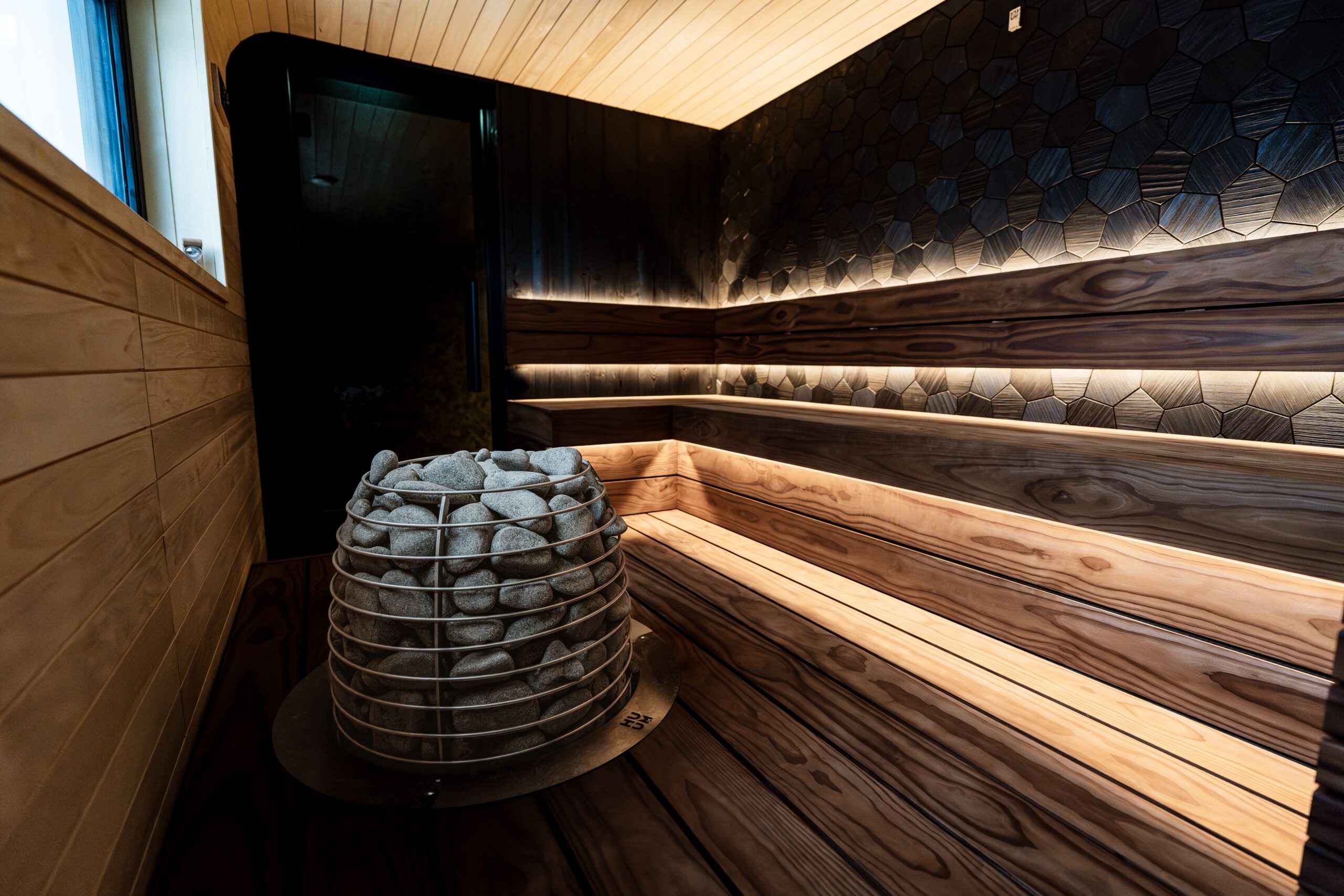
Whole-body heat is one of the stranger ideas moving through depression research. The basic observation is real: small randomized studies have found antidepressant effects after controlled whole-body hyperthermia. The leap from that finding to “your sauna treats depression” is not real.
Earlier randomized work found a larger reduction in depression scores after active whole-body hyperthermia than after a sham condition. More recent work has continued investigating possible mechanisms, including inflammatory signaling and thermoregulation.
A 2025 randomized trial added either active whole-body hyperthermia or a sham heat condition to cognitive behavioral therapy. Both groups improved substantially. The study did not establish that active heat clearly outperformed the comparison condition.
Why heat is biologically plausible
Body temperature, sleep, circadian timing, inflammation, and mood are connected systems. Researchers have proposed that controlled heating may influence thermoregulatory pathways and inflammatory signaling involved in depression.
Plausible does not mean proven. Clinical hyperthermia involves screening, temperature monitoring, controlled equipment, and a defined protocol. A gym sauna session after work is not automatically equivalent.
This distinction matters because wellness marketing tends to erase the dose. A clinical protocol and a warm 20-minute sauna may both involve heat, but that does not make them the same intervention.
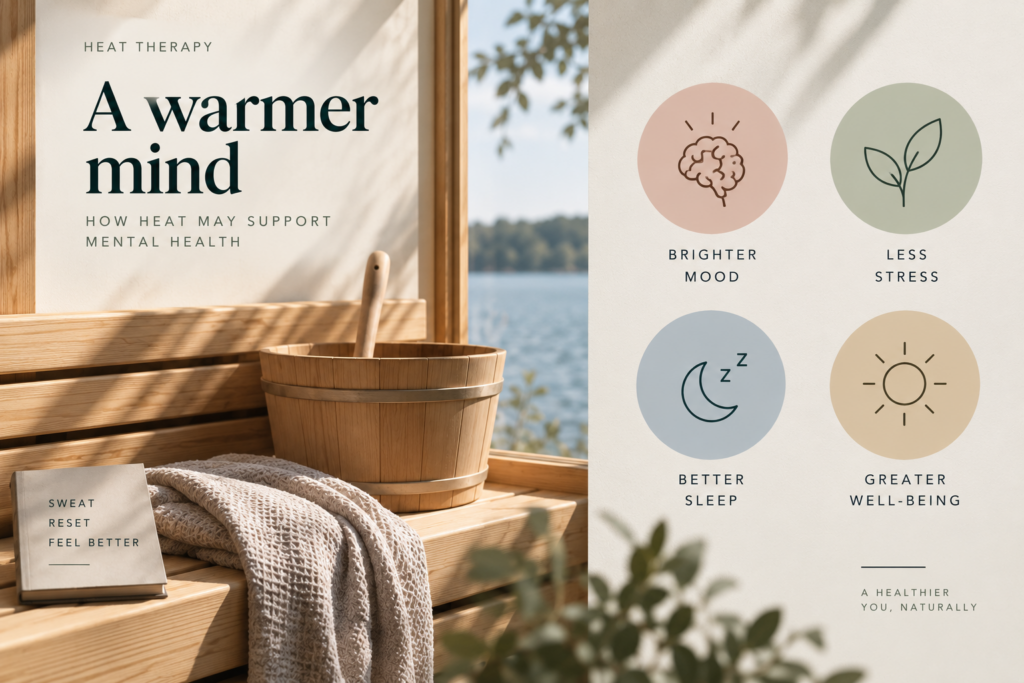
The immediate effect of heat can also confuse the issue. Warmth can feel relaxing, a sauna session creates a forced break from screens and work, and the ritual itself can be pleasant. Those are real benefits, but they make it difficult to know whether heat is acting through a specific antidepressant mechanism or through ordinary relaxation and expectancy.
That is exactly why sham-controlled trials matter. If both groups improve, the result is not a failure. It tells researchers that attention, ritual, expectancy, CBT, and the sensory experience of treatment may all be contributing. The next study has to separate those pieces more cleanly.
The Livium recipe
Tool. If you already use heat for relaxation or recovery, treat it as a wellness tool rather than an antidepressant device. The HigherDOSE infrared sauna blanket is a specific home heat product, but it has not been proven equivalent to research-grade hyperthermia. Keep an Owala FreeSip bottle nearby for normal hydration. A TheraICE cooling cap can help you cool down afterward, and a notebook can track mood before and after sessions.
Behavior. If you already tolerate sauna or heat well, use a consistent, conservative routine and judge it by relaxation, enjoyment, and recovery. Do not escalate temperature or duration because a depression study used controlled hyperthermia.
Threshold. Heat is not a substitute for depression treatment. If low mood lasts most days for two weeks, function is dropping, or you are having thoughts of self-harm, professional evaluation takes priority.
| Evidence | What happened | What it means |
|---|---|---|
| Earlier randomized trial | Active hyperthermia outperformed sham | Promising antidepressant signal |
| Mechanism research | Inflammatory and thermoregulatory pathways are being studied | Biologically plausible, not settled |
| 2025 CBT + heat trial | Both active and comparison groups improved | Added benefit remains uncertain |
| Home sauna use | Not the same protocol | Do not call it depression treatment |
Source: Mason et al., randomized CBT and whole-body hyperthermia trial, 2025.
What we are ruling out
This is not permission to use extreme heat when you are dehydrated, ill, intoxicated, pregnant, taking medications that impair heat tolerance, or living with a condition that makes heat unsafe.
A good mood after a sauna does not tell you whether major depressive disorder is improving. Clinical depression is measured across days and weeks, including sleep, interest, energy, concentration, appetite, function, and safety.
If you enjoy sauna and it helps you unwind, that is enough. A wellness habit does not need an antidepressant claim attached to it to be worthwhile.
What would change the recommendation
The evidence becomes more convincing if larger trials can reproduce the antidepressant effect with a credible sham and show that the benefit lasts. Researchers also need to establish which patients respond, how much heat is required, how often treatment should occur, and which medical conditions change safety.
Until then, the most defensible position is curiosity without overclaiming. Heat may eventually become an adjunctive treatment. Right now, established depression treatments have a much stronger evidence base and should remain the center of the plan.
There is also a practical reason not to chase the hottest possible session. Heat stress is still stress. More is not automatically better, and a protocol that leaves you depleted, dizzy, or unable to sleep has failed as a wellness routine even if the internet calls it hormesis.
If heat reliably improves relaxation, use that as the outcome. If it worsens sleep, headaches, lightheadedness, or recovery, reduce the dose or stop. The reader does not need to reproduce a laboratory intervention to justify enjoying a sauna.
Plan of action
- If you already use heat safely, keep the routine conservative and consistent.
- Track mood before and several hours after, not only the immediate post-sauna calm.
- Do not increase heat exposure to imitate a research protocol.
- Review medications and medical conditions that may change heat tolerance.
- Use established depression care when symptoms are persistent or impairing.
The decision this week. Keep sauna in the wellness column for now. The research is interesting enough to watch, but not strong enough to replace treatment.
Table of Content

Know your body better.
Trusted By Thousands Daily




FAQs
Can a sauna treat depression?
Research-grade whole-body hyperthermia has shown promising results, but ordinary sauna use has not been established as a treatment for major depression.
Is an infrared sauna blanket the same as whole-body hyperthermia?
No. Clinical studies use controlled protocols and monitoring. A consumer sauna blanket should not be assumed to reproduce the same treatment exposure.
How often should I use heat for depression?
There is no established home-sauna dosing protocol for treating depression. If you use heat, use it for general wellness and follow safety guidance.
Legal Disclaimer
The content published on Livium Health is for informational and educational purposes only. Nothing on this site constitutes medical advice, diagnosis, or treatment. Always consult a qualified healthcare provider before making decisions about your health, including changes to medications, supplements, diet, or exercise.
Livium Health is not a medical practice and does not have a patient-provider relationship with its readers. We do not sell supplements, medications, or treatments, and we have no financial relationship with the products or services we reference.
While we work to ensure the information we publish is accurate and up to date, health and medical guidance evolves. We make no guarantees about the completeness or currency of any content on this site. Reliance on any information provided by Livium Health is solely at your own risk.
If you are experiencing a medical emergency, call 911 or your local emergency services immediately.
We may receive compensation, free products, or affiliate commissions for products mentioned in this post. Opinions are our own.