
Share
Men's Health
Sleep
Women's Health
Jet lag after 40: How to land functional
7 min read
Key takeaways
- Jet lag hits harder after 40 because circadian rhythm flexibility declines with age. Recovery from a 6-hour eastward time zone shift takes the average 45-year-old roughly 30 percent longer than it did at 25.
- The biggest jet lag mistake is melatonin timing. Most people take it too early, too late, or at the wrong dose. 0.5 mg taken at the target bedtime in the new time zone is more effective than 5 mg taken at the wrong time.
- Light is the most powerful circadian reset tool available. Bright light exposure at the right time in the new time zone matters more than any supplement.
- Eastward travel is harder than westward for most adults. Your biological clock runs slightly longer than 24 hours, making it easier to delay sleep than to advance it.
You landed in London. Your body is still in Chicago
You are sitting in a conference room that is cold in the way only conference rooms in November are cold. You have a 4 PM presentation. You have been awake since 4 AM body time. Your cortisol already peaked six hours ago, your body temperature is heading the wrong direction, and the coffee stopped working around noon local.
Jet lag is not just feeling tired. It is your suprachiasmatic nucleus (SCN), the brain’s master clock, running on a different schedule than every clock in the building. The SCN governs cortisol timing, core body temperature rhythm, melatonin secretion, and digestive function. All of them are synchronized to your home time zone. All of them need recalibrating. And after 40, that recalibration is slower than it used to be.
Why it hits harder at midlife
The SCN loses sensitivity with age. Older adults have a smaller amplitude circadian rhythm, meaning the peaks and troughs of temperature, cortisol, and melatonin are less pronounced. That sounds minor. It is not. A flatter circadian rhythm is harder to shift because there is less mechanical energy driving the clock to a new phase position.
At the same time, melatonin production declines with age. The pineal gland of a 50-year-old produces roughly half the melatonin of a 25-year-old at peak. That matters for jet lag recovery because melatonin is the primary signal the SCN uses to confirm nighttime. Less melatonin means a weaker “it is now nighttime in this time zone” signal, which means slower clock reset.
The result is practical: a 45-year-old traveling New York to London (6 hours east) will typically take 4 to 5 days to fully reset. A 25-year-old doing the same trip is mostly functional by day 2 or 3. The rules below are designed to compress that window for the midlife traveler.
The melatonin confusion
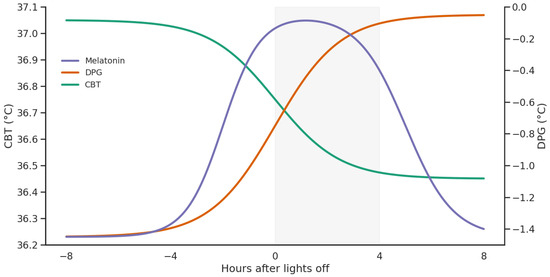
Most people taking melatonin for jet lag are doing it wrong. The two most common mistakes are the wrong dose and the wrong time.
Wrong dose. The melatonin supplements sold at most pharmacies are 5 mg or 10 mg. The research on jet lag uses 0.5 mg. This matters because melatonin is not a sleeping pill. It is a timing signal. A large dose does not shift the clock faster. It just produces more grogginess. A 2002 Cochrane review (Herxheimer and Petrie) found 0.5 mg as effective as 5 mg for jet lag recovery, with fewer side effects. The supplement industry has never had much interest in telling you this.
Wrong time. Melatonin for jet lag should be taken at target bedtime in the new time zone, not when you feel tired. If it is 10 PM in London and your body thinks it is 5 PM, you take melatonin at 10 PM London time regardless of whether you are sleepy. The point is to tell your SCN that it is nighttime in the new location. Timing is the signal. Drowsiness is just a side effect.
For westward travel, melatonin is less useful. Westward travel delays the clock (you stay up later), which is the direction your biological clock naturally runs anyway. Light management matters more for westward resets than melatonin does.
Light is the main lever
The SCN is primarily set by light. Not melatonin, not food, not caffeine. Light. Bright light exposure (2,500 lux or above) in the morning of the new time zone tells the SCN what time it is locally. Avoiding bright light in the evening of the new time zone prevents the clock from being pushed back.
For eastward travel: seek bright light in the morning local time, avoid bright light in the evening. An outdoor walk at 8 AM local time on arrival day is more effective than any supplement. For westward travel: seek bright light in the late afternoon and evening local time to delay the clock further in the direction it already wants to go.
A 10,000-lux light therapy lamp is useful for the first morning in the new time zone when outdoor light is unavailable (winter arrivals, early morning layovers, indoor hotel mornings). Twenty minutes in front of one at 6 to 8 AM local time produces a circadian phase advance equivalent to outdoor morning light. It is one of the few gadgets in this category that earns its carry-on space.
The Livium recipe
Tool. A 10,000-lux light therapy lamp for morning light exposure on arrival. Life Extension Melatonin 500 mcg (0.5 mg) tablets for precise low-dose melatonin timing. Blue-light-blocking glasses for evening light avoidance when the hotel has bright overhead lighting. Sleep mask and earplugs travel kit for the flight and the first night in an unfamiliar room.
Behavior. The protocol for eastward travel (the hard direction): On the flight, set your watch to destination time immediately and sleep according to destination night, not current body time. On arrival day, get outside by 8 AM destination time regardless of what your body wants. Take 0.5 mg melatonin at 10 PM destination time for the first three nights. Avoid alcohol on the flight and arrival night (it fragments sleep architecture and delays circadian reset). Eat meals on the destination schedule from arrival day one, not body-clock schedule.
Threshold. A successful jet lag recovery means feeling alert by 9 AM local and sleepy by 11 PM local by day 3 of eastward travel, or day 2 of westward travel. Most adults following the light and melatonin protocol above will hit that window. Without the protocol, the same recovery takes 5 to 7 days.
| Direction | Light: seek | Light: avoid | Melatonin | Expected reset (age 40+) |
|---|---|---|---|---|
| Eastward (e.g., NY to London) | 6–9 AM local | After 8 PM local | 0.5 mg at 10 PM local, 3 nights | 3–5 days |
| Westward (e.g., London to NY) | 4–7 PM local | Before 9 AM local | Less critical; light is the main tool | 2–3 days |
| Trans-Pacific eastward (>8 hrs) | 6–9 AM local; consider starting light protocol 2 days before departure | After 7 PM local, strictly | 0.5 mg at 9:30 PM local, 4 nights | 5–7 days |
Source: Livium editorial synthesis based on NHLBI circadian sleep guidance and Herxheimer & Petrie, Cochrane Database of Systematic Reviews (2002).
What does not work
A quick inventory of the most common jet lag remedies that the evidence does not support:
Staying up all night to “force reset.” Sleep deprivation increases adenosine but does not shift the circadian clock. You will be tired and misaligned.
Alcohol to fall asleep on the flight. Alcohol suppresses REM sleep and fragments the second half of sleep. You land less rested than you would have without it. The one glass of wine that “helps you sleep” on a transatlantic flight costs you the restorative back half of the night.
High-dose melatonin (5 mg or 10 mg). Makes you groggy without shifting the clock faster. The timing matters. The dose does not, above 0.5 mg.
Fasting on the flight. Meal timing has some circadian influence through peripheral clocks (liver, gut), but the effect is smaller than the light effect, and the research on fasting-for-jet-lag is not robust enough to justify skipping meals at altitude, where dehydration and caloric deprivation already impair cognition.
Plan of action
- Buy 0.5 mg melatonin before the trip, not at the airport pharmacy where the options are almost always 5 mg or 10 mg. Life Extension Melatonin 500 mcg is the right dose. Take it at target bedtime in the new time zone for the first three nights.
- On arrival morning, get outside for 20 to 30 minutes of bright light between 6 and 9 AM local time. This is the single highest-value action for an eastward traveler. If weather or schedule prevents outdoor time, a 10,000-lux lamp at the hotel desk works.
- Do not nap on arrival day for more than 20 minutes before 3 PM local time. A full nap on arrival afternoon will reset your sleep pressure in the wrong direction and make that first night harder.
- If the trip is three days or fewer and you are returning home, it may not be worth attempting a full circadian reset. Stay on home time for short trips: eat, sleep, and work on home time, then recover on return.
Table of Content

Know your body better.
Trusted By Thousands Daily






FAQs
Does caffeine help with jet lag?
Caffeine helps with alertness in the short term but does not shift the circadian clock. It can be useful on arrival morning to get through a morning meeting, but it does not accelerate the underlying reset. The standard 2 PM caffeine cutoff applies. In a new time zone where your body clock is running 5 to 6 hours behind, “2 PM local” is the right cutoff even if your body thinks it is much earlier.
Do apps like Timeshifter actually work?
Timeshifter was developed with circadian science researcher Dr. Steven Lockley and produces personalized light and sleep recommendations based on your itinerary and chronotype. The protocol it recommends is consistent with the published research. For complex multi-leg trips or travelers who are frequent flyers, it is worth the subscription. The principles above are the same ones the app applies. The app just calculates the timing automatically for your specific flights.
My partner recovers from jet lag much faster than I do. Is that normal?
Chronotype plays a real role. Evening chronotypes (night owls) adapt to eastward travel more slowly and to westward travel more easily. Morning chronotypes are the opposite. Younger adults reset faster than older adults regardless of chronotype. If the gap between you and your partner is large, chronotype is the most likely explanation. It is not a willpower issue.
Legal Disclaimer
The content published on Livium Health is for informational and educational purposes only. Nothing on this site constitutes medical advice, diagnosis, or treatment. Always consult a qualified healthcare provider before making decisions about your health, including changes to medications, supplements, diet, or exercise.
Livium Health is not a medical practice and does not have a patient-provider relationship with its readers. We do not sell supplements, medications, or treatments, and we have no financial relationship with the products or services we reference.
While we work to ensure the information we publish is accurate and up to date, health and medical guidance evolves. We make no guarantees about the completeness or currency of any content on this site. Reliance on any information provided by Livium Health is solely at your own risk.
If you are experiencing a medical emergency, call 911 or your local emergency services immediately.
We may receive compensation, free products, or affiliate commissions for products mentioned in this post. Opinions are our own.