
Share
Men's Health
Sleep
Women's Health
Pink noise may be hurting your sleep: Why earplugs can work better at night
5 min read
Key takeaways
- Pink noise can reduce some environmental-noise fragmentation, but it is not acoustically neutral.
- In a 2026 randomized sleep-lab study, pink noise reduced REM sleep compared with a quiet control.
- Foam earplugs protected sleep from environmental noise better than pink noise in the study.
- The quietest effective intervention is usually the better place to start.
Pink noise is not automatically sleep-friendly
Pink noise has become the polished cousin of white noise. Apps, speakers, and sleep playlists promise a softer sound that masks traffic, neighbors, and the unpredictable noises that pull you out of sleep. The idea sounds intuitive: cover disruptive noise with a steady one.
A 2026 randomized laboratory study put that assumption under unusually controlled conditions. Twenty-five healthy adults slept through seven polysomnography nights while researchers exposed them to intermittent environmental noise, pink noise at different levels, foam earplugs, combinations of those conditions, and a quiet control night.
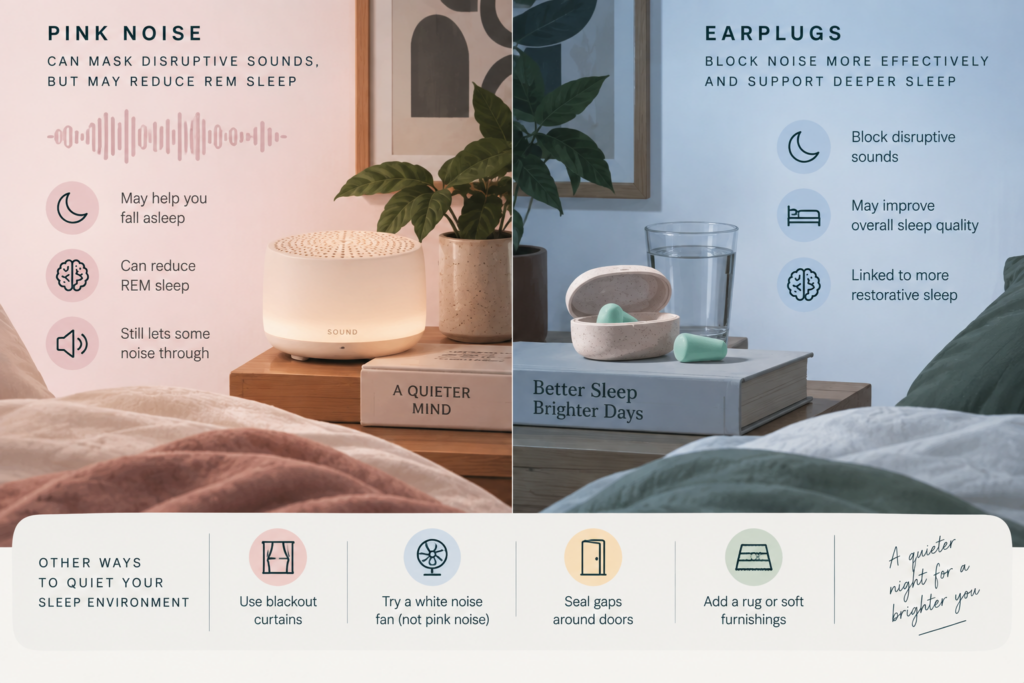
Environmental noise reduced deep N3 sleep. Pink noise did reduce some noise-triggered fragmentation, but it also reduced REM sleep compared with the quiet control. Foam earplugs were more effective overall at protecting sleep from environmental noise.
Masking noise still adds noise
The problem is easy to miss. A masking sound can make a sudden event less noticeable, but your sleeping brain is still receiving sound all night. More sound is not automatically better just because it is smooth and predictable.
The study also found that the type of environmental noise mattered. A crying baby and a fire alarm were especially likely to trigger awakenings and arousals, followed by several transportation sounds. That means a generic noise machine cannot make every bedroom acoustically equivalent.
If your main problem is a loud street or unpredictable neighbors, start by reducing the sound reaching your ears. A pair of foam earplugs is less glamorous than a sleep soundtrack, but the randomized data favored earplugs over pink noise.
The Livium recipe
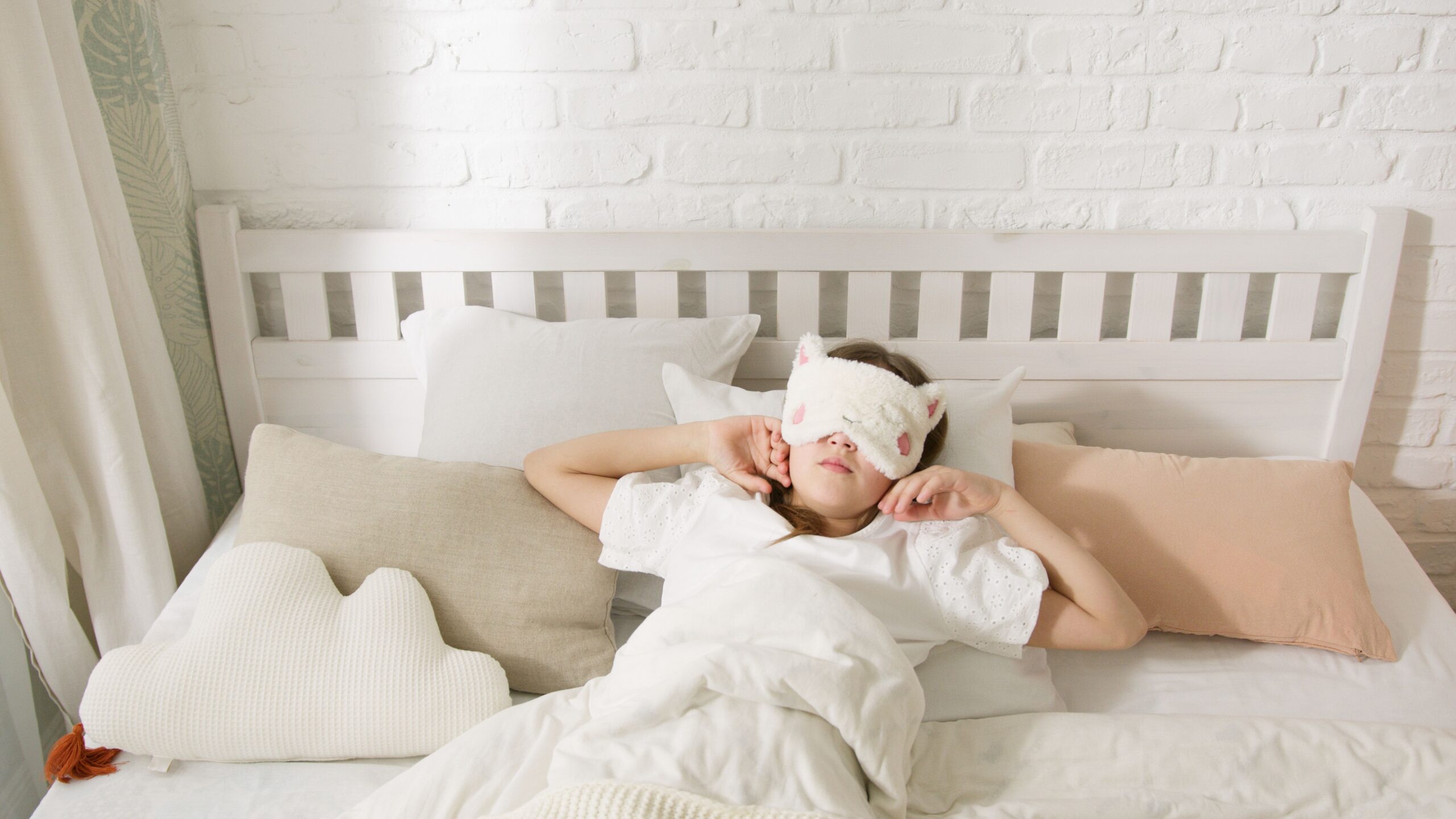
Tool. Use the quietest effective intervention first. Earplugs are reasonable when environmental sound is the problem. If light also enters the room, a sleep mask addresses a separate sensory input without adding sound.
Behavior. Spend three nights identifying the actual disturbance before changing the bedroom. Is it traffic, a partner’s schedule, an HVAC cycle, a barking dog, or your own awakenings with no external trigger? Treat the source you actually have.
Threshold. If you choose masking sound anyway, keep the volume modest. A small bedside fan can create steady background sound while also moving air, but it should not be used loudly enough to dominate the room.
| Bedroom problem | What the study suggests | First move |
|---|---|---|
| Intermittent traffic or aircraft | Can fragment sleep | Reduce incoming noise |
| Pink noise added all night | May mask events but can alter sleep structure | Do not assume more is better |
| Foam earplugs | Outperformed pink noise | Reasonable first-line sound barrier |
| Quiet room | Best reference condition | Do not add noise without a reason |
Source: Basner et al., Sleep, 2026.
Do not optimize a bedroom that is already quiet
If your room is quiet and you sleep well, there is no evidence-based reason to add pink noise because a playlist calls it restorative. Sleep products often turn the absence of a problem into a problem that needs equipment.
A simple room thermometer can be more useful if the real issue is a bedroom that becomes hot overnight. Sound, temperature, light, and bedding are different variables. Change one at a time.
When noise is not the whole story
Earplugs will not fix insomnia that continues in a quiet hotel room, waking caused by pain, untreated sleep apnea, restless legs, or a circadian schedule that does not match your sleep opportunity. If the environment changes and the awakenings do not, stop blaming the environment.
Also remember safety. You still need to hear alarms, children, and other important signals. The goal is not sensory isolation at any cost.
The practical test is simple
Try the same bedtime setup for several nights before deciding whether the sound intervention works. Compare earplugs, a quiet room, and your usual masking sound while keeping the rest of the environment as stable as possible. You are looking for fewer remembered awakenings and better next-day function, not a perfect tracker score.
Do not raise the volume because a louder masking sound seems more powerful. The research specifically complicates the assumption that continuous sound is harmless to sleep architecture. If a quieter solution controls the disturbance, choose the quieter solution.
Keep the bedroom experiment boring
Change one thing at a time. If you add pink noise, new bedding, a colder thermostat, and a supplement on the same night, a better night tells you almost nothing.
A boring experiment is more useful: three nights with the usual setup, then several nights with one change. Sleep naturally varies, so patterns matter more than one dramatic night.
Plan of action
- Spend three nights identifying the sound that actually wakes you.
- Reduce incoming noise before adding masking noise.
- If you use pink noise, keep it modest and compare it with a quiet night.
- Stop adding sleep audio if the room is already quiet and sleep is good.
Table of Content

Know your body better.
Trusted By Thousands Daily




FAQs
Is pink noise good for sleep?
It can mask some environmental noise, but a 2026 randomized laboratory study found trade-offs, including reduced REM sleep compared with quiet conditions.
Are earplugs better than pink noise?
In the cited study, foam earplugs were more effective at reducing environmental-noise sleep disruption.
Should I use pink noise in a quiet bedroom?
There is no clear reason to add continuous sound if the room is already quiet and you are sleeping well.
Legal Disclaimer
The content published on Livium Health is for informational and educational purposes only. Nothing on this site constitutes medical advice, diagnosis, or treatment. Always consult a qualified healthcare provider before making decisions about your health, including changes to medications, supplements, diet, or exercise.
Livium Health is not a medical practice and does not have a patient-provider relationship with its readers. We do not sell supplements, medications, or treatments, and we have no financial relationship with the products or services we reference.
While we work to ensure the information we publish is accurate and up to date, health and medical guidance evolves. We make no guarantees about the completeness or currency of any content on this site. Reliance on any information provided by Livium Health is solely at your own risk.
If you are experiencing a medical emergency, call 911 or your local emergency services immediately.
We may receive compensation, free products, or affiliate commissions for products mentioned in this post. Opinions are our own.