
Share
Fitness
Men's Health
Women's Health
Power training after 40: Why moving weight faster matters
2 min read
Key takeaways
- Strength measures force, while power reflects how quickly that force can be expressed.
- Everyday actions such as rising, stepping, and reacting often depend on muscular power.
- Safe power work begins with controlled strength and uses manageable resistance.
- A power set ends when speed, balance, or technique starts to deteriorate.
Strength gets the attention, but power handles the moment
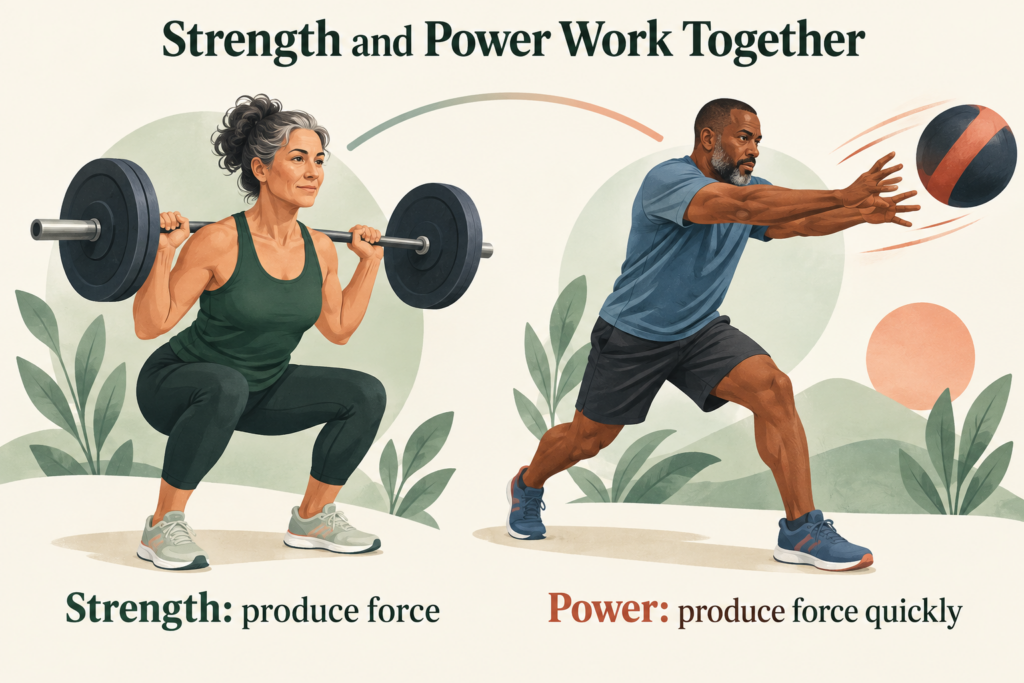
Strength is the ability to produce force. Power adds speed. Getting out of a chair before momentum disappears, climbing a step, catching a heavy door, or reacting to a stumble all require force to arrive on time. Traditional slow resistance training builds an essential base, but it may not fully practice that faster expression.
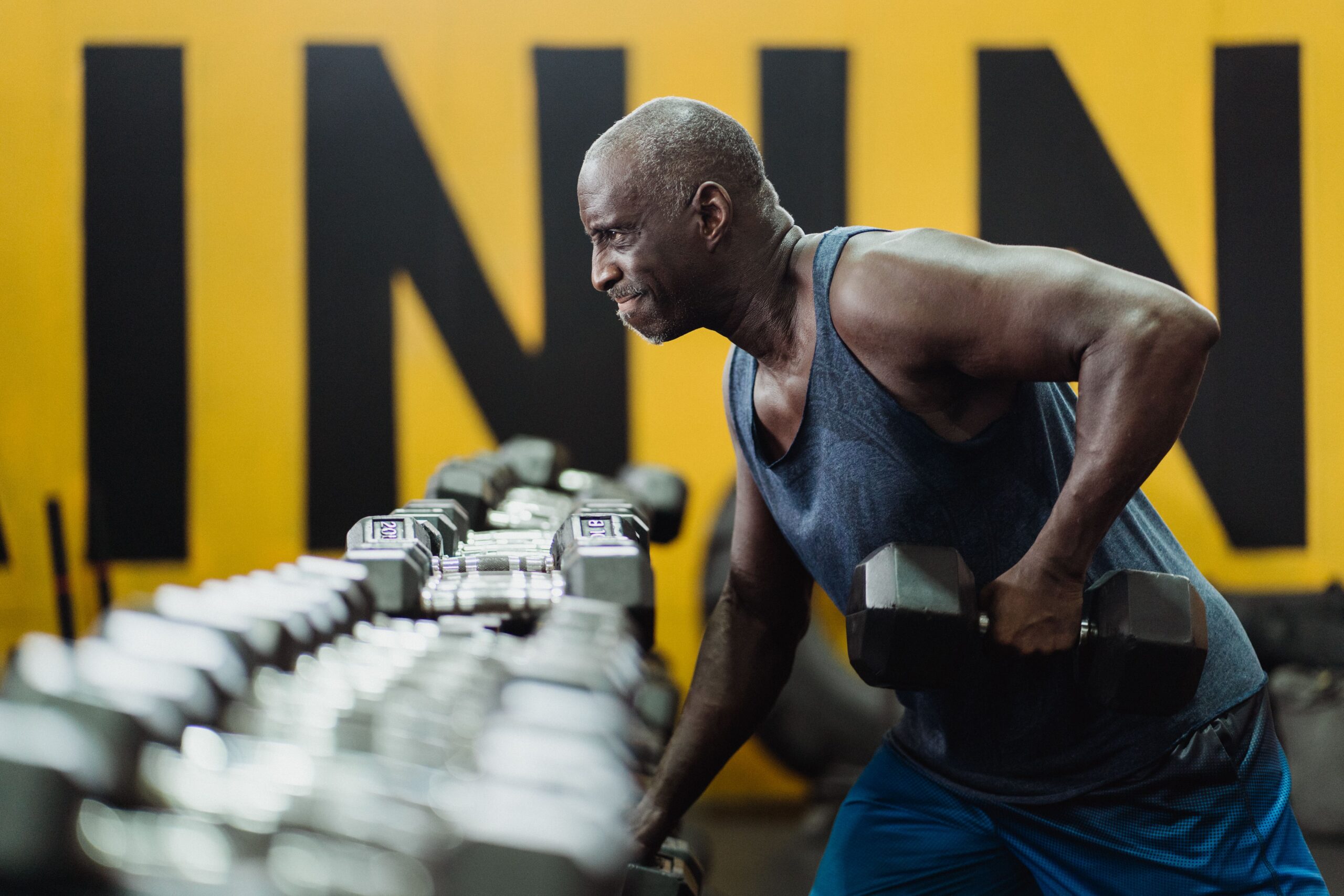
Power training does not mean throwing the heaviest weight possible. A common approach uses a load you can control, an intentional fast lifting phase, and a slower return. Technique determines the useful speed. When the movement becomes jerky or the load slows substantially, the set is finished.
Earn speed through control
Start with movements you already perform confidently. A chair rise is a useful example: stand with intent, reach full balance, then lower slowly. A step-up can follow the same pattern. External load comes after consistent control.
Equipment should match the movement. Light medicine balls suit some coached drills. Adjustable dumbbells make small load changes possible. A kettlebell with a secure handle is useful only when the technique is established, while resistance bands with an anchor offer a lower-impact option.
The Livium recipe
| Stage | Example | Quality check |
|---|---|---|
| Base | Controlled chair rise | No push from the hands |
| Intent | Stand quickly, lower slowly | Feet remain planted |
| Load | Hold a light dumbbell | Speed and posture stay consistent |
| Transfer | Step-up or push press | Stop before speed or form fades |
This is a conceptual progression, not individualized programming. Research base: National Library of Medicine.
Plan of action
- Build competence with ordinary strength training before adding speed.
- Use light-to-moderate resistance and move the lifting phase with clear intent.
- End the set when speed, balance, or technique declines.
- Seek qualified supervision if you have cardiovascular symptoms, uncontrolled blood pressure, osteoporosis-related restrictions, recent surgery, or significant joint pain.
Table of Content

Know your body better.
Trusted By Thousands Daily







FAQs
Can beginners train power?
Beginners should first learn the movement at a controlled pace. Speed can be introduced gradually once technique, balance, and basic strength are dependable.
How heavy should the weight be?
Use a load that allows deliberate speed without sacrificing control. The appropriate load depends on experience, health, and the exercise.
Is power training the same as plyometrics?
No. Jumping is one form of power training, but faster chair rises, step-ups, medicine-ball drills, and other controlled movements can also train power.
Legal Disclaimer
The content published on Livium Health is for informational and educational purposes only. Nothing on this site constitutes medical advice, diagnosis, or treatment. Always consult a qualified healthcare provider before making decisions about your health, including changes to medications, supplements, diet, or exercise.
Livium Health is not a medical practice and does not have a patient-provider relationship with its readers. We do not sell supplements, medications, or treatments, and we have no financial relationship with the products or services we reference.
While we work to ensure the information we publish is accurate and up to date, health and medical guidance evolves. We make no guarantees about the completeness or currency of any content on this site. Reliance on any information provided by Livium Health is solely at your own risk.
If you are experiencing a medical emergency, call 911 or your local emergency services immediately.
We may receive compensation, free products, or affiliate commissions for products mentioned in this post. Opinions are our own.