
Share
Men's Health
Nutrition
Women's Health
Salt that lowers blood pressure: Why potassium-enriched substitutes are getting serious attention
4 min read
Key takeaways
- A 2026 network meta-analysis included 34 randomized trials and more than 37,000 participants.
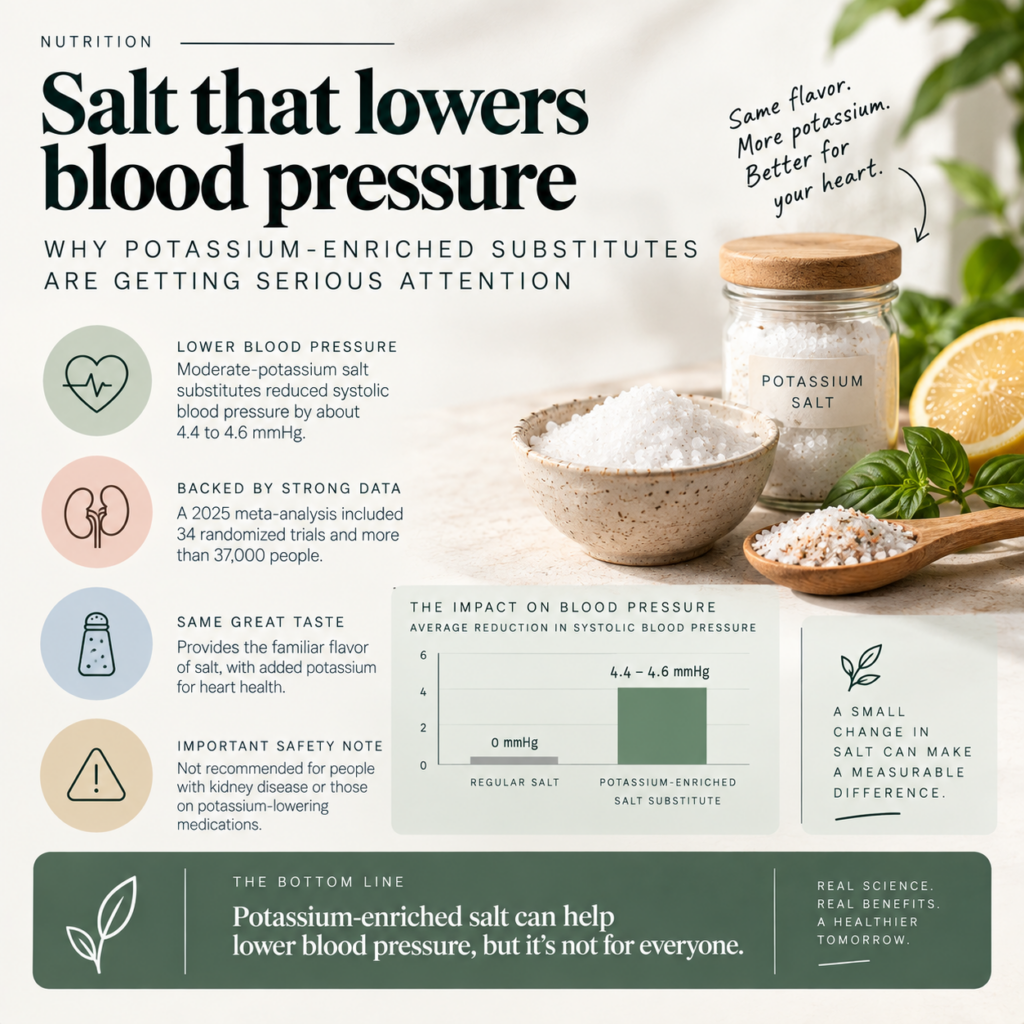
- Moderate-potassium, lower-sodium salt substitutes reduced systolic blood pressure by roughly 4.4 to 4.6 mmHg versus regular salt.
- The strongest cardiovascular-outcome evidence is heavily influenced by one very large trial.
- Potassium-enriched salt is not appropriate for everyone, particularly when potassium handling is impaired.
The most useful salt swap may happen inside the shaker
Sodium reduction advice sounds simple until it reaches a real kitchen. Salt contributes flavor, and asking people to remove it without replacing that function often fails. Potassium-enriched salt substitutes take a different approach: replace part of the sodium chloride with potassium chloride.
A 2026 network meta-analysis pooled 34 randomized controlled trials involving 37,063 participants across 15 countries. Moderate-potassium, lower-sodium formulations produced meaningful blood-pressure reductions compared with regular salt.
The blood-pressure effect is large enough to notice at population scale
The analysis estimated systolic blood-pressure reductions of roughly 4.39 to 4.64 mmHg with formulations containing about 25% to 40% potassium chloride. It also found probable reductions in cardiovascular outcomes and mortality, although those clinical outcomes were strongly influenced by the very large SSaSS trial.
A few millimeters of mercury sounds small, but blood pressure is a continuous cardiovascular risk factor. A population-wide shift of that size can matter.
If you cook often, a small digital kitchen scale can help you learn how much salt actually goes into a recipe before you change the formulation.
Potassium is the benefit and the safety issue
For most people with normal kidney function, dietary potassium is useful. But the kidneys are responsible for maintaining potassium balance, and some diseases and medications can raise blood potassium dangerously.
That means potassium-enriched salt is not a universal wellness swap. People with kidney disease or those taking medications that affect potassium need individualized guidance.
A small seasoning container can keep a salt substitute clearly separated from regular salt in a shared kitchen. A recipe notebook can record which dishes tolerate the swap without changing taste too much.
You still need the rest of the diet
A lower-sodium salt does not cancel out a diet dominated by salty packaged foods. Much dietary sodium comes from foods manufactured with salt before they reach the home shaker.
Use herbs, acids, aromatics, and spices alongside the substitute. A kitchen timer can help with slow-cooked meals where flavor develops without relying on repeated salting.
The strongest approach is both structural and practical: lower the sodium density of the overall diet while keeping food enjoyable enough to sustain.
Why this is different from simply eating more potassium
A salt substitute changes two variables at once: sodium goes down and potassium goes up. That is part of why the intervention is appealing, but it also means the result should not be reduced to a claim that potassium supplements lower cardiovascular risk.
Potassium from fruits, vegetables, beans, dairy, and other foods comes inside a larger dietary pattern. Potassium chloride in a salt substitute is a targeted tool for the specific place where sodium chloride would otherwise be used.
Taste adaptation matters
Potassium chloride can taste slightly bitter or metallic at higher proportions, which is one reason moderate-potassium formulations may be easier to use consistently than extreme substitutions. Gradual use can make the change less noticeable.
Flavor can also come from lemon, vinegar, garlic, herbs, toasted spices, chiles, and browning. When those elements are strong, salt does not have to carry the entire dish.
The Livium recipe
Tool. Consider a potassium-enriched salt only if it is medically appropriate for you.
Behavior. Use it where you currently add regular salt rather than adding more because the product sounds healthier.
Threshold. Kidney disease, high potassium, or potassium-raising medications require medical guidance before making the swap.
| Evidence | Finding | Important context |
|---|---|---|
| 34 randomized trials | 37,063 participants | 15 countries |
| Systolic blood pressure | About 4.4 to 4.6 mmHg lower | Moderate-potassium formulations |
| Cardiovascular outcomes | Probable benefit | Heavily influenced by SSaSS |
| Safety | Generally reassuring in trials | Higher-risk potassium patients often excluded |
Source: Comparative effects of salt substitutes, systematic review and network meta-analysis, 2026.
Plan of action
- Check whether a potassium salt substitute is appropriate for you.
- Swap rather than adding extra salt.
- Reduce sodium from packaged foods too.
- Use herbs, acid, and spices to keep lower-sodium food enjoyable.
Table of Content

Know your body better.
Trusted By Thousands Daily








FAQs
What is potassium-enriched salt?
It replaces part of sodium chloride with potassium chloride, reducing sodium while increasing potassium.
How much can salt substitute lower blood pressure?
The 2026 network meta-analysis found systolic reductions of about 4.4 to 4.6 mmHg for moderate-potassium formulations compared with regular salt.
Who should avoid potassium salt substitutes?
People with kidney disease, impaired potassium handling, or medications that raise potassium should get individualized medical guidance first.
Legal Disclaimer
The content published on Livium Health is for informational and educational purposes only. Nothing on this site constitutes medical advice, diagnosis, or treatment. Always consult a qualified healthcare provider before making decisions about your health, including changes to medications, supplements, diet, or exercise.
Livium Health is not a medical practice and does not have a patient-provider relationship with its readers. We do not sell supplements, medications, or treatments, and we have no financial relationship with the products or services we reference.
While we work to ensure the information we publish is accurate and up to date, health and medical guidance evolves. We make no guarantees about the completeness or currency of any content on this site. Reliance on any information provided by Livium Health is solely at your own risk.
If you are experiencing a medical emergency, call 911 or your local emergency services immediately.
We may receive compensation, free products, or affiliate commissions for products mentioned in this post. Opinions are our own.