
Share
Longevity & Aging
Men's Health
Women's Health
Skin aging from the inside: What the longevity literature says about collagen, UV, and glycation
5 min read
Key takeaways
- Skin aging is approximately 80 percent photoaging (UV damage) and 20 percent intrinsic biological aging for adults with consistent sun exposure. Broad-spectrum SPF 30 or higher daily use is the single highest-leverage anti-aging intervention for skin, outperforming every topical product and oral supplement studied.
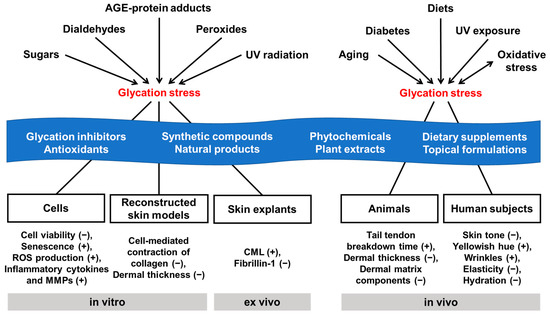
- Glycation, the non-enzymatic cross-linking of proteins by sugar molecules, accelerates skin aging by forming advanced glycation end-products (AGEs) that stiffen collagen fibers, impair elastin function, and increase oxidative stress in skin tissue.
- Collagen peptide supplementation at 2.5 to 10 grams daily has published RCT evidence for improved skin hydration, elasticity, and reduced wrinkle depth at 8 to 12 weeks, with effects appearing to persist after discontinuation in some studies.
- Skin aging is visible biological aging. The correlation between facial aging rate and epigenetic clock acceleration is strong enough that trained clinicians can estimate biological age from facial appearance with meaningful accuracy. Skin health and systemic aging share drivers.
UV is doing most of the damage
The most convincing evidence for the relative contribution of photoaging comes from studies of twins with different sun exposure histories, and from a striking series of photographs comparing the sun-exposed versus unexposed sides of faces in professional truck drivers who spent decades with one side of their face more exposed to UV through the driver’s side window. The degree of differential aging is striking and makes the point quantitatively. UV exposure explains most of what people attribute to “just getting older.”
UVA penetrates cloud cover and glass and reaches the dermis, degrading collagen and elastin through matrix metalloproteinase activation. UVB is blocked by glass but produces the direct DNA damage and inflammation associated with sunburn. Daily broad-spectrum SPF 30 or higher applied to all sun-exposed skin is not cosmetic vanity. It is the most evidence-supported longevity intervention for skin with the largest effect size in published studies. The NEJM dermatology publication in 2013 of a 69-year-old truck driver’s face showing profound left-sided photoaging and minimal right-sided aging is the most compelling single image in the photoaging literature.
Glycation: The sugar crosslink problem
Glycation occurs when glucose molecules attach non-enzymatically to proteins and lipids, forming advanced glycation end-products (AGEs). In skin, the primary targets are collagen and elastin, the structural proteins that provide firmness, elasticity, and resilience. When collagen fibers are cross-linked by AGEs, they become stiff and resistant to turnover. Skin loses the ability to spring back from deformation, producing the loss of elasticity and recoil that characterizes aged skin. AGE-modified collagen is also more susceptible to oxidative damage and triggers RAGE (receptor for AGE) signaling that perpetuates local inflammation.
The dietary drivers of glycation include chronically elevated blood glucose (any carbohydrate that produces high post-meal glucose), high-temperature cooking methods (grilling, frying, roasting at high heat produce dietary AGEs that are absorbed), and fructose (which glycates protein at a rate roughly ten times faster than glucose). Maintaining blood glucose below 110 mg/dL post-meal, cooking at lower temperatures (steaming, poaching, slow cooking), and limiting fructose-heavy food all reduce the glycation rate in skin and throughout the body simultaneously.
The Livium recipe
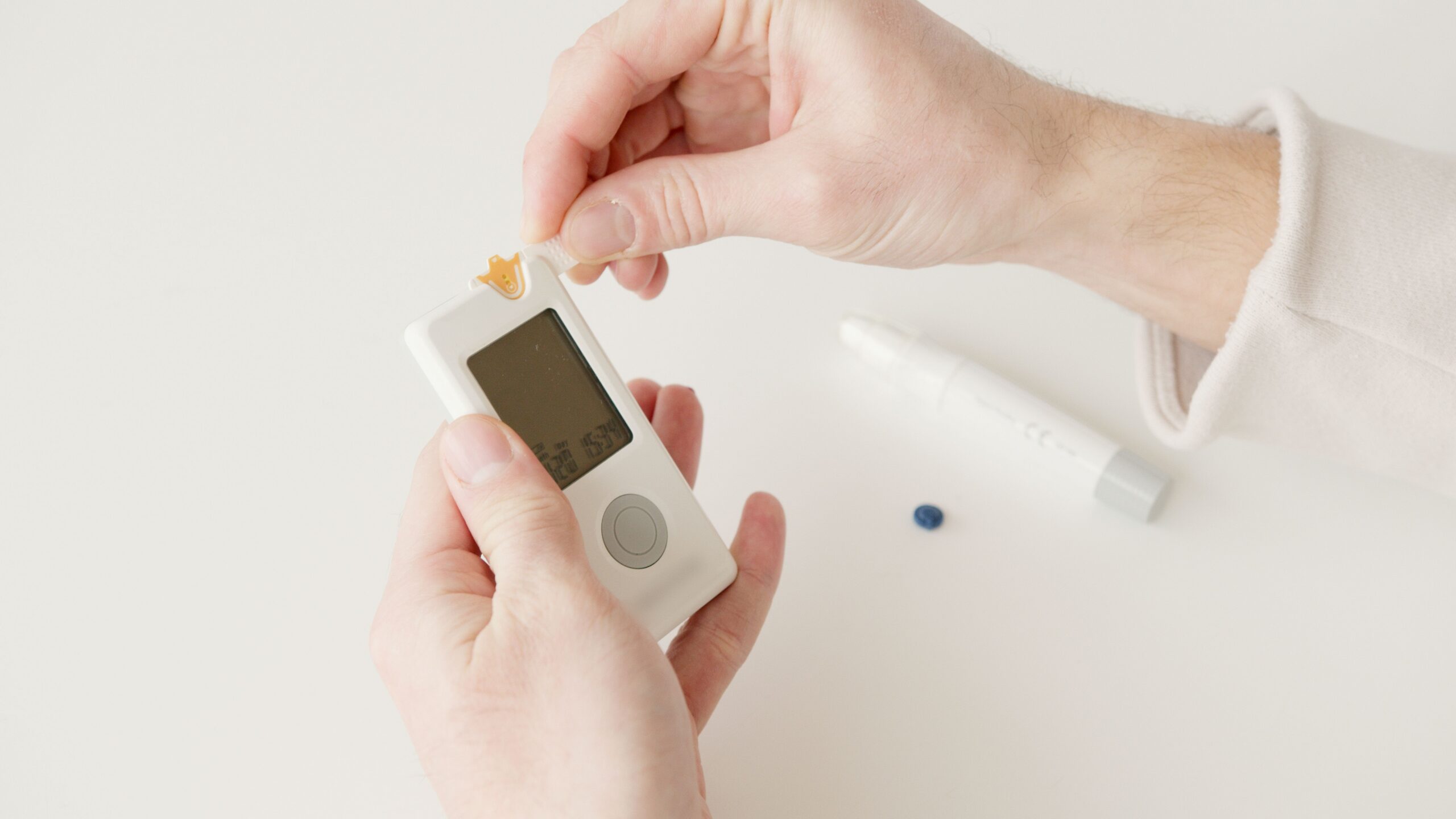
Tool. A continuous glucose monitor (CGM) for two weeks provides direct real-time feedback on which foods and meals are producing the post-meal glucose spikes that drive glycation. Most people are surprised by which foods produce the largest responses in their individual glycemic profile. A UV index app (or simply looking at the UV index in a weather app) makes daily SPF application proportional to actual UV exposure.
Behavior. Three simultaneous interventions: (1) Broad-spectrum SPF 30 or higher on face, neck, and hands daily regardless of weather or season. This is the non-negotiable intervention. (2) Post-meal glucose management through protein-first eating, reduced refined carbohydrate load, and portion discipline. (3) Adequate protein and collagen precursor intake to support dermal collagen synthesis, as the collagen synthesis rate declines progressively after 25 at approximately 1 to 1.5 percent annually.
Threshold. At 12 weeks of consistent collagen peptide supplementation: published RCT data shows measurable skin hydration improvement in approximately 90 percent of subjects and elasticity improvement in 75 percent by blinded measurement. At 12 months of consistent SPF use: twin studies show measurable differential in photoaging between the consistent-use twin, confirming cumulative protective effect.
Life Extension Skin Care Collection Collagen Support provides marine collagen peptides at 5 grams per serving, the dose range with the most RCT support for skin outcomes. Marine collagen hydrolysate has the highest bioavailability among collagen supplement types. NOW Foods Hyaluronic Acid 100 mg supports dermal hydration from the inside: oral hyaluronic acid has published RCT data showing skin hydration improvement, as HA is distributed to skin tissue following oral absorption. BulkSupplements Nicotinamide Riboside supports NAD production, which is required for DNA repair mechanisms in skin cells exposed to UV damage, and SIRT1 activation via NAD supports collagen synthesis regulatory pathways. Pure Encapsulations Astaxanthin 4 mg provides the most potent carotenoid photoprotector studied in humans, with multiple published trials showing reduced UV-induced skin damage, improved skin elasticity, and reduced pigmentation changes from within.
| Skin aging driver | Evidence-supported intervention | Evidence level |
|---|---|---|
| UV photoaging | Broad-spectrum SPF 30+ daily; astaxanthin oral | Very strong; RCTs and cohort studies |
| Glycation (AGEs) | Post-meal glucose management; low-temperature cooking; carnosine | Solid; mechanism well-established; dietary RCT data |
| Collagen loss | Marine collagen peptides 2.5–10 g daily; vitamin C; protein adequacy | Solid; multiple RCTs |
| Oxidative stress | Antioxidant-rich diet; astaxanthin; CoQ10 | Solid; mechanistic and some RCT data |
| Dehydration (skin) | Oral hyaluronic acid; adequate water intake; ceramide intake | Moderate; RCT data for oral HA |
Source: Livium editorial synthesis based on American Academy of Dermatology Skin Care resources and Proksch et al., Skin Pharmacology and Physiology (2014), collagen peptide RCT.
Plan of action
- Apply SPF 30 or higher to face, neck, chest, and hands tomorrow morning and every morning regardless of planned outdoor time. The majority of lifetime UV exposure occurs incidentally, not during intentional sun activity.
- Add marine collagen peptides at 5 grams daily to a morning drink or smoothie. At 12 weeks, assess skin hydration and elasticity subjectively and compare to baseline photos. The effect is measurable and motivating.
- Use a CGM for two weeks to identify the top three post-meal glucose offenders in the current diet. Targeting these specifically reduces glycation rate without wholesale dietary change.
- Add astaxanthin 4 mg daily. The cumulative photoprotective and anti-glycation effects accumulate over months and compound with the topical SPF protection.
Table of Content

Know your body better.
Trusted By Thousands Daily




FAQs
Does sunscreen block vitamin D synthesis?
Theoretically yes; practically the evidence shows that sunscreen use does not produce clinical vitamin D deficiency in real-world populations, because sunscreen is rarely applied thickly or completely enough to block all UVB, and because sun exposure to small areas (forearms, hands, lower legs) that are often unprotected is sufficient for meaningful vitamin D synthesis. Vitamin D supplementation is still advisable regardless of sun exposure in adults over 50, and is covered in the vitamin D section of the relevant Livium articles in this library.
What collagen peptide dose actually works?
Published RCTs show meaningful skin outcomes at doses from 2.5 grams (Verisol hydrolyzed collagen, smallest dose with published data) to 10 grams daily. The dose-response relationship suggests that 5 to 10 grams produces more consistent benefit than 2.5 grams, though both show statistically significant effects versus placebo in the published literature. The marine collagen hydrolysate formulations consistently outperform bovine collagen in skin-specific studies due to higher bioavailability of the specific peptide fractions relevant to dermal collagen synthesis stimulation.
Is topical retinol as effective as oral interventions?
Topical retinoids (tretinoin, retinol) have substantial evidence for increasing dermal collagen production, reducing fine lines, improving hyperpigmentation, and reducing actinic keratoses. Prescription tretinoin has the strongest evidence. The oral and topical approaches work through different mechanisms and are complementary rather than competitive. SPF daily, topical retinoid nightly, and oral collagen peptides plus astaxanthin daily represent the highest evidence-density anti-photoaging stack available without a physician procedure.
Legal Disclaimer
The content published on Livium Health is for informational and educational purposes only. Nothing on this site constitutes medical advice, diagnosis, or treatment. Always consult a qualified healthcare provider before making decisions about your health, including changes to medications, supplements, diet, or exercise.
Livium Health is not a medical practice and does not have a patient-provider relationship with its readers. We do not sell supplements, medications, or treatments, and we have no financial relationship with the products or services we reference.
While we work to ensure the information we publish is accurate and up to date, health and medical guidance evolves. We make no guarantees about the completeness or currency of any content on this site. Reliance on any information provided by Livium Health is solely at your own risk.
If you are experiencing a medical emergency, call 911 or your local emergency services immediately.
We may receive compensation, free products, or affiliate commissions for products mentioned in this post. Opinions are our own.