
Share
Men's Health
Sleep
Women's Health
Sleeping hot: The bedroom temperature deep sleep actually needs
10 min read
Key takeaways
- Your core body temperature must drop 2 to 3°F for deep, slow-wave sleep to engage; a bedroom over 70°F or sheets that trap heat make that drop impossible.
- The room temperature that supports deep sleep is 65 to 68°F, with cotton or linen sheets and a warm pre-bed shower amplifying the cooling effect your body is trying to produce on its own.
- If the room alone isn’t enough, Eight Sleep Pod 5 (automated, $2,499 plus $25 per month) and ChiliPad Dock Pro ($1,099, no subscription) are the two active cooling tools worth the spend.
- Healthy 50-year-old baselines: 13 to 23 percent of total sleep as deep sleep, resting heart rate of 55 to 80 bpm during sleep, and HRV trending up 10 to 20 percent over a two-week window once the temperature variable is fixed.
Why you’re still waking up at 3 AM
You’re going to bed earlier. You stopped scrolling. You took the magnesium. You’re still waking up at 3 AM, sweating, and dragging through the next day. The fix isn’t in your routine. It’s in your body temperature, and once you understand what’s happening, it becomes one of the most solvable variables in midlife sleep.
Research published in the Journal of Physiological Anthropology shows that heat exposure during sleep cuts deep, slow-wave sleep by 10 to 30 percent. That’s a measurable, repeatable effect, and the recipe to fix it doesn’t require a prescription, a clinic visit, or another supplement.
What’s actually happening when you sleep hot
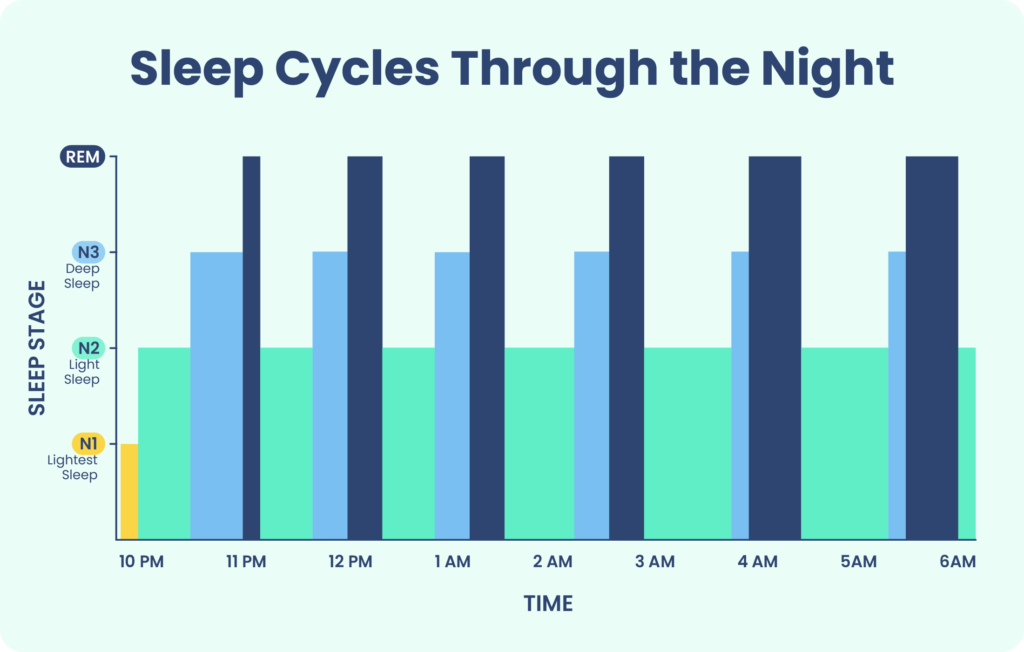
Sleep is not a flat state. Across a normal night, your body cycles through light sleep, deep slow-wave sleep, and REM, each playing a different role in physical and cognitive recovery. The trigger that pulls you into the deep stage is a drop in your core body temperature of about 2 to 3°F. Without that drop, the deep stage either never engages or stays too brief to matter.
Your body releases heat through your hands, feet, and face. The temperature of your sheets, your blanket, and the room around you either lets that heat escape or traps it in. A bedroom at 72°F with microfiber sheets is the trap. When your core can’t cool, you bounce between light sleep and waking, and the second half of the night takes the brunt of it. On a tracker, hot sleepers consistently log less deep sleep and less REM than people in cooler rooms, even when total sleep time looks the same.
This gets worse in midlife for two reasons. First, your body’s thermoregulation efficiency declines with age, so the cooling system you used to take for granted does less of the work. Second, hormonal shifts push more heat to the surface at the wrong times: declining testosterone in men, perimenopausal hot flashes in women. Both compound the room’s effect.
Once those are clean and you’re still waking up hot or fragmented in the middle of the night, the next variable to test is temperature. Not another supplement. Not a sleep mask. Not melatonin. Not a third magnesium brand. The room and the sheets are the conversation now.
Magnesium glycinate is a real tool for sleep onset and restless legs. It does not fix thermoregulation. Blue light filtering matters for adults who haven’t yet addressed evening screen time. It doesn’t fix thermoregulation either. You are not going to fix a thermoregulation problem with a sleep mask.
The Livium recipe
Tool. Start with your thermostat. The room temperature that supports deep sleep is 65 to 68°F. Most bedrooms drift warm without their owner noticing, partly because HVAC zoning is rarely accurate and partly because bedding adds insulation the thermostat doesn’t see. A smart thermostat like Nest or Ecobee lets you schedule the bedroom to drop to 65 to 67°F starting 30 minutes before bed. If room temperature alone isn’t enough (hot climates, partner conflict, perimenopausal hot flashes, post-workout temperature spikes), active cooling tech is the next step. Eight Sleep Pod 5 and ChiliPad Dock Pro are the two products worth the spend, covered in detail below.
Behavior. Swap microfiber, polyester, or any sheets labeled as cooling that aren’t cotton or linen. We’ve measured the temperature delta on the same body, in the same bed, with cotton versus microfiber, and the difference is real: roughly 1.5 to 2°F across the night. Take a warm shower 60 to 90 minutes before bed. The mechanism is counterintuitive but proven: the warm water pulls blood to the surface of your skin, and the post-shower drop accelerates your core body temperature decline. A 2019 meta-analysis of 17 studies, published in Sleep Medicine Reviews, found that people who did this fell asleep about 10 minutes faster on average and had longer deep sleep.
Threshold. Give the changes 14 days. If temperature was your variable, deep sleep rises 5 to 15 percentage points off your personal baseline, resting heart rate during sleep drops 2 to 5 bpm, and HRV trends upward 10 to 20 percent over your two-week average. The 3 AM wake-ups become rare or stop entirely, and morning energy returns within the first week. If none of that moves after two weeks of consistent application, temperature isn’t your variable, and the next stop is full-panel bloodwork along with screening for sleep apnea.
The room: 65 to 68 degrees, and why most people get it wrong
The bedroom temperature that supports deep sleep is between 65 and 68°F. The Sleep Foundation, along with modern sleep medicine literature, all converge on this range. Matthew Walker, the UC Berkeley neuroscientist who founded the Center for Human Sleep Science, devotes part of chapter 13 of his book Why We Sleep to it, and Stanford’s Sleep Medicine Center has replicated the temperature-deep-sleep relationship in multiple studies.
Most bedrooms drift warm without their owner noticing, and three things drive it:
- HVAC zoning is rarely accurate. Your thermostat may read 68°F in the hallway and 72°F in your bedroom.
- Bedding adds insulation that the thermostat doesn’t see.
- Your body and your partner’s body each give off roughly 100 watts of heat overnight. A closed door amplifies it.
The fix is simple to start. Drop the thermostat 3°F below where you usually keep it. If your house has a Nest or Ecobee, schedule the bedroom zone (or the whole house if you’re zone-less) to drop to 65 to 67°F starting 30 minutes before you go to bed.
Sheets are the second move, and they matter more than most people expect. Cotton percale or linen, full stop. Microfiber traps heat and feels nice in the store, but it’s the wrong material for sleeping hot. Pure cotton or linen breathes, and the temperature delta we’ve measured on the same body, in the same bed, with cotton versus microfiber, is roughly 1.5 to 2°F across the night.
Then the counterintuitive one: a warm shower 60 to 90 minutes before bed. Not cold. The warm water pulls blood to the surface of your skin, and the post-shower drop accelerates your core body temperature decline, exactly the cooling pattern your body is trying to produce on its own. A 2019 meta-analysis of 17 studies led by Shahab Haghayegh, a biomedical engineer at the University of Texas at Austin, published in Sleep Medicine Reviews, found that people who did this fell asleep about 10 minutes faster on average and had longer deep sleep across the night.
When the room isn’t enough: active cooling tech
For some readers, the room and the sheets are not enough. Hot climates, partner thermostat conflict, perimenopausal hot flashes, sleep apnea overheating, and post-workout overnight temperature spikes are all reasons the room alone can’t get there. In those cases, active cooling tech is the next move.
Two products genuinely work. We’ve tested both.
Eight Sleep Pod 5 is a mattress cover with active heating and cooling, water-circulated, full bed coverage, and automated based on sleep stage. It runs roughly $2,499 plus a $25 per month subscription. The subscription is mandatory and is the most common complaint in reviews, but the automation is excellent. The Pod will warm you for sleep onset, cool you for deep sleep stages, and warm you again toward morning to ease wake-up. If hands-off automation is what you want, this is the winner.
ChiliPad Dock Pro is the same idea with simpler hardware and no subscription. It’s a mattress topper, water-circulated, single or dual zone. The single is roughly $1,099 and the dual is $1,799. Manual temperature setting, and more durable than the older Chili Sleep models. No automation, which some people actively prefer (they sleep through bedside fans and don’t want temperature changing on them through the night).
Which one to buy depends on whether you want a system that manages the variable for you or a tool you set once and forget. For first-time cooling tech buyers who aren’t sure how much temperature matters, ChiliPad is the safer test purchase. If two weeks of the Chili moves your numbers, you can upgrade to Eight Sleep later. The reverse is harder.
What we don’t recommend yet: standalone cooling pillows, gel mattresses marketed as cooling, and most cooling sheets that aren’t pure cotton or linen. The category is full of marketing terms with no measurable effect.
| Eight Sleep Pod 5 | ChiliPad Dock Pro | |
|---|---|---|
| Upfront price | $2,499 | $1,099 (single) / $1,799 (dual) |
| Subscription | $25/month (required) | None |
| Automation | Auto-adjusts by sleep stage | Manual setpoint |
| Dual-zone option | Yes (Pod Cover) | Yes (dual model) |
| Temperature range | 55°F to 110°F | 55°F to 115°F |
| Install | Mattress cover + hub | Mattress topper + hub |
| Trial period | 30 nights | 90 nights |
| Best for | Set-and-forget automation | Manual control, no recurring cost |
What the numbers should look like at 50
Before you decide whether the temperature fix is working, you need to know what healthy looks like for your age. Below is the baseline for a 50-year-old in normal health, sourced from peer-reviewed sleep research and large device datasets.
| Metric | Healthy man at 50 | Healthy woman at 50 | Flag at |
|---|---|---|---|
| Deep sleep | 13-20% of total (~60-80 min on a 7.5-hr night) | 15-23% of total (~70-90 min on a 7.5-hr night) | Under 10% regularly |
| Resting heart rate (sleep) | 55-75 bpm | 60-80 bpm | Over 80 consistently |
| HRV (nighttime RMSSD) | 25-50 ms | 22-45 ms | Personal trend matters more than absolute number |
Sources: deep sleep ranges from the Ohayon et al., 2004 meta-analysis in Sleep, which remains the largest dataset on age-banded sleep architecture; resting heart rate ranges from the American Heart Association and Mayo Clinic; HRV ranges from WHOOP’s age-banded data and the 2010 systematic review by Nunan et al.
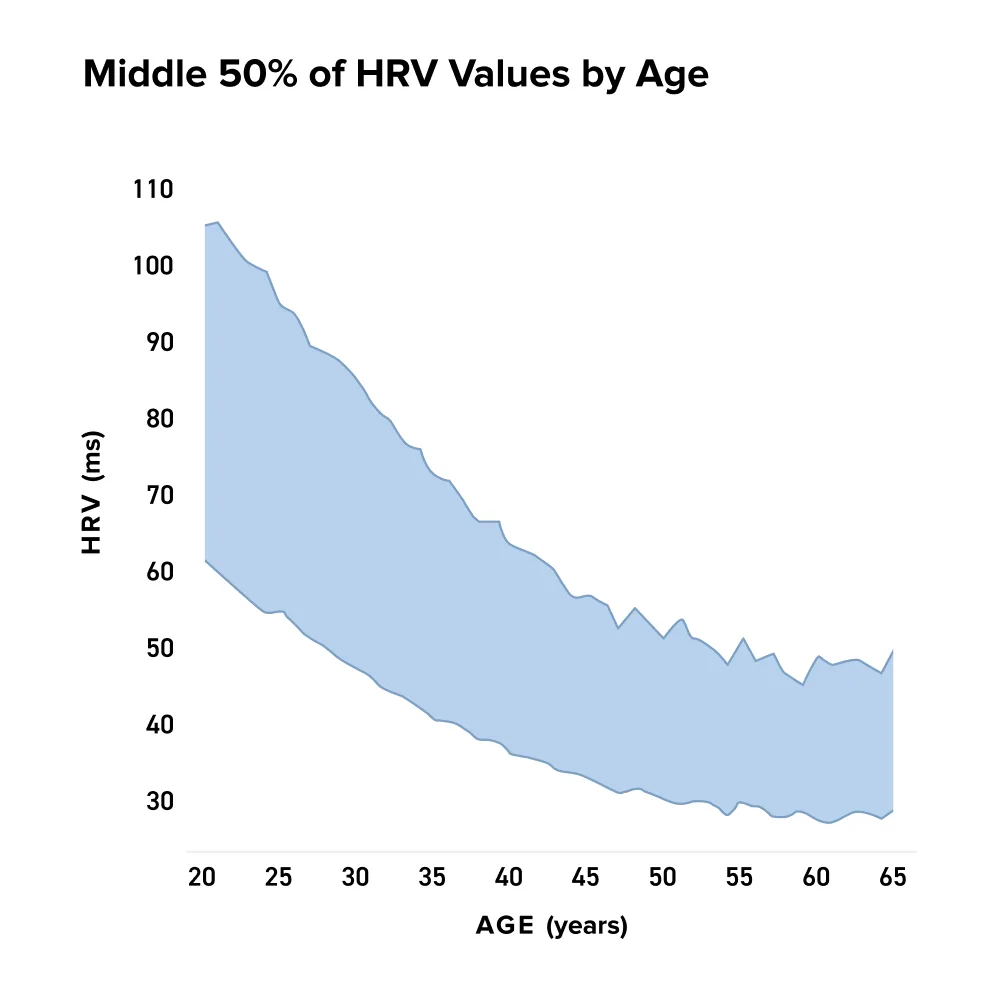
These are normal-population ranges, not athlete ranges. If you sit below them, that’s the case for changing the variable. If you sit inside them and still feel unrested, the issue is sleep architecture (the quality and ordering of the stages, not the volume). Nine fragmented hours is not better than seven clean ones.
What you should see after 14 days of the temperature protocol: deep sleep rising 5 to 15 percentage points off your personal baseline, resting heart rate during sleep dropping 2 to 5 bpm, HRV trending upward 10 to 20 percent over your two-week average, the 3 AM wake-ups becoming rare or stopping entirely, and morning energy returning inside the first week.
If none of that moves after 14 days of consistent room temperature in the 65 to 68 range, cotton or linen sheets, and the pre-bed warm shower protocol, then temperature isn’t your variable. The next step is full-panel bloodwork: ferritin, free testosterone, TSH, free T3, vitamin D, CBC, and a fasting glucose. Services like Function Health make the panel easy to order without a referral, and the results should go to a physician who treats hormones, not just primary care. If you snore, screen for sleep apnea as the next stop rather than treating it as a side note. Untreated apnea wrecks deep sleep regardless of how cold the room is.
Plan of action
- Tonight, drop your thermostat 3°F below where you usually keep it. Aim for 65 to 67°F in the bedroom.
- This week, check your sheets. If they’re microfiber, polyester, or anything labeled as cooling that doesn’t say cotton or linen, swap them.
- For the next seven nights, take a warm shower 60 to 90 minutes before bed. Note your morning energy on a 1-to-10 scale.
- At the two-week mark, compare your HRV, RHR, and deep sleep trends against your personal baseline. The targets are in the baseline table above.
- If room temperature isn’t enough on its own, start with ChiliPad Dock Pro to test the variable at the lower price point. Upgrade to Eight Sleep Pod 5 if you want full automation.
- If your numbers haven’t moved after the full protocol, temperature isn’t the cause. Move to bloodwork. Rule out sleep apnea. If you’re a midlife man, check your testosterone. If you’re a woman in your 40s, look at perimenopausal hormones.
Table of Content

Know your body better.
Trusted By Thousands Daily


FAQ
Is 60°F too cold for sleep?
For most adults, yes. The sweet spot is 65 to 68. Below 62 starts to cost you sleep continuity because mild shivering wakes you during light sleep. Cold to the point of bringing you out of sleep isn’t doing the cooling work you want.
Will a fan work as well as active cooling tech?
For mild cases, yes. A bedroom fan reduces perceived temperature by 3 to 5°F and helps air circulation, and that’s enough for many people. For real thermoregulation problems (perimenopausal hot flashes, post-workout core temperature spikes, hot climates), a fan doesn’t go far enough.
Do I need cooling tech if I'm not a hot sleeper?
Probably not. If your HRV, RHR, and deep sleep are already inside the baselines we listed, you don’t have a thermoregulation problem to solve. Cooling tech is a fix for a symptom, not a baseline upgrade.
How long until I see results?
Most people notice morning energy changes within 3 to 7 days. Tracker metrics like HRV trend and deep sleep need 10 to 14 days to show a clear delta. Give the full two weeks before deciding whether the variable was temperature.
Eight Sleep or ChiliPad: which one?
Eight Sleep if you want automated temperature changes through the night based on sleep stage and the monthly subscription doesn’t bother you. ChiliPad if you want simpler hardware, no subscription, and manual control. For first-time buyers testing the variable, start with ChiliPad. If it moves your numbers, you can upgrade.
Legal Disclaimer
The content published on Livium Health is for informational and educational purposes only. Nothing on this site constitutes medical advice, diagnosis, or treatment. Always consult a qualified healthcare provider before making decisions about your health, including changes to medications, supplements, diet, or exercise.
Livium Health is not a medical practice and does not have a patient-provider relationship with its readers. We do not sell supplements, medications, or treatments, and we have no financial relationship with the products or services we reference.
While we work to ensure the information we publish is accurate and up to date, health and medical guidance evolves. We make no guarantees about the completeness or currency of any content on this site. Reliance on any information provided by Livium Health is solely at your own risk.
If you are experiencing a medical emergency, call 911 or your local emergency services immediately.
We may receive compensation, free products, or affiliate commissions for products mentioned in this post. Opinions are our own.