
Share
Men's Health
Sleep
Women's Health
Spending more time in bed can worsen insomnia: Why sleep restriction works
4 min read
Key takeaways
- Sleep restriction therapy temporarily narrows time in bed to consolidate sleep.
- A 2025 meta-analysis of nine randomized studies found improvements across several insomnia outcomes.
- Total sleep time can decrease early in treatment as an expected part of the mechanism.
- Sleep restriction is structured treatment, not a challenge to survive on less sleep.
More time in bed can make insomnia worse
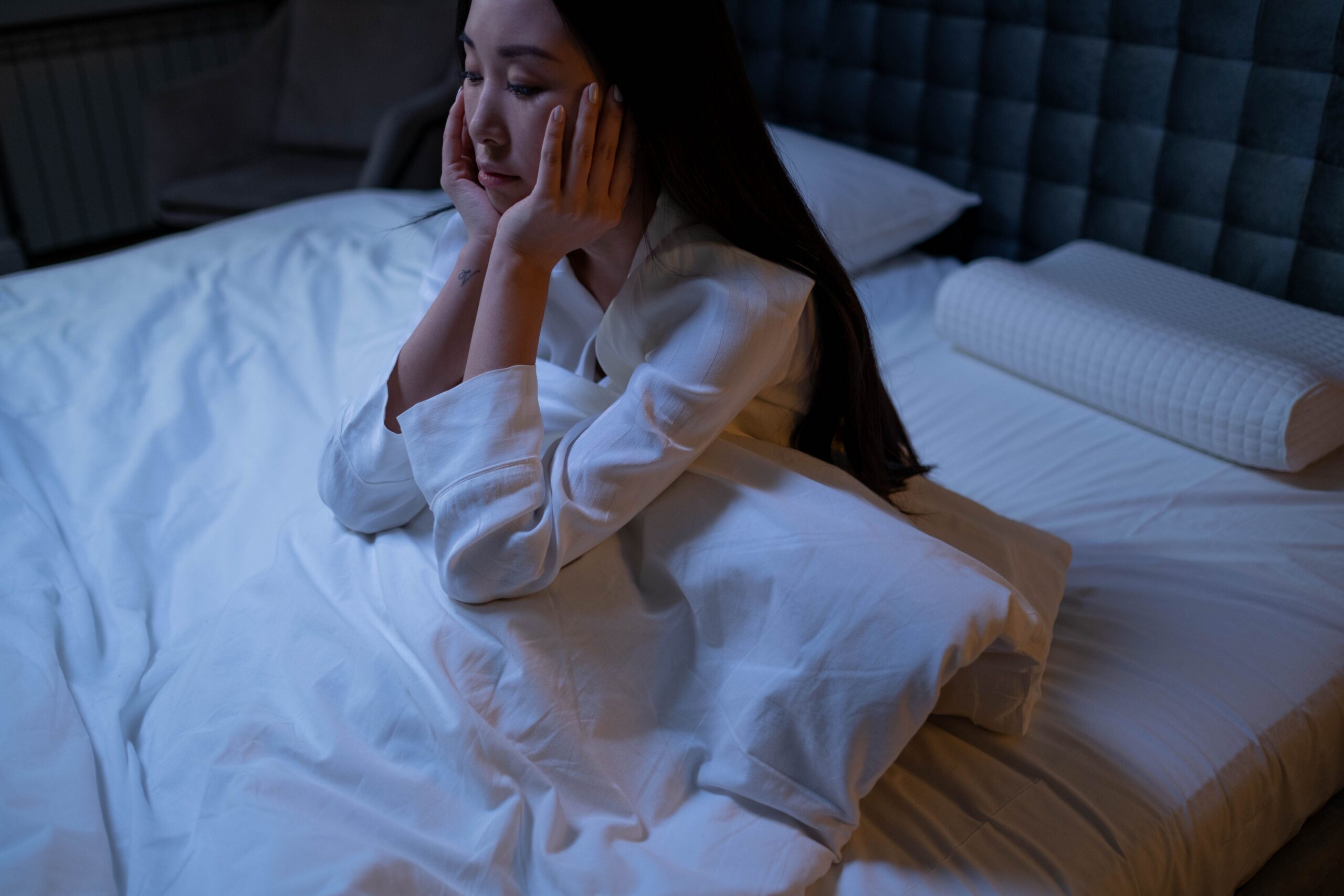
When sleep is bad, the instinct is to protect it by giving yourself more opportunity. You go to bed earlier, stay in bed later, cancel the alarm, and spend nine hours in bed hoping seven of them turn into sleep.
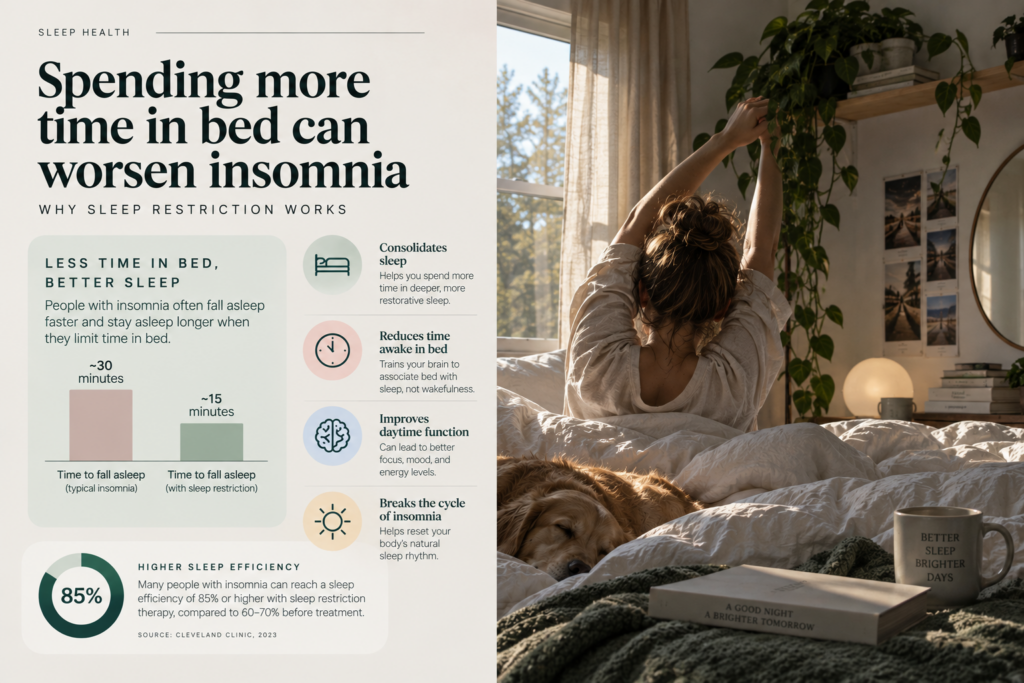
Sleep restriction therapy uses the opposite logic. It temporarily limits time in bed so the sleep window more closely matches the amount of sleep a person is actually getting. The goal is to consolidate sleep, increase sleep efficiency, and then gradually expand the window as sleep becomes more stable.
A 2025 meta-analysis of nine randomized studies with 1,239 participants found that single-component sleep restriction therapy improved insomnia severity, sleep-onset latency, diary-rated sleep quality, sleep efficiency, and wake time after sleep onset compared with control conditions.
The name sounds harsher than the treatment goal
Sleep restriction is not about seeing how little sleep you can survive on. It is a structured insomnia treatment. The initial reduction in time in bed is expected to reduce total sleep time temporarily, which the meta-analysis also found.
That temporary sleep loss is why this is not a casual biohack. People can become sleepier during the early phase, and the schedule needs to be adjusted as sleep consolidates.
A notebook can be used as a simple sleep diary to record bedtime, estimated sleep onset, awakenings, final wake time, and out-of-bed time. You need the pattern before you can understand the window.
The Livium recipe
Tool. Use a sleep diary before using a tracker score. A visual timer can help with a consistent wind-down cue without pulling you back onto your phone.
Behavior. Keep the wake time stable and use the bed for sleep rather than extending the sleep opportunity every time a night goes badly. In formal treatment, the time-in-bed window is calculated and adjusted from sleep data.
Threshold. Do not aggressively restrict sleep on your own if you have bipolar disorder, seizure risk, untreated sleep apnea, severe daytime sleepiness, safety-sensitive work, or another condition where sleep loss could be dangerous. This is a treatment to learn with professional guidance when risk is present.
| Outcome | What the meta-analysis found | Why it matters |
|---|---|---|
| Insomnia severity | Improved | Core symptoms decreased |
| Sleep onset latency | Improved | Less time trying to fall asleep |
| Sleep efficiency | Improved | More of bed time was spent asleep |
| Wake after sleep onset | Improved | Less awake time during the night |
| Total sleep time initially | Decreased | Expected part of the mechanism |
Source: Meta-analysis of sleep restriction therapy, Journal of Sleep Research, 2025.
The wake time is the anchor
People often focus on bedtime because it feels controllable. In insomnia treatment, wake time can be the more useful anchor. Sleeping late after a bad night can reduce sleep pressure for the next night and keep the cycle moving.
Morning light can support that anchor. A bright-light lamp is useful when outdoor morning light is not available, but it is not part of sleep restriction therapy itself. It simply helps create a clearer daytime signal.
Do not confuse sleepiness with success
The early phase can make you sleepy. That does not mean more restriction is better. The treatment is titrated, and the long-term goal is adequate, consolidated sleep, not permanent sleep deprivation.
If you become dangerously sleepy, cannot drive safely, or your mood destabilizes, stop treating the schedule like a challenge. A sleep mask can help with light once you are in bed, but no bedroom accessory makes unsafe sleep restriction safe.
Why less time in bed can feel counterintuitive
Insomnia creates a strong urge to protect sleep opportunity. The bed starts earlier, mornings stretch later, and awake time in bed expands. That can strengthen the association between bed and wakefulness while also reducing the sleep pressure available at the next bedtime.
Sleep restriction therapy reverses that pattern deliberately. It asks the bed to become a more reliable cue for consolidated sleep. Because the early phase can be uncomfortable, the treatment works best as a structured protocol rather than an improvised attempt to exhaust yourself.
This belongs inside CBT-I, not outside it
Sleep restriction is one component of cognitive behavioral therapy for insomnia. CBT-I also addresses stimulus control, unhelpful beliefs about sleep, and other behaviors that maintain insomnia.
If the idea of reducing time in bed makes you anxious, that is another reason to use a structured program. The schedule should respond to your sleep data and safety needs, not to a generic number from an article.
Plan of action
- Track actual sleep and time in bed for one week.
- Stop automatically adding hours in bed after a bad night.
- Keep wake time as consistent as practical.
- Use clinician-guided CBT-I or sleep restriction when insomnia is chronic or safety factors apply.
Table of Content

Know your body better.
Trusted By Thousands Daily





FAQs
What is sleep restriction therapy?
It is a CBT-I technique that temporarily limits time in bed to more closely match actual sleep, then expands the window as sleep consolidates.
Does sleep restriction mean sleeping less forever?
No. The long-term goal is adequate, consolidated sleep. The initial reduction in total sleep time is temporary.
Is sleep restriction safe to do alone?
Not for everyone. Significant daytime sleepiness, bipolar disorder, seizure risk, untreated sleep apnea, and safety-sensitive work can change the risk-benefit calculation.
Legal Disclaimer
The content published on Livium Health is for informational and educational purposes only. Nothing on this site constitutes medical advice, diagnosis, or treatment. Always consult a qualified healthcare provider before making decisions about your health, including changes to medications, supplements, diet, or exercise.
Livium Health is not a medical practice and does not have a patient-provider relationship with its readers. We do not sell supplements, medications, or treatments, and we have no financial relationship with the products or services we reference.
While we work to ensure the information we publish is accurate and up to date, health and medical guidance evolves. We make no guarantees about the completeness or currency of any content on this site. Reliance on any information provided by Livium Health is solely at your own risk.
If you are experiencing a medical emergency, call 911 or your local emergency services immediately.
We may receive compensation, free products, or affiliate commissions for products mentioned in this post. Opinions are our own.