
Share
Men's Health
Sleep
Women's Health
The afternoon crash is not a caffeine problem
6 min read
Key takeaways
- The post-lunch energy dip between 1 and 3 PM is a hardwired circadian event. It happens regardless of what you ate, how much coffee you had, or how well you slept. Blaming it on lunch or caffeine withdrawal misses the biology.
- A strategic nap of 10 to 20 minutes taken before 3 PM restores alertness, working memory, and reaction time to morning levels in published studies. Longer naps produce sleep inertia (grogginess) and fragment that evening’s sleep.
- The caffeine-nap (200 mg caffeine immediately before a 20-minute nap) is the highest-performance alertness strategy in the research: the caffeine clears adenosine from receptors while you sleep, then kicks in as you wake. NASA studies it for pilots.
- Relying on afternoon caffeine to push through the dip masks a solvable circadian problem and degrades night sleep quality, which creates more dip the next afternoon. The loop is breakable.
It is 2:59 PM. You have had three coffees. Nothing is working
The screen blurs slightly at the edges. You reread the same paragraph. The ambient office noise sounds distant. You are not tired in the way that makes you want to sleep, exactly. You are tired in the way that makes thinking feel like pushing through wet cement.
Most people in this moment reach for more caffeine. Most people are wrong.
The afternoon dip is not a caffeine-deficiency symptom. It is a circadian event built into human biology. It exists in cultures where lunch has no particular significance. It exists in people who skipped lunch. It exists in people who have had five cups of coffee. You cannot outrun it with stimulants indefinitely. You can work with it.
The two drivers
Driver one: the circadian trough. Core body temperature drops twice in 24 hours: once at night (triggering sleep) and once in the early-to-mid afternoon (the post-lunch dip). The trough timing varies by chronotype but typically falls between 1 and 3 PM for most adults. Temperature and alertness track together, so when temperature dips, cognitive performance dips with it. This is a circadian program, not a lunch consequence.
Driver two: adenosine accumulation. Adenosine is a sleep-pressure molecule that builds throughout the day. Caffeine works by blocking adenosine receptors, not by reducing adenosine itself. By mid-afternoon, enough adenosine has accumulated that even caffeine struggles to suppress its signal, especially in adults over 40 whose adenosine sensitivity increases slightly with age. More caffeine at 2 PM delays the clearing of that adenosine until 2 AM, which is why afternoon coffee degrades night sleep even in people who fall asleep fine.
The standard 2 PM caffeine cutoff is the right default. The afternoon dip happens anyway. What changes is whether you push through it at a cost to night sleep or manage it directly with a short nap.
The nap research
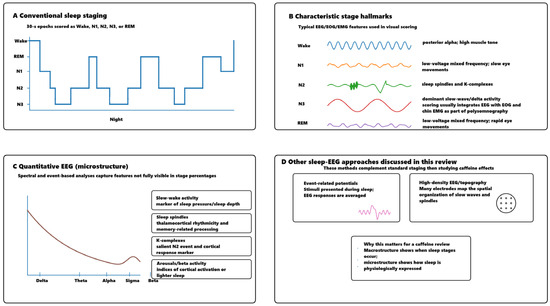
The case for the strategic nap is not soft. A 2002 NASA study of commercial pilots found that a 40-minute nap (allowing for 26 minutes of actual sleep) improved performance by 34 percent and alertness by 100 percent compared to no-nap controls. A 1995 study at the Alertness Solutions lab found the 10- to 20-minute nap the optimal sweet spot: sufficient sleep for restoration, short enough to avoid deep sleep and the grogginess (sleep inertia) that follows.
Sleep inertia is the real problem with longer naps. Thirty-minute or 45-minute naps frequently push into stage 2 or slow-wave sleep, and waking from slow-wave sleep leaves you more impaired immediately after than you were before the nap. The grogginess can last 20 to 30 minutes and leaves people worse off than if they had just pushed through. The 20-minute ceiling exists for this reason.
The caffeine-nap (also called a “nappuccino” in some research, though the term is aggressively unfortunate) is the most-studied high-performance variant. Take 200 mg caffeine immediately before lying down for 20 minutes. Caffeine takes approximately 20 to 30 minutes to reach peak blood concentration. In that window, you sleep; the caffeine arrives at the adenosine receptors at the same time you wake. Multiple studies show the combination outperforms either caffeine alone or the nap alone on measures of reaction time and working memory.
The Livium recipe
Tool. A quiet space to lie flat for 20 minutes. This can be a car, a couch, a conference room floor, an office nap pod, or a bedroom. Eye mask and earplugs help in noisy environments. A sleep mask and foam earplugs set takes up about as much space in a work bag as a pen case. For the caffeine-nap variant: the caffeine should be from a consistent source with a known dose. Vitamatic Caffeine 200 mg tablets are precise in a way that “a coffee” is not (a shot of espresso ranges from 60 to 100 mg; a drip coffee from 80 to 200 mg depending on the brew).
Behavior. Schedule the nap for between 1 and 3 PM, as close to the felt trough as possible. Set an alarm for 20 minutes. The goal is not to fall into a deep sleep. If you doze lightly for 15 minutes, that is sufficient. Some people never fully lose consciousness in a nap and still emerge 20 minutes later meaningfully more alert. For the caffeine-nap: take 200 mg caffeine, then immediately lie down. Set a 20-minute alarm. Do not use this protocol after 2 PM or if you already consumed caffeine after noon. The 2 PM cutoff applies to the caffeine portion of the caffeine-nap too.
Threshold. Three days of scheduled napping show measurable improvement in late-afternoon productivity and mood for most people. Two weeks of replacing afternoon caffeine with a strategic nap typically shows improvement in night sleep onset latency (you fall asleep easier) and reduction in the morning grogginess that comes from poor night sleep driven by late caffeine. Track wake time and sleep onset for two weeks; the feedback is clear. L-Theanine 200 mg taken in the morning with your first coffee smooths the afternoon trough by moderating the cortisol spike from caffeine without reducing the alertness benefit.
| Strategy | Performance recovery | Night sleep impact | Notes |
|---|---|---|---|
| 10–20 min nap | Strong (34% performance, NASA data) | Neutral if before 3 PM | Set alarm; do not oversleep |
| Caffeine-nap (200 mg + 20 min nap) | Highest of all strategies tested | Neutral if before 2 PM | Do not use if last caffeine was after noon |
| 30–45 min nap | Mixed; sleep inertia risk | Slight negative if late | May feel worse immediately after |
| Afternoon coffee (after 2 PM) | Moderate; temporary | Negative (delays sleep onset, fragments deep sleep) | Masks the problem; does not solve it |
Source: Livium editorial synthesis based on NHLBI sleep science and Horne & Reyner, Psychophysiology (1996) caffeine-nap study.
Plan of action
- Stop taking caffeine after 2 PM for two weeks and track what happens to your night sleep and your next-morning grogginess. The result is usually informative. Most adults discover the afternoon coffee was costing them more than it gave them.
- Build a 20-minute nap into the 1 to 3 PM window on days when it is logistically possible. A parked car works. A closed office door and a jacket over your head work. The barrier is social (napping feels lazy) more than logistical. The research does not share that prejudice.
- If you need to be operationally sharp in the afternoon after a short-sleep night, the caffeine-nap is the most evidence-backed tool. 200 mg caffeine tablet, immediately lie down, 20-minute alarm. Do this before noon or no later than 1 PM if possible.
- Bright light exposure for 10 minutes between 12:30 and 1:30 PM (just before the typical trough) delays and blunts the trough slightly. A short outdoor walk after lunch produces a meaningful circadian alertness bump. The circadian system responds to light within minutes.
Table of Content
Know your body better.
Trusted By Thousands Daily


FAQs
Will napping make it harder to sleep at night?
A 20-minute nap before 3 PM removes approximately 20 minutes of adenosine pressure from your sleep account. For most adults getting 7 to 8 hours of sleep, this is a small fraction of the total sleep drive and does not meaningfully delay sleep onset. The problem is longer naps (45 to 90 minutes) that draw a much larger debt from the sleep pressure account and can push sleep onset by one to two hours. Keep it short, keep it early.
I can’t fall asleep for naps. Should I still try?
Yes. Rest without sleep still has alertness benefits. Lying down with eyes closed for 20 minutes, even without losing consciousness, reduces physiological arousal, lowers heart rate, and often produces at least a few minutes of light stage 1 sleep. The key is lying flat in a quiet, dark environment. If sitting in a chair, the threshold to actual sleep is much higher and the rest benefit is lower.
Does the afternoon crash get worse with age?
The subjective intensity of the dip does not change dramatically with age, but the recovery time from a short-sleep night that produces a more severe dip is longer for adults over 40. In your 20s, pulling an all-nighter and functioning reasonably the next day is plausible. By 45, the recovery from poor sleep is slower and the afternoon dip on a bad-sleep day is harder. Managing night sleep quality is the upstream fix; napping is the day-of intervention.
Legal Disclaimer
The content published on Livium Health is for informational and educational purposes only. Nothing on this site constitutes medical advice, diagnosis, or treatment. Always consult a qualified healthcare provider before making decisions about your health, including changes to medications, supplements, diet, or exercise.
Livium Health is not a medical practice and does not have a patient-provider relationship with its readers. We do not sell supplements, medications, or treatments, and we have no financial relationship with the products or services we reference.
While we work to ensure the information we publish is accurate and up to date, health and medical guidance evolves. We make no guarantees about the completeness or currency of any content on this site. Reliance on any information provided by Livium Health is solely at your own risk.
If you are experiencing a medical emergency, call 911 or your local emergency services immediately.
We may receive compensation, free products, or affiliate commissions for products mentioned in this post. Opinions are our own.