
Share
Men's Health
Sleep
Women's Health
The alcohol and sleep trade-off: Why the nightcap is wrecking your second half of the night
6 min read
Key takeaways
- Alcohol sedates you into sleep but suppresses REM in the first half of the night, then produces a rebound arousal effect in the second half that causes fragmented, non-restorative sleep.
- Even one to two drinks in the evening measurably reduces sleep quality, with effects on heart rate, temperature, and REM architecture detectable on wearable devices.
- Timing matters: alcohol consumed three or more hours before bed produces significantly less sleep disruption than the same amount consumed within an hour of sleep.
- The wine-sleep myth persists because the subjective experience (falling asleep faster) does not match the objective outcome (worse sleep quality overall).
The trade you do not know you are making
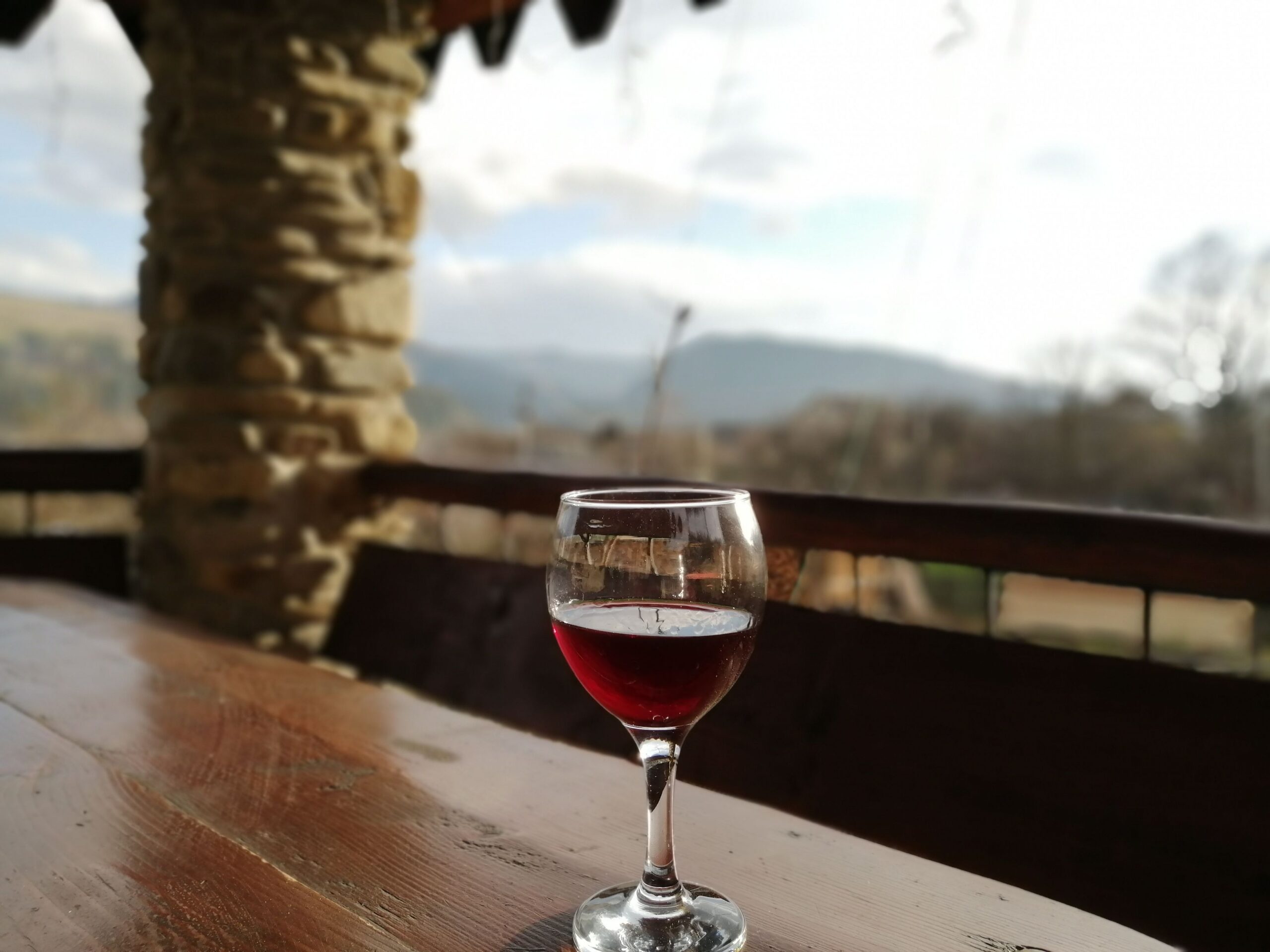
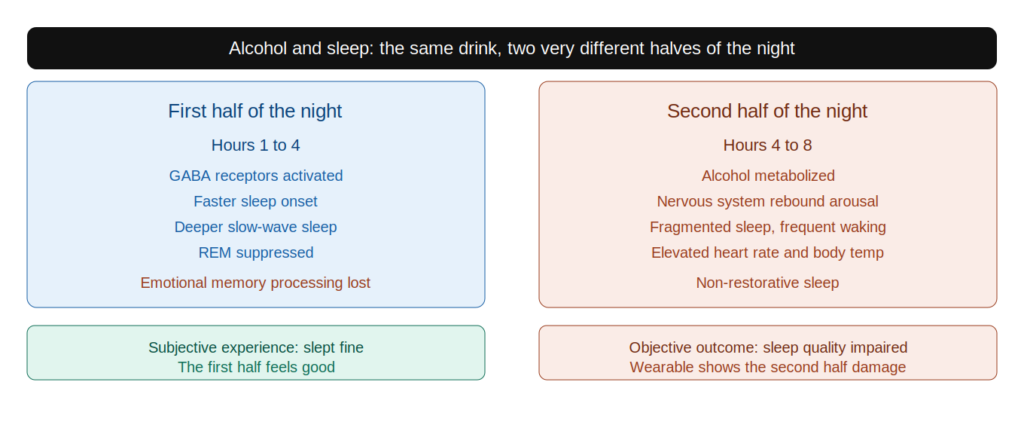
Alcohol is a sedative. It binds to GABA receptors, reducing neural excitation and producing the drowsiness that makes the nightcap feel helpful. You fall asleep faster. You sleep more deeply in the first two hours. Then the alcohol metabolizes, GABA effects wear off, and the nervous system rebounds into a more excitable state. The second half of the night is when the damage happens: fragmented sleep, frequent awakenings, early-morning waking, and suppression of REM sleep, which processes emotional memory and supports next-day cognitive performance.
The problem is that the subjective experience of this is unreliable. People who drink before bed often feel they slept fine because the first half of their night felt consolidated. They do not notice the second-half fragmentation the way they would a 3 AM wake-up caused by anxiety. They wake up feeling tired without knowing why, and sometimes drink more the following evening to replicate the initial sedative effect. The cycle is self-reinforcing, and the connection to the alcohol is rarely made.
What the research actually shows
A 2026 narrative review covering the past decade of evidence confirmed that alcohol consistently reduces REM sleep duration, increases sleep fragmentation, and impairs breathing during sleep, particularly in the second half of the night. The effect is dose-dependent: higher doses produce greater disruption. But the threshold for measurable disruption is low. Even moderate drinking (one to two standard drinks) produces detectable changes in sleep architecture in healthy adults.
Wearable data adds to this picture. Studies using consumer smartwatches and rings have found that alcohol consumption elevates nocturnal heart rate, disrupts heart rate variability, and increases body temperature during sleep in ways that independently impair sleep quality regardless of how the person subjectively rates their sleep. This is why people who track their sleep with a wearable often notice worse recovery scores on nights they drink even when they do not remember waking.
The timing variable most people ignore
How long before bed you drink matters significantly. Alcohol consumed within one hour of sleep produces the most severe disruption to sleep architecture. Consuming the same amount three to four hours before bed gives the liver time to process most of the alcohol before sleep onset, meaningfully reducing the second-half rebound effect. This does not make evening drinking harmless, but it makes the timing decision a practical lever for reducing harm without abstinence.
For midlife adults specifically, the problem compounds. Alcohol worsens sleep apnea by relaxing upper airway muscles. It suppresses melatonin secretion, which is already declining with age. It elevates body temperature during sleep, when thermoregulation is less efficient. And it disrupts the REM sleep that processes the emotional content of the day, which is one of the mechanisms by which poor sleep worsens mood and anxiety.
The Livium recipe
Tool. If you track sleep with a wearable, run a 30-day experiment: log every evening you drink and compare your recovery or HRV scores against dry nights. Most people who do this see the pattern clearly within two weeks and find it more motivating than any written statistic. A sleep tracker that monitors HRV gives you the objective picture that subjective sleep quality cannot. In the ritual replacement problem, the sensory experience of the nightcap is often what people miss most. A non-alcoholic evening drink that preserves the wind-down ritual removes the behavioral barrier without requiring willpower every evening.
Behavior. Move alcohol earlier. Finish drinking by 7 PM and give yourself three to four hours before your target sleep time. This single timing change reduces sleep disruption more than cutting volume by half while drinking close to bedtime. If you are going to drink, eat alongside it: food slows alcohol absorption and flattens the peak blood alcohol level that drives the rebound effect. Avoid mixing alcohol with sleep aids or antihistamines, which compound sedation and produce worse sleep architecture than either alone.
Threshold. If you are waking between 2 and 4 AM consistently, and you drink in the evenings, the alcohol is the first variable to address before any other sleep intervention. Magnesium glycinate 200 to 400 mg taken before bed supports GABA activity and can smooth the nervous system transition that alcohol disrupts, without the rebound. If sleep apnea symptoms are present alongside regular evening drinking, the two are interacting: address both simultaneously.
| Variable | Effect on sleep | Practical lever |
|---|---|---|
| Timing (within 1 hr of bed) | Most severe disruption | Finish drinking 3 to 4 hours before bed |
| Volume (3+ drinks) | Dose-dependent REM suppression | Keep to 1 to 2 drinks maximum on sleep-prioritizing nights |
| Sleep apnea risk | Alcohol relaxes upper airway muscles | Avoid or eliminate alcohol if apnea present |
| Melatonin suppression | Delays sleep phase independently | Earlier drinking window protects melatonin onset |
Source: Colrain et al., Nutrients 2026 — Alcohol, Wine, and Sleep in Adults. CC BY 4.0.
Plan of action
- Run 14 dry nights in a row and track your sleep quality, morning energy, and HRV. Use this as your personal reference data, not a commitment to permanent change. Most people find the difference in quality obvious and use it to make more deliberate choices going forward.
- Move your last drink earlier. If you currently drink at 10 PM before an 11 PM bedtime, shift it to 7 PM. This single change produces meaningfully better sleep without requiring abstinence.
- Replace the ritual, not just the drink. The wind-down value of the nightcap is real. A magnesium drink or herbal tea at the same time, in the same glass, with the same intention preserves the behavioral cue that makes the ritual work.
- If you wake consistently between 2 and 4 AM and drink most evenings, eliminate evening alcohol for 30 days before trying any other intervention for early waking. A sleep quality journal tracking waking times alongside evening alcohol gives you the pattern data to make the connection concrete.
Table of Content

Know your body better.
Trusted By Thousands Daily




FAQs
Does red wine affect sleep differently than other alcohol?
No meaningfully. Red wine contains small amounts of melatonin and resveratrol, but the quantities are too low to produce any measurable sleep benefit. The ethanol content drives the effects on sleep architecture regardless of beverage type.
Can I counteract the effect with melatonin?
Partially. Melatonin may counteract some of the phase-delaying effect of alcohol by restoring the suppressed melatonin signal. It does not address the rebound arousal or REM suppression caused by alcohol metabolism. It is a partial mitigation, not a full solution.
Is one drink genuinely a problem?
At the population level, one drink produces small but measurable changes in sleep architecture. Whether this matters individually depends on how sensitive you are, when you drink it, and your baseline sleep quality. One drink consumed three hours before bed is unlikely to produce clinically meaningful disruption for most adults. One drink consumed 30 minutes before bed is different.
Legal Disclaimer
The content published on Livium Health is for informational and educational purposes only. Nothing on this site constitutes medical advice, diagnosis, or treatment. Always consult a qualified healthcare provider before making decisions about your health, including changes to medications, supplements, diet, or exercise.
Livium Health is not a medical practice and does not have a patient-provider relationship with its readers. We do not sell supplements, medications, or treatments, and we have no financial relationship with the products or services we reference.
While we work to ensure the information we publish is accurate and up to date, health and medical guidance evolves. We make no guarantees about the completeness or currency of any content on this site. Reliance on any information provided by Livium Health is solely at your own risk.
If you are experiencing a medical emergency, call 911 or your local emergency services immediately.
We may receive compensation, free products, or affiliate commissions for products mentioned in this post. Opinions are our own.