
Share
Men's Health
Mental Health
Women's Health
The anger that is not anger: What irritability in midlife actually signals
6 min read

Key takeaways
- Irritability in midlife is rarely primarily a personality problem. It is almost always a symptom of something measurable: sleep deprivation, hormonal decline, chronic pain, thyroid dysfunction, blood sugar instability, or chronic inflammation.
- The prefrontal cortex requires adequate sleep, stable glucose, and sufficient sex hormone support to maintain its regulatory function over the amygdala. Remove any of these and the emotional brake system degrades.
- In men, testosterone decline is a frequently missed driver of irritability that is distinct from the clinical irritability of depression and responds to hormonal rather than psychological treatment.
- In perimenopausal women, estrogen and progesterone fluctuation directly alters serotonin and GABA receptor function, producing irritability that is neurochemical in origin and responds poorly to behavioral intervention alone.
The short fuse that appeared somewhere in the 40s
The traffic that would have been mildly annoying in 2015 is now producing a physical stress response. The colleague who asks one follow-up question too many is generating rage disproportionate to the actual situation. The same partner doing the same thing that was always slightly irritating is now producing conflict. The person has attributed this to stress, to being too busy, to getting older and having less patience. All of those may contribute. None of them explain why the threshold shifted.
The prefrontal cortex is the brain’s emotional regulation system. Its primary function in the context of anger is to receive the amygdala’s threat signal and decide whether the situation actually warrants the response the amygdala is proposing. When the prefrontal cortex is operating at full function, minor irritants produce minor responses. When prefrontal function is degraded by sleep deprivation, hormonal insufficiency, glucose instability, or chronic cortisol elevation, the amygdala signal passes through less filtered and the response is disproportionate.
The irritability is not the problem. The irritability is the symptom. The problem is what is degrading the prefrontal brake.
The five most common physiological drivers
Sleep deprivation. A single night of inadequate sleep reduces prefrontal cortex function measurably and amplifies amygdala reactivity by up to 60 percent in imaging studies. People who are chronically sleeping 6 hours when they need 7.5 are running with a permanently degraded emotional brake system. The irritability tracks the sleep debt precisely.
Testosterone decline (men). Testosterone modulates serotonin receptor sensitivity in the prefrontal cortex. Low testosterone is associated with irritability, low frustration tolerance, and what researchers call “irritable male syndrome,” a pattern of irritability, anger, and hypersensitivity that responds to testosterone optimization. This is distinct from the irritability of depression, though they often coexist.
Estrogen and progesterone fluctuation (women). Estrogen supports serotonin synthesis and receptor sensitivity. Progesterone metabolizes to allopregnanolone, a potent positive allosteric modulator of GABA-A receptors (essentially a natural anxiolytic). When progesterone drops in perimenopause, allopregnanolone availability drops with it. The result is a GABA deficit that produces anxiety, irritability, and reduced stress tolerance through the same mechanism as benzodiazepine withdrawal.
Blood sugar instability. Glucose is the primary fuel for prefrontal cortex function. Hypoglycemic episodes, even mild ones, produce irritability in a majority of people because the prefrontal cortex is the brain region most sensitive to glucose availability. The person who is irritable before meals and improved after eating has a glucose regulation pattern worth investigating.
Subclinical thyroid dysfunction. Both hypothyroidism and hyperthyroidism produce irritability, though through different mechanisms. Hyperthyroidism produces a sympathomimetic hyperarousal state. Hypothyroidism produces the cognitive slowing and emotional lability that comes from reduced cellular energy production in neural tissue. A TSH outside the 1 to 2.5 mIU/L optimal range alongside new irritability is worth investigating.
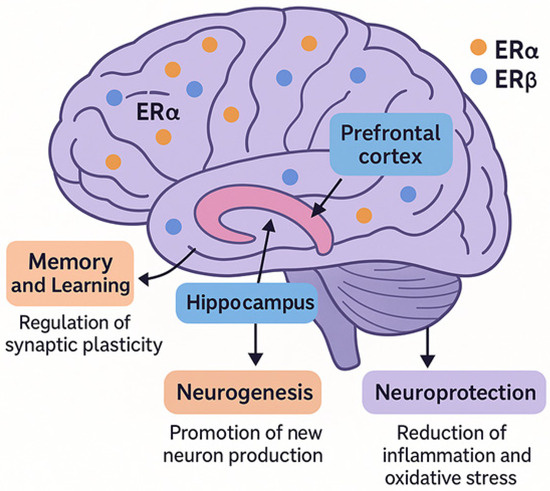
Declining estrogen during the menopausal transition reduces serotonin receptor expression and activity, allopregnanolone-mediated GABA inhibition, and HPA axis regulation — producing the irritability, mood lability, and heightened stress reactivity that midlife women often mistake for personality change. Source: Bae, Brain Sciences 2025 — Beyond Hot Flashes: Estrogen Receptors and Menopausal Mental Health. CC BY 4.0.
The Livium recipe
Tool. A diagnostic panel targeting the five drivers: free testosterone and SHBG, estradiol and progesterone (for women, timed to day 21 of cycle for luteal phase assessment), TSH and free T3, fasting glucose and fasting insulin, and a wearable providing objective sleep data. The wearable data specifically should include deep sleep percentage, REM percentage, and nighttime HRV, which together distinguish sleep-driven irritability from hormonally driven irritability with reasonable reliability.
Behavior. Based on the diagnostic findings, address the primary driver specifically. Sleep deprivation: sleep timing protocol, no screens after 9 PM, consistent wake time. Glucose instability: protein and fat before carbohydrates at each meal, CGM monitoring to identify specific trigger foods. Hormonal drivers: clinical conversation with a hormone-aware physician about the testosterone, estrogen, or progesterone picture.
Threshold. After addressing the primary driver for six to eight weeks, a subjective reduction in irritability frequency and intensity is the primary marker. Partners and close colleagues often notice before the person does. A reduction in minor conflict frequency and an improved ability to pause before responding are the behavioral markers of recovering prefrontal regulation capacity.
The nutritional support layer
Life Extension Optimized Saffron 50 mg is the most directly evidence-supported nutritional intervention for irritability and mood instability. At 30 to 50 mg daily, saffron produces serotonin reuptake inhibition and dopamine modulation in multiple double-blind RCTs with effect sizes comparable to low-dose SSRIs, without the sexual side effects, tolerance, or discontinuation syndrome. Life Extension Ashwagandha (KSM-66) addresses the cortisol elevation that amplifies amygdala reactivity and reduces prefrontal regulatory capacity, supporting both the anxiety and irritability dimensions simultaneously.
Thorne Stress B-Complex provides the full spectrum of B vitamins in their active forms, supporting neurotransmitter synthesis, methylation, and the adrenal response to chronic stress. B6 specifically is required for serotonin and GABA synthesis; deficiency is more common than recognized in adults with high alcohol intake, oral contraceptive use, or inflammatory conditions. Nordic Naturals Arctic Cod Liver Oil provides EPA and DHA alongside naturally occurring vitamin D and A, addressing the omega-3 and vitamin D deficiencies that independently contribute to mood dysregulation and serotonin pathway dysfunction.
Irritability drivers: what to test and how to recognize each
| Driver | Distinguishing pattern | Test | First intervention |
|---|---|---|---|
| Sleep deprivation | Worse on poor sleep nights; improves after good sleep | Wearable deep sleep % | Sleep timing protocol |
| Low testosterone (M) | Persistent low frustration tolerance; fatigue + irritability together | Free testosterone + SHBG | Upstream protocol; physician consultation |
| Perimenopause (F) | Cyclical pattern; worse in luteal phase; new onset after 40 | Estradiol + progesterone day 21 | Hormone-aware physician; HRT evaluation |
| Glucose instability | Irritable before meals; improved immediately after eating | CGM; fasting insulin | Protein-first meals; snack timing |
| Thyroid dysfunction | Diffuse; accompanied by temperature changes, weight change | TSH + free T3 | Cofactor optimization; physician referral |
Source: Livium editorial synthesis based on NIMH Men and Mental Health resources and Salminen et al., Psychoneuroendocrinology (2016).
Plan of action
- Identify which pattern from the table above most closely matches the timing and triggers of the irritability. The pattern is diagnostic before any bloodwork is run.
- Run the relevant bloodwork based on the pattern. Do not assume the cause without data. Treating glucose instability when the problem is testosterone deficiency wastes months of potential improvement.
- Add saffron 30 to 50 mg daily as a bridge intervention while the physiological driver is being identified and addressed. It is not a substitute for addressing the cause, but it reduces symptom severity during the investigation period.
- Tell the people closest to the situation what is being investigated. The relational cost of unexplained irritability compounds quickly. A brief, non-defensive explanation that this is being taken seriously and actively addressed changes the interpersonal dynamic before the biological change produces the behavioral change.
Table of Content

Know your body better.
Trusted By Thousands Daily




FAQs
Can chronic pain cause irritability?
Yes, significantly. Chronic pain is one of the most reliable drivers of irritability through two mechanisms: the constant attentional demand of pain management depletes prefrontal resources, and chronic pain elevates cortisol and inflammatory markers that independently degrade emotional regulation. People with unaddressed chronic pain are almost invariably irritable, and the irritability resolves in proportion to the pain management.
Should anger management therapy be the first response?
Not as the sole first response if the irritability is new or worsening rather than lifelong. Anger management therapy teaches behavioral regulation skills that are genuinely useful, but if the irritability is physiologically driven, behavioral skills are fighting against a degraded neurobiological brake system. Addressing the physiology first or simultaneously with behavioral skills produces substantially better outcomes than behavioral skills alone against an unaddressed biological driver.
Is irritability different in women versus men?
The physiology of emotional dysregulation is the same. The most common proximal drivers differ. In men in the 40s to 50s, testosterone decline is the highest-yield investigation. In women in the same period, perimenopausal hormone fluctuation is typically the highest-yield investigation. Both groups also have sleep, glucose, and thyroid as potential drivers that are equally common across sexes.
Legal Disclaimer
The content published on Livium Health is for informational and educational purposes only. Nothing on this site constitutes medical advice, diagnosis, or treatment. Always consult a qualified healthcare provider before making decisions about your health, including changes to medications, supplements, diet, or exercise.
Livium Health is not a medical practice and does not have a patient-provider relationship with its readers. We do not sell supplements, medications, or treatments, and we have no financial relationship with the products or services we reference.
While we work to ensure the information we publish is accurate and up to date, health and medical guidance evolves. We make no guarantees about the completeness or currency of any content on this site. Reliance on any information provided by Livium Health is solely at your own risk.
If you are experiencing a medical emergency, call 911 or your local emergency services immediately.
We may receive compensation, free products, or affiliate commissions for products mentioned in this post. Opinions are our own.