
Share
Fitness
Men's Health
Women's Health
The case for lifting heavy: What resistance training does to your bones that nothing else can
7 min read
Key takeaways
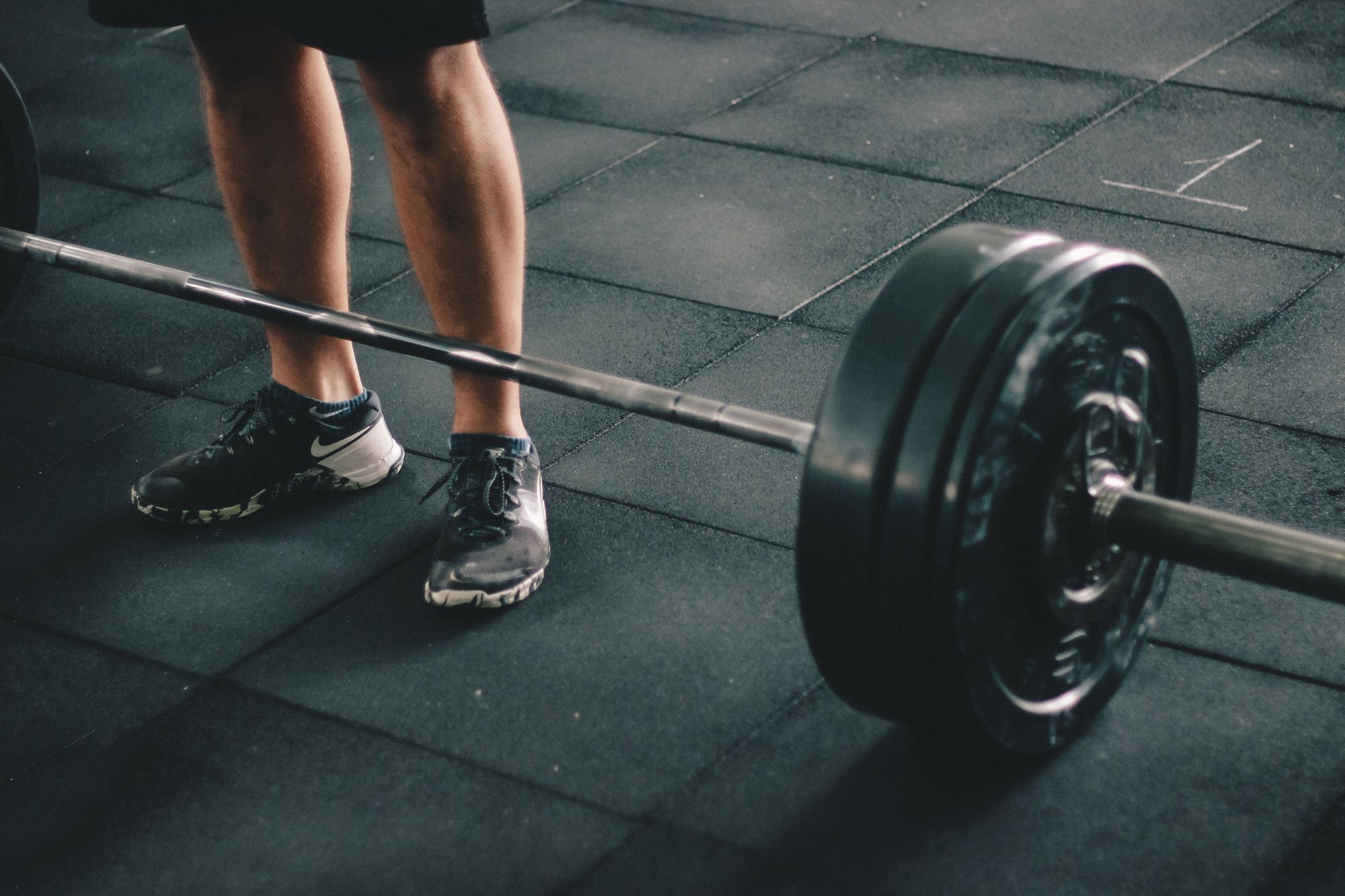
- Bone is a mechanosensitive tissue. It responds to compressive load by forming new bone. Cardio, walking, and yoga do not produce the load signal the skeleton needs to maintain density.
- Resistance training is the only exercise modality with consistent evidence for increasing bone mineral density at the spine and hip in adults over 40.
- A DEXA scan at 44 or 45 gives a baseline that tells you how much time is left in the high-leverage intervention window. Most people do not get one until 65, by which point 25 years of preventable loss have already occurred.
- The supplement stack that supports bone formation is straightforward. The exercise is not optional.
Running is not enough. Neither is yoga
Running produces ground reaction forces that benefit hip bone density. It does almost nothing for the spine. Yoga, cycling, and swimming produce negligible bone-forming stimulus at any site. This is not a criticism of any of those activities. It is a clarification of what the skeleton specifically requires.
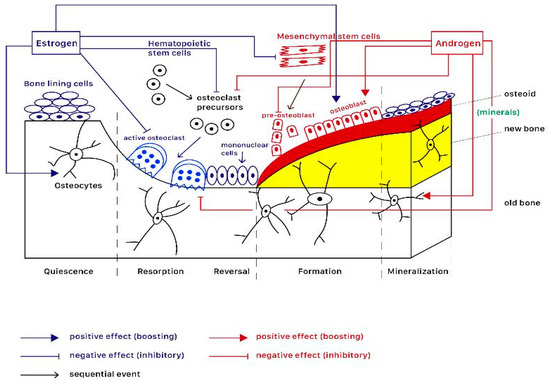
Bone formation is triggered by mechanical strain applied to bone tissue. Osteoblasts, the cells that build bone, activate in response to deformation. Running applies moderate cyclical strain at the hip. Resistance training with heavy loads applies significantly greater strain across multiple sites simultaneously, including the lumbar vertebrae and femoral neck, the two locations where osteoporotic fractures are most clinically consequential.
A hip fracture after 70 carries a 20 to 30 percent one-year mortality rate. A lumbar compression fracture produces chronic pain, postural collapse, and reduced lung capacity. The downstream effects of these fractures are not cosmetic. They are survival events. The intervention window to prevent them is in the 40s and 50s, not after the fracture.
What happens to the bone after 40
Peak bone mass is achieved between the ages of 25 and 30. After that, the balance between bone formation and bone resorption begins to shift. In adults who remain active and have adequate hormonal function, the loss is gradual, perhaps 0.5 to 1 percent per year at the spine. In women entering perimenopause, estrogen decline removes the key inhibitor of osteoclast activity, and the loss accelerates to 3 to 5 percent per year for 5 to 10 years.
The process is silent. No pain, no stiffness, no signal. Bone density at 55 is a direct function of bone density at 45 minus however much was lost in the decade between. The trabecular architecture inside the bone, the lattice structure that gives it load-bearing strength, does not regenerate once it is gone. Surface density can improve. Internal structure is largely irreversible.
The DEXA scan (dual-energy X-ray absorptiometry) measures bone mineral density at the spine and hip in 10 minutes. It costs $50 to $150 at most imaging centers as a cash-pay procedure. The T-score it produces indicates where bone density currently falls relative to a young adult reference population. Above minus 1.0 is normal. Between -1.0 and -2.5 is osteopenia. Below -2.5 is osteoporosis. Most people getting a DEXA for the first time are surprised by the result in either direction.
What the research says about resistance training and bone
A 2022 meta-analysis in the British Journal of Sports Medicine, including 10,000 adults across 80 trials, found that resistance training produced significantly greater improvements in bone mineral density at the lumbar spine and femoral neck than aerobic training alone. The effect was present across all age groups but was largest in perimenopausal and postmenopausal women, precisely the population with the highest rate of bone loss.
The training stimulus that produces bone formation is not light resistance. It requires progressive overload. The osteoblast activation response is proportional to the strain applied. Bodyweight squats and resistance bands produce some response. Barbell squats, Romanian deadlifts, hip thrusts, and loaded carries produce significantly more, particularly at the spine and hip.
Frequency matters less than intensity and consistency. Two sessions per week of progressive loading, maintained over 12 to 24 months, produce meaningful bone density gains. Three sessions per week produce modestly more. One session per week, while better than nothing, does not produce the same adaptive stimulus.
The movements that target the sites that matter
Lumbar spine. Axial loading through the spine drives the bone-forming response at the vertebrae. Barbell back squats, goblet squats, Romanian deadlifts, and overhead press all apply axial compression. Machine-based leg press does not produce meaningful spinal loading. This is a meaningful distinction for anyone whose primary fitness goal is bone health rather than aesthetics.
Femoral neck and hip. Hip hinge movements, particularly Romanian deadlifts, sumo deadlifts, and hip thrusts, apply the forces that stimulate bone formation at the femoral neck. This is the site where osteoporotic hip fractures occur. Lunges and step-ups provide a secondary stimulus. Running provides some, but significantly less than, loaded hip-hinge work.
Wrist and forearm. Often overlooked. Grip-intensive movements, including deadlifts, farmer carries, and pull-up variations, apply loading to the distal radius, a common fracture site in falls. Including carries in a training program addresses this site without requiring additional dedicated work.
The supplement stack that supports bone formation
Training provides the stimulus. The supplement stack provides the raw materials. Without adequate vitamin D, calcium absorption is impaired, and the parathyroid hormone system compensates by pulling calcium from bone. Life Extension Vitamin D3 with K2 at 2,000 to 4,000 IU daily covers the D3 requirement, while K2 directs the calcium to bone rather than arteries. Recheck vitamin D levels at 8 to 10 weeks.
For anyone whose DEXA comes back in the osteopenia range, a comprehensive bone formula covers all the cofactors in one place. Life Extension Bone Restore with Vitamin K2 combines calcium, D3, K2, magnesium, boron, and silicon in clinically relevant doses, eliminating the need for five separate purchases. The cost per day is lower than buying each component separately.
When dietary calcium is consistently below 800 mg daily, a supplement fills the gap. Thorne Calcium-Magnesium Malate provides both calcium and magnesium in well-absorbed malate forms, without the constipation risk associated with calcium carbonate. Do not exceed 1,500 mg total calcium from all sources combined.
Collagen peptides are an underused addition to a bone protocol. Bone matrix is primarily type I collagen, and several clinical trials specifically on bone collagen peptides (the Fortibone formulation) show measurable increases in bone mineral density when combined with resistance training. Vital Proteins Collagen Peptides provides roughly 10 g of proline and glycine per serving, the amino acids most directly used in collagen matrix synthesis.
The Livium recipe
Tool. A DEXA scan. Search for imaging centers in your area offering cash-pay pricing. Most results come back within 24 hours. Do it this month if bone health has not been tested before. Pair with a blood panel covering vitamin D (25-OH), PTH, calcium, and sex hormones. Together, they indicate the current density status and the biological drivers behind any loss.
Behavior. Resistance training at least twice per week, with progressive load specifically on the spine and hips. Squats, deadlifts, hip hinges, farmer carries. Not machine-based isolation work. Protein at 1.2 to 1.6 g/kg body weight daily. Collagen peptides 10 g daily, taken with vitamin C to maximize collagen synthesis. Vitamin D3 with K2 every morning.
Threshold. Rerun the DEXA at 24 months. Bone changes slowly, and annual scans are not necessary unless pharmacological intervention is underway. Vitamin D above 50 ng/mL and PTH below 65 pg/mL on bloodwork should normalize within 8 to 12 weeks of consistent supplementation. If hormones are driving bone loss, a conversation with a hormone-aware physician is the next step.
DEXA T-score interpretation and action by result
| T-score | Classification | Action |
|---|---|---|
| Above −1.0 | Normal | Start or continue resistance training. D3 and K2 daily. Retest in 5 years or at menopause onset. |
| −1.0 to −2.5 | Osteopenia | Escalate resistance training to 3x per week. Add Bone Restore formula. Address hormones with a physician. Retest in 2 years. |
| Below −2.5 | Osteoporosis | Clinical referral to an endocrinologist or rheumatologist. Pharmacological treatment (bisphosphonate) is likely indicated alongside training and supplementation. |
Source: Livium editorial synthesis based on National Osteoporosis Foundation diagnostic criteria and Endocrine Society Osteoporosis Guidelines.
Plan of action
- Book a DEXA scan this month. Search for imaging centers offering cash-pay pricing between $50 and $150. No referral required at most facilities.
- Start or escalate resistance training this week. Two sessions per week with compound movements: squat, hinge, press, carry. The bone-forming response requires the load. There is no substitute.
- Start Life Extension D3 with K2 at 2,000 to 4,000 IU daily. Recheck vitamin D in 8 to 10 weeks.
- If the DEXA comes back in the osteopenia range, switch to Bone Restore with K2 as the comprehensive formula and schedule a conversation with a physician about the hormonal picture.
Table of Content
Know your body better.
Trusted By Thousands Daily

FAQs
Does running protect bone density?
Running benefits hip bone density through impact loading. It produces minimal stimulus at the spine, where osteoporotic fractures are most consequential. The combination of running and resistance training is better than either alone. Running alone is not sufficient to protect the spine.
Is it safe to lift heavy with low bone density?
For osteopenia, progressive resistance training is strongly encouraged and forms part of the clinical management recommendation. For diagnosed osteoporosis, resistance training is still recommended but should be supervised initially, and certain high-impact or extreme range-of-motion movements should be avoided. A physical therapist familiar with osteoporosis can design a program that applies the right stimulus without inappropriate fracture risk.
Is the bone loss from perimenopause reversible?
Partially. Starting hormone therapy within 5 to 10 years of menopause onset significantly slows further loss and can produce modest density recovery. Bisphosphonate medications can produce measurable gains. Starting resistance training during the perimenopausal window is associated with better preservation of density than starting after menopause. Timing matters more than most people realize.
Legal Disclaimer
The content published on Livium Health is for informational and educational purposes only. Nothing on this site constitutes medical advice, diagnosis, or treatment. Always consult a qualified healthcare provider before making decisions about your health, including changes to medications, supplements, diet, or exercise.
Livium Health is not a medical practice and does not have a patient-provider relationship with its readers. We do not sell supplements, medications, or treatments, and we have no financial relationship with the products or services we reference.
While we work to ensure the information we publish is accurate and up to date, health and medical guidance evolves. We make no guarantees about the completeness or currency of any content on this site. Reliance on any information provided by Livium Health is solely at your own risk.
If you are experiencing a medical emergency, call 911 or your local emergency services immediately.
We may receive compensation, free products, or affiliate commissions for products mentioned in this post. Opinions are our own.