
Share
Men's Health
Sleep
Women's Health
The weekend sleep catch-up myth: Why sleeping in on Saturday is making Monday worse
6 min read
Key takeaways
- Sleeping two or more hours later on weekends than on weekdays creates what chronobiologists call social jetlag. Your circadian clock shifts, and then has to shift back on Monday morning.
- A 2019 NHLBI study found that adults who used weekend catch-up sleep actually gained more weight and showed worse insulin sensitivity than those who consistently slept short, because of the metabolic effects of circadian disruption.
- The consistent wake time is the highest-leverage variable in sleep quality. Your bedtime follows your wake time. Not the other way around.
- Over 70% of people experience at least one hour of social jetlag per week. It is extremely common. It is also fixable without giving up Saturday morning.
Your body clock does not take weekends off
The plan makes sense. You ran short on sleep all week. The weekend is the payback window. Sleep until 10 on Saturday, 9:30 on Sunday. Reset. Start fresh on Monday.
Except Monday arrives and the grogginess is worse, not better. You are dragging through the morning. By Tuesday, you are back to the same pattern, except now Sunday night sleep came late, and Monday’s alarm hit before the body was ready.
This is social jetlag. And it is not just an annoyance. The metabolic data is worse than most people realize.
What the clock is actually doing
Your circadian clock is anchored primarily to light exposure and the timing of consistent daily activities. When you consistently wake up at 6:30 AM during the week and then sleep until 9:30 on Saturday, the clock treats that three-hour shift like a westward flight across multiple time zones. It takes one to three days to shift back. Your Monday 6:30 AM alarm is now arriving at what your clock still perceives as 3:30 AM.
The NHLBI notes this directly: some people experience social jetlag, which can occur when they go to activities on weekends at much later times than on weekdays. The clock is not getting a weekend. It is getting jet-lagged every week.
Chronobiologists calculate social jetlag by measuring the difference in the sleep midpoint between workdays and free days. A 3 AM weekday and 5 AM weekend midpoint is 2 hours of social jetlag. Research suggests over 70% of people carry at least one hour per week. Evening chronotypes carry the most, because their natural clocks run late and they are forced to sleep early by work schedules, creating the largest gap when the constraint is removed on Friday night.
The metabolic cost nobody told you about
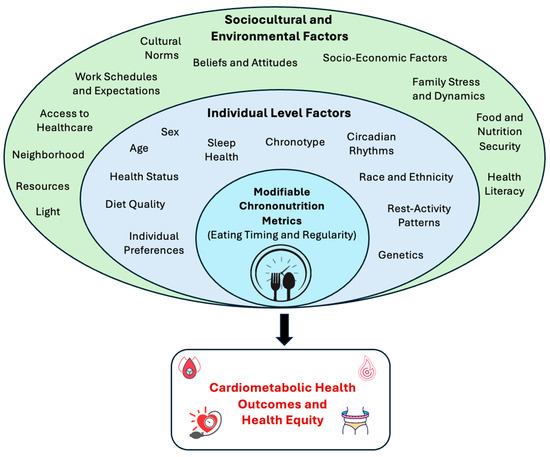
The 2019 NHLBI study is the clearest data point here. In a controlled two-week lab study of 36 healthy adults, the group that slept short on weekdays and caught up on weekends showed a 27% decrease in insulin sensitivity and gained more weight than the group that simply slept short consistently throughout. The circadian disruption of the back-and-forth shift cost more metabolically than the sleep debt it was supposed to repair.
The broader social jetlag literature associates greater weekend sleep schedule shifts with higher rates of obesity, metabolic syndrome, depressive symptoms, and poorer academic and work performance. The mechanism is circadian misalignment, which disrupts the hypothalamic-pituitary-adrenal axis and downstream glucose regulation.
The Livium take. The weekly cycle is a weekly time zone flight without the trip. You are flying west on Friday night and east on Sunday afternoon. Setting your watch back two hours every Friday and resetting it every Sunday morning is not a recovery strategy. It is the problem.
The Livium recipe
Tool. A sleep tracker that shows sleep timing, not just duration. Duration data is helpful. Timing data is what catches social jetlag. The midpoint-of-sleep metric on WHOOP, Oura, and Garmin tells you how much your schedule is actually shifting throughout the week. One hour of shift is manageable. Two hours is significant. Three hours is meaningful circadian disruption every single week.
Behavior. Anchor the wake time. Not the bedtime. The bedtime will naturally follow a consistent wake time within a week or two as sleep pressure builds at the right hour. Pick a wake time you can hold seven days a week, including Saturday and Sunday. It does not have to be 6 AM. It just has to be consistent. If your weekday wake is 6:30 AM, try keeping Saturday and Sunday no later than 7:30 AM. That is a manageable one-hour tolerance that does not meaningfully shift the clock. Two to three hours of sleep-in is when the damage compounds.
Threshold. Three weeks of a consistent seven-day wake time. The Monday morning difference in how you feel is the most reliable signal. The grogginess that usually lands hardest on Monday should be noticeably reduced. If Monday still feels like a circadian crash after three weeks of consistent wake times, the upstream driver is likely sleep debt (fix with earlier bedtimes, not later wake times) or a genuine sleep disorder worth investigating.
The math on social jetlag and what it costs
| Weekend shift from weekday wake time | Social jetlag level | Days to re-anchor after the weekend | Associated health effects |
|---|---|---|---|
| Under 1 hour | Low / negligible | Essentially none | No meaningful circadian disruption |
| 1-2 hours | Moderate | 1-2 days (typically through Monday) | Affects most adults; associated with mild metabolic effects with chronic exposure |
| 2-3 hours | Significant | 2-3 days (through Tuesday for some) | Meaningfully associated with obesity, metabolic syndrome, depressive symptoms in population data |
| Over 3 hours | Severe | 3-4+ days; may not fully re-anchor before next weekend | Strong association with metabolic disruption; may worsen insulin sensitivity beyond the baseline sleep debt |
Sources: NHLBI 2019 catch-up sleep study; Proceedings of the National Academy of Sciences (social jetlag); NHLBI, Circadian Rhythm Disorders.
Plan of action
- Pick a consistent seven-day wake time. Start with a one-hour tolerance off your weekday wake: if you wake at 6:30 on workdays, cap the weekend at 7:30. That is the ceiling that does not meaningfully shift the clock.
- Use a sleep tracker with sleep timing data (not just duration) to see your actual social jetlag number each week. WHOOP and Oura both make this visible.
- If you are sleep-deprived and need more sleep, take it by going to bed earlier on Friday and Saturday nights, not by sleeping later in the morning. Earlier bedtime adds sleep without shifting the clock. Later wake time shifts the clock.
- If Monday morning is reliably terrible regardless of weekend schedule, the upstream problem is probably chronic weekday sleep debt, not weekend catch-up timing. Fix the weeknight total first.
- If sleep quality rather than quantity is the issue (waking often, not feeling rested after adequate time in bed), a home sleep test via Lofta rules out sleep apnea as the driver.
Table of Content

Know your body better.
Trusted By Thousands Daily








FAQ
Is one hour of sleeping in on weekends really a problem?
Probably not for most people. The significant effects in the literature cluster around shifts of two or more hours. One hour is the generally accepted tolerance. Keep it at one hour or under, and you are unlikely to produce meaningful circadian disruption.
I work a rotating shift. Can I fix social jetlag?
Shift work is the most challenging circadian context, and the research on rotating shifts is detailed: chronic circadian misalignment carries real health costs over years and decades. For shift workers, the strategies focus on manipulating light exposure to shift the circadian clock as cleanly as possible toward the current schedule, and on maximizing sleep quality during available sleep windows. A sleep medicine specialist is worth consulting if you have been on rotating shifts for years and are noticing persistent health effects.
Can light therapy help reset the clock faster on Sunday night?
Bright light exposure in the morning on Sunday can help pull the clock back earlier, partially counteracting the Saturday-morning shift. A 10,000-lux SAD lamp or outdoor light, used immediately upon waking on Sunday morning, is a reasonable re-anchoring tool if you slept significantly later on Saturday. It helps but does not fully replace schedule consistency.
Legal Disclaimer
The content published on Livium Health is for informational and educational purposes only. Nothing on this site constitutes medical advice, diagnosis, or treatment. Always consult a qualified healthcare provider before making decisions about your health, including changes to medications, supplements, diet, or exercise.
Livium Health is not a medical practice and does not have a patient-provider relationship with its readers. We do not sell supplements, medications, or treatments, and we have no financial relationship with the products or services we reference.
While we work to ensure the information we publish is accurate and up to date, health and medical guidance evolves. We make no guarantees about the completeness or currency of any content on this site. Reliance on any information provided by Livium Health is solely at your own risk.
If you are experiencing a medical emergency, call 911 or your local emergency services immediately.
We may receive compensation, free products, or affiliate commissions for products mentioned in this post. Opinions are our own.