
Share
Energy & Focus
Men's Health
Women's Health
What continuous glucose monitoring reveals about energy
7 min read
Key takeaways
- Most energy crashes that people attribute to sleep deprivation, stress, or “just getting older” are postprandial glucose spikes followed by insulin-driven drops.
- A continuous glucose monitor (CGM) makes the connection between food timing, food type, and energy state visible in real time.
- Two weeks of CGM data teach you more about your personal metabolic patterns than a decade of annual HbA1c tests.
- The CGM findings that move the needle most: what spikes your glucose, how quickly it clears, and what your baseline runs between meals.
The hidden cause of the 2:30 PM energy crash
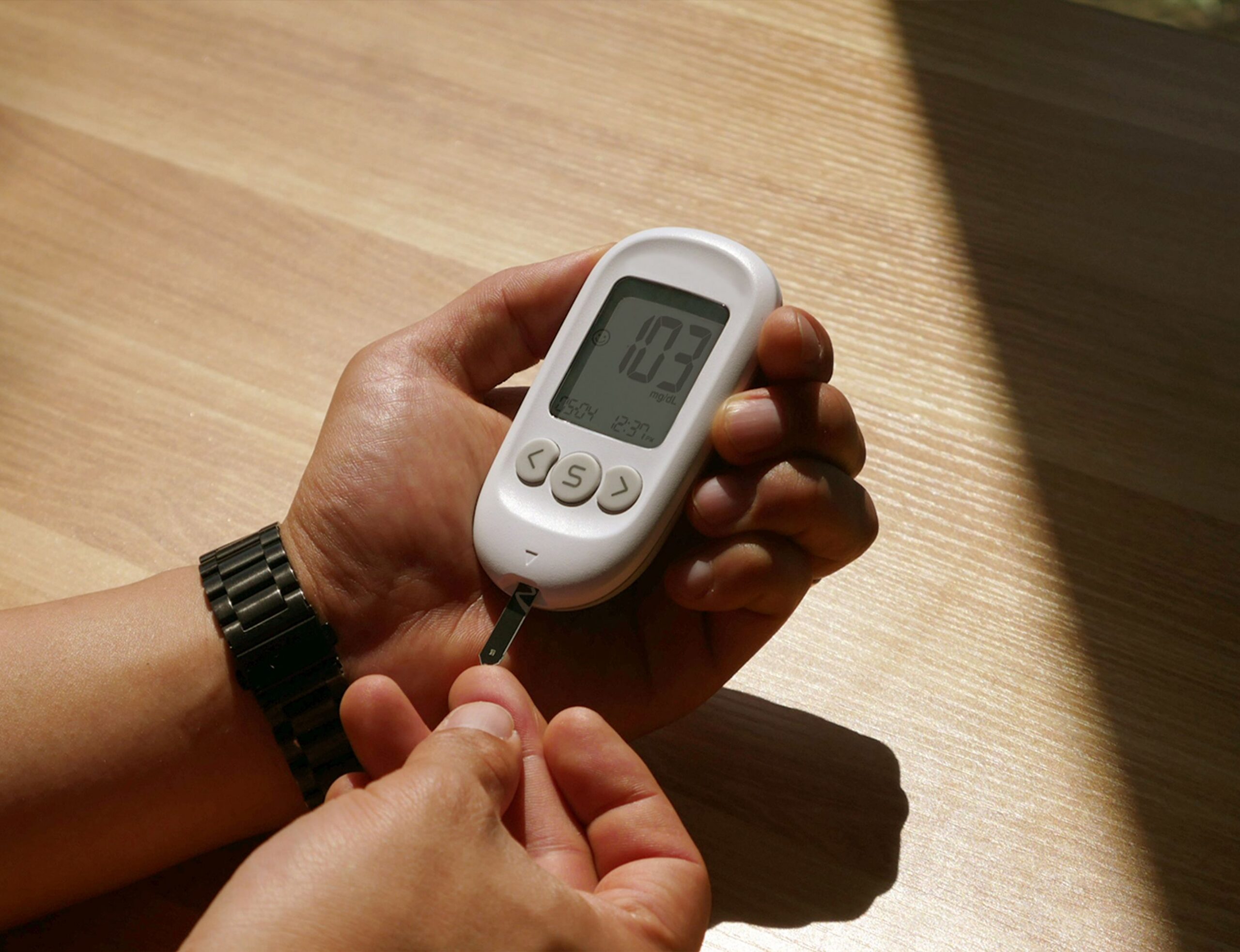
Put a CGM on your arm for two weeks, and you will learn three things about yourself that nobody could have told you beforehand. What specifically spikes your glucose? How hard your body works to bring it back down. And what are your baseline glucose runs when you have not eaten in four hours and are sitting at a desk?
The first week is mostly data collection. The second week is when it changes how you eat. Not because you are following a protocol, but because you can see the crash before you feel it. A glucose spike to 165 mg/dL followed by a 40-minute drop to 78 mg/dL is not a vague mid-afternoon fog. It is a clear event with a cause: the lunch three hours earlier, which had more carbs than the previous day.
The Stelo by Dexcom is the first over-the-counter CGM. Available directly through Lofta, no prescription required, worn for 15 days per sensor. The data streams to your phone in real time. The first reading, when you eat a bowl of pasta at 7 PM, tends to be clarifying.
What glucose has to do with energy
Glucose is the brain’s primary fuel. When glucose rises sharply after a meal, the pancreas releases insulin to clear it from the blood. In a healthy response, glucose rises, plateaus, then returns to baseline over 60 to 90 minutes. In a dysregulated response, glucose rises higher, insulin overshoots, and glucose drops below the pre-meal baseline. That undershoot is the crash.
The brain interprets a rapid glucose drop as a threat. The stress response activates. Cortisol rises. Adenosine builds. The result: fatigue, difficulty concentrating, a strong pull toward either coffee or something sweet. Both of which produce another spike, and another crash, at a lower amplitude, two hours later.
Caffeine on a glucose crash is particularly misread. The caffeine genuinely raises alertness for 40 minutes. The underlying glucose problem remains. By 4 PM, both the adenosine debt and the glucose variability are running together, which is what makes the late-afternoon wall feel so absolute.
What the numbers actually mean
Fasting glucose (no food for 4+ hours): optimal is 70 to 85 mg/dL. Consistently above 90 mg/dL fasting is a metabolic signal worth investigating. Above 100 mg/dL is the prediabetic range. The CGM shows this continuously, not just in the one data point your annual physical captures.
Post-meal peak: a healthy postprandial response stays below 140 mg/dL. Many people who consider themselves metabolically healthy spike to 160-180 mg/dL on a normal mixed meal. That range is not pathological in isolation, but sustained spiking into that zone correlates with energy volatility and, over the years, insulin resistance.
Glucose variability: the standard deviation of your CGM readings over two weeks is arguably the most useful single metric. High variability (standard deviation of 15-20 mg/dL or greater) correlates strongly with energy crashes, cognitive inconsistency, and inflammatory markers. Low variability, with readings consistently in the 70-110 mg/dL range, is the goal.
The Livium recipe
Tool. Order the Stelo biosensor through Lofta. One 15-day sensor gives you enough data to identify your personal glucose patterns. Wear it for two full working weeks to capture weekday and weekend eating patterns. Pair it with an Oura Ring if you have one; correlating your glucose variability with your HRV and deep sleep data reveals connections that neither device shows alone.
Behavior. While wearing the CGM, run two intentional experiments. First: eat your usual lunch on day 3, note the peak and time-to-baseline. On day 4, eat the same volume of food but start with protein and fat before any carbs. Compare the peak. Second: note what your glucose is doing at the exact time your energy usually crashes. That data point alone is worth the cost of the sensor. Then run a Function Health fasting insulin and HbA1c panel to give the CGM data a clinical context.
Threshold. After two weeks, the standard deviation of glucose variability was under 15 mg/dL. Post-meal peaks staying below 140 mg/dL. Fasting glucose in the low 80s. If your fasting insulin comes back above 10 μIU/mL on the Function Health panel, that is a metabolic conversation worth having with a physician. If the CGM pattern warrants a GLP-1 conversation, Hims Zepbound is the telehealth path.
What the CGM shows that bloodwork misses
| Metric | Annual bloodwork | 2-week CGM |
|---|---|---|
| Fasting glucose | One snapshot per year | Continuous; shows real fasting baseline and variability |
| Post-meal response | Not measured | Every meal, every day, personalized to your foods |
| Glucose variability | Not measured | Standard deviation across 15 days |
| Exercise response | Not measured | Real-time glucose during and after exercise |
| Sleep glucose | Not measured | Shows Dawn Phenomenon (early AM glucose rise) and nocturnal dips |
| Stress response | Not measured | Cortisol-driven glucose spikes visible without eating |
Source: Livium editorial synthesis based on NIDDK, Continuous Glucose Monitoring and Function Health clinical reference ranges.
What to have on hand before the sensor arrives
The Stelo sensor ships in two to three days. These four things make the two-week experiment more useful and set up the habits that the CGM data will likely point you toward anyway.
A food scale. You do not need to weigh food forever. But during the first two weeks of CGM wear, knowing the actual sizes of the portions you log makes the data interpretable. A 60-gram serving of oats and a 120-gram serving produce completely different glucose curves. Without a scale, you are logging guesses. A basic digital kitchen scale costs under $15 and takes up almost no counter space.
A protein powder with no added sugar. One of the most consistent CGM findings is that adding protein before or alongside carbohydrates significantly flattens the post-meal glucose curve. Having a clean whey or casein protein powder on hand lets you run the protein-first experiment on any meal within about 30 seconds. Unflavored isolate blends into almost anything without changing the taste.
Apple cider vinegar. A tablespoon of apple cider vinegar in water before a carbohydrate-heavy meal consistently reduces post-meal glucose peaks in multiple small trials. The mechanism is acetic acid, which slows gastric emptying and reduces amylase activity. It is not a substitute for changes in meal composition, but it is a useful variable to test during the CGM window. Cheap, immediate, easy to log.
A sleep tracker. Glucose variability and sleep quality run in both directions: poor sleep raises fasting glucose, and high glucose variability fragments sleep. An Oura Ring worn during the same two-week CGM period lets you correlate your highest-variability days with your lowest HRV mornings. That combination tells a more complete story than either device alone.
Plan of action
- Order a Stelo sensor from Lofta today. No prescription. Ships in two to three days. Wear it for one full work cycle before drawing any conclusions.
- While waiting for the sensor, note the times of day when your energy consistently drops. That list becomes your primary experiment list once the CGM is on.
- Run a Function Health panel including fasting insulin and HbA1c alongside the CGM. The bloodwork gives clinical context to the patterns the CGM shows.
- If your CGM data shows consistently elevated fasting glucose above 95 mg/dL or variability above 20 mg/dL standard deviation, that is a clinical conversation, not a supplement conversation.
Table of Content

Know your body better.
Trusted By Thousands Daily



FAQs
Do I need a prescription for the Stelo CGM?
No. The Stelo by Dexcom is FDA-cleared as an over-the-counter device for adults 18 and over who do not use insulin. Available directly through Lofta.
Does the CGM hurt?
The insertion is a brief pinch. Most people describe the ongoing wear as unnoticeable after the first few hours. The sensor sits on the back of the upper arm and is water-resistant. You can shower, swim, and sleep with it on.
What if my CGM shows I am already in normal ranges?
Then the energy problem is not primarily glucose-driven, and you should look elsewhere: sleep quality (especially deep sleep percentage), testosterone, thyroid, and B12 are the next most common culprits. The CGM rules out one cause and points you at the others.
Legal Disclaimer
The content published on Livium Health is for informational and educational purposes only. Nothing on this site constitutes medical advice, diagnosis, or treatment. Always consult a qualified healthcare provider before making decisions about your health, including changes to medications, supplements, diet, or exercise.
Livium Health is not a medical practice and does not have a patient-provider relationship with its readers. We do not sell supplements, medications, or treatments, and we have no financial relationship with the products or services we reference.
While we work to ensure the information we publish is accurate and up to date, health and medical guidance evolves. We make no guarantees about the completeness or currency of any content on this site. Reliance on any information provided by Livium Health is solely at your own risk.
If you are experiencing a medical emergency, call 911 or your local emergency services immediately.
We may receive compensation, free products, or affiliate commissions for products mentioned in this post. Opinions are our own.