
Share
Men's Health
Nutrition
Women's Health
What your food is actually doing to your blood sugar, meal by meal
6 min read
Key takeaways
- Most nutrition advice is based on population averages. A continuous glucose monitor (CGM) shows how a specific person responds to specific foods in real time, which is often nothing like the average.
- Two people eating the same meal can have glucose responses that differ by 50 mg/dL. Standard dietary guidelines cannot account for that. A CGM can.
- The order in which food is eaten matters as much as what is eaten. Protein and vegetables before carbohydrates in the same meal reduces the post-meal glucose peak by 30 to 50 percent.
- Two weeks on a CGM produces more actionable personal nutrition data than any diet book, macro calculator, or food sensitivity panel.
The oatmeal that was supposed to be healthy
Put a CGM on and eat what most people consider a clean, nutritious breakfast. Steel-cut oats, a banana, and black coffee. Watch the graph. In many adults over 40, glucose spikes to 155-175 mg/dL within 45 minutes, overshoots the correction, and drops to 78 mg/dL by mid-morning. That undershoot is the crash. That crash is the 10:30 AM hunger and the hand reaching for something sugary.
The oatmeal was not bad for nutrition. It was the wrong nutrition for that person at that time. The CGM tells the difference. Nothing else does.
Standard nutrition advice is based on population averages. Glycemic index tables, macro ratios, calorie targets, elimination diets, all of them describe what happens to a statistical average person. The research that produced the Weizmann Institute PREDICT study (Zeevi et al., Cell, 2015) showed that individual glucose responses to the same foods vary so dramatically that population-level dietary guidelines often predict the wrong outcome for a specific individual. The CGM is the first practical tool that lets a non-diabetic adult see their own response rather than the population’s.
What the glucose response actually tells you
Glucose is the brain’s primary fuel. When a meal causes a sharp spike in blood glucose, the pancreas releases insulin to bring it back down. In a well-functioning metabolic response, glucose rises gently, plateaus, and returns to baseline over 60 to 90 minutes without overshooting. In a dysregulated response, glucose rises steeply, insulin overshoots, and then drops below the pre-meal baseline. That undershoot triggers a cortisol response, which produces hunger, fatigue, and a strong pull toward sugar or caffeine.
Sustained glucose variability, the pattern of repeated spikes and crashes, is independently associated with fatigue, cognitive inconsistency, weight gain, and accelerated insulin resistance over the years. The standard deviation of CGM readings over two weeks is one of the most informative single numbers a person can generate about their metabolic health. Below 15 mg/dL is the target for a non-diabetic adult.
The CGM makes this visible not in the abstract but in the specific. Not “refined carbohydrates cause insulin resistance” but “this person’s glucose spikes to 162 after brown rice and returns to baseline within 90 minutes, versus spiking to 178 after the same portion of white pasta and taking 140 minutes to clear.” Those are different foods with the same calorie count and a meaningfully different metabolic effect for that individual.
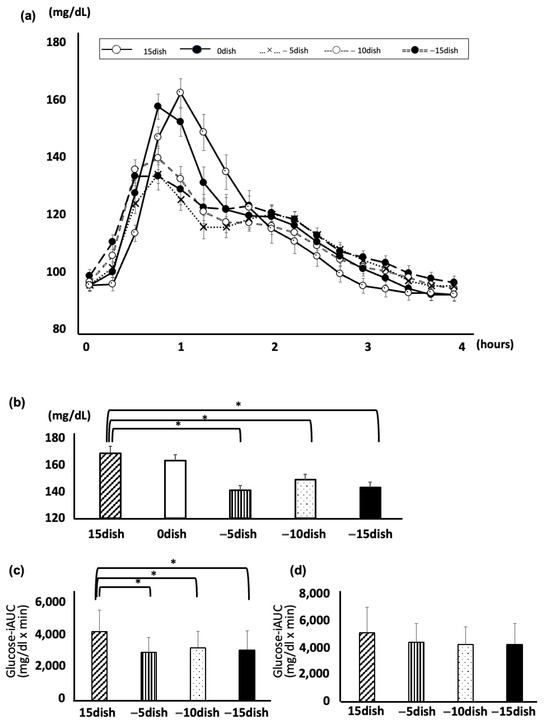
Yamagishi et al., Nutrients 2025 — Meal Sequencing and Postprandial Glucose Response. CC BY 4.0.
The meal order finding that changes how most people eat
One of the most consistent and immediately actionable CGM findings: the order in which food arrives in the stomach determines how much glucose the meal produces, regardless of the total carbohydrate content.
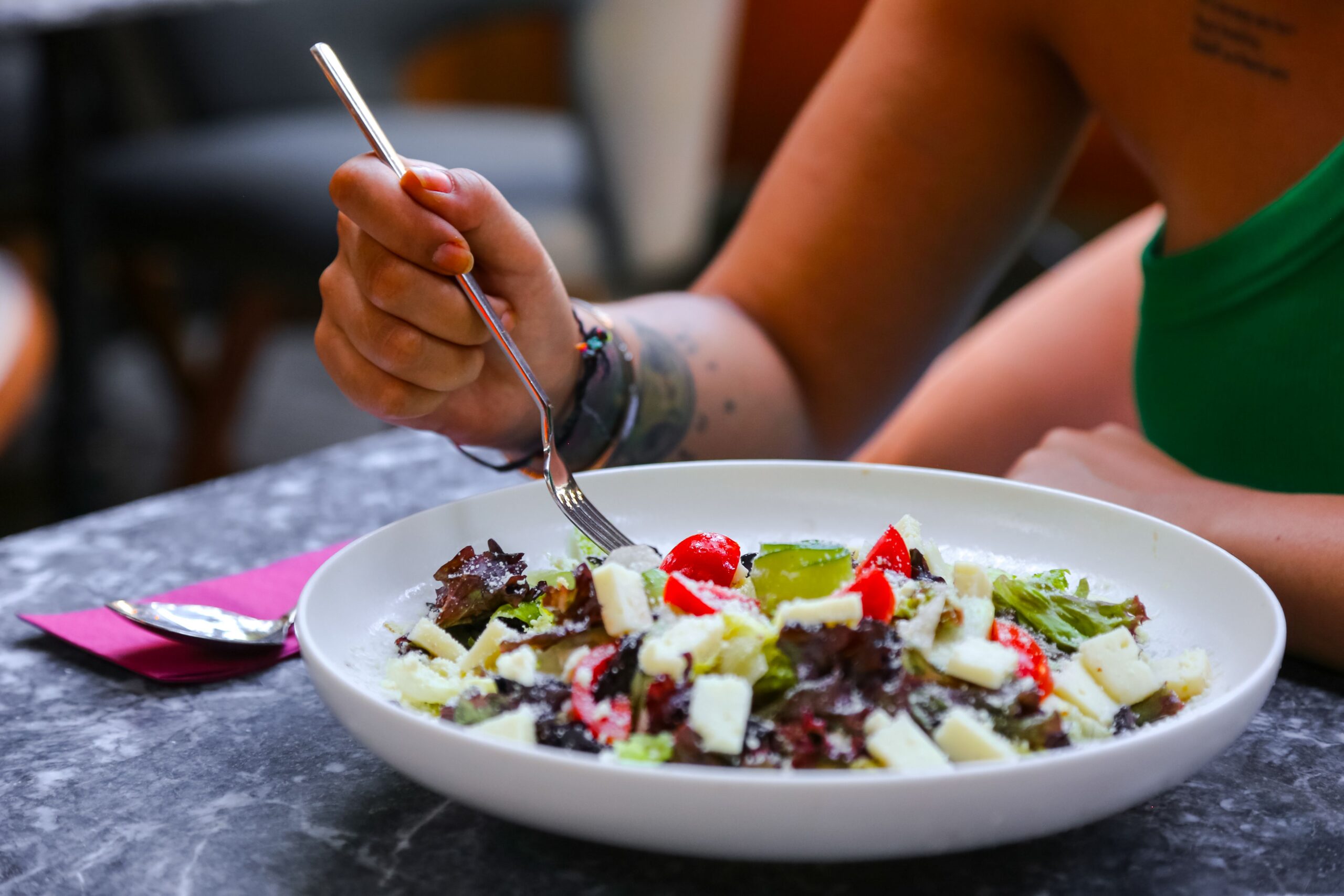
Eating protein and vegetables first, then carbohydrates, consistently reduces post-meal glucose peaks by 30 to 50 percent versus eating in the reverse order. The mechanism is well established: protein and fat slow gastric emptying, blunting the rate at which carbohydrates reach the small intestine. Fiber in vegetables provides a physical buffer. By the time the carbohydrates clear, the glucose-processing machinery is already primed, and the delivery rate is slower.
This is not a diet. Nothing is removed. The same foods, in a different sequence, produce a dramatically flatter response. The CGM confirms this on the person’s own foods rather than requiring them to take a researcher’s word for it.
What to have ready before the sensor arrives
The Stelo by Dexcom is the first FDA-cleared over-the-counter CGM for non-diabetic adults. One sensor, 15 days, no prescription. The sensor ships in two to three days. These four things make the experiment significantly more useful.
A digital food scale. A 60-gram serving of oats and a 120-gram serving produce completely different glucose curves. Without a scale, what gets logged is a guess. Under $15.
Unflavored whey protein isolate. Having protein on hand makes the protein-first eating experiment easy to run on any meal. It blends into almost anything within 30 seconds and does not change the taste of the food it is added to.
Apple cider vinegar. A tablespoon of water before a carbohydrate-heavy meal consistently reduces post-meal glucose peaks in multiple small trials by slowing gastric emptying and reducing amylase activity. Cheap, immediate, easy to log as a variable during the CGM window.
A food and symptom log notebook. Even brief notes per meal, timed to the CGM graph, transform the data from a line to a story. This habit alone makes the graphs interpretable rather than just visually interesting.
The Livium recipe
Tool. One Stelo sensor was worn for two full workweeks, applied on a Sunday to capture both weekday and weekend eating patterns. Pair with a baseline blood panel covering fasting insulin and HbA1c. The CGM shows what food does; the bloodwork confirms the underlying metabolic state.
Behavior. Run three intentional experiments. Eat the usual breakfast three days in a row and note the peak and return-to-baseline time. On day four, eat the same volume but lead with protein and fat before any carbs. Compare the graphs. On days with exercise, note whether training lowers or spikes glucose and how long the effect lasts. These three experiments yield more useful nutritional insights than any generic dietary protocol.
Threshold. Optimal metrics for a non-diabetic adult: glucose variability standard deviation under 15 mg/dL, time in range (70 to 140 mg/dL) above 90 percent, post-meal peaks under 140 mg/dL, fasting baseline in the low 80s consistently. If fasting insulin comes back above 10 mcIU/mL alongside high variability, that is an insulin resistance signal warranting a clinical conversation before any further dietary tinkering.
What the CGM reveals that standard nutrition guidance misses
| What standard nutrition advice provides | What a CGM adds |
|---|---|
| Population-average glycemic index for foods | Personal glucose response to those specific foods |
| Calorie counts and macro ratios | How specific meal compositions affect glucose curve shape, not just content |
| General advice to eat less sugar | Which specific foods are driving spikes for this person (often surprising) |
| Annual fasting glucose snapshot | 15-day continuous picture including overnight, post-meal, exercise, and stress responses |
| Advice to eat at consistent times | Visible confirmation of what meal timing shifts actually do to glucose patterns |
Source: Livium editorial synthesis based on NIDDK CGM research and Zeevi et al., Cell (2015), Personalized Nutrition by Prediction of Glycemic Responses.
Plan of action
- Order a Stelo CGM sensor. Available over the counter from several pharmacies and health retailers. No prescription required. Ships in two to three days.
- Order a digital food scale at the same time. Under $15. Without it, logging is approximate rather than accurate.
- Start eating protein and vegetables before carbohydrates at every meal during the wear period. The CGM will confirm within the first three days whether this makes a meaningful difference for this person.
- After the 15 days, identify the two or three foods that consistently spike above 140 mg/dL. Those are the foods to swap, reduce, or sequence differently. Start there before overhauling anything else.
Table of Content

Know your body better.
Trusted By Thousands Daily




FAQs
Do I need a CGM if my HbA1c is normal?
HbA1c reflects average glucose over 90 days. A normal HbA1c can coexist with significant post-meal variability that the average smooths over. Many people with normal HbA1c levels spike to 160-180 mg/dL after certain foods. The CGM reveals that. The HbA1c does not.
Will the CGM tell me what to eat?
No. It tells you how your current diet affects your blood sugar. What to do with that information is a personal decision. For most people, the first two changes are obvious within the first week: one or two foods that spike significantly more than expected, and a meal timing pattern that produces consistently worse results.
Is one 15-day wear enough?
For identifying personal glucose spikers and testing the effects of meal order, yes. For tracking change over time after dietary adjustments, a second wear three to four months later gives a meaningful before-and-after comparison.
Legal Disclaimer
The content published on Livium Health is for informational and educational purposes only. Nothing on this site constitutes medical advice, diagnosis, or treatment. Always consult a qualified healthcare provider before making decisions about your health, including changes to medications, supplements, diet, or exercise.
Livium Health is not a medical practice and does not have a patient-provider relationship with its readers. We do not sell supplements, medications, or treatments, and we have no financial relationship with the products or services we reference.
While we work to ensure the information we publish is accurate and up to date, health and medical guidance evolves. We make no guarantees about the completeness or currency of any content on this site. Reliance on any information provided by Livium Health is solely at your own risk.
If you are experiencing a medical emergency, call 911 or your local emergency services immediately.
We may receive compensation, free products, or affiliate commissions for products mentioned in this post. Opinions are our own.