
Share
Men's Health
Sleep
Women's Health
When you swear you were awake all night: The science of sleep state misperception
5 min read
Key takeaways
- Sleep state misperception is a real subjective-objective mismatch seen in insomnia.
- Hyperarousal and altered sensory gating may make some sleep feel wake-like.
- The mismatch is not evidence that a person is inventing or exaggerating insomnia.
- More tracking and more effort to verify sleep can become part of the problem.
You can be asleep and still feel awake
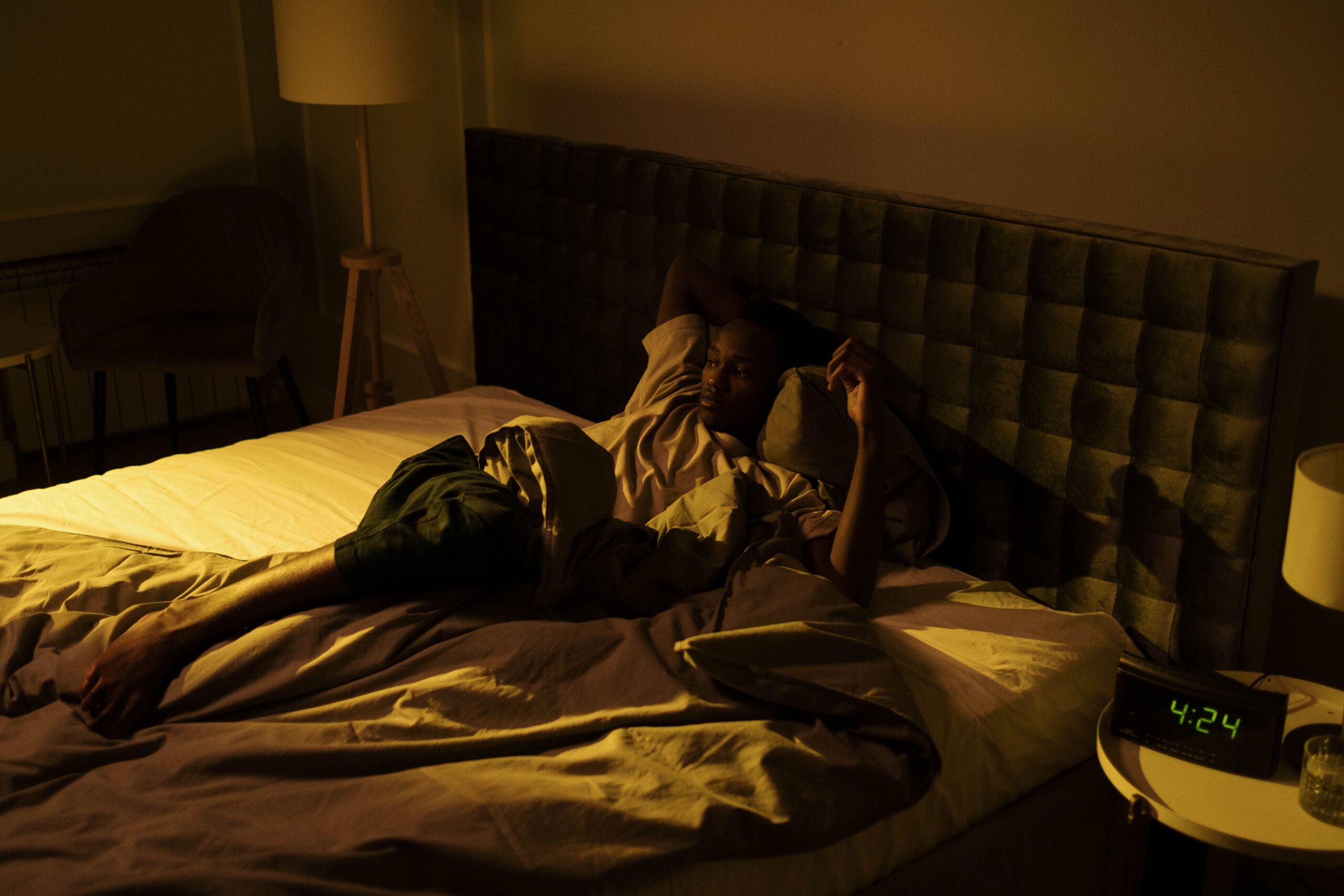
Some nights feel impossibly long. You remember the ceiling, the clock, the thoughts, and the sense that sleep never really arrived. Then a sleep study or another objective measure suggests you slept far more than you believed.
That mismatch is called sleep state misperception. It is especially relevant in insomnia, where some people consistently underestimate total sleep time or overestimate how long it took to fall asleep. The experience is real even when the estimate is inaccurate.
A 2025 theoretical review in Sleep Medicine Reviews examined the neurobiology behind this phenomenon. The authors concluded that cognitive and neurophysiological hyperarousal, along with altered sensory gating, may help explain why some sleeping brain states still feel wake-like.
This is not the same as imagining insomnia
Telling someone “you slept more than you think” can sound dismissive. The newer research points in the opposite direction. Sleep can contain enough arousal and wake-like brain activity that the subjective experience does not line up neatly with conventional sleep staging.
A 2025 study also found that insomnia patients who underestimated their sleep had more cortical arousals and more stage 1 sleep despite having objective total sleep time similar to other insomnia patients. The discrepancy may reflect real instability in the sleeping brain, not simply bad time estimation.
If the clock fuels the sense that every minute awake is evidence of failure, remove it from view. A simple timer can handle a morning cue without displaying the passing night beside your face.
The Livium recipe
Tool. Use a sleep diary for patterns, not minute-by-minute surveillance. A notebook is enough to record approximate sleep onset, awakenings, and wake time the next morning.
Behavior. Stop repeatedly checking whether you are asleep yet. Sleep is one of the few biological processes that becomes harder to observe accurately when you are trying to monitor it in real time.
Threshold. If your reported sleep is dramatically shorter than what a clinician or sleep study measures, ask about sleep state misperception rather than escalating sleep medication solely because the night feels sleepless.
| What you experience | What may be happening | Useful response |
|---|---|---|
| Feels awake for hours | Light or unstable sleep may be perceived as wake | Avoid clock checking |
| Sleep study shows more sleep than expected | Subjective-objective discrepancy | Discuss sleep-state misperception |
| Frequent cortical arousals | Sleep may feel less clearly asleep | Treat insomnia and hyperarousal |
| Severe daytime sleepiness | May signal another sleep disorder | Get appropriate evaluation |
Source: Joo et al., Sleep Medicine Reviews, 2025.
Do not let the tracker become the referee
Consumer wearables cannot diagnose sleep state misperception. They estimate sleep from indirect signals and can be wrong in both directions. If a wearable says you slept while you feel you did not, the disagreement is not proof that either side has the full story.
A sleep mask can reduce light if the room is bright, but environmental tools do not directly treat the perceptual mismatch. The treatment target is insomnia and hyperarousal, not proving to yourself that you were unconscious.
Why this changes treatment
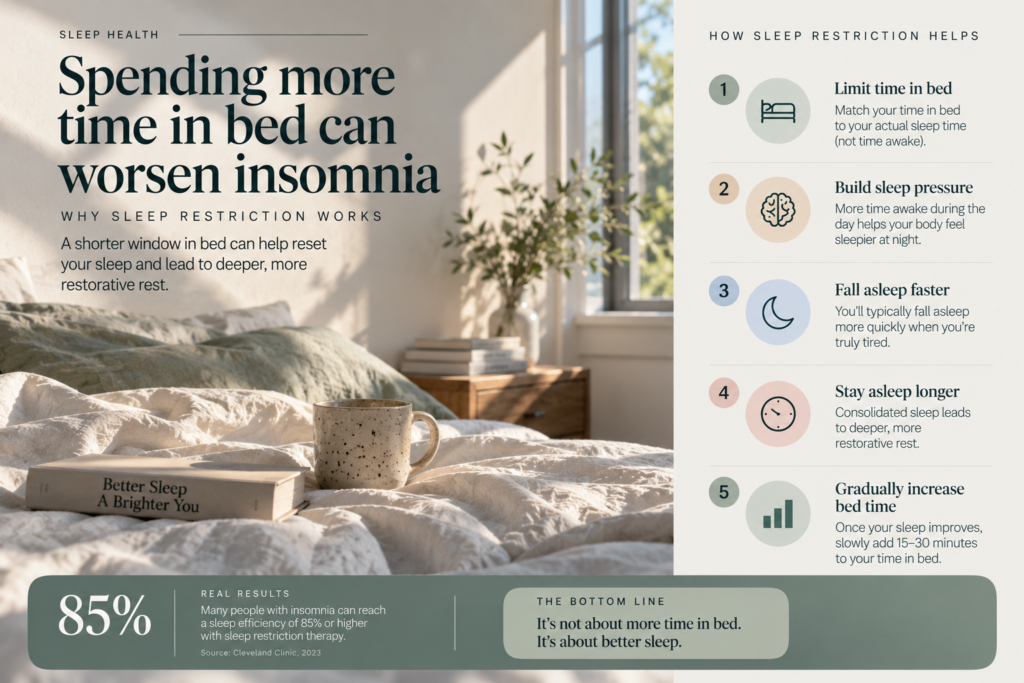
If the problem is interpreted only as insufficient sleep quantity, the response can become more time in bed, more medication, more tracking, and more effort. Those strategies can intensify the attention paid to sleep.
CBT-I works partly by changing the behaviors and beliefs that keep insomnia active. In people with major sleep-state discrepancy, psychoeducation about how sleep can feel wake-like may also reduce the nightly battle over whether sleep happened.
A morning light lamp can help anchor the daytime side of the schedule when natural light is unavailable, but the bigger shift is conceptual: a night that felt awake may not have been a night of zero sleep.
The mismatch can become its own source of anxiety
If you believe you slept only two hours, the next day can begin with a prediction that you will not function. That prediction increases monitoring of fatigue, memory slips, and mood, which can make every normal fluctuation feel like evidence that the night was catastrophic.
Learning that subjective sleep and measured sleep can diverge does not erase the distress. It gives the distress a more accurate target. Instead of fighting for proof that sleep happened, treatment can focus on hyperarousal, sleep stability, and the behaviors that keep insomnia active.
Objective data is not a courtroom verdict
A sleep study can show that more sleep occurred than you perceived, but that does not make the night feel restorative retroactively. The purpose of objective data is to improve the model of what is happening, not to argue with the person experiencing it.
Likewise, one wearable night cannot settle the question. Clinical sleep measurement, repeated patterns, symptoms, and daytime function all matter when insomnia is persistent.
Plan of action
- Stop using the bedside clock to calculate lost sleep in real time.
- Keep a simple morning sleep diary instead of monitoring the night minute by minute.
- If objective and subjective sleep differ dramatically, ask about sleep state misperception.
- Treat persistent insomnia with evidence-based care rather than escalating sleep effort.
Table of Content

Know your body better.
Trusted By Thousands Daily





FAQs
What is sleep state misperception?
It is a discrepancy between how much sleep a person believes they got and what objective sleep measures suggest.
Does sleep misperception mean the insomnia is not real?
No. Research suggests hyperarousal and unstable sleep physiology may contribute to the wake-like experience.
Can a smartwatch diagnose sleep state misperception?
No. Consumer wearables estimate sleep indirectly and are not diagnostic tools for this phenomenon.
Legal Disclaimer
The content published on Livium Health is for informational and educational purposes only. Nothing on this site constitutes medical advice, diagnosis, or treatment. Always consult a qualified healthcare provider before making decisions about your health, including changes to medications, supplements, diet, or exercise.
Livium Health is not a medical practice and does not have a patient-provider relationship with its readers. We do not sell supplements, medications, or treatments, and we have no financial relationship with the products or services we reference.
While we work to ensure the information we publish is accurate and up to date, health and medical guidance evolves. We make no guarantees about the completeness or currency of any content on this site. Reliance on any information provided by Livium Health is solely at your own risk.
If you are experiencing a medical emergency, call 911 or your local emergency services immediately.
We may receive compensation, free products, or affiliate commissions for products mentioned in this post. Opinions are our own.