
Share
Men's Health
Mental Health
Women's Health
Why trauma lives in the body: The somatic connection
6 min read

Key takeaways
- Trauma produces lasting changes in the autonomic nervous system, interoceptive awareness, and stress response physiology that are stored in the body’s regulatory systems, not only in explicit memory.
- The polyvagal theory framework describes three autonomic states that trauma disrupts: ventral vagal (safe and social), sympathetic (fight or flight), and dorsal vagal (shutdown). Chronic trauma locks the nervous system in sympathetic or dorsal vagal states with limited access to ventral vagal regulation.
- Talk therapy alone is insufficient for trauma stored at a physiological level because the brain regions that process trauma memory (amygdala, brainstem) are not primarily connected to the prefrontal language centers that talk therapy engages.
- Body-based approaches including somatic experiencing, EMDR, yoga, and breath-based interoception training have published evidence for trauma treatment that does not depend on verbal narrative processing.
What the body remembers that the mind cannot articulate
The classic trauma patient is not someone who cannot remember what happened. Many trauma patients remember the events in precise detail. What they cannot do is access those memories without the body launching a full physiological threat response: elevated heart rate, muscle tension, dissociation, hypervigilance. The memory is stored not just as explicit narrative but as a bodily state that reasserts itself when the memory is accessed.
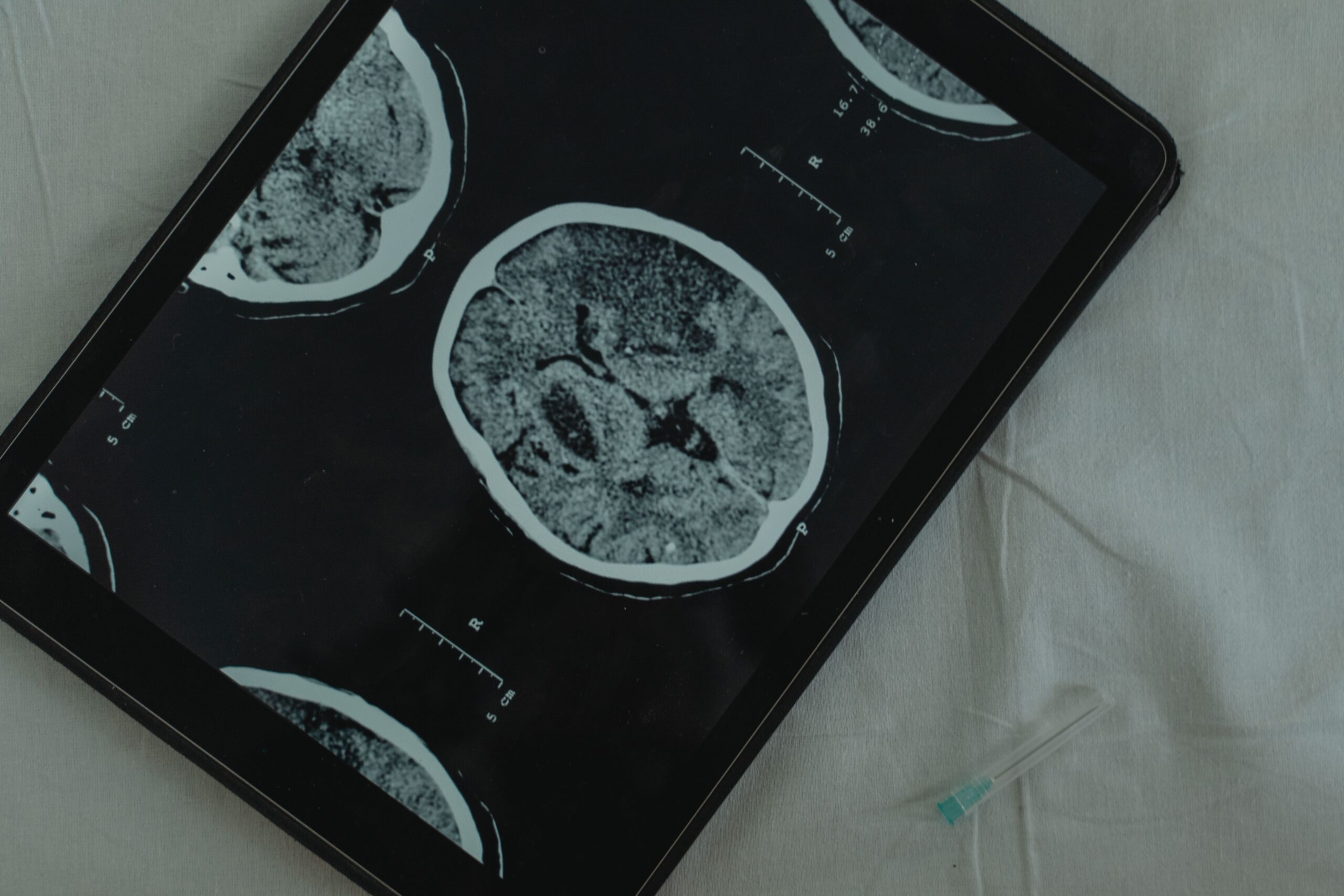
Van der Kolk’s neuroimaging work showed that during trauma memory recall in PTSD patients, Broca’s area, the brain’s language production center, deactivates. The person is not reluctant to describe the experience. The language center is literally offline. Meanwhile, the limbic system and brainstem are fully activated. This is why asking someone to talk about trauma in the absence of tools to regulate the nervous system during the telling often produces retraumatization rather than healing.
Polyvagal theory and the three states
Stephen Porges’ polyvagal theory describes the autonomic nervous system as having three hierarchical states. The ventral vagal state (safe and social) is the highest evolutionary state: the person feels safe, connected, able to engage, and capable of nuanced social interaction. The sympathetic state (fight or flight) mobilizes the body for threat response: increased heart rate, blood pressure, and muscle tension. The dorsal vagal state (shutdown) is the oldest evolutionary response: when threat is perceived as overwhelming and inescapable, the nervous system collapses into a freeze or shutdown response, reducing metabolic activity and disconnecting from the environment.
Chronic trauma dysregulates the ability to return to the ventral vagal state. The person with a trauma history is running closer to the sympathetic-dorsal boundary, spending less time in the ventral vagal window where learning, connection, and healing are possible. Small triggers move them into sympathetic or dorsal states that feel disproportionate to the triggering stimulus because the nervous system is reading the present through the lens of the past threat landscape.
The evidence for body-based trauma approaches
Somatic experiencing (SE). Developed by Peter Levine, SE works by tracking body sensations during trauma memory processing and completing the defensive responses that were interrupted during the original trauma event. Multiple RCTs now support its efficacy for PTSD, with a 2017 randomized trial showing significant PTSD and depression reduction compared to waitlist control.
Trauma-sensitive yoga. Published research from Bessel van der Kolk’s group showed trauma-sensitive yoga producing significant PTSD symptom reduction in women with treatment-resistant PTSD in a 2014 RCT in the Journal of Clinical Psychiatry. The mechanism is interoceptive: yoga develops the awareness of internal body states that trauma disrupts, rebuilding the person’s relationship with their own body as a source of information rather than threat.
EMDR. Covered in the therapy article in this library, EMDR is effectively a body-based approach in that it works through bilateral sensory stimulation rather than verbal narrative. It is the most robustly evidence-supported treatment for PTSD and one of only two WHO-endorsed first-line trauma treatments alongside trauma-focused CBT.
The Livium recipe
Tool. The PCL-5 (PTSD Checklist for DSM-5) is a 20-item validated screener for PTSD symptom severity available free from the VA. Even in the absence of a discrete traumatic event, the body symptom cluster (hypervigilance, somatic reactivity, emotional numbing, sleep disruption) points toward a nervous system dysregulation pattern that responds better to somatic than purely cognitive approaches. HRV tracking provides objective real-time data on the autonomic state, confirming when the nervous system is in a sympathetically activated versus ventral vagal state.
Behavior. Seek a therapist trained in somatic experiencing or EMDR as the primary treatment for a trauma presentation. For self-directed supplemental work: trauma-sensitive yoga classes (look for instructors specifically trained in trauma-sensitive yoga, not standard yoga for PTSD), resonance breathing (covered in the breathwork article in this library) as a daily ventral vagal access practice, and progressive muscle relaxation to develop interoceptive awareness in a non-threatening body-sensation context.
Threshold. Progress in somatic trauma work is measured by expanding the window of tolerance: the range of emotional and physiological activation within which the person can remain present and regulated. Early markers include reduced startle response, less time to return to baseline after being triggered, improved sleep continuity, and increased capacity for physical closeness and social engagement.
The physical support layer
A 36-inch foam roller for daily myofascial release supports the release of chronic muscle tension patterns that trauma stores in the body’s connective tissue. Psoas release (hip flexor rolling), thoracic spine extension over the roller, and chest-opening positions specifically address the defensive postural holding patterns of chronic sympathetic activation. A Shakti acupressure mat activates the same parasympathetic pathways as gentle manual pressure, promoting a shift from the sympathetic to the ventral vagal state through skin receptor stimulation. Twenty minutes lying on the mat before bed produces reliably measurable parasympathetic activation.
Hyperice Venom heat wrap for targeted heat therapy to chronically held-tension areas, particularly the lumbar and shoulder regions, where sympathetic activation produces predictable postural holding. Heat applied to these areas supports parasympathetic shift through thermoreceptor activation. A Theragun Mini provides percussive muscle therapy that can be self-applied to address the chronic muscle tension patterns stored in the body during prolonged sympathetic activation, supporting the somatic release work between therapy sessions.
Plan of action
- Complete the PCL-5 this week to quantify the symptom load. A score above 33 suggests significant PTSD symptoms warranting clinical evaluation and somatic-informed treatment.
- Start resonance breathing this week regardless of whether therapy has begun. Daily ventral vagal access practice is the foundation on which all other somatic work rests, and it requires no therapist and no equipment.
- When selecting a therapist for trauma, ask specifically about their EMDR certification or somatic experiencing training. These are not optional specializations for trauma work. They are the treatment modalities with the evidence base for this presentation.
- Add body-based daily practice: foam rolling, acupressure mat, or gentle yoga, not as wellness theater but as nervous system regulation tools. Do them at the same time each day to build the predictable routine that a dysregulated nervous system finds regulating.
Table of Content

Know your body better.
Trusted By Thousands Daily




FAQs
Does everyone with a traumatic history have PTSD?
No. Most people exposed to traumatic events do not develop PTSD. The rate of PTSD following trauma exposure varies substantially by event type: it is highest following sexual assault, combat, and torture, and lower following natural disasters and accidents. Individual factors including prior trauma history, social support availability, and biological stress response sensitivity significantly modulate the risk.
What is complex trauma and how does it differ from PTSD?
Complex PTSD (C-PTSD) develops from prolonged, repeated trauma, typically interpersonal and occurring in childhood or contexts of captivity or repeated abuse. It includes the core PTSD symptoms plus disturbances in self-organization: difficulty regulating emotions, a persistently negative self-view, and difficulty sustaining relationships. C-PTSD responds to somatic approaches but typically requires longer treatment and a trauma-specialized therapist experienced with complex presentations.
Can exercise help with trauma?
Yes, with nuance. Aerobic exercise activates the same mobilization physiology as the sympathetic threat response, which can be retraumatizing if approached without awareness. For some trauma survivors, high-intensity exercise is regulating because it provides a context for completing the physiological mobilization response. For others, the elevated heart rate and physical intensity trigger threat-state activation. Yoga and gentle movement are more universally accessible starting points. High-intensity exercise is worth adding once the window of tolerance is established through somatic therapy work.
Legal Disclaimer
The content published on Livium Health is for informational and educational purposes only. Nothing on this site constitutes medical advice, diagnosis, or treatment. Always consult a qualified healthcare provider before making decisions about your health, including changes to medications, supplements, diet, or exercise.
Livium Health is not a medical practice and does not have a patient-provider relationship with its readers. We do not sell supplements, medications, or treatments, and we have no financial relationship with the products or services we reference.
While we work to ensure the information we publish is accurate and up to date, health and medical guidance evolves. We make no guarantees about the completeness or currency of any content on this site. Reliance on any information provided by Livium Health is solely at your own risk.
If you are experiencing a medical emergency, call 911 or your local emergency services immediately.
We may receive compensation, free products, or affiliate commissions for products mentioned in this post. Opinions are our own.