
Share
Men's Health
Thyroid Health
Women's Health
Mildly high TSH after 60: Why treatment may not improve how you feel
4 min read

Key takeaways
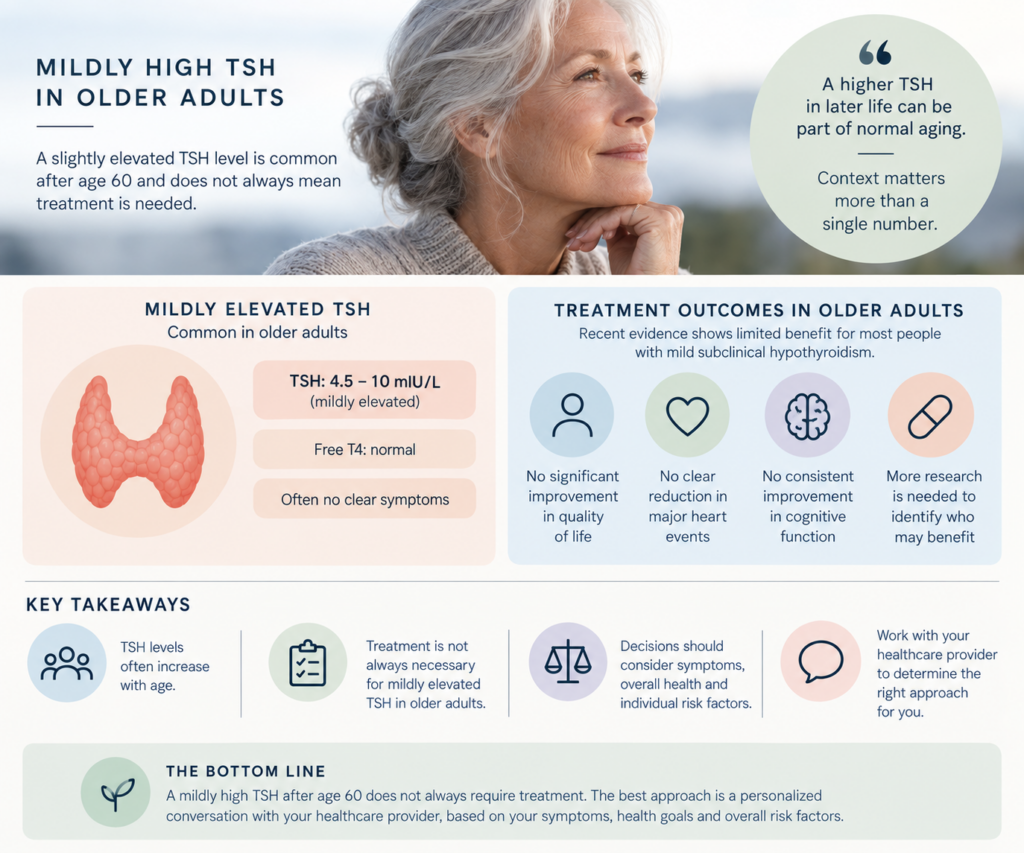
- Mild subclinical hypothyroidism usually means TSH is 4.5 to 10 mIU/L while free T4 remains normal.
- A 2026 systematic review found no meaningful improvement in quality of life or major cardiovascular events from levothyroxine in older adults with mild subclinical hypothyroidism.
- Treatment decisions still depend on TSH level, persistence, symptoms, antibodies, age, cardiovascular context, and other individual factors.
- The finding supports careful surveillance for many older adults, not ignoring thyroid disease altogether.
A laboratory diagnosis does not guarantee a treatment benefit
Subclinical hypothyroidism is common in older adults. The biochemical definition is simple: TSH is elevated while free T4 remains normal. The harder question is whether lowering TSH with medication improves outcomes the person can actually feel or avoids future disease.
That distinction is especially important when the TSH elevation is mild, and age itself may shift the reference distribution upward.
The 2026 review looked beyond the laboratory number
A systematic review published in 2026 included eight studies and 4,892 adults age 60 or older with mild subclinical hypothyroidism. Two were randomized trials, and six were prospective cohort studies, with follow-up extending five to eight years.
Randomized trials did not show significant improvement in health-related quality of life or major adverse cardiovascular events with levothyroxine. High-quality cohort studies pointed in the same direction after adjustment.
A symptom and lab notebook can help keep fatigue, cold sensitivity, constipation, mood, medication changes, and repeat TSH values on one timeline.
Lowering TSH and improving health are different endpoints
Levothyroxine reliably changes thyroid laboratory values when the dose is sufficient. That does not mean every symptom attributed to a mildly high TSH will improve, because fatigue and other nonspecific symptoms have many causes.
This review reminds us to define the goal before treatment. If the goal is feeling better, the plan needs a way to judge whether that actually happens after the laboratory value changes.
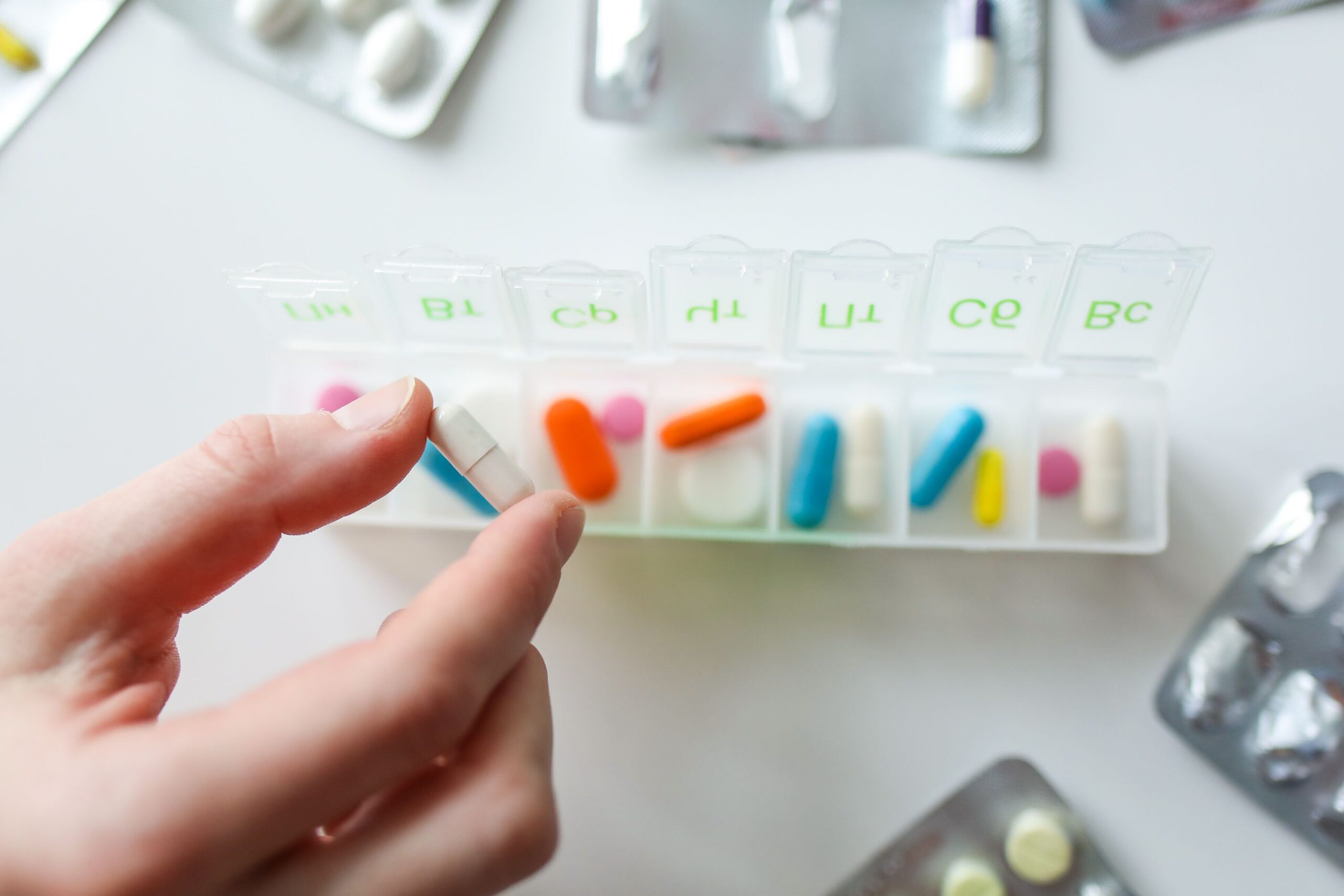
A weekly medication organizer can support consistent dosing when levothyroxine is prescribed, while a morning reminder timer can help preserve the dosing routine.
There are still reasons treatment may be appropriate
This evidence applies to older adults with mild subclinical disease. It does not erase treatment for overt hypothyroidism or more substantial and persistent TSH elevations.
Pregnancy, younger age, symptoms, thyroid antibodies, cardiovascular context, goiter, progression, and other factors can change the clinical decision. The article is not a universal stop-treatment message.
A water bottle can simplify taking a morning tablet with water, but medication timing should follow the actual prescription and absorption guidance.
Surveillance is still an active plan
Choosing not to start levothyroxine immediately does not mean doing nothing. A surveillance plan can include repeat TSH and free T4, review of symptoms and medications, and attention to whether the biochemical abnormality is stable, resolving, or progressing.
That distinction helps keep conservative care from becoming neglect. The value is in avoiding treatment that has not shown benefit while still catching the patients whose disease changes.
The Livium recipe
Tool. Define whether the goal is symptom improvement, biochemical correction, or prevention of a specific outcome.
Behavior. Confirm persistent mild TSH elevation before assuming it requires lifelong treatment.
Threshold. Do not stop prescribed levothyroxine because of population-level research without discussing your individual indication.
| 2026 review | Evidence | Result |
|---|---|---|
| Included studies | 8 | 2 RCTs + 6 prospective cohorts |
| Participants | 4,892 | Adults age 60+ |
| Quality of life | Randomized evidence | No significant benefit |
| Major cardiovascular events | Randomized evidence | No significant reduction |
| Follow-up | 60-96 months | Long-term evidence |
Source: Levothyroxine for subclinical hypothyroidism in older adults, systematic review, 2026.
Overtreatment has its own cost
When levothyroxine pushes thyroid hormone exposure too high, the problem is no longer theoretical. Palpitations, atrial fibrillation, bone loss, tremor, and other effects become more relevant, particularly in older adults.
That is why ‘might not help’ matters. Any medication decision should compare expected benefit with the real possibility of overshooting the target.
The result also challenges symptom hunting
When a mild TSH elevation is discovered, it is tempting to reinterpret every ordinary midlife or aging symptom through the thyroid. Fatigue, dry skin, constipation, weight change, and low mood are real but nonspecific.
A better approach asks whether the symptom pattern changes when thyroid status changes and whether another explanation fits better. That keeps a laboratory label from swallowing the entire health picture.
Plan of action
- Keep thyroid decisions tied to repeatable laboratory and clinical evidence.
- Track changes over time instead of reacting to one isolated result.
- Tell clinicians about prescriptions, supplements, and major medication changes.
- Use urgent care for severe or rapidly changing symptoms rather than self-adjusting thyroid treatment.
Table of Content

Know your body better.
Trusted By Thousands Daily




FAQs
What is mild subclinical hypothyroidism?
In this review, it meant TSH between 4.5 and 10 mIU/L with free T4 remaining within the reference range.
Does levothyroxine help fatigue in older adults with mild subclinical hypothyroidism?
The randomized evidence summarized in the 2026 review did not show a meaningful overall quality-of-life benefit.
Does this mean no older adult with high TSH should be treated?
No. Higher TSH levels, overt hypothyroidism, symptoms, antibodies, and individual circumstances can change the decision.
Legal Disclaimer
The content published on Livium Health is for informational and educational purposes only. Nothing on this site constitutes medical advice, diagnosis, or treatment. Always consult a qualified healthcare provider before making decisions about your health, including changes to medications, supplements, diet, or exercise.
Livium Health is not a medical practice and does not have a patient-provider relationship with its readers. We do not sell supplements, medications, or treatments, and we have no financial relationship with the products or services we reference.
While we work to ensure the information we publish is accurate and up to date, health and medical guidance evolves. We make no guarantees about the completeness or currency of any content on this site. Reliance on any information provided by Livium Health is solely at your own risk.
If you are experiencing a medical emergency, call 911 or your local emergency services immediately.
We may receive compensation, free products, or affiliate commissions for products mentioned in this post. Opinions are our own.