
Share
Longevity & Aging
Men's Health
Women's Health
Hearing supplements: Five that earn their place, seven you can walk past
10 min read
Key takeaways
- Most of the supplement aisle is marketing. Five ingredients have real data behind them for hearing and hearing-adjacent health. Seven popular ones do not. If you buy the five in their basic single-ingredient forms, you spend maybe 15 dollars a month. If you buy the seven fanciest “hearing formulas,” you spend north of 60.
- The one place to actually put money before you buy anything is a baseline biomarker test. If your vitamin D is 22 and your ferritin is 18, no combination of magnesium and NAC is going to move the needle as much as fixing those first.
- Zero supplement replaces a hearing test. If you have hearing loss, no pill will bring the missing frequencies back. Supplements at best slow the rate of loss and support cardiovascular and metabolic health that hearing depends on. Everything else in the aisle is telling you what you want to hear.
Aisle 7, 8:12 PM, on a Tuesday
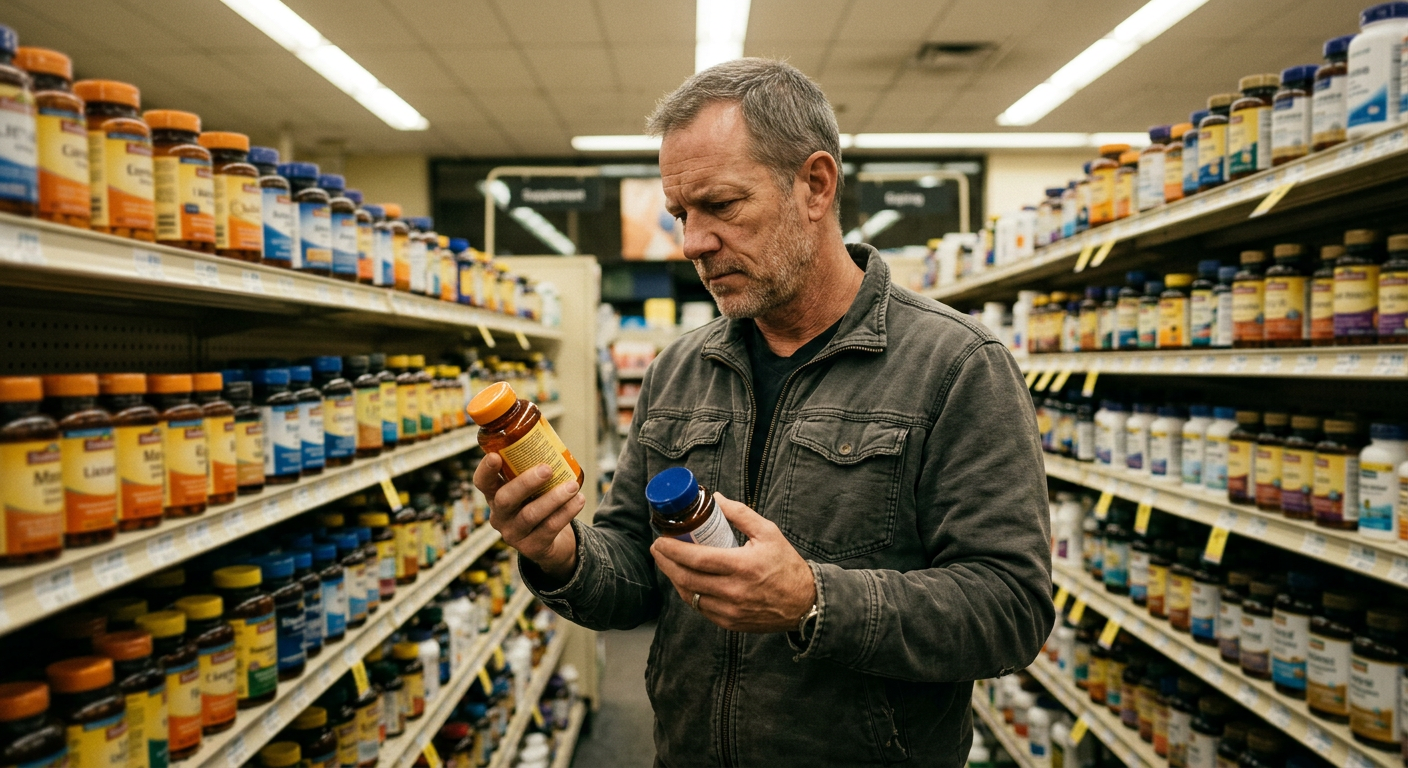
You are standing in the CVS supplement aisle after work with a bottle in each hand. One is labeled Lipo-Flavonoid Plus. It costs $19.99 for 100 tablets. The label says it supports “ear health.” The other is a plain generic magnesium glycinate for $9. You are reading both labels because your brother-in-law swears by the Lipo-Flavonoid for his tinnitus, and you have been meaning to try something for the ringing in your left ear. The fluorescent lights are humming. There is faint 90s pop coming through the speakers. You have been standing here for four minutes.
Here is the whole article in one sentence. Buy the magnesium. Put the Lipo-Flavonoid back.
The longer version is that the hearing supplement aisle is one of the last frontiers of unregulated wellness marketing. There are ingredients with real research behind them. There is also a lot of hope in a bottle at four to six times the price. This is Livium’s honest read on what earns space in your medicine cabinet and what does not.
The five that earn their space
Magnesium
Best supported single supplement for hearing preservation, mostly on the noise-induced side. In animal and small human trials, magnesium supplementation before loud exposures reduced measurable hearing threshold shifts. It is also cheap, safe at reasonable doses, and does about five other useful things for a midlife body (blood pressure, sleep quality, muscle cramps, insulin sensitivity, migraine frequency). Form matters. Skip magnesium oxide (poor absorption, laxative). Thorne Magnesium Bisglycinate is the form and brand Livium has recommended in earlier articles. About $25 for a two-month supply. If you already take it for sleep, you are done here.
The NIH Office of Dietary Supplements fact sheet on magnesium is the neutral reference if you want to read the professional version.
N-acetyl cysteine (NAC)
Dr. Colleen Le Prell’s group at UT Dallas has spent 15 years studying antioxidants for noise-induced hearing loss prevention. The single ingredient with the most consistent supporting data is N-acetyl cysteine. Mechanism is clean: NAC increases glutathione, which is the primary antioxidant defense against the oxidative damage that noise causes in the inner ear. Practical use. Take it a few hours before a known loud exposure (concert, sporting event, sustained yard work with equipment). Not something to take daily forever unless there is a specific reason. Cheap, widely available. About $12 a bottle.
Folate and B12
The Brigham and Women’s / Harvard research group has run some of the largest dietary studies in hearing health, looking at what women in the nurses cohorts ate over decades and how their hearing tracked. Adherence to a broadly healthy dietary pattern (Mediterranean or DASH style) is associated with substantially lower risk of hearing loss. Within those patterns, adequate folate and B12 keep showing up. This is not exotic. Get it from food if you can (leafy greens, fortified cereals, animal proteins). If you eat like a normal midlife adult, a basic B-complex covers you at $10 a month.
Vitamin D
This one is on the list because deficiency is common, associated with worse hearing outcomes, and easy to correct. It is not a direct hearing supplement so much as a hidden-tax fix. Get your 25(OH)D level tested. If it is under 30 ng/mL, take 2,000 to 4,000 IU per day, retest in three months. If your level is fine, do not bother. This is where lab testing pays for itself.
Zinc
The smallest of the five. Zinc plays a role in inner-ear function, and small trials in patients with idiopathic tinnitus who were also zinc-deficient showed some symptom improvement with correction. If you eat oysters, red meat, or dairy regularly, you probably do not need to supplement. If you are on a plant-forward diet or over 65, worth checking. About $8 a month for a basic zinc picolinate.
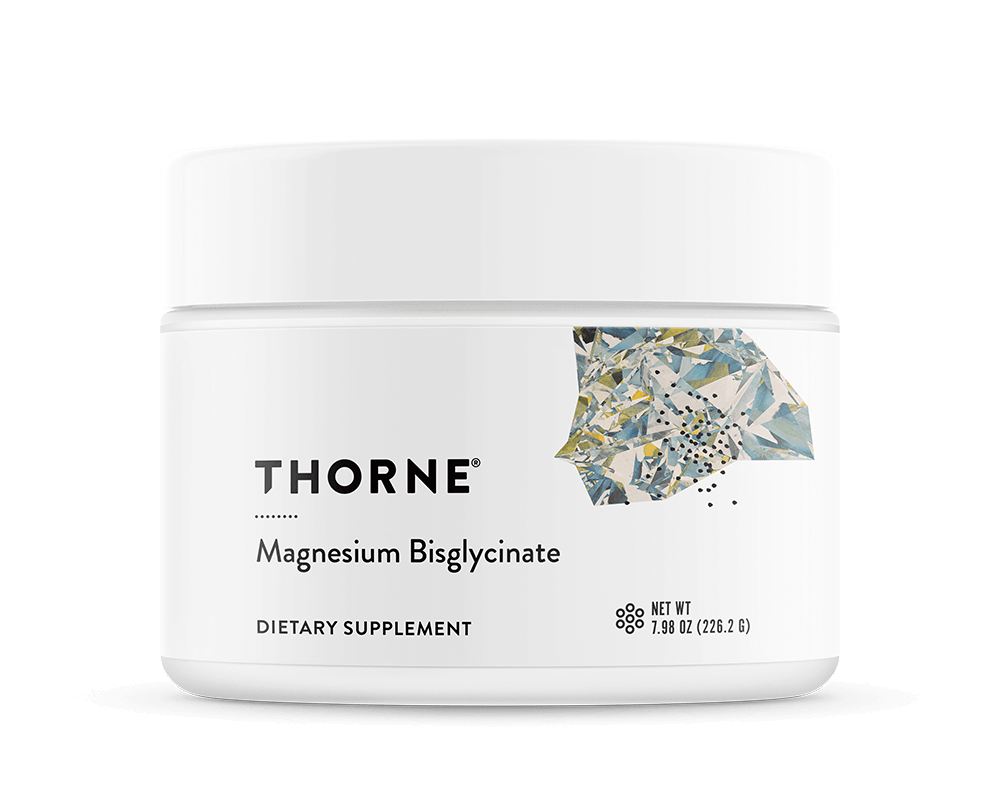
“Magnesium bisglycinate is the form Livium recommends for both sleep and noise-induced hearing protection. Thorne’s version is NSF-certified.”
The seven you can walk past
Ginkgo biloba
This one is settled. The 2022 Cochrane review pooled 12 randomized trials with 1,915 people and found no evidence of benefit for tinnitus versus placebo. Cochrane’s language is careful (“may have little to no effect”) but the direction of the evidence is unambiguous. If your ENT is still recommending Ginkgo for your tinnitus, they are behind the literature. Examine.com’s Ginkgo entry has the wider picture (small cognitive effects in older adults, no clear benefit in healthy young people). But for hearing and tinnitus, walk past it.
Lipo-Flavonoid Plus
The one your brother-in-law swears by. Marketed for Meniere’s disease and tinnitus. The evidence backing it up is essentially a case series from the 1960s. There has been no rigorous placebo-controlled trial of the current formulation that would clear a modern evidence bar. About $20 to $25 per month, which is real money over a year. The five keep-list items above cost about the same combined.
ConcentRX, Sound Relief, Clear Tinnitus, Arches Tinnitus Formula
A category, not a specific product. Proprietary blends of magnesium plus B vitamins plus Ginkgo plus “proprietary herbal blend” at three to five times the price of the singles. The trick is that when someone runs a trial on the blend, there is no trial to run, because the blend is not a scientific object. Everything the blend does that works (magnesium, B vitamins) you can get in the single ingredients for a fraction of the cost. Everything else is a story.
“Hair cell support” or “cochlea repair” formulas
If a supplement label promises to “support” or “restore” your inner-ear hair cells, be direct with yourself. This is not a category the science supports. Adult human hair cells do not regenerate. There is real research on gene therapy and cell therapy for hearing restoration (see the earlier Livium article on the Otarmeni FDA approval), but those are surgical or injectable therapies for specific genetic conditions, not oral supplements. Skip.
Coenzyme Q10 for hearing
CoQ10 has decent evidence for statin-related muscle pain and some cardiovascular endpoints. For hearing, the data is thin and the mechanism (mitochondrial support) is plausible but not proven at supplement doses. If you are already taking CoQ10 for another reason, fine. If not, this is not the hearing-specific investment to make.
Multivitamin “hearing formulas”
The bundle move. The best ingredients in these bottles (magnesium, B vitamins, zinc) are the cheapest, most widely available supplements on earth. The bundle exists to charge a premium for the packaging. Buy the singles that showed up in the keep list. Save the difference and put it toward a hearing test.
CBD oil for tinnitus
This one is having a moment on the internet. There is no meaningful clinical evidence that CBD reduces tinnitus, and mechanistically, it is not what CBD is doing. If you take CBD for sleep or anxiety and your tinnitus feels marginally more tolerable because you are less anxious, that is real but it is not the CBD directly quieting your ears. Do not overpay a “tinnitus-formulated” CBD product for what is basically standard CBD.
The keep and skip list at a glance
| Verdict | Item | Why |
|---|---|---|
| Keep | Magnesium | Real evidence in noise-induced hearing loss prevention studies. Cheap. Also fixes half the things going wrong with your sleep. |
| Keep | N-acetyl cysteine (NAC) | Antioxidant with the strongest supporting data among hearing-protection candidates per the Le Prell UT Dallas group. Take before loud exposures. |
| Keep | Folate and B12 | Higher intake associated with slower age-related hearing loss in the Brigham / Harvard nurses cohort. Basic nutrition, not exotic. |
| Keep | Vitamin D | Deficiency is associated with worse hearing outcomes. Fix your 25(OH)D level, not your hearing directly. Also cardiovascular, bone, mood. |
| Keep | Zinc | Small trials in idiopathic tinnitus in patients who are deficient. If you eat oysters and red meat, you probably do not need it. |
| Skip | Ginkgo biloba | Cochrane looked at 12 randomized trials, 1,915 people. No evidence of benefit for tinnitus. This one is settled. |
| Skip | Lipo-Flavonoid Plus | Marketed for Meniere’s and tinnitus. The evidence is essentially a decades-old case series. About $20 per month for hope. |
| Skip | ConcentRX / Sound Relief / Clear Tinnitus | Proprietary blends of ingredients with no data as blends. Buy the singles that do have data. Save the difference. |
| Skip | “Hair cell support” / “cochlea repair” formulas | Not a category the science supports. Your hair cells cannot yet be regenerated by a pill. See the gene-therapy article. |
| Skip | Coenzyme Q10 for hearing | The heart-failure evidence is fine. The hearing evidence is thin. Save it for cardiovascular, not for your ears. |
| Skip | Multivitamin “hearing formulas” | The best ingredients are also the cheapest. Bundling them into a $60 “hearing support” bottle is marketing, not science. |
| Skip | CBD oil for tinnitus | No good evidence. Also not what CBD does mechanistically. |
Source: Livium editorial synthesis of the 2022 Cochrane review on Ginkgo for tinnitus, NIH Office of Dietary Supplements fact sheets, and the antioxidant hearing-protection research from Dr. Colleen Le Prell’s UT Dallas group. Costs and product notes are Livium’s read of the current US retail landscape as of July 2026.
Test first, supplement second
The most useful $500 you spend in this whole conversation is not on supplements. It is on a baseline biomarker panel that tells you what you are actually deficient in. Function Health is the accessible consumer version of what internists have been ordering piecemeal for decades. If your vitamin D is at 22 ng/mL, taking magnesium is not going to move the needle much. If your ferritin is 18, you are anemic and your hearing is a downstream victim. Do the test first. Supplement to the actual gap, not to the marketing.
The rest of the Livium hearing series covers what happens when supplements are not the answer. If you already suspect hearing loss and are reading this article to avoid the audiogram, please read the hidden hearing loss article and the article on the daily cognitive tax of unaddressed hearing loss instead. If you have persistent tinnitus that is not helped by any of the keep-list items, the Lenire tinnitus article covers what actually works. And the hearing-dementia link article is why you should not wait.
The Livium take
The supplement aisle is where wellness culture has quietly built a $50 billion annual business selling people the feeling of taking action. Some of the aisle is real medicine at drugstore prices. Some of the aisle is expensive placebo with better packaging. This article is Livium’s attempt to give you the five that earn their space and let you walk past the seven that do not, without you having to read a Cochrane review at 8:12 PM on a Tuesday.
The bigger point. Buying supplements is not the intervention. Testing your levels, treating the actual deficiency, protecting your ears from loud noise, and getting the hearing test when things start to slip. That is the intervention. Everything in the bottle is at best a rounding error on the underlying behavior.
The Livium recipe
The short version. Get a baseline biomarker test. Take magnesium bisglycinate daily (also good for sleep). Take NAC before known loud exposures. Fix vitamin D and B12 if the test flags them. Skip everything else in the hearing aisle. If your ears are actually giving you trouble, put the supplement money toward an audiogram instead.
Plan of action
- Order a baseline biomarker panel via Function Health (about $500). Wait for the results before you spend anything on supplements.
- Buy magnesium bisglycinate. Thorne’s version is the Livium-recommended one (NSF certified, well tolerated). About $25 for two months. Take it in the evening.
- If you go to concerts, sporting events, or do sustained loud yard work, keep a bottle of NAC in the cabinet. Take 1,200 mg a few hours before the exposure. It is not a permanent daily supplement for most people.
- Correct vitamin D, B12, and iron to normal levels only if your biomarker panel flags them. Do not shotgun. Do not supplement to symptom, supplement to number.
- If you catch yourself reaching for Ginkgo, Lipo-Flavonoid, or a $60 “hearing formula” at the store, put it back. Buy the ingredient it is trying to bundle in single form.
Table of Content

Know your body better.
Trusted By Thousands Daily





If Ginkgo does not work, why does my ENT sometimes recommend it?
Some ENTs are recommending it because they inherited the recommendation from an older textbook and it stuck. Some are recommending it because it is harmless and doing something is more comforting than doing nothing (a real and legitimate reason in a clinician’s toolkit). Neither of those is the same as saying Ginkgo works. The 2022 Cochrane review is the current best summary and it does not support it. If your ENT recommends it and you want to try it anyway, do so with the understanding that any improvement is likely placebo or coincidence, not the pill.
Why is Thorne always more expensive than the CVS-brand version?
Two things. Thorne pays for NSF certification testing on their finished products, which is a third-party quality-control seal that the store-brand versions typically do not carry. That testing is a real cost and it is why sports leagues and Mayo Clinic list Thorne on their approved-supplement lists. Second, the supplement industry is a race to the bottom on price, and cheap versions often use lower-absorbing forms of the ingredient (magnesium oxide instead of bisglycinate, for example). Livium’s read is that for the specific supplements you actually take daily, the Thorne premium is worth it. For occasional use, a good drugstore brand is fine.
Do I really need Function Health, or can I just get labs from my doctor?
Your doctor can order the same tests, sometimes covered by insurance, sometimes not. What Function Health offers that a typical annual physical does not is a bundled panel of about 100 biomarkers packaged with software that tracks trends over time. If your primary care doctor is proactive about running comprehensive labs, you probably do not need Function Health. If your annual physical is basically a blood pressure check and a lipid panel, Function Health closes a real gap. Either path gets you the information. What you cannot do is guess.
Legal Disclaimer
The content published on Livium Health is for informational and educational purposes only. Nothing on this site constitutes medical advice, diagnosis, or treatment. Always consult a qualified healthcare provider before making decisions about your health, including changes to medications, supplements, diet, or exercise.
Livium Health is not a medical practice and does not have a patient-provider relationship with its readers. We do not sell supplements, medications, or treatments, and we have no financial relationship with the products or services we reference.
While we work to ensure the information we publish is accurate and up to date, health and medical guidance evolves. We make no guarantees about the completeness or currency of any content on this site. Reliance on any information provided by Livium Health is solely at your own risk.
If you are experiencing a medical emergency, call 911 or your local emergency services immediately.
We may receive compensation, free products, or affiliate commissions for products mentioned in this post. Opinions are our own.