
Share
Men's Health
Sleep
Women's Health
Inspire: The implant that’s replacing CPAP for the right patient
14 min read
Key takeaways
- Inspire is a small implantable device that stimulates the hypoglossal nerve (the nerve that controls the tongue) to keep the airway open during sleep. FDA-approved in 2014 for moderate-to-severe obstructive sleep apnea, covered by Medicare and most commercial insurers, and growing fast as the alternative for patients who cannot tolerate CPAP.
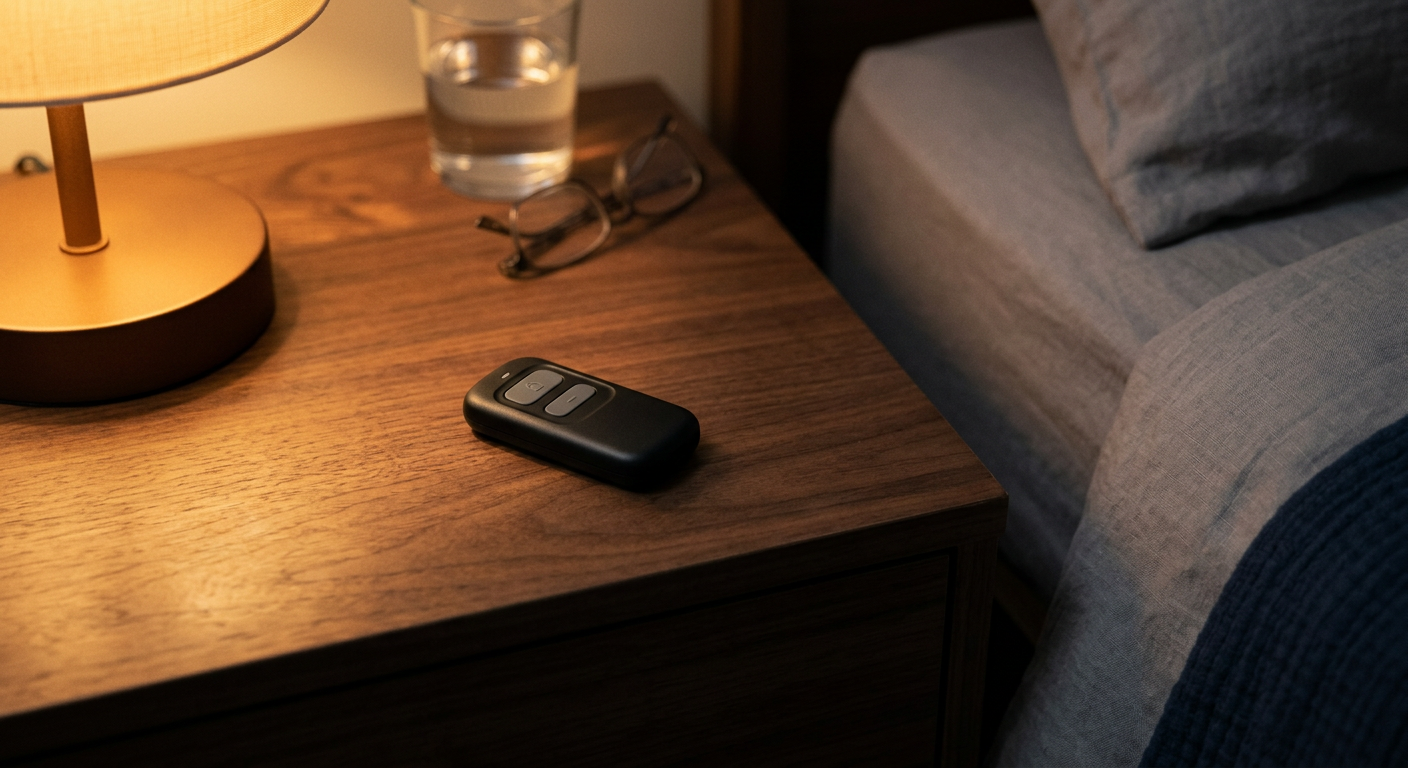
- The setup is different from CPAP. There is no mask, no hose, no machine on the nightstand. The implant sits under the skin of the chest. At bedtime the patient presses a small remote, the device activates, and the tongue gets a gentle stimulus through the night to push forward and keep the airway open. In the morning, the remote turns it off.
- It is not for everyone. Eligibility includes moderate-to-severe OSA (AHI 15 to 65), BMI under 32 (some criteria now allow up to 40), and a pre-operative test called drug-induced sleep endoscopy (DISE) that confirms the airway is collapsing in the right pattern. About 30 to 50 percent of CPAP-intolerant patients qualify.
- The right reader for this piece is someone who has been diagnosed with moderate-to-severe OSA, has tried CPAP, and quietly stopped using it. Inspire was built for that patient. The decision is real surgery and the cost is real ($30,000 to $40,000, mostly insurance covered), but for the right candidate it ends the nightly mask conversation permanently.
Your CPAP is in the closet. Your AHI is back where it started.
If you have moderate-to-severe sleep apnea (covered in Sleep apnea after 40: when snoring is a longevity problem) and you were prescribed a CPAP, the published statistics say you are roughly a coin flip to still be using it consistently after one year. Thirty to fifty percent of patients quietly stop. The mask never fits right. The hose tangles. Travel becomes a project. The dry mouth never goes away. After enough nights of pulling it off at 3 AM and giving up, the machine ends up in the closet and the apnea ends up untreated.
The first new tool that changed this conversation was Zepbound for sleep apnea: the first FDA-approved drug for OSA isn’t a sleep drug, which covered the December 2024 FDA approval of tirzepatide for adults with obesity and moderate-to-severe OSA. Zepbound is now the first real pharmacological alternative. But it is for a specific patient: BMI 30 or higher, willing to commit to a weekly injection, willing to lose 15 to 20 percent of body weight to remodel the airway. For everyone else who is CPAP-intolerant, the third tool is a surgical option that almost nobody hears about from their primary care doctor.
That tool is Inspire, an implantable device made by Inspire Medical Systems that gently stimulates the nerve controlling the tongue to keep the airway open during sleep. FDA-approved in 2014, growing rapidly in the past five years, covered by Medicare and most commercial insurance. About 50,000 patients have been implanted to date. It is not new and it is not experimental. It is just under-discussed because most primary care doctors and even most sleep doctors are slower than the device industry to update their default first answer to OSA. Johns Hopkins Medicine names it explicitly in their OSA treatment overview alongside CPAP and oral appliances. This article is the catch-up.
How Inspire actually works
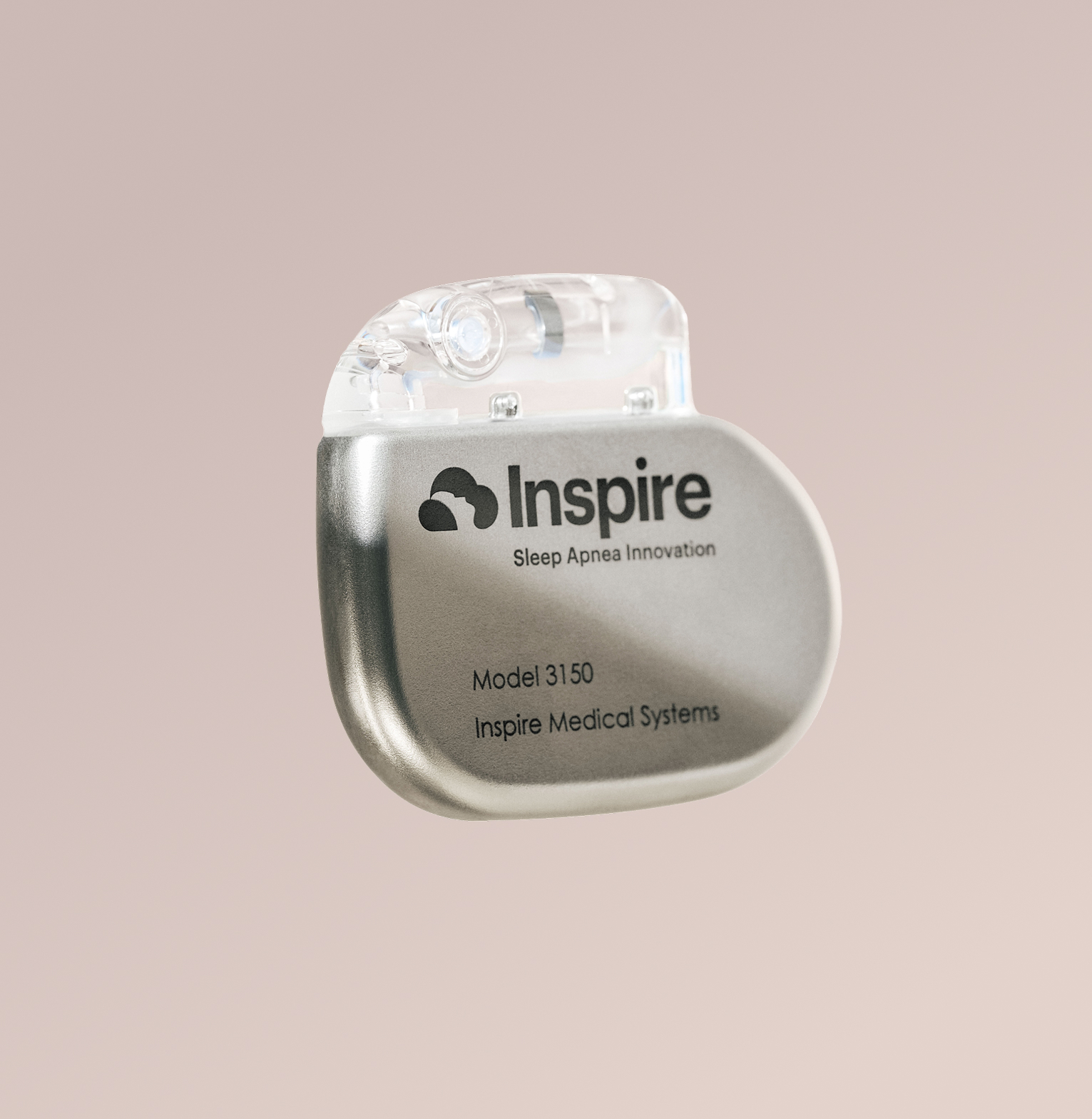
The mechanism is direct. The implant itself is about the size of a small matchbox or two stacked credit cards, roughly 70mm by 55mm by 11mm and weighing about 60 grams, comparable in size to a heart pacemaker. It sits under the skin of the upper right chest with two thin leads. One lead runs up to the hypoglossal nerve in the neck, the nerve that controls the tongue muscle. The other lead runs to a chest sensor that detects the breathing cycle. The device watches your breathing in real time, and on each inhale it sends a small electrical pulse to the hypoglossal nerve. The pulse gently moves the tongue forward, which opens the airway, which prevents the collapse that causes apnea. Inspire publishes a detailed walkthrough of the device and how it sits in the body for readers who want the full anatomy.
At bedtime the patient holds a small remote against the upper chest and presses one button. The device activates after a built-in delay so you can fall asleep first. Through the night, it cycles with your breathing. In the morning, the remote turns it off. There is no mask to wear, no hose to tangle, no machine on the nightstand, no water tank to refill. The longest interaction with the device on a normal night is the 5 seconds of pressing the remote.
The procedure to place the device is outpatient. About 2 hours under general anesthesia, three small incisions (one upper chest, one upper neck, one rib area for the breathing sensor), recovery in days. The device gets activated about 30 days after surgery to allow healing. Full benefit takes 2 to 3 months as the patient and the device dial in the right stimulation level.
Inspire publishes the trial data openly. The 5-year outcomes from the STAR trial (Woodson et al., Otolaryngology Head Neck Surgery, 2018) showed a 79 percent reduction in apnea events. Inspire’s own patient-reported data shows 90 percent of bed partners report no or soft snoring and 91 percent of patients say Inspire is better than CPAP. The numbers are strong enough that the device has been added to most sleep medicine practice guidelines for the CPAP-intolerant patient.
Who actually qualifies for Inspire
Eligibility is specific and worth understanding before you start the conversation with a sleep specialist. The current criteria for adult Inspire eligibility:
- Diagnosed moderate-to-severe obstructive sleep apnea. The apnea-hypopnea index (AHI) needs to be between 15 and 65 events per hour. Below 15 is mild OSA and does not meet criteria. Above 65 is severe enough that the surgical option may not provide adequate reduction.
- BMI under 32 in most insurance criteria. Some sleep centers and updated FDA approval allow up to BMI 40, but coverage approval still skews toward the under-32 group. Higher BMI patients are usually directed toward Zepbound or weight-loss-first paths.
- Age 18 or older. Inspire is also FDA-approved for pediatric patients with Down Syndrome with separate criteria, but the adult-OSA approval is the main population.
- Predominantly obstructive sleep apnea, not central sleep apnea. The device works by stimulating airway opening, which does nothing for central apnea (where the brain stops sending breathing signals).
- Failed or intolerant to CPAP. Insurance generally requires documentation of a real CPAP attempt before approving Inspire. “I tried it for a week and hated it” usually does not qualify. “I used it for 6 months, never got AHI below 10, switched masks three times, still not sleeping” usually does.
- A pre-operative drug-induced sleep endoscopy (DISE) showing the airway collapse pattern is suitable. The test puts the patient briefly under sedation while a sleep surgeon looks at the airway with a small camera. About 20 to 30 percent of otherwise-eligible patients have a collapse pattern (complete concentric collapse at the palate) that disqualifies them from Inspire.
Net of all those criteria, roughly 30 to 50 percent of CPAP-intolerant adults with moderate-to-severe OSA end up being Inspire candidates. The rest are directed to Zepbound (if the BMI fits), oral appliances, positional therapy, or back to a different CPAP setup.
Other options to know about before surgery
Inspire is the headline non-CPAP option, but it is not the only one. For patients who do not qualify (BMI over 32, the wrong collapse pattern, mild OSA, or simply not ready for surgery), several other paths exist. The Johns Hopkins OSA overview and the AASM Practice Guidelines both cover them in more detail.
Oral appliances are the most common alternative. A custom-fit mouthpiece made by a dentist or sleep-specialist orthodontist holds the lower jaw slightly forward during sleep, opening the airway from the front. Best for mild-to-moderate OSA or as a step between CPAP and Inspire. They are less effective than CPAP for severe cases but much more travel-friendly and far better tolerated by most patients. The AASM specifically recommends oral appliances for adults with mild-to-moderate OSA who prefer them or cannot tolerate CPAP. A sleep specialist or a sleep dentistry practice handles the fitting and the follow-up titration.
Surgical procedures other than Inspire exist for the specific patient. Most have less track record than Inspire and lower per-procedure success rates, but they remain options worth knowing about during a comprehensive evaluation with a sleep surgeon. The main ones:
- Uvulopalatopharyngoplasty (UPPP). Removes excess tissue from the soft palate, uvula, and sometimes tonsils. Older procedure, mixed track record, sometimes paired with tonsillectomy. Often a starting point that did not work for many earlier-generation OSA patients.
- Maxillomandibular advancement (MMA). Moves both upper and lower jaws forward to enlarge the airway. High success rate (often 80 to 90 percent) but invasive, with a 4 to 6 week recovery and significant facial changes. Usually reserved for severe OSA in younger patients.
- Tongue base reduction. Removes or reshapes excess tissue at the base of the tongue. Can be done with radiofrequency, laser, or robotic assistance.
- Genioglossus advancement. A small bone-cut procedure that pulls the tongue’s muscle attachment forward. Often combined with other procedures.
- Septoplasty and turbinate reduction. Address the nasal airway component. Useful when nasal obstruction is part of the picture, less useful as a standalone OSA fix.
- Palate stiffening implants (Pillar procedure). Small implants placed into the soft palate to reduce vibration and partial collapse. Less invasive, also less effective. Niche.
- Bariatric surgery. For patients with severe obesity-driven OSA who are not candidates for or do not respond to GLP-1 therapy. Weight loss surgery is genuinely curative for OSA in a meaningful fraction of patients, but the procedure is itself major surgery and the indication is obesity first, OSA second.
Anyone who is not an Inspire candidate should ask their sleep specialist which of these may fit their specific anatomy, OSA severity, and tolerance for surgical recovery. None of these is a substitute for the full workup. They are options to know about so the conversation with the specialist is not a one-question conversation.
What you have probably already been told
If your CPAP is in the closet, you have probably heard one of two things from your sleep doctor. The first is “try a different mask.” Sometimes that works. Often the patient has already tried three masks and is being asked to try a fourth because the alternatives are not in the prescriber’s standard playbook. The second thing is silence, because moderate-to-severe OSA with intolerant CPAP is one of the hardest patient conversations and the easy answer is to keep prescribing what is familiar.
Here is the Livium take. CPAP is the nightly setup. Mask, hose, humidifier, calibration, nightly ritual, indefinite. For the patient who tolerates it, CPAP is the gold standard and works. For the patient who cannot tolerate it, the nightly setup is the reason the machine ends up in the closet, and the apnea ends up untreated. Telling that patient to try a fifth mask is not a sleep medicine plan. It is an unfortunate version of avoiding the harder conversation.
Inspire is the implanted switch. One-time procedure, then a single button press at bedtime. No mask. No hose. No nightly assembly. For the right patient (moderate-to-severe OSA, BMI under 32, predominantly obstructive collapse pattern, has actually tried CPAP), it is a real path to treated apnea that does not require winning a fight with a mask every night for the rest of your life. The decision is real surgery and the cost is real, but the alternative for the wrong-fit-CPAP patient is untreated OSA, and the cost of THAT compounds for years.
The Livium move is not to push everyone toward Inspire. CPAP works for most patients who can tolerate it. Zepbound works for the obesity-and-OSA patient who can commit to a GLP-1. Inspire is the third tool in the toolkit. Knowing it exists, knowing the eligibility criteria, and asking the sleep specialist about it (because most primary care doctors will not bring it up) is what closes the gap. There is no longer a reason to leave a CPAP in the closet and call that OSA treatment.
The Livium recipe
Tool. Start with the diagnosis if you do not have one. A home sleep test from Lofta ($189) gives you the AHI score that everything downstream depends on. Then the path forks. If you have not tried CPAP, Lofta’s ResMed AirSense 11 package is still the right first move. If CPAP is in the closet and your BMI is 30 or higher, Hims Zepbound is the second tool to consider. If CPAP did not work and you are not a Zepbound candidate (or have tried it), the next conversation is Inspire. Their site has a self-screening questionnaire and a find-a-doctor tool that lists implanting surgeons by region. Baseline bloodwork through Function Health is useful before any surgical procedure (CBC, basic metabolic panel, lipid panel, A1c).
Behavior. The behavior layer matters even with surgical treatment. Side sleeping reduces airway collapse in most OSA patients regardless of which tool you use. Caffeine cutoff at 2 PM (the standard Livium default; caffeine half-life is roughly 6 hours). Last meal 3 hours before bed. Last drink of alcohol 4 hours before bed, or none for the 2 weeks before any pre-operative testing. If you are working toward Inspire eligibility, the BMI under 32 requirement is the variable most patients can move. A 10 percent body weight reduction can be the difference between qualifying and being told to come back next year.
Threshold. Different timelines than the other tools. The Inspire pre-op consultation, DISE, and surgical scheduling typically run 2 to 4 months from the first specialist visit. Recovery from the procedure is days. Device activation is 30 days post-op. Full therapeutic benefit dials in over 2 to 3 months of titration. Total time from CPAP-in-the-closet to fully-treated-on-Inspire is roughly 6 to 9 months. The targets to confirm Inspire is working: post-implant sleep study showing AHI under 15 (mild range or resolved), self-reported daytime sleepiness improved, bed partner reports of snoring reduced or gone. If those numbers are not landing 4 months after activation, the device is adjusted by the sleep specialist (stimulation level, lead position, sometimes a revision procedure).
The three OSA tools, side by side
For the first time, moderate-to-severe OSA has three FDA-approved first-line tools that do different things for different patients. Worth seeing all three side by side. The right tool depends on the patient, not on which one the prescriber happens to know best.
| CPAP | Zepbound | Inspire | |
|---|---|---|---|
| Approved for OSA | Standard since the 1980s | FDA-approved Dec 2024 (adults with obesity) | FDA-approved 2014 (CPAP-intolerant patients) |
| How it works | Positive air pressure forces airway open | Tirzepatide reduces airway and abdominal fat | Implanted device stimulates tongue muscle to keep airway open |
| Best for | Almost any OSA severity, any weight | Moderate-severe OSA + BMI 30 or higher | Moderate-severe OSA, BMI under 32, CPAP-intolerant |
| Setup | Mask, hose, water tank, nightly | Weekly self-injection, ongoing | Outpatient surgical procedure, one-time, then remote at bedtime |
| Time to effect | Immediate (night one) | Weeks to months as weight comes down | 30-day device activation after surgery; full benefit in months |
| Common downsides | Mask fit, dry mouth, claustrophobia, travel friction | Nausea, vomiting, monthly cost, indefinite use | Surgical recovery, ~10% revision rate over 5 years |
| Cost | $800-2,000 upfront plus supplies | $1,000-1,400 monthly without insurance | $30,000-40,000 (mostly insurance covered, including Medicare) |
| Reversibility | Stop using it anytime | Weight regained after stopping | Implant can be removed but not casually |
Source: Livium editorial synthesis based on the Inspire Medical Systems published clinical data and patient information, the December 2024 FDA approval of tirzepatide for OSA, the Cleveland Clinic sleep apnea overview, and the AASM Practice Guidelines.
Plan of action
- If you do not have a current AHI diagnosis: order a home sleep test from Lofta ($189). Every conversation downstream needs this number.
- If you have not tried CPAP and your sleep doctor recommends it: that is still the right first move. The Lofta ResMed AirSense 11 package is the standard. Give it a real 90-day trial with proper mask fitting before declaring it intolerable.
- If your BMI is 30 or higher and CPAP did not work: Zepbound via Hims is the next conversation. Our Zepbound for OSA piece walks through the eligibility and the timeline.
- If CPAP did not work and you are not a Zepbound candidate: start the Inspire conversation. Inspire’s self-screening questionnaire is the fastest first step (5 minutes online). If you pass the screen, the find-a-doctor tool lists implanting surgeons by region. Most operate via the hospital or sleep surgery practice they are affiliated with.
- Before any surgical procedure: order baseline bloodwork through Function Health (CBC, basic metabolic panel, lipid panel, A1c, thyroid). Useful for pre-op clearance and the broader workup any sleep specialist will want.
- Insurance pre-authorization usually takes 4 to 8 weeks. Use that window to lose 5 to 10 pounds if your BMI is close to the threshold, do the DISE if your specialist requests it, and confirm the surgical schedule once approval lands.
- After implant: 30 days for healing, then activation, then 2 to 3 months of titration. Follow-up sleep study at month 6 to confirm AHI improvement. From there, annual device check-ins.
- Behavior baseline through the whole timeline: caffeine cutoff at 2 PM, alcohol moderation, side sleeping, last meal 3 hours before bed. These help regardless of which tool you end up on.
Table of Content

Know your body better.
Trusted By Thousands Daily




Is Inspire safer than CPAP?
They are different risk profiles. CPAP has essentially zero serious risk over years of use; the main downsides are quality of life (mask, hose, travel). Inspire is a real surgical procedure with the risks that surgery carries (anesthesia complications, infection, lead migration, device malfunction). The 5-year revision rate is roughly 10 percent. For the right patient (CPAP-intolerant with moderate-to-severe OSA), the calculus is that the surgical risks are lower than the cumulative cardiovascular and cognitive cost of years of untreated OSA. For the patient who tolerates CPAP well, there is no good reason to go through the surgery.
What does the surgery actually involve?
Three small incisions, about 2 hours under general anesthesia, outpatient (you go home the same day). The device sits under the skin of the upper right chest. One lead is tunneled under the skin up to the hypoglossal nerve in the neck. A second lead goes to a sensor near the rib cage that detects breathing. Recovery is days for the incisions to heal and about 30 days before the device is activated. Most patients are back to normal daily activity within a week, lifting restrictions for about 4 weeks.
How much does Inspire cost?
The all-in cost is roughly $30,000 to $40,000 for the device, the surgery, and the follow-up activation visits. Medicare covers Inspire and so do most commercial insurers, including Veterans Affairs. Out-of-pocket costs vary widely based on the plan and deductible. The Inspire patient services team and the implanting surgeon’s office both handle pre-authorization, which usually takes 4 to 8 weeks.
What is the DISE test and why do I need it?
DISE stands for drug-induced sleep endoscopy. The patient is briefly sedated to simulate sleep while a sleep surgeon looks at the upper airway with a small camera through the nose. The test confirms the pattern of airway collapse. Inspire works best when the collapse is anteroposterior (front-to-back) at the base of the tongue. It does not work well when the collapse is concentric (the whole airway closes in a circular pattern at the palate). About 20 to 30 percent of otherwise-eligible patients fail the DISE and are not Inspire candidates.
Can I feel the device working?
Most patients describe a mild tongue-tingle sensation during the first few weeks while the stimulation level is being dialed in. Once the device is titrated correctly, most patients do not feel it at all during sleep. Daytime, the device is off and there is no sensation. The device itself is small enough that most patients are not aware of it under the skin once the implant heals.
What about MRIs and other procedures?
Current-generation Inspire devices are conditional-MRI-safe, meaning you can have an MRI under specific conditions (1.5T scanner, certain body regions, with the device temporarily disabled). The Inspire patient card spells out the requirements; carry it with you. For dental procedures, surgery, and most other medical interactions, you let providers know you have the device and they manage around it.
What if Inspire does not work?
Inspire works for about 70 to 80 percent of properly selected patients (per the published outcomes data). For the 20 to 30 percent who do not get adequate AHI reduction, the next steps are dose-titration (the stimulation level adjusted by the sleep specialist), lead repositioning (a minor revision procedure), or in some cases falling back to CPAP, Zepbound, or other surgical options. The device can be removed if needed, though most patients who get adequate benefit keep it indefinitely.
When should I see a sleep specialist instead of my primary care doctor?
For any conversation about Inspire, yes. Most primary care doctors will not have implanted-device experience or familiarity with current eligibility criteria. A board-certified sleep medicine specialist or an ENT (ear, nose, and throat) surgeon affiliated with an Inspire implanting center is the right conversation. The Inspire find-a-doctor tool lists qualified specialists nationwide.
Legal Disclaimer
The content published on Livium Health is for informational and educational purposes only. Nothing on this site constitutes medical advice, diagnosis, or treatment. Always consult a qualified healthcare provider before making decisions about your health, including changes to medications, supplements, diet, or exercise.
Livium Health is not a medical practice and does not have a patient-provider relationship with its readers. We do not sell supplements, medications, or treatments, and we have no financial relationship with the products or services we reference.
While we work to ensure the information we publish is accurate and up to date, health and medical guidance evolves. We make no guarantees about the completeness or currency of any content on this site. Reliance on any information provided by Livium Health is solely at your own risk.
If you are experiencing a medical emergency, call 911 or your local emergency services immediately.
We may receive compensation, free products, or affiliate commissions for products mentioned in this post. Opinions are our own.