
Share
Sleep
Late dinners and bad sleep after 40: What a CGM actually shows you
9 min read
Key takeaways
- Eating dinner late, especially carbs and alcohol, doesn’t just make you feel sluggish. It spikes your glucose, triggers an insulin overshoot, and sets you up for a 2 to 3 AM cortisol-driven wake-up. After 40, the swing is bigger because your insulin sensitivity drops every decade.
- A continuous glucose monitor (CGM) shows you the curve in real time. You can see your own dinner-time spike, the overnight crash, and the cortisol rebound. Two weeks of data ends years of guessing.
- The cheapest and easiest CGM right now is the Stelo by Dexcom, $99 for 2 sensors (15 days each) over the counter, available through Lofta. Lingo by Abbott and Levels are the other two worth knowing.
- The behavior playbook is simple: last bite 3 hours before bed (4 if it was carb-heavy or alcohol-included), a 10-minute walk after dinner, and glucose under 110 mg/dL at bedtime. Most readers see sleep change inside a week.
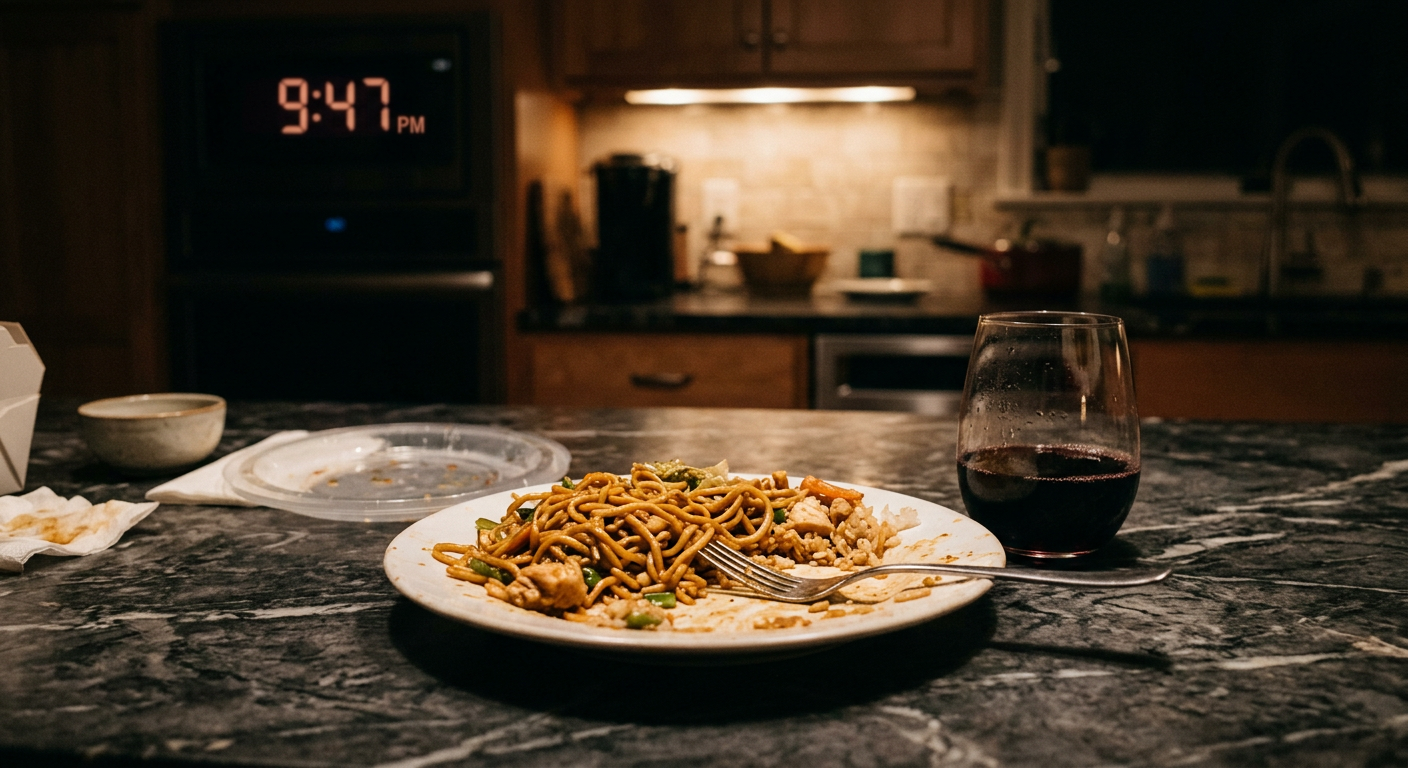
It is 9:47 PM. You are eating dinner.
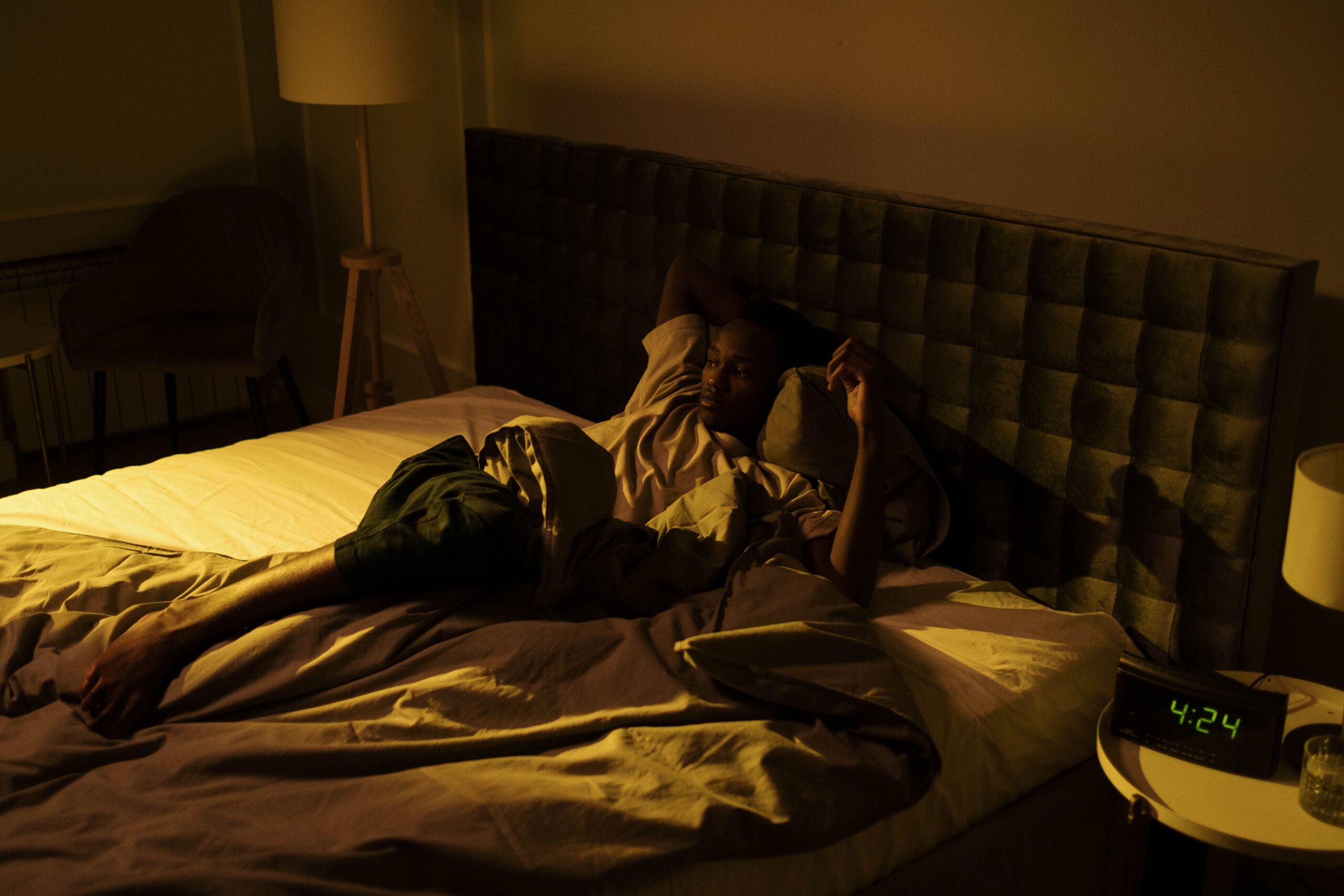
Pasta. Bread. A glass of red. Maybe two. The day got away from you, the kids’ homework took longer than expected, and dinner slid back to almost ten. You fall asleep fine. You wake up at 2:34 AM, wired, with a heart that feels like it skipped the warmup. You scroll your phone for forty minutes. You blame stress.
The stress is real. But there is another variable doing more work than you think, and it is sitting on the dinner plate from four hours ago. Late food, especially refined carbs and alcohol, drives a glucose spike that your body chases down with insulin. The chase often overshoots. Glucose drops too low at 2 or 3 AM. Cortisol fires to rescue it. You wake up.
Per the American Academy of Sleep Medicine, short sleep and glucose dysregulation feed each other in a tight loop. Bad sleep makes your cells less responsive to insulin. Worse insulin response makes your sleep worse. By the time you hit 45 the loop is louder than it was at 30. And almost nobody is checking the variable that ties the two together: real-time glucose.
What actually happens after a late dinner
Your body’s job at night is simple: keep glucose stable while you sleep so the brain, heart, and repair systems can do their work without interruption. Late food breaks that job in three ways.
The first hit lands in the first 90 minutes. Carbs at 9 PM raise blood glucose into the 140s or 160s within an hour, sometimes higher if the meal was heavy on refined grains or sweet sauces. Your pancreas reads the spike, releases insulin, and the chase begins. Your bedtime glucose might already be on its way down when your head hits the pillow, which is fine. The problem is that the chase often overshoots in midlife. Insulin sticks around longer than it needs to, glucose keeps dropping, and you cross a threshold around 60 to 70 mg/dL that the brain reads as an emergency.
That is when the second hit fires. The adrenal glands release cortisol and adrenaline to bring glucose back up. Cortisol is doing its job here, but the side effect is that it wakes you up. The 2:34 AM wake-up is not random. It is a glucose rescue mission with a cost.
The third hit lands the next day. Cortisol that fires at 2 AM is cortisol that should have fired at 6 AM. The morning curve gets flat, which is why you wake up tired even though you slept seven hours. The whole rhythm rolls forward an hour earlier and the next night repeats the pattern. This is why a single late dinner usually wrecks two nights, not one.
Alcohol makes all of this worse. A glass of wine drops glucose during metabolism (the liver prioritizes processing alcohol over making new glucose), which deepens the overnight low. It also fragments the second half of the night and suppresses REM. Two glasses of red at 9 PM is a 3 AM wake-up almost every time after 40.

What you have probably already tried
You cut out carbs at dinner for a week and felt fine. You read the protein-first-vegetables-second-carbs-last bit on a podcast. You tried intermittent fasting. You bought a food journal app. Maybe you stopped drinking on weeknights, maybe you committed to no food after 8 PM but couldn’t stick it. The needle moved a little, then moved back.
Here is the Livium take. Macro-counting and meal-timing rules are somebody else’s recipe applied to your kitchen. Confident instructions, written for a body that is not yours. They work, somewhat, the way any thoughtful effort works. But you are guessing about your own metabolism. A carb that spikes one person to 180 might leave another at 130. A 7 PM dinner that wrecks your spouse might be fine for you. Without your own data, the protocol you are following belongs to someone else.
A CGM is the receipt your body writes for every meal. Two weeks of real-time glucose data tells you exactly which meals spike you, exactly how high, exactly when the crash hits, and exactly which behavioral levers move the curve in your specific body. You stop guessing and start solving. This is the Livium move: stop borrowing other people’s rules, get your own data, fix the root cause. Symptom-chasing is the long way around. Watching your own glucose curve at 2 AM is the short way.
There is a small caveat. A CGM tells you the glucose story, not the whole story. If late dinners are happening because of work stress, relationship dynamics, or evening dysregulation that has nothing to do with hunger, the device shows you the consequence but not the cause. For most readers the data alone shifts behavior anyway. For some, the CGM data plus a 90-day commitment to dinner-by-7 closes the loop. For a few, the underlying driver is cortisol and the conversation needs to widen.
The Livium recipe
Tool. Get a CGM. The simplest entry point is the Stelo Biosensor by Dexcom, available over the counter at Lofta for $99 (2 sensors, 15 days of wear each, so a month of data). Stelo runs through a clean app and does not require a prescription. Lingo by Abbott is the closest alternative, also OTC, with a nudge-style app aimed at metabolic optimization. If you want coaching and food-tagging analytics, Levels runs about $199 monthly and layers a guided program on top of the sensor. Pair the CGM with a full bloodwork panel through Function Health ($499 a year) to see A1c, fasting insulin, and a HOMA-IR (homeostatic model assessment of insulin resistance) score. The CGM gives you the moving picture; the bloodwork gives you the still photograph. Both matter.
Behavior. Three changes during the 2-week test window. Last bite of dinner 3 hours before bed, 4 hours if the meal is carb-heavy or includes alcohol. A 10-minute walk after dinner blunts the post-meal spike by 20 to 30 percent on most people. Cap alcohol at 1 drink, finish it by 8 PM, and treat 2 drinks within 4 hours of bed as the same as not sleeping. Caffeine cutoff at 2 PM (the standard Livium default; caffeine half-life is roughly 6 hours, so 2 PM still has a quarter of the dose in your system at bedtime). If your dinner has to be late because of life, prioritize protein and vegetables over starches and dessert. The smaller spike costs you less downstream.
Threshold. 2 weeks of CGM data. Targets: glucose under 110 mg/dL at bedtime. Overnight average under 100 mg/dL. No glucose readings under 70 mg/dL between 1 and 4 AM. Post-meal spike under 140 mg/dL for any single meal. If your bedtime number is consistently above 120 or you are spiking past 160 at dinner, the meal or the meal timing needs to move. If your overnight reading drops under 65 and you are waking up around it, the rescue cortisol is doing what your liver should have done. From the bloodwork: A1c under 5.5, fasting insulin under 7 mIU/L, HOMA-IR under 1.5. These are the optimization targets, not the diabetes thresholds.
Why 40 is the year the curve gets uglier
Insulin sensitivity declines about 1 to 2 percent per year starting in your 30s. By 45, your pancreas has to release more insulin to handle the same dinner that 30-year-old you metabolized without thinking. The post-meal spike runs higher, the insulin chase lasts longer, the overnight overshoot deepens. The same Thai takeout that was fine at 32 wakes you up at 47.
Three things compound the slide. Lean muscle drops without resistance training, and muscle is where 80 percent of glucose disposal happens. Visceral fat goes up, and visceral fat releases inflammatory signals that worsen insulin signaling. Sleep gets lighter, especially deep sleep, and deep sleep is when your body does most of its glucose regulation. The three combine into the midlife metabolic noise that most people just call “getting older.”
None of that is irreversible. The CGM is the diagnostic and the dashboard. Resistance training 3 days a week is the single most effective glucose-management intervention available, more impactful than diet for most people. Time-restricted eating (last meal by 7 PM, first meal after 9 AM) on most days flattens the curve. If the CGM and bloodwork land on real insulin resistance, GLP-1 medications are increasingly the right tool, not a vanity move. Zepbound via Hims is the cleanest channel for tirzepatide; GLP-1s improve insulin sensitivity, reduce post-meal spikes, and (incidentally) improve sleep quality in the people who need them. Not for everyone. Worth a conversation with a clinician if your fasting insulin is consistently over 10 or your HOMA-IR is over 2.
The CGMs worth knowing
Four products dominate the consumer CGM market in 2026. The right one depends on your budget, how much coaching you want, and whether you are optimizing or just curious.
| CGM | Price | Wear time | Best for | Trade-offs |
|---|---|---|---|---|
| Stelo (Dexcom) | $99 for 2 sensors via Lofta | 15 days per sensor | First-timers. OTC. Simplest app. | No coaching. Limited food tagging. |
| Lingo (Abbott) | About $89 for 2 sensors direct | 14 days per sensor | Athletes and high-frequency users; nudge-style app. | Newer to market; less third-party app support. |
| Levels | About $199 monthly membership (plus sensors) | 14 to 15 days per sensor | Anyone wanting coaching, food scoring, and zone analytics. | Higher monthly cost; locks you into the ecosystem. |
| Nutrisense | About $299 monthly with a dietitian | 14 days per sensor | If you want a human reviewing your data with you. | Most expensive; overkill for most readers. |
Source: Livium editorial synthesis based on product specifications from Lofta (Stelo), Lingo, Levels, and Nutrisense as of May 2026.
Plan of action
- This week: order a Stelo CGM through Lofta ($99, no prescription needed). Stelo ships fast and the app is the simplest to set up.
- This week: order full bloodwork through Function Health or a direct lab. A1c, fasting insulin, HOMA-IR, lipid panel, basic metabolic panel.
- Week 1 (CGM days 1 to 7): wear the sensor, do not change your behavior. Log dinner time, dinner composition, alcohol, and bedtime. Watch the overnight curve. The first week is diagnostic, not interventional.
- Week 2 (CGM days 8 to 14): make three changes. Move last bite to 3 hours before bed. Walk for 10 minutes after dinner. Cap alcohol at 1 drink with last sip by 8 PM. Watch how the overnight curve changes.
- Day 15: review the data. Pick the single behavior change that moved your overnight average the most and make it permanent. Discard the rest if they did not move the curve for you.
- If the data shows insulin resistance (A1c over 5.6, fasting insulin over 10, HOMA-IR over 2, or your CGM stays above 120 average): time to consider a GLP-1. Hims for Zepbound is the telehealth channel.
- Month 2: add resistance training 3 days a week. This is the single most powerful glucose intervention available and most readers underweight it. Even 20 minutes of compound movements moves the next-day curve.
- Month 3: re-check bloodwork. Sleep quality, body composition, and the morning curve should all be in a different place.
Table of Content

Know your body better.
Trusted By Thousands Daily







Do I need a CGM if I am not diabetic?
You do not need one, in the medical sense. But two weeks of CGM data is the fastest way to learn how your specific body responds to meals, timing, alcohol, stress, and exercise. Once you have seen your own curves you stop guessing about food and start making informed choices. Most users wear a CGM for 1 to 2 months total, learn what they need to learn, and stop. The point is the data, not the device.
Which one should I get, Stelo or Lingo or Levels?
If you want the cheapest, simplest entry: Stelo through Lofta for $99. If you want a more athletic-optimization vibe with daily nudges: Lingo. If you want coaching, food scoring, and a structured program: Levels at $199 monthly. Most readers do well starting with Stelo and upgrading only if they want the coaching layer.
Is intermittent fasting the answer?
Often, yes. The most consistent CGM finding across midlife readers is that time-restricted eating (typically last meal by 7 PM, first meal after 9 AM) flattens the overnight curve and improves sleep within a week. Not because fasting is magic, but because the meal is happening earlier and the body is fully digested by bedtime. If you already eat dinner by 7, you do not need to skip breakfast on top of it.
Should I just avoid carbs at dinner?
Not necessarily. Carbs at dinner are fine if the dinner is early enough, the portion is reasonable, and the meal has protein and fiber to slow the spike. Late carbs are the problem, not all carbs. The CGM will show you exactly which dinner-and-time combinations work for your body. Some readers find that pasta at 6:30 is fine but pasta at 9 wrecks them. Others find the inverse. You are looking for your pattern.
What about GLP-1s like Zepbound for late-night eating?
GLP-1s genuinely change the food noise. Readers who could not stop snacking at 10 PM report the urge simply going away on tirzepatide or semaglutide. Worth knowing. They are not a first-line tool for someone whose only issue is bad meal timing — fix the timing first. But if the bloodwork shows real insulin resistance, or if late-night eating is compulsive and behavioral changes have not stuck, GLP-1s are increasingly the right tool. Telehealth makes them accessible through Hims and similar channels.
What if I am stress-eating, not hungry?
The CGM data will not fix that. It will, however, show you the consequence in glucose terms, which is sometimes enough to break the loop. For most stress-eaters the underlying driver is cortisol or unprocessed evening dysregulation, and the conversation needs to widen to sleep timing, evening light, and a sustainable wind-down. Our piece on 3 AM cortisol wake-ups covers that side of the loop. The two articles work together for many midlife readers.
Will a CGM mess with my sleep?
No. The sensor sits on the back of your upper arm and most users forget it is there within 24 hours. The phone app does not need to be looked at overnight (turn off any alerts during sleep hours). The only thing the CGM changes about your sleep is what you learn about it.
Legal Disclaimer
The content published on Livium Health is for informational and educational purposes only. Nothing on this site constitutes medical advice, diagnosis, or treatment. Always consult a qualified healthcare provider before making decisions about your health, including changes to medications, supplements, diet, or exercise.
Livium Health is not a medical practice and does not have a patient-provider relationship with its readers. We do not sell supplements, medications, or treatments, and we have no financial relationship with the products or services we reference.
While we work to ensure the information we publish is accurate and up to date, health and medical guidance evolves. We make no guarantees about the completeness or currency of any content on this site. Reliance on any information provided by Livium Health is solely at your own risk.
If you are experiencing a medical emergency, call 911 or your local emergency services immediately.
We may receive compensation, free products, or affiliate commissions for products mentioned in this post. Opinions are our own.