
Share
Men's Health
Sleep
Women's Health
Sleep and muscle repair: Why your recovery happens at night, not at the gym
6 min read

Key takeaways
- Growth hormone secretion is concentrated in the first two hours of sleep, during slow-wave sleep, and accounts for the majority of the daily growth hormone pulse that drives muscle protein synthesis and repair.
- Sleep restriction below seven hours measurably reduces muscle protein synthesis rates, increases muscle protein breakdown, and elevates cortisol, which actively degrades muscle tissue.
- Pre-sleep protein (30 to 40 g of casein or a mixed protein source, 30 minutes before bed) extends the overnight muscle protein synthesis window and has been shown in multiple RCTs to increase lean mass and strength gains beyond training alone.
- The gym creates the stimulus. Sleep is where the adaptation actually occurs. Consistently shortchanging sleep while training hard is the most common unrecognized reason for a plateau in progress.
Training breaks muscle. Sleep builds it
Resistance training does not build muscle. It creates the stimulus that tells the body to build muscle. The actual construction occurs later, during recovery, and most of that recovery happens during sleep. The gym provides the signal. Sleep provides the substrate, the hormonal environment, and the time window in which muscle protein synthesis occurs.
Growth hormone, the primary anabolic hormone involved in muscle repair and synthesis, is released in pulses. The largest pulse of the day occurs within the first 90 minutes of sleep, during slow-wave sleep. This is not incidental. The hypothalamus is programmed to release the bulk of the day’s growth hormone during this window. Anything that disrupts the onset of slow-wave sleep or fragments it in the first two hours (alcohol, a warm bedroom, a late workout that keeps body temperature elevated, stress-driven cortisol) directly reduces the size of this pulse and the muscle repair that depends on it.
What sleep restriction costs the body
Muscle protein synthesis is not just reduced by poor sleep. It is actively reversed. Sleep restriction increases cortisol, which has direct catabolic effects on muscle tissue: it accelerates muscle protein breakdown and impairs the insulin signaling that drives amino acid uptake into muscle cells. A study restricting sleep to five and a half hours in adults on a caloric deficit found that 70 percent of the resulting weight loss came from lean mass rather than fat, compared to 52 percent lean mass loss in well-rested controls on the same deficit. The sleep-deprived group was losing muscle, not fat, at a significantly higher rate.
For midlife adults, this matters more than it did at 30. After 40, muscle protein synthesis rates decline and the anabolic window after training narrows. The hormonal environment of sleep becomes proportionally more important as the body’s baseline anabolic signaling weakens. Protecting sleep is more important for muscle retention at 50 than it was at 30, not less.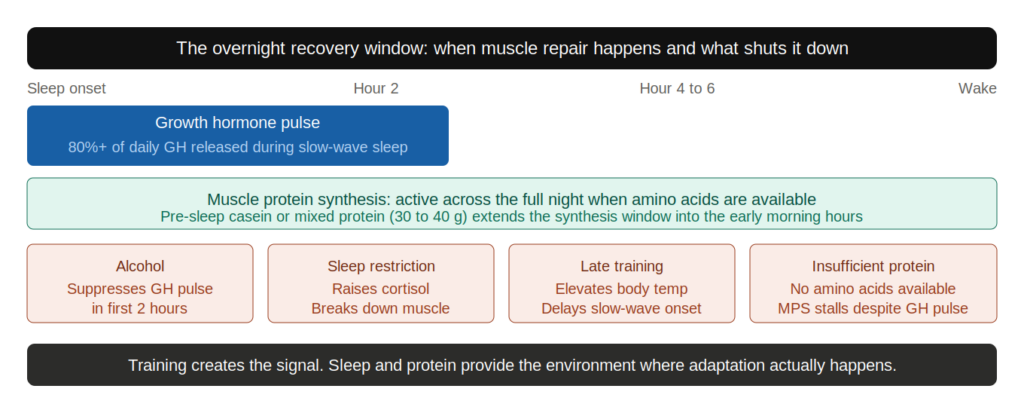
Pre-sleep protein: The underused recovery tool
Amino acids are required for muscle protein synthesis. The body cannot synthesize muscle without them. During a normal night without a pre-sleep protein source, amino acid availability from the last meal declines over four to six hours and muscle protein synthesis slows, even when growth hormone is present and the anabolic signal is active. Protein is the rate-limiting factor.
Casein protein digests slowly, releasing amino acids over five to seven hours, making it well-suited to maintaining overnight availability. Multiple RCTs have found that 30 to 40 g of casein or a mixed protein source consumed 30 minutes before bed produces greater lean mass gains and strength improvements over 12-week resistance training programs than training plus a placebo. The gains are real, additive, and consistent across multiple trials. This is one of the simplest and most evidence-backed recovery optimizations available to any adult who trains.
The Livium recipe
Tool. Pre-sleep protein is the most direct overnight recovery intervention. Casein protein (30-40 g) 30 minutes before bed on training days is the evidence-based starting point. For those who prefer whole foods: full-fat Greek yogurt (200 to 250 g), cottage cheese, or a small amount of meat with a slow-digesting carbohydrate achieves a similar profile. Sleep duration is the non-negotiable foundation. A sleep tracker confirms that the sleep you are getting includes adequate slow-wave sleep, during which the growth hormone pulse occurs. Consistently low slow-wave percentages (below 15 percent) indicate a disrupted recovery environment regardless of total sleep time.
Behavior. Schedule training sessions to finish at least two hours before sleep. Late training elevates core body temperature and delays the onset of slow-wave sleep, which initiates the growth hormone pulse. The training still counts. The recovery is just less efficient. Target seven to nine hours of sleep consistently, not just on training days. Muscle protein synthesis rates track total sleep time, not whether you trained that day. A hard training week is not the time to cut sleep for work. It is the time to protect it most carefully. Eliminate or move evening alcohol to at least three hours before bed on training days.
Threshold. If muscle soreness persists beyond 72 hours after training sessions, strength gains plateau despite consistent training, or body composition does not improve despite adequate protein and training, check total sleep first. For midlife adults who are also doing significant aerobic training: the recovery demand is higher, not lower. Sleep is not where gains happen despite training. It is where gains occur through training. A recovery monitoring tool (HRV-based) provides the data to know when the body has recovered before training again, preventing the compounding of under-recovery that kills both progress and motivation.
| Recovery protocol | Mechanism | Evidence |
|---|---|---|
| 7 to 9 hours total sleep | Preserves MPS, suppresses cortisol | Strong (multiple studies) |
| Pre-sleep casein 30 to 40 g | Extends overnight amino acid availability | Strong (multiple RCTs) |
| Training 2+ hours before bed | Allows core temp drop, protects GH pulse | Moderate (sleep architecture data) |
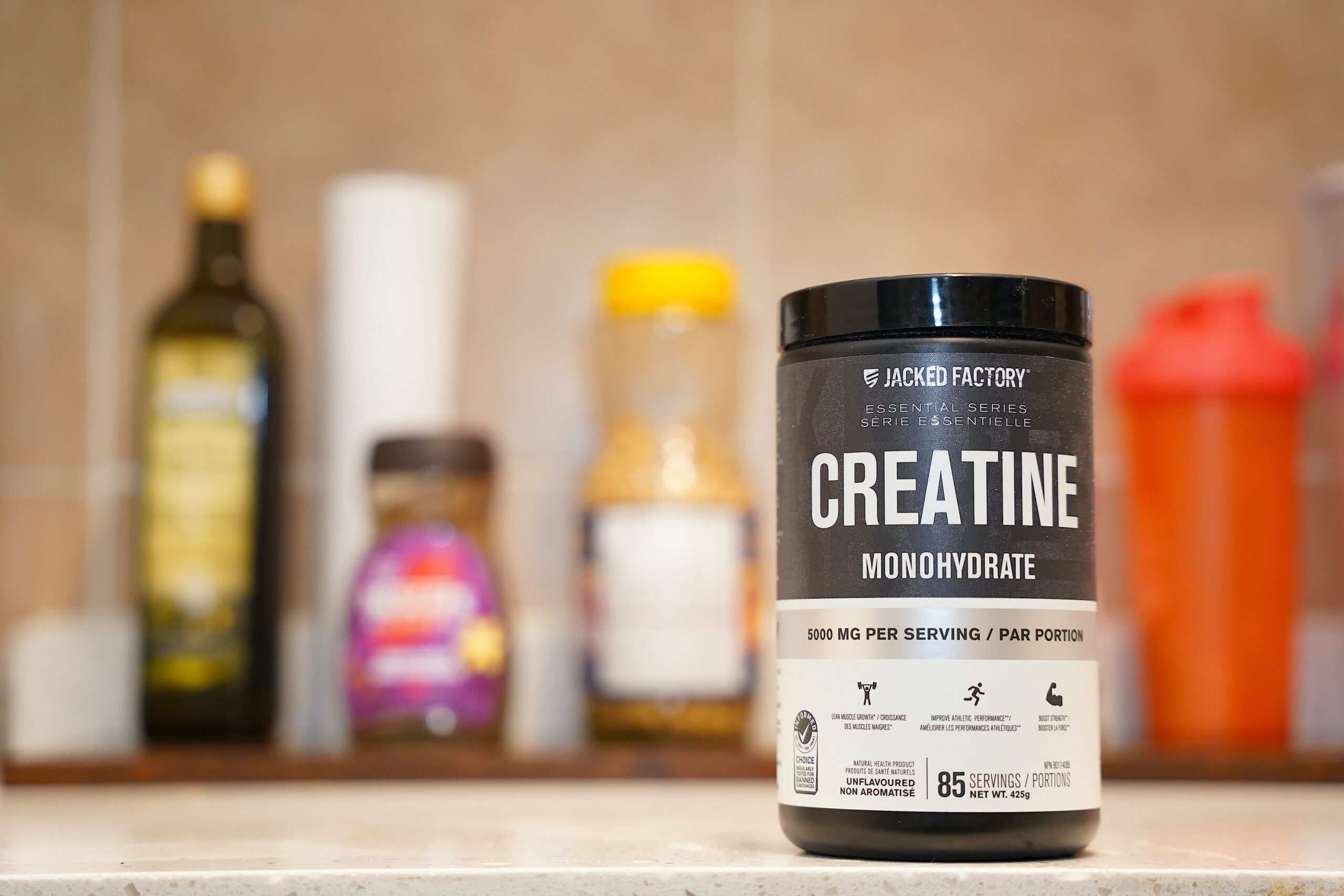
| Creatine 5 g daily | Supports MPS and muscle cell hydration | Strong (additive to sleep and protein) |
Plan of action
- Add pre-sleep protein starting tonight. Casein protein 30 to 40 g or 200 g of full-fat cottage cheese 30 minutes before bed on training days. Give it 30 days before evaluating soreness and recovery quality.
- Schedule any sessions that currently run past 9 PM to finish earlier. The growth hormone pulse that drives repair is time-locked to the onset of slow-wave sleep. Anything that delays that onset costs you recovery.
- If progress has plateaued: audit your sleep before changing your training program. Add 30 to 60 minutes of sleep for two weeks and assess whether strength, soreness recovery, and body composition respond. The answer is usually yes, and it is a cheaper solution than a new program.
- A protein powder with added creatine simplifies the pre-sleep stack into a single serving and removes one friction point from the habit. Consistency over weeks, not optimization of any single night, is what drives the adaptation.
Table of Content

Know your body better.
Trusted By Thousands Daily







FAQs
Will pre-sleep protein make me fat?
No. RCT data shows pre-sleep casein does not alter fat metabolism or body fat percentage when total daily protein and calories are controlled. The concern that eating before bed causes fat gain reflects a discredited model of metabolism. Protein consumed before bed is used for recovery, not stored as fat.
Do I need to train to benefit from sleep optimization?
No. Sleep is essential for muscle maintenance even in sedentary adults. As we age, muscle is lost without active stimulus. Sleep restriction accelerates that loss through elevated cortisol and reduced growth hormone, regardless of whether you trained that day. Sleep is the maintenance environment for all muscle tissue, not just trained muscle.
Is whey protein as good as casein before bed?
Whey is digested faster and peaks in the bloodstream within 60 to 90 minutes. For overnight use, the slower-digesting profile of casein or a mixed protein source is preferable because it sustains amino acid availability for five to seven hours, compared with the two to three hours provided by whey. A mixed protein powder that includes both whey and casein is a practical compromise.
Legal Disclaimer
The content published on Livium Health is for informational and educational purposes only. Nothing on this site constitutes medical advice, diagnosis, or treatment. Always consult a qualified healthcare provider before making decisions about your health, including changes to medications, supplements, diet, or exercise.
Livium Health is not a medical practice and does not have a patient-provider relationship with its readers. We do not sell supplements, medications, or treatments, and we have no financial relationship with the products or services we reference.
While we work to ensure the information we publish is accurate and up to date, health and medical guidance evolves. We make no guarantees about the completeness or currency of any content on this site. Reliance on any information provided by Livium Health is solely at your own risk.
If you are experiencing a medical emergency, call 911 or your local emergency services immediately.
We may receive compensation, free products, or affiliate commissions for products mentioned in this post. Opinions are our own.