
Share
Longevity & Aging
Mental Health
The hearing-dementia link your doctor isn’t telling you about
12 min read
Key takeaways
- The 2024 Lancet Commission on Dementia Prevention ranked hearing loss as the single largest modifiable risk factor for dementia. Untreated hearing loss accounts for about 7 percent of dementia cases globally, more than smoking, physical inactivity, or excessive alcohol. Most primary care doctors do not surface this at midlife physicals.
- The ACHIEVE trial (Dr. Frank Lin, Johns Hopkins Cochlear Center for Hearing and Public Health) enrolled nearly 1,000 adults ages 70 to 84, ran for three years, and published in The Lancet in 2023. In the higher-risk subgroup, the rate of cognitive decline dropped by nearly 50 percent for participants who received hearing aids. The largest cognitive intervention trial ever done on hearing loss and it landed on the side of the device.
- The mechanism is not mysterious. Untreated hearing loss burns cognitive resources on listening effort, shrinks the auditory processing regions of the brain over years, and drives social withdrawal. All three independently accelerate cognitive decline. Fixing the hearing input lifts the load off the brain.
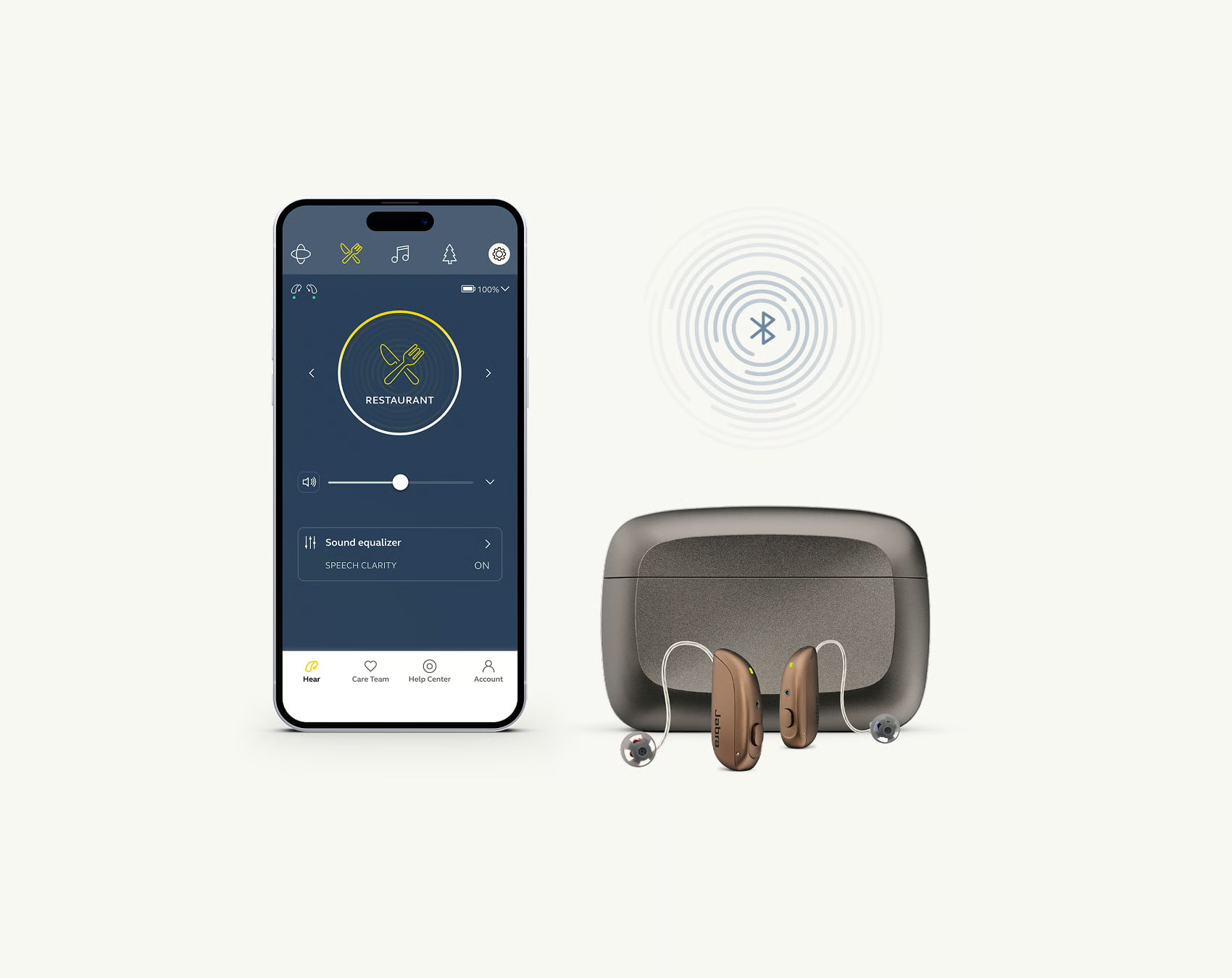
- The reader-facing action is straightforward. A baseline hearing test at 50, again at 55, and every couple of years after that. If loss shows up, treat it. Modern over-the-counter hearing aids like Jabra Enhance cost a fraction of what they used to and come with a 100-day trial. Treating hearing at 55 is treating your brain at 75.
Hearing loss is the number-one modifiable dementia risk factor. Most doctors still aren’t screening for it.
The 2024 Lancet Commission on Dementia Prevention finalized its list of modifiable dementia risk factors. Fourteen things a person can change that reduce their odds of developing dementia. Number one, the single largest, was untreated hearing loss. Not smoking. Not high blood pressure. Not physical inactivity. Hearing loss.
For most readers this is the first time hearing that. Because primary care has not caught up. If you had a midlife physical last year, your doctor probably asked about your cholesterol, your resting heart rate, your alcohol intake, your exercise habits, and whether you were sleeping well. The odds that the same doctor asked about your hearing are small. And if you brought it up (“I feel like I miss words in restaurants”), the odds you were sent for a hearing test are smaller.
The research is not new. Johns Hopkins epidemiologist Dr. Frank Lin has been publishing on the hearing-cognition connection for more than fifteen years. In 2023 his ACHIEVE trial, the largest randomized study ever done on hearing intervention and cognitive decline, landed in The Lancet with a headline finding. In the higher-risk subgroup, three years of hearing aids cut the rate of cognitive decline by nearly half compared with controls.
Nearly half. Off a single intervention. In three years.
If that were a pill, it would be one of the most-prescribed drugs in America. It is a device that fits behind your ear. Most people over 50 who need one do not have one. Most primary care doctors are not screening for the loss that would justify one.
This is the update.
What the ACHIEVE trial actually proved
The Aging and Cognitive Health Evaluation in Elders (ACHIEVE) trial enrolled 977 older adults, ages 70 to 84, with untreated mild-to-moderate hearing loss and without diagnosed dementia at baseline. Recruitment ran across four US sites. Half were pulled from a long-running heart-health study (the Atherosclerosis Risk in Communities study, ARIC), which meant that group carried more established cardiovascular and metabolic risk factors and higher baseline dementia risk. The other half were community-recruited from the same four sites and carried less baseline risk.
Every participant was randomized to one of two arms. The hearing intervention arm received a full audiologist workup, professionally fit hearing aids, and structured follow-up sessions over three years to reinforce use. The control arm received a health education program on healthy aging with the same frequency of visits.
Every six months for three years, both groups took a battery of cognitive tests measuring memory, executive function, and processing speed. The primary analysis pooled both groups together and looked at the overall change in cognition across three years. On that overall metric, the two arms did not differ significantly.
The finding that made the headlines came out of the pre-specified subgroup analysis. In the higher-risk ARIC subgroup (older adults with more cardiovascular risk factors and faster baseline cognitive decline), the hearing intervention arm had a 48 percent reduction in the rate of cognitive decline compared with the health-education control arm. That is the number the NIA highlighted when the results published. It is also the number that has since been cited by the American Speech-Language-Hearing Association, the Alzheimer’s Association, and the Lancet Commission update.
Read the result this way. For older adults who are already carrying meaningful dementia risk (which is a large fraction of the midlife-to-early-older-adult population), treating hearing loss substantially slows cognitive decline. For lower-risk adults, the effect is smaller and the three-year window may be too short to detect it. Longer follow-up is underway.
Frank Lin’s summary line at publication is worth quoting: “Hearing loss is very treatable in later life, which makes it an important public health target to reduce risk of cognitive decline and dementia.” The NIA covered the study and the ACHIEVE team is continuing to follow the cohort with brain imaging and social-engagement data to understand which mechanisms are doing the heaviest work.
Why hearing loss shows up in the brain before dementia does
Three specific loads land on the brain when hearing loss goes untreated. Each one has been measured independently.
Listening effort is where the tax lands hardest day to day. Every conversation with hearing loss requires more mental resources to piece together. Missed words, background noise to filter out, gaps to fill in from context. What used to be automatic now costs mental energy. That energy comes out of the same pool the brain uses for memory, planning, and executive function. Listening effort research at the University of Texas at El Paso and Carnegie Mellon has measured this directly. Even mild hearing loss doubles the cognitive load on standard listening tasks. By the end of a workday of meetings, a person with untreated mild hearing loss is running on the mental fumes a person with normal hearing still has half a tank of.
The brain also changes shape. MRI studies from Johns Hopkins show that the auditory processing regions shrink faster in adults with untreated hearing loss than in age-matched adults with normal hearing. Less input, less demand on the region, less volume over time. The change is progressive, and it starts in midlife rather than in the 70s. By the time cognitive symptoms appear, the shrinkage has been underway for years.
The most under-appreciated load is social. When conversations require effort, people opt out. Fewer dinners, fewer phone calls, less time at the family gathering, at the book club, at church. The NIA notes that older adults who cannot hear well often become depressed or withdrawn because they feel embarrassed or frustrated by not understanding what is being said. The U.S. Surgeon General’s 2023 Advisory on Loneliness and Isolation named social isolation an independent driver of dementia risk. Hearing loss does not just correlate with isolation. It drives it.
Three mechanisms, one underlying signal. Unclear input in, degraded processing out. Untreated hearing loss is the fogged windshield your brain has been driving with for years. Every trip takes more effort. The strain compounds. The trip you cannot make becomes the trip you stop trying.
The 14 modifiable dementia risk factors, ranked
The 2024 Lancet Commission update expanded the previous list of 12 modifiable risk factors to 14 by adding high LDL cholesterol in midlife and untreated vision loss in later life. Together the 14 factors account for about 45 percent of dementia cases worldwide, meaning nearly half of all dementia is potentially preventable through interventions that already exist. Hearing loss and high LDL cholesterol tie for the largest single share. The full list, ranked by population attributable fraction (the share of dementia cases in the population attributable to each factor).
| Rank | Modifiable risk factor | Share of dementia cases | Life stage most actionable |
|---|---|---|---|
| 1 | Hearing loss (untreated) | 7% | Midlife (45-65) |
| 2 | High LDL cholesterol | 7% | Midlife (45-65) |
| 3 | Less education | 5% | Early life (under 45) |
| 4 | Social isolation | 5% | Later life (65+) |
| 5 | Depression | 3% | Midlife (45-65) |
| 6 | Traumatic brain injury | 3% | Midlife (45-65) |
| 7 | Air pollution | 3% | Later life (65+) |
| 8 | Physical inactivity | 2% | Later life (65+) |
| 9 | Diabetes | 2% | Later life (65+) |
| 10 | Smoking | 2% | Later life (65+) |
| 11 | Hypertension | 2% | Midlife (45-65) |
| 12 | Untreated vision loss | 2% | Later life (65+) |
| 13 | Excessive alcohol | 1% | Midlife (45-65) |
| 14 | Obesity | 1% | Midlife (45-65) |
Source: Livium editorial synthesis based on the 2024 Lancet Commission on Dementia Prevention (Livingston et al.) and the NIA’s coverage of the ACHIEVE trial and the hearing-cognition link.
Hearing loss is not just on the list. It sits at number one and it sits in the midlife window, which means it is actionable during the years when most Livium readers still have runway to change the outcome. A baseline hearing test at 50 is the same order of intervention as a baseline colonoscopy, a baseline coronary calcium scan, or a baseline HbA1c. It is a midlife longevity move.
What most primary care visits miss
If you had an annual physical last year, you were probably screened for high blood pressure, high cholesterol, diabetes, prostate cancer or breast cancer, colon cancer, and depression. Hearing was almost certainly not screened. Neither was vision, though vision usually gets checked by an optometrist. Hearing has no analog. The audiologist visit is not part of the standard midlife physical rhythm.
The gap is not incidental. Primary care visits are short and the workflow is optimized for the metrics that show up in insurance quality reports. Hearing screening is not one of those metrics. Neither is a conversation about the hearing-dementia link, even though the link is now the most-cited finding in the modifiable-dementia-risk literature. The reader who wants to close the gap has to close it themselves.
Here is the Livium take. A hearing aid is not a hearing device. It is a brain-health device. That reframe is the important one. Every midlife longevity investment (cardiovascular imaging, biomarker panels, strength training, sleep tracking, GLP-1s for the right patient) is worth the money because it protects future function. Hearing aids belong on the same list. They are just categorized wrong in most people’s heads because the boomer generation of hearing aids were bulky beige devices marketed to old people.
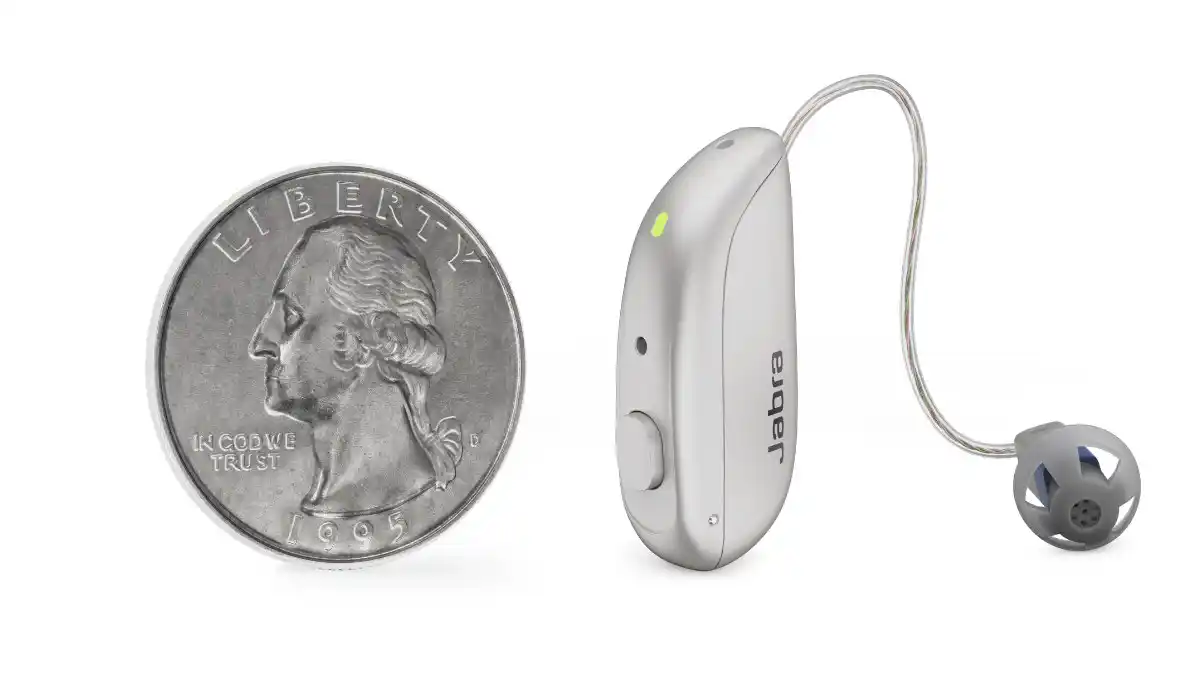
Modern OTC hearing aids do not look or work like that. They are small, Bluetooth-enabled, often nearly invisible, and priced under $2,000 for a pair with real audiology support. The FDA opened the OTC category in 2022 and the market has matured. If a reader in their fifties or sixties has been putting off the audiologist visit because they still picture their grandfather’s hearing aid, the picture in their head is thirty years out of date.
The Livium recipe
Tool. Start with a baseline hearing test. The easiest first move is a free online hearing screener from a reputable provider. The Hearing Loss Association of America (HLAA) maintains a Hearing Loss 101 hub with links to legitimate screeners and information on both prescription and over-the-counter options. If the online screener flags anything (or if you already know you struggle in restaurants), the next step is a full audiologist workup for a proper audiogram. If the audiogram shows mild-to-moderate loss, Jabra Enhance is the direct-to-consumer OTC option with the strongest track record. Their Select 300 model runs $1,695 per pair and their Select 50R runs $1,195, both with a 100-day risk-free trial and licensed audiology support included. For readers who prefer prescription hearing aids fit by a local audiologist, the HLAA hearing aids page walks through the process. Baseline midlife biomarkers through Function Health (cardiovascular, metabolic, inflammatory) are worth having on file since cardiovascular risk factors drive the higher-risk subgroup effect from ACHIEVE.
Behavior. Two behaviors matter more than most people realize. First, protect the hearing you still have. Loud environments (concerts, power tools, headphones at high volume) cause permanent damage to the same hair cells whose loss shows up as age-related hearing loss. Wearing hearing protection at concerts, sporting events, and while operating loud equipment is a longevity move at any age. Second, do not opt out of conversations. If restaurants, dinners, or family gatherings have become tiring, that is data, not a preference change. Push back against social withdrawal deliberately while you close the hearing gap. The withdrawal itself is part of what drives cognitive risk, not just the hearing loss underneath it.
Threshold. The thresholds worth knowing. A pure-tone audiogram is the standard test and it produces a hearing threshold in decibels at each of several frequencies. Normal hearing sits at 25 dB HL or better across the range. Mild loss is 26 to 40 dB HL. Moderate is 41 to 60 dB HL. OTC hearing aids are FDA-approved for the mild-to-moderate range. Above 60 dB HL, you are in prescription territory and you need an audiologist. Ages worth calibrating around are 50 for the baseline test, 55 for the first retest, and then every two to three years after that unless a real change happens sooner. If you already know you strain to follow conversations in a restaurant, do not wait for a birthday. That symptom alone justifies the test now.
Plan of action
- Get a baseline. Start with a free online screener from HLAA’s Hearing Loss 101 or take the Jabra Enhance candidacy survey. If either flags a concern, book a full audiologist workup for a proper audiogram.
- Treat mild-to-moderate loss without waiting. Try Jabra Enhance Select 300 ($1,695 per pair) or Enhance Select 50R ($1,195 per pair). Both include a 100-day risk-free trial and unlimited licensed-audiologist adjustments. If the fit does not work, return them and try a different path.
- Ask about financial assistance if cost is the barrier. HLAA maintains a financial assistance directory covering insurance, veterans benefits, and nonprofit programs.
- Get baseline midlife biomarkers on file through Function Health. Cardiovascular and metabolic risk factors drove the higher-risk subgroup effect in ACHIEVE, so knowing your CBC, lipid panel, HbA1c, and inflammatory markers gives you the fuller picture on brain-health runway.
- Protect the hearing you have. Wear high-fidelity attenuator earplugs at concerts and while using power tools. The NIA’s page on age-related hearing loss and hearing aids walks through prevention, treatment, and communication strategies for someone already dealing with loss.
- At your next annual physical, ask your primary care doctor to add hearing screening to your midlife baseline. If they do not want to run it in-office, ask for a referral to an audiologist. If they push back or dismiss it, the NIA page on hearing loss in older adults is the fastest reference for why the screening matters at midlife, not just after 65.
Table of Content

Know your body better.
Trusted By Thousands Daily









How would I even know if I have hearing loss? I feel like I hear fine.
The most common early signs are subtle. Missing words in restaurants or noisy rooms. Asking people to repeat themselves. Turning up the TV a little more than you used to. Feeling like others are mumbling. Trouble following a group conversation when several people are talking. Frequent misses in phone calls, especially with high-pitched voices. Most people with early loss do not feel like anything has changed until a specific situation exposes it. The online screener takes ten minutes and answers the question.
Is this really actionable in midlife or is this a 65-plus problem?
Actionable in midlife. Age-related hearing loss usually starts in the 40s and progresses gradually over decades. The Lancet Commission places hearing loss in the midlife (45 to 65) actionable window, meaning the intervention window is now for most Livium readers. The ACHIEVE trial enrolled adults 70 to 84 and still showed a 48 percent effect in three years. If the intervention still works at 75, treating at 55 is money in the bank.
Do I need to see an audiologist first or can I just buy OTC hearing aids?
Depends on the loss level. The FDA authorized OTC hearing aids in 2022 specifically for adults with mild-to-moderate hearing loss and without other symptoms (no sudden loss, no pain, no drainage, no dizziness). If you fit that profile, you can buy directly and skip the audiologist step. Some OTC providers (including Jabra Enhance) include remote audiologist appointments as part of the package. If you have severe hearing loss, a history of ear surgery, sudden onset, or any of the red-flag symptoms above, see an ENT or audiologist first. The HLAA and NIA both walk through the split in detail.
Are hearing aids covered by insurance?
Standard Medicare does not cover hearing aids for adults, though some Medicare Advantage plans do. Commercial insurance coverage varies widely and often has a benefit cap far below the cost of a fitted pair. HSA and FSA funds can generally be used for hearing aids. HLAA maintains a directory of assistance programs. The other honest answer is that OTC pricing has dropped enough (Jabra Enhance Select 50R is $1,195 a pair) that many midlife adults with any HSA balance can pay out of pocket.
Do hearing aids reverse the brain changes from years of untreated loss?
Partially. ACHIEVE and follow-up work show slowed cognitive decline, meaning the trajectory improves once hearing input is restored. Whether the brain-atrophy piece reverses is less clear. The best current evidence supports treating early and treating consistently. Waiting for a symptom is waiting too long. If a reader is going to buy a hearing aid at 68 because a family member finally forced the issue, buying at 55 was the better plan.
What about Apple AirPods Pro as a hearing aid?
The AirPods Pro 2 received FDA clearance in 2024 for hearing assistance for adults with mild-to-moderate hearing loss. iOS 18 added a built-in hearing test and custom amplification profile. For someone with mild loss who already owns AirPods Pro 2, this is a legitimate no-cost first move. For someone with moderate loss, dedicated OTC hearing aids like the Jabra Enhance line are still the stronger tool because they are optimized for all-day wear and speech clarity across a wider range. A future Livium piece covers the AirPods route in detail; for a reader deciding today, either path beats the option of doing nothing.
Legal Disclaimer
The content published on Livium Health is for informational and educational purposes only. Nothing on this site constitutes medical advice, diagnosis, or treatment. Always consult a qualified healthcare provider before making decisions about your health, including changes to medications, supplements, diet, or exercise.
Livium Health is not a medical practice and does not have a patient-provider relationship with its readers. We do not sell supplements, medications, or treatments, and we have no financial relationship with the products or services we reference.
While we work to ensure the information we publish is accurate and up to date, health and medical guidance evolves. We make no guarantees about the completeness or currency of any content on this site. Reliance on any information provided by Livium Health is solely at your own risk.
If you are experiencing a medical emergency, call 911 or your local emergency services immediately.
We may receive compensation, free products, or affiliate commissions for products mentioned in this post. Opinions are our own.