
Share
Fitness
Men's Health
Women's Health
Grip strength and aging: Why it may reflect more than hand strength
6 min read
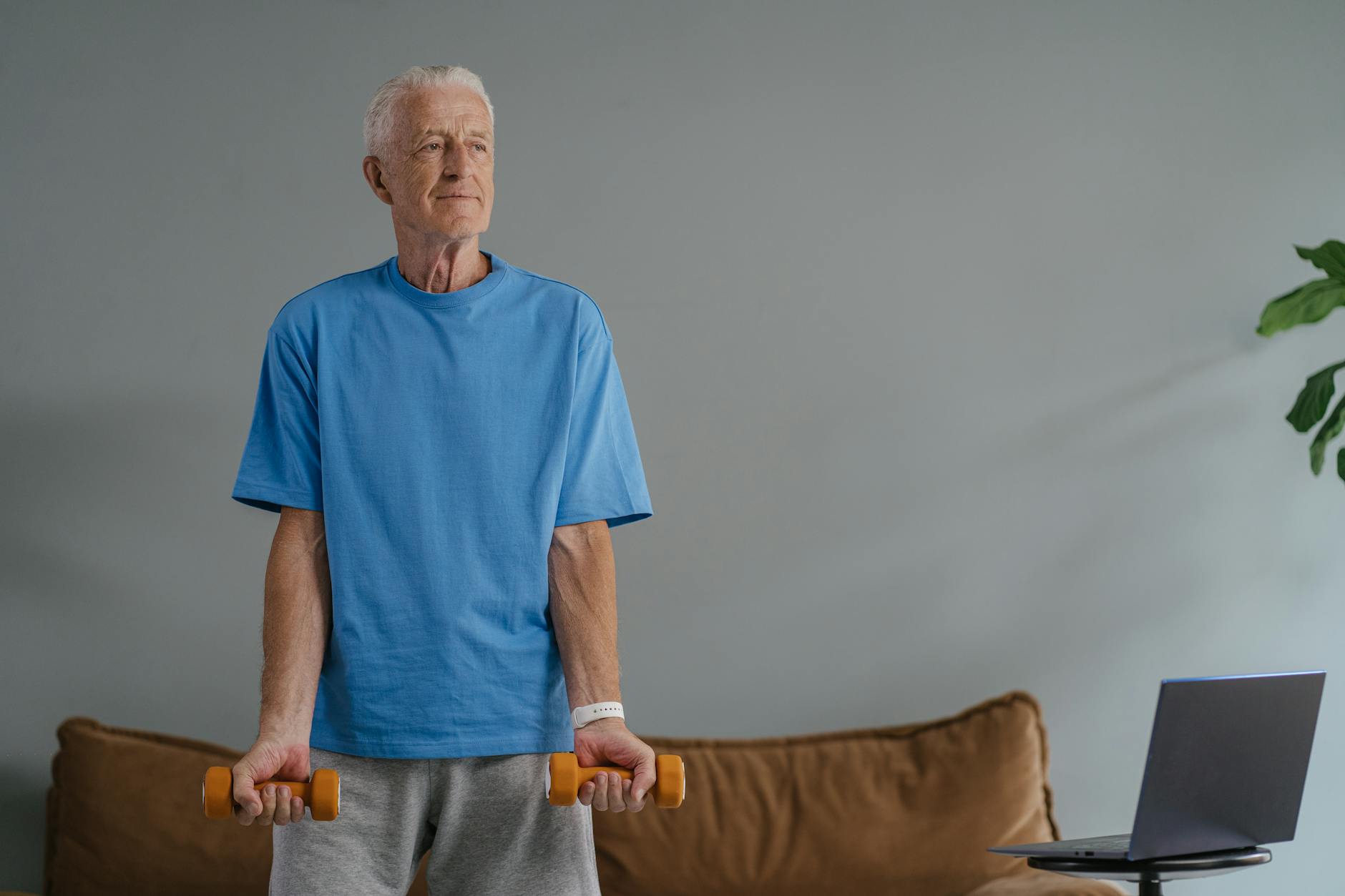
Key takeaways
- Grip strength is widely used as a functional health marker because it reflects overall muscle mass, coordination, and physical resilience as you age.
- Declining grip often progresses in parallel with muscle loss, reduced mobility, and an increased risk of falls or disability in older adults.
- You can assess grip informally by noticing changes in daily tasks or measure it directly with an inexpensive hand dynamometer.
- Simple exercises like farmer carries, dead hangs, and using thicker grips can improve grip strength with consistent practice over a few weeks.
Why grip strength matters beyond your hands
Grip strength isn’t just about how firmly you can shake hands or open a jar. It’s become one of the most-watched functional health markers in aging research, often used as a proxy for overall muscle health, mobility, and even longevity. A weaker grip may signal broader changes in strength, independence, and physical resilience as you age.
This article explains why grip strength has gained traction as an aging health marker, what declining grip may suggest about your body, and how you can assess and improve it using simple, practical methods.
What grip strength reflects in the body
Grip strength is measured by how much force your hand can generate when squeezing. While that sounds specific to your hands and forearms, it correlates strongly with total body muscle mass and function. Researchers use it as a quick, low-cost way to assess physical capability without complex equipment.
Studies consistently link weaker grip strength to higher rates of disability, frailty, slower walking speed, and increased risk of falls. It also correlates with cardiovascular health, metabolic function, and even cognitive decline in older adults. This doesn’t mean weak grip causes these outcomes, but it often moves in parallel with them.
In practical terms, grip strength reflects whether your muscles are maintaining their size, function, and coordination over time. Muscle loss, also called sarcopenia, typically begins in your 30s and accelerates after 60. Grip strength offers a measurable signal of that process.
Why grip declines with age
Grip strength naturally decreases as you get older, primarily due to muscle loss, changes in nerve function, and reduced physical activity. Hormonal shifts, particularly drops in testosterone and growth hormone, also contribute. Chronic inflammation and poor nutrition can speed up the decline.
Sedentary lifestyles compound the issue. If you’re not regularly challenging your muscles through resistance or load-bearing activity, they adapt by shrinking. Your nervous system also becomes less efficient at recruiting muscle fibers, which affects coordination and force production.
Injuries, arthritis, or joint issues in the hands, wrists, or shoulders can further limit grip. However, even without pain, grip often weakens simply because it’s not being trained or maintained.
What declining grip may suggest
A noticeable drop in grip strength may be an early indicator that overall muscle function is changing. It doesn’t diagnose a specific condition, but it can prompt you to look more closely at your movement habits, nutrition, and recovery.
Weaker grip is associated with:
- Lower muscle mass across the body
- Reduced ability to perform daily tasks like carrying groceries, lifting objects, or stabilizing yourself
- Higher risk of falls and fractures in older adults
- Poorer outcomes in recovery from illness or surgery
- Greater likelihood of mobility limitations over time
It’s also worth noting that grip strength in midlife may predict how well you age into your 70s and beyond. Maintaining it now can support independence later.
How to assess your grip strength
You don’t need a medical test to get a general sense of your grip. While research studies use a hand dynamometer, a calibrated device that measures force in kilograms, you can start by noticing functional changes.
Functional signs your grip may be weakening:
- Difficulty opening jars or bottles that used to be easy
- Struggling to carry heavy bags or hold onto objects for long periods
- Feeling unstable when gripping a pull-up bar, dumbbell, or steering wheel
- Dropping items more often or feeling less control in your hands
If you want to measure it more formally, hand dynamometers are available online for under $30. Typical grip strength for men in their 30s averages around 45-50 kilograms, and for women, 25-30 kilograms. Strength declines by roughly 10 percent per decade after age 50.
These are general ranges. Your baseline matters more than comparing yourself to a chart. If your grip is noticeably weaker than it was a year or two ago, that change is worth addressing.
How to improve grip strength
Grip strength responds well to consistent training. You don’t need specialized equipment or a complicated program. The key is to load your hands and forearms regularly in ways that challenge them.
Practical ways to build grip:
- Carry heavy objects such as groceries, dumbbells, or kettlebells for time instead of using a cart or making multiple trips
- Use thicker handles or grip attachments on weights to increase demand on your hands
- Hang from a pull-up bar for as long as you can, even if you can’t do a pull-up yet
- Squeeze a hand gripper or stress ball for repetitions throughout the day
- Perform farmer carries by walking while holding heavy weights at your sides
- Do deadlifts or rows without straps to force your grip to work harder
Start with manageable loads and gradually increase weight or time. Consistency matters more than intensity. Training grip two to three times per week is enough to see improvement within a few weeks.
If you have joint pain or arthritis, work within a comfortable range and consider using adaptive tools or working with a physical therapist to avoid aggravating symptoms.
Why grip training supports more than your hands
When you train grip, you’re also training the muscles in your forearms, wrists, shoulders, and core. Many grip exercises require full-body stability, which improves coordination and balance. This carries over into everyday movements like lifting, pulling, and stabilizing your body during activity.
A stronger grip also makes other strength training more effective. If your hands give out before your legs or back during a deadlift or row, you limit the training stimulus to those larger muscle groups. Improving grip removes that bottleneck.
Beyond performance, maintaining grip supports independence. Being able to open containers, carry objects, catch yourself during a stumble, or hold onto a railing can directly affect the quality of life as you age.
Plan of action
- Start noticing how your grip feels during daily tasks like opening jars, carrying bags, or holding onto objects. If you notice consistent difficulty, treat it as a signal to act.
- Add one or two grip-focused exercises to your weekly routine, such as farmer carries, dead hangs, or hand gripper work.
- If you lift weights, avoid using straps on every set. Let your grip do the work on at least some of your pulling exercises.
- Consider measuring your grip with a hand dynamometer to track progress over time. Baseline data helps you notice improvement or decline.
- If grip weakness is sudden, painful, or accompanied by numbness or tingling, consult a healthcare provider to rule out nerve or joint issues.
- Pair grip training with overall strength work and adequate protein intake to support muscle maintenance across your entire body.
Table of Content
Know your body better.
Trusted By Thousands Daily








FAQ
Is weak grip strength always a sign of a health problem?
Not necessarily. Grip naturally declines with age, and some people start with less baseline strength due to genetics or activity history. However, a noticeable or rapid drop may warrant investigation, especially if it affects daily functioning.
How long does it take to improve grip strength?
Most people notice measurable improvement within four to six weeks of consistent training, assuming they’re challenging their grip two to three times per week. Progress depends on your starting point and how much load you’re using.
Can grip strength predict how long I will live?
Research shows associations between grip strength and longevity, but grip itself doesn’t determine lifespan. It serves as a marker of overall muscle health, physical function, and resilience, all of which influence how well you age.
Should I use a hand gripper or do full-body exercises?
Both work. Hand grippers are convenient and effective for isolating grip, but full-body exercises like deadlifts, rows, and carries train grip while also building strength elsewhere. A mix of both is ideal.
What if I have arthritis or joint pain in my hands?
You can still train grip, but you may need to modify intensity, use padded grips, or work with a physical therapist to avoid flare-ups. Strengthening the muscles around your joints can actually improve stability and reduce discomfort over time.
Legal Disclaimer
The content published on Livium Health is for informational and educational purposes only. Nothing on this site constitutes medical advice, diagnosis, or treatment. Always consult a qualified healthcare provider before making decisions about your health, including changes to medications, supplements, diet, or exercise.
Livium Health is not a medical practice and does not have a patient-provider relationship with its readers. We do not sell supplements, medications, or treatments, and we have no financial relationship with the products or services we reference.
While we work to ensure the information we publish is accurate and up to date, health and medical guidance evolves. We make no guarantees about the completeness or currency of any content on this site. Reliance on any information provided by Livium Health is solely at your own risk.
If you are experiencing a medical emergency, call 911 or your local emergency services immediately.
We may receive compensation, free products, or affiliate commissions for products mentioned in this post. Opinions are our own.