
Share
Energy & Focus
Men's Health
Women's Health
Sleep debt: The compounding energy deficit most people are carrying and calling normal
7 min read

Key takeaways
- Sleep debt is cumulative and does not clear with a single long night. Research shows it takes roughly four days of adequate sleep to recover from one hour of nightly sleep loss accumulated over a week. Most adults in chronic mild deficit never fully clear it.
- Sleep efficiency (the percentage of time in bed actually spent asleep) is a more useful metric than total hours. A wearable that tracks time awake after sleep onset and sleep latency gives you efficiency, not just duration. Target: above 85 percent.
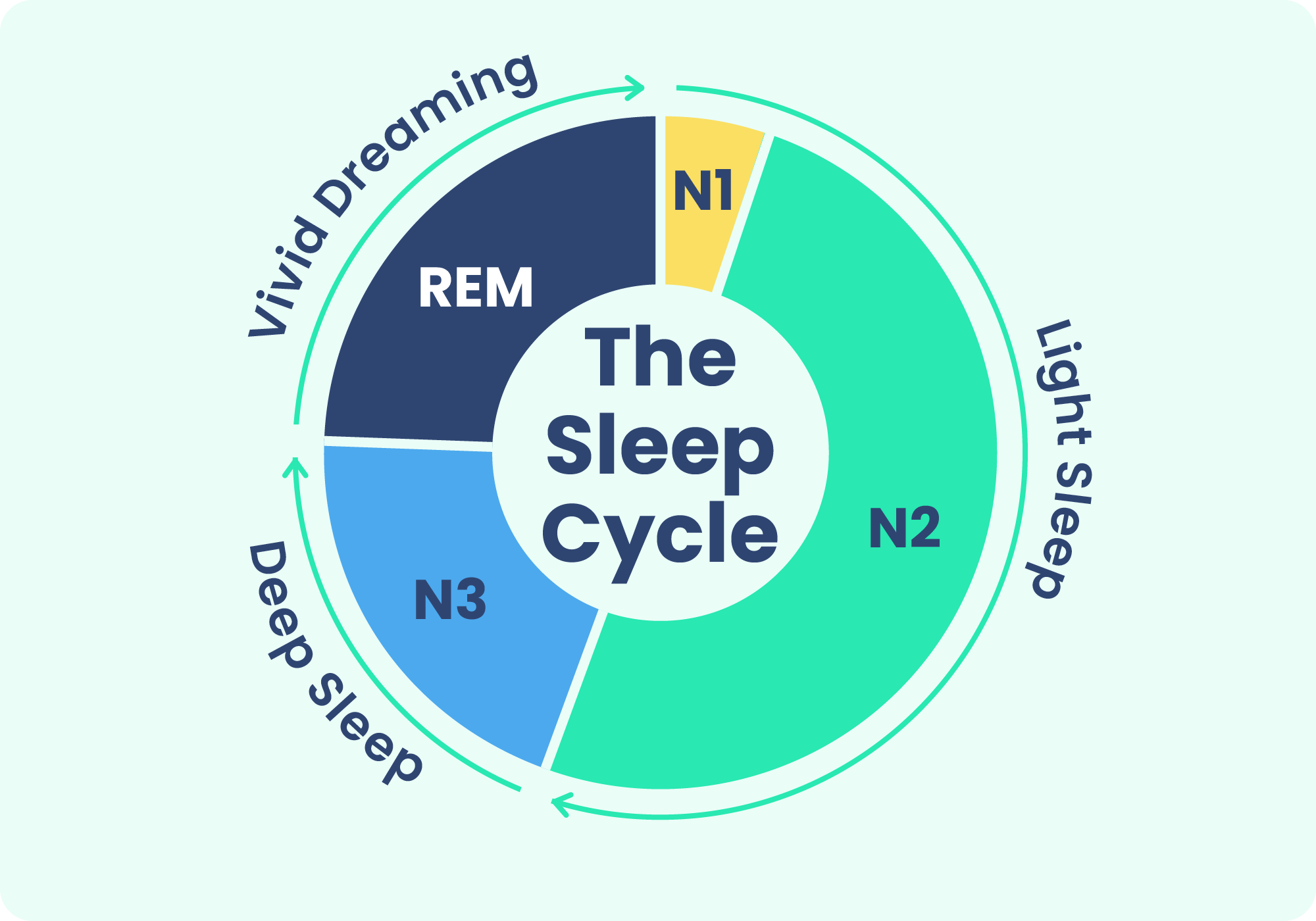
- Slow-wave sleep (deep NREM sleep, stages 3 and 4) is where physical restoration, hormone production including growth hormone and testosterone, and immune function primarily occur. Adults lose slow-wave sleep at roughly 2 percent per decade after age 30 even with consistent sleep hours.
- The single highest-leverage intervention for sleep quality is not a supplement or a device. It is a fixed wake time, held consistent every day including weekends, which anchors the circadian rhythm and compresses sleep pressure toward the bedtime window.
You sleep seven hours. You wake tired. You call it your baseline
Six years ago it was six and a half hours and you were fine. Then came a phase of worse sleep. A demanding period. Some late nights that became a pattern. The seven hours now feels like the compromise between what the schedule allows and what the body actually needs. It has been this way long enough that this level of tired feels like your personality rather than a problem with a cause.
Sleep debt does not feel like debt when you are carrying it. It feels like your baseline. The adaptation is real and neurologically documented: after two weeks of six-hour nights, cognitive performance on standardized tests degrades to the same level as after 24 hours of total sleep deprivation, but subjective sleepiness stops increasing. The brain adapts to feeling this way and stops registering the impairment as impairment.
The wearable is the external reference point. It does not adapt. It reports what actually happened during the night: how long you took to fall asleep, how many times you woke, what proportion of the time in bed was actual sleep, and in some devices, an estimate of slow-wave and REM proportions. That data is not a judgment. It is a diagnostic.
What is actually happening
Sleep architecture matters more than hours. A full sleep cycle runs roughly 90 minutes and includes light NREM sleep, deep slow-wave sleep (stages 3 and 4), and REM sleep. The first half of the night is dominated by slow-wave sleep, which is where physical restoration, growth hormone secretion, immune consolidation, and testosterone synthesis primarily occur. The second half is dominated by REM, where emotional processing and memory consolidation happen. Cutting sleep by 90 minutes does not evenly reduce all stages. It disproportionately eliminates REM sleep, which falls at the end of the night. This is why a six-hour night feels more cognitively impaired than a seven-and-a-half-hour night by a margin greater than 90 minutes would suggest.
Sleep efficiency is the number that matters. Lying in bed for eight hours while actually sleeping for six and a half is not eight-hour sleep. It is six-and-a-half-hour sleep with 90 minutes of fragmented wakefulness. Wearables that track heart rate and movement continuously can estimate sleep efficiency. A healthy efficiency is 85 percent or above. Adults with undiagnosed sleep apnea or elevated cortisol at night often show efficiency in the 70s, which means a stated eight-hour night is delivering around five and a half hours of restorative sleep.
Alcohol is the most common efficiency suppressant most people do not connect to sleep. Alcohol is sedating but not sleep-producing. It induces sleep onset but fragments the second half of the night as it metabolizes, suppresses REM, and reduces slow-wave sleep in the first two cycles. Two glasses of wine before bed can reduce sleep efficiency from 88 percent to 74 percent and cut slow-wave sleep time by 25 percent with no acute awareness of the disruption. We covered the mechanism in depth in Alcohol and sleep quality over 40: What changes and why it matters.
What you have probably already tried
Sleeping in on weekends. Weekend recovery sleep helps acutely but does not clear chronic debt and actively destabilizes the circadian rhythm by shifting the wake time later. Monday morning is harder because the circadian clock shifted over the weekend and Tuesday morning coffee is now fighting jet lag on top of the original debt. The cost-benefit on weekend sleep-ins is worse than it appears.
Melatonin. Melatonin is a circadian timing signal, not a sedative. It is effective for phase-shifting the sleep cycle (jet lag, shift work, delayed sleep phase syndrome) and for some older adults whose endogenous melatonin production has declined. It does not meaningfully improve sleep efficiency, slow-wave time, or recovery quality in most adults with garden-variety sleep debt. Correct signal for the wrong problem.
A cooler room. Correct and worth doing. Core body temperature drops during sleep onset and reaches its lowest point during slow-wave sleep. A room temperature of 65 to 68 degrees Fahrenheit (18 to 20 degrees Celsius) facilitates this thermoregulation. It is one input into a larger system, and effective in combination with the other variables, not as a standalone fix.
The Livium take. The highest-leverage intervention for sleep quality is a fixed wake time, seven days a week, non-negotiable. Everything else (supplements, temperature, lighting, phone cutoff) works better with a consistent anchor than without it. The wake time is the protocol. Everything else is optimization on top of the protocol.
The Livium recipe
Tool. A wearable that tracks sleep efficiency, not just hours. Whoop, Oura Ring, and Garmin all report estimated sleep stages and efficiency. Apple Watch reports sleep stages on Series 9 and later. Use the efficiency metric as the primary number to improve, not total time in bed. If efficiency is below 85 percent consistently, the next diagnostic is a home sleep test to rule out OSA before attributing the deficit to behavioral causes. Available at Lofta. We covered the OSA-sleep quality connection in Sleep apnea after 40: When snoring is a longevity problem.
Behavior. Four inputs in order of impact. First: fixed wake time, same every day, including weekends. Set it and hold it for 30 days. Second: room temperature 65 to 68 degrees Fahrenheit. Third: cut alcohol to zero or to before 6 PM if sleep efficiency is below 85 percent. Fourth: no caffeine after 2 PM (12 PM in a cortisol diagnostic window). These four address the primary suppressors of sleep efficiency. Supplements come after the behavioral protocol is in place, not before.
Threshold. Sleep efficiency above 85 percent, slow-wave sleep above 90 minutes per night (estimated by wearable), and a morning energy score of 7 or above at 9 AM, self-reported. These three together indicate that the sleep debt is actively clearing. Most people on the fixed-wake-time protocol see efficiency improve within two weeks and report morning energy improvement within three to four weeks.
| Intervention | Primary effect | Impact on sleep efficiency | Livium priority |
|---|---|---|---|
| Fixed wake time (daily) | Anchors circadian rhythm, builds sleep pressure toward bedtime | High | Do first |
| Alcohol reduction or cutoff before 6 PM | Removes primary efficiency suppressor and REM disruptor | High (up to 15 percent gain) | Do first if drinking nightly |
| Room temperature 65 to 68 degrees Fahrenheit | Supports core temperature drop for sleep onset and slow-wave sleep | Moderate | Easy; do alongside others |
| Home sleep test if efficiency under 85% | Rules out OSA as the primary fragmentation cause | Critical diagnostic if behavioral fixes fail | Do if behavioral fixes do not move efficiency after 4 weeks |
| Melatonin supplement | Circadian phase signal; useful for jet lag and phase disorders | Low for general sleep debt | After behavioral protocol is in place |
Source: Livium editorial synthesis based on NHLBI sleep research, Van Dongen et al. (2003) chronic sleep restriction study, and published sleep efficiency intervention data.
Plan of action
- Set one wake time for the next 30 days. The same time every day including Saturday and Sunday. Write it down. This is the protocol. Everything else is secondary.
- Check your room temperature tonight. If it is above 70 degrees Fahrenheit, bring it down to 65 to 68 degrees. This takes 30 seconds and has measurable effect.
- If you drink alcohol and your sleep efficiency is below 85 percent, remove alcohol entirely for two weeks and track whether efficiency improves. That is the experiment. The result is your data.
- At four weeks, check your wearable’s sleep efficiency trend. If it is not above 85 percent consistently, order a home sleep test at Lofta. OSA is the most common structural cause of persistently low sleep efficiency in adults over 40.
- If efficiency is above 85 percent and fatigue persists, the sleep architecture may be adequate but slow-wave time may be low. At that point, a bloodwork panel through Function Health and a hormone evaluation at Hone Health are the next branches.
Table of Content

Know your body better.
Trusted By Thousands Daily




FAQ
Can you ever fully repay sleep debt?
Short-term debt (a week or two of mild sleep restriction) can be substantially cleared with consistent adequate sleep over four to seven days. Chronic multi-year sleep debt may not be fully reversible to the performance baseline of full sleep, based on current research. The goal is not restoration of a hypothetical peak. It is improvement from where you are now, which is meaningful and achievable.
How do I know how much slow-wave sleep I am getting?
Consumer wearables estimate sleep stages using heart rate and movement algorithms. Whoop, Oura, and Garmin provide stage breakdowns. These are estimates, not clinical polysomnography measurements, but the trend data is useful. A clinical sleep study (polysomnography) in a lab provides fully accurate stage data if precision is needed for a specific medical concern.
What about sleep aids like magnesium or glycine?
Both have evidence for modest improvement in sleep quality and subjective restfulness. Magnesium glycinate at 300 to 400 mg taken 30 to 60 minutes before bed is a reasonable addition after the behavioral protocol is in place. Glycine at 3 grams before bed has small but consistent evidence for reducing sleep latency and improving slow-wave sleep time in human trials. Neither replaces the behavioral protocol. Both are additive when the baseline behaviors are already running.
Legal Disclaimer
The content published on Livium Health is for informational and educational purposes only. Nothing on this site constitutes medical advice, diagnosis, or treatment. Always consult a qualified healthcare provider before making decisions about your health, including changes to medications, supplements, diet, or exercise.
Livium Health is not a medical practice and does not have a patient-provider relationship with its readers. We do not sell supplements, medications, or treatments, and we have no financial relationship with the products or services we reference.
While we work to ensure the information we publish is accurate and up to date, health and medical guidance evolves. We make no guarantees about the completeness or currency of any content on this site. Reliance on any information provided by Livium Health is solely at your own risk.
If you are experiencing a medical emergency, call 911 or your local emergency services immediately.
We may receive compensation, free products, or affiliate commissions for products mentioned in this post. Opinions are our own.